SCORM Content Modernization: How to Convert Static PPTs and PDFs into Adaptive Micro-Lessons
```html
SCORM Content Modernization: How to Convert Static PPTs and PDFs into Adaptive Micro-Lessons
In the fast-evolving landscape of corporate learning and development, the challenge for L&D leaders – from Vice Presidents to Managers – often boils down to making training truly impactful and accessible. While traditional resources like PowerPoint presentations and PDF documents have long been staples, their static nature struggles to keep pace with the dynamic needs of modern workforces. This is where SCORM content modernization, specifically the transformation of these rigid formats into adaptive micro-lessons, emerges as a strategic imperative.
Imagine a world where your essential compliance training, intricate sales methodologies, or complex financial product knowledge isn't just consumed, but actively absorbed and retained. This isn't a distant dream; it's the tangible outcome of embracing modern eLearning strategies, powered by a robust Microlearning LMS. For organizations across diverse sectors like Banking, Pharma, Retail, and Oil and Gas, upgrading outdated content isn't just about aesthetics; it's about competitive advantage, risk mitigation, and fostering continuous employee growth through a powerful `learning management system`.
The Evolving Landscape of Corporate Learning
The days of passive learning are numbered. Today's employees, accustomed to on-demand information and personalized experiences in their daily lives, expect the same from their professional development. Static PPTs and lengthy PDFs, no matter how well-researched, often lead to low engagement, poor retention, and a significant disconnect from real-world application. They lack the interactivity, personalization, and immediate relevance that drives true learning.
A critical question often arises for L&D professionals: "How can advanced algorithms help us transform our existing training materials to be more engaging and effective?" The answer lies in breaking down monolithic content into digestible, targeted micro-lessons. These bite-sized modules are designed to address specific learning objectives, delivering just-in-time knowledge when and where it's needed most. This approach significantly boosts engagement, especially for busy professionals who might only have a few minutes to spare, making the most of any `learning management software`.
Why Modernize? The Business Case for Adaptive Micro-Lessons
For L&D executives, the decision to modernize content isn't merely an operational one; it's a strategic investment with clear returns across various industry segments:
- Compliance: Convert dense regulatory PDFs into interactive scenarios and quizzes, ensuring higher comprehension and adherence in Banking, Finance, and Healthcare.
- Sales: Transform product knowledge PPTs into adaptive micro-lessons with the help of an AI Powered Authoring Tool, enabling sales teams to quickly master features and overcome objections for Retail or Pharma.
- Finance & Insurance: Simplify complex policies and financial instruments into clear, concise modules that adapt to the learner's understanding, a key benefit of advanced `learning content management system` solutions.
- Healthcare & Pharma: Ensure critical medical procedures and drug information are conveyed accurately and retained effectively, reducing errors and improving patient outcomes.
- Hospitality: Train staff quickly on service standards and protocols, enhancing guest experience and operational efficiency.
- Oil and Gas & Mining: Modernize safety protocols and operational procedures, significantly reducing Risk-focused Training and improving field efficiency, supported by a robust `enterprise learning management` system.
Another common concern for global enterprises is: "What intelligent approaches can we use to ensure our digitized learning resources are culturally and contextually relevant to diverse employee groups worldwide?" Modernization allows for flexible content design that can be easily localized or adapted to specific regional requirements, a key benefit of a flexible `LMS` or a powerful `learning content management system`.
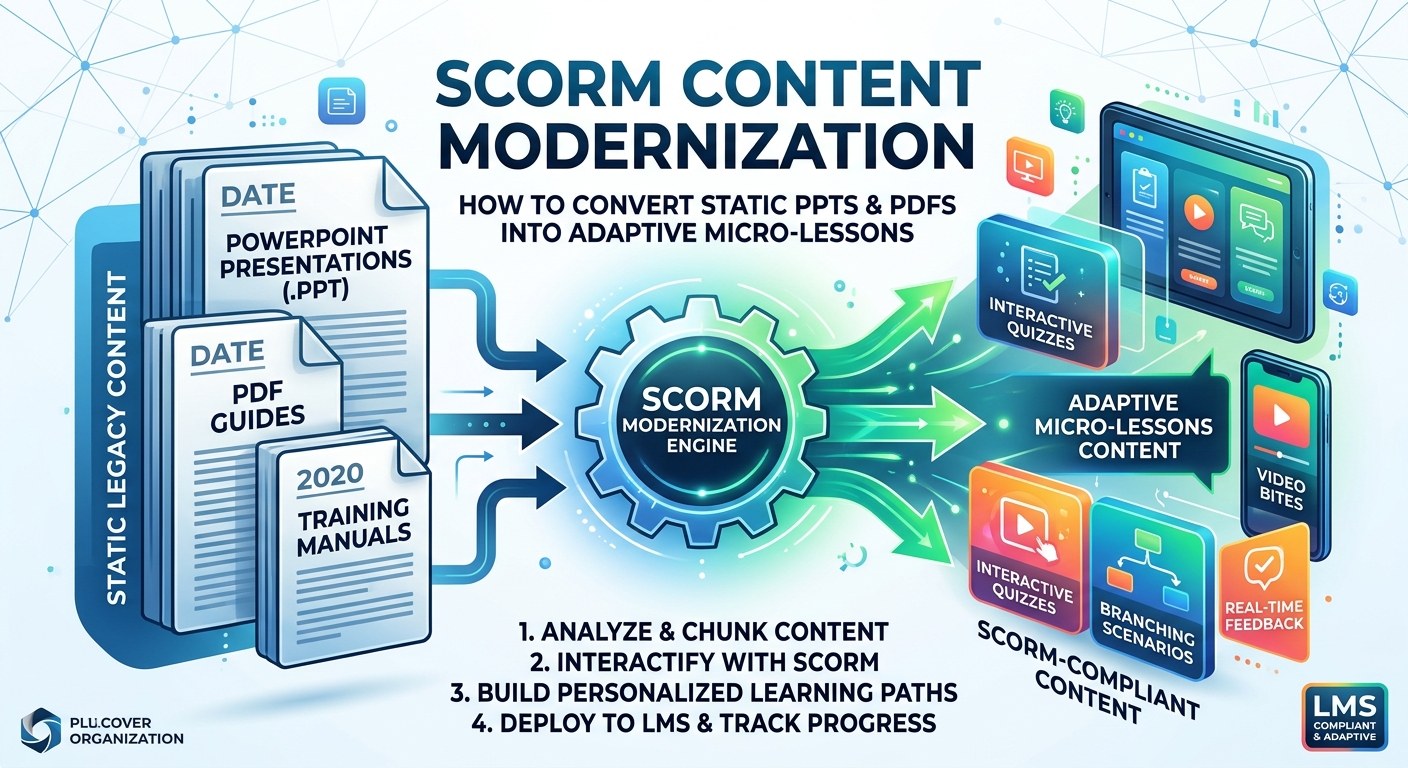
The SCORM Modernization Process: From Static to Dynamic
1. Content Audit and Strategic Chunking
The journey begins with a comprehensive audit of your existing PPTs and PDFs. Identify core learning objectives, key messages, and critical information. Instead of a direct conversion, this is an opportunity to re-imagine content delivery. Break down large topics into smaller, self-contained units – the essence of micro-lessons. Each chunk should ideally focus on one specific learning outcome, making it easier for learners to process and retain information. This foundational step is crucial for any `learning management solutions` implementation within your `lms learning management system`.
2. Design for Interactivity and Engagement
Once content is chunked, the next step is to transform static text and images into engaging experiences. This involves:
- Multimedia Integration: Incorporating short videos, animations, interactive graphics, and audio narration.
- Gamification Elements: Adding quizzes, challenges, points, and leaderboards to foster healthy competition and motivation. This is where a Gamified LMS truly shines.
- Scenario-Based Learning: Creating real-world simulations that allow learners to apply knowledge and make decisions, especially critical for high-stakes Risk-focused Training.
- Adaptive Paths: Designing content that responds to learner performance, guiding them through personalized learning journeys. This is the cornerstone of Adaptive Learning.
3. Leveraging Technology for Efficient Conversion
Converting static content into interactive, SCORM-compliant micro-lessons requires the right tools. Modern authoring platforms, often integrated within or alongside a sophisticated `lms learning management system`, provide functionalities to import existing assets and enrich them. Many now incorporate intelligent features that can analyze content, suggest interactivity, and even automate aspects of the conversion process. This capability is paramount for `enterprise learning management` initiatives.
Consider the question: "Where can advanced learning platforms most effectively enhance the delivery of our learning content, making it truly personalized?" With an AI Powered Authoring Tool, L&D teams can rapidly develop and deploy high-quality, interactive content without extensive coding knowledge, drastically cutting development time and costs. These tools are often part of a comprehensive `LCMS` (Learning Content Management System), ensuring seamless content creation and deployment.
Implementing Adaptive Learning Strategies for Maximum Impact
Adaptive Learning takes micro-lessons a step further by tailoring the learning experience to each individual. Instead of a one-size-fits-all approach, adaptive platforms assess a learner's prior knowledge, performance, and preferences, then dynamically adjust the content, pace, and pathway. This ensures that learners focus on areas where they need improvement, bypass what they already know, and receive reinforcement where necessary.
For L&D leaders, this translates into highly efficient and effective training. Imagine a new hire in Banking receiving a personalized onboarding journey, or a sales professional in Pharma getting targeted refreshers based on their recent performance gaps. This level of personalization is only truly achievable with a robust `learning management software` capable of advanced analytics and content delivery. A key consideration here is: "What specific capabilities should our next generation `LMS` offer to facilitate truly individualized learning journeys across all departments?" The answer often points to platforms that excel in data analytics, AI-driven recommendations, and dynamic content serving.
The Role of an Advanced Learning Platform
To successfully implement SCORM content modernization and adaptive micro-lessons, a powerful `learning management system` is indispensable. A modern `cloud based learning management system` offers the infrastructure to host, deliver, and track all your revitalized content. Key features to look for in a top-tier platform, such as MaxLearn LMS, include:
- SCORM and xAPI Compliance: Essential for tracking learner progress, scores, and completion, ensuring seamless integration with your existing HR systems.
- Intuitive Authoring Tools: For easy content creation and updates, especially when leveraging an AI Powered Authoring Tool.
- Reporting and Analytics: Providing deep insights into learner engagement, performance, and the effectiveness of your training programs.
- Mobile Accessibility: Ensuring micro-lessons are available anytime, anywhere, on any device – a hallmark of flexible `learning management software`.
- Personalization Engines: Driving Adaptive Learning pathways based on learner data.
- Gamification Features: Integrating elements like badges, leaderboards, and points to boost motivation, aligning with a Gamified LMS approach.
Conclusion
The journey from static PPTs and PDFs to adaptive micro-lessons is a transformative one for any organization serious about elevating its L&D initiatives. By embracing SCORM content modernization, L&D leaders can move beyond traditional, often ineffective, training methods and usher in an era of engaging, personalized, and highly effective learning experiences. This not only empowers employees but also drives tangible business outcomes, from enhanced compliance and reduced risk to improved sales performance and a more skilled workforce. Investing in the right `learning management solutions` and methodologies isn't just an upgrade; it's a strategic leap towards future-proofing your organization's most valuable asset: its people.
```


Comments
Post a Comment