Training ROI Metrics: How Real-Time Reporting Fixes Broken Corporate Learning Budgets
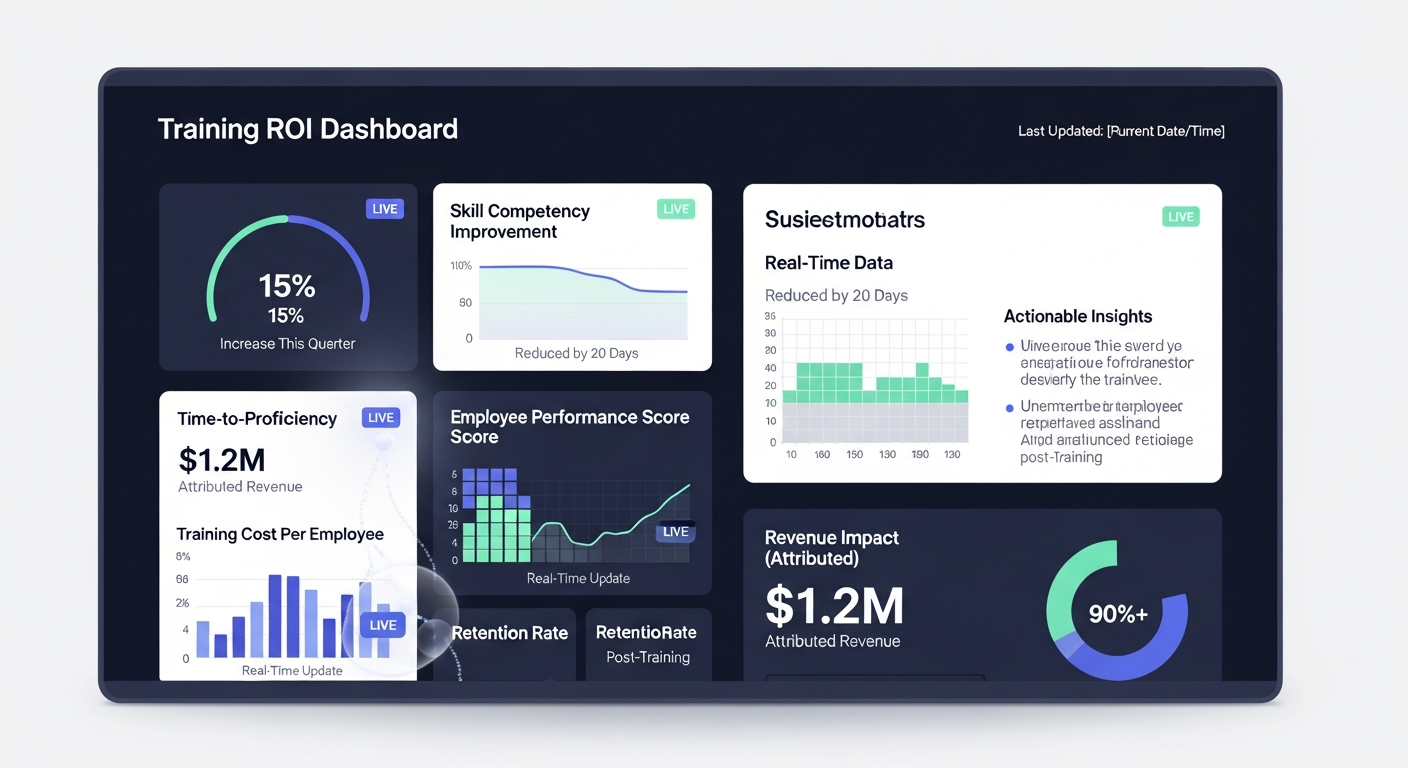
Training ROI Metrics: How Real-Time Reporting Fixes Broken Corporate Learning Budgets
For L&D leaders, the perennial challenge isn't just delivering effective training; it's proving its worth. In an era where every budget line item faces intense scrutiny, demonstrating a tangible return on investment (ROI) for corporate learning initiatives is paramount. Too often, learning budgets are seen as a cost center rather than a strategic investment, leading to cuts, underfunding, and missed opportunities for organizational growth. The culprit? Often, it's a lack of timely, actionable data. Traditional reporting methods, bogged down by manual processes and lagging indicators, fail to provide the insights necessary to connect learning outcomes directly to business impact. But what if there was a way to get a pulse on your training effectiveness in real-time, enabling immediate adjustments and clear justification for every dollar spent? Real-time reporting is emerging as the game-changer, transforming how L&D departments manage, optimize, and justify their learning budgets.
The Hidden Costs of Lagging Training Insights
Imagine investing significant resources into a new compliance program or a critical sales training module, only to discover months later that it missed the mark. This scenario, unfortunately, is all too common. Without real-time data, L&D teams operate in a reactive mode, making decisions based on assumptions or outdated information. This leads to:
- Wasted Resources: Programs that aren't working continue to consume budget and employee time.
- Delayed Corrections: By the time issues are identified, the window for effective intervention may have passed.
- Inability to Adapt: Rapid market changes demand agile learning solutions, impossible without immediate feedback.
- Lack of Strategic Influence: Without clear ROI, L&D struggles to secure executive buy-in for future initiatives.
What are the common pitfalls in measuring training effectiveness that hinder budget justification? The answer often lies in the reliance on post-training surveys alone, or annual reviews that offer a rearview mirror perspective. These methods provide some insight but lack the granularity and immediacy needed for proactive budget management.
Unlocking Value with Real-Time Reporting
Real-time reporting shifts the paradigm from reactive analysis to proactive optimization. It leverages advanced technology to continuously collect, process, and present data on learner engagement, performance, and skill development as it happens. This immediate feedback loop empowers L&D professionals to:
- Identify Issues Instantly: Pinpoint struggling learners, confusing content, or ineffective methodologies the moment they arise.
- Optimize Content and Delivery: Make agile, data-driven adjustments to course material, formats, and instructional strategies.
- Demonstrate Value Clearly: Present concrete metrics that tie learning directly to key performance indicators (KPIs).
- Forecast Needs Accurately: Use current trends to better plan future training investments.
For organizations adopting a Microlearning LMS, real-time data becomes even more powerful, providing granular insights into short, focused learning bursts. This enables L&D teams to see which specific modules are driving engagement and knowledge retention most effectively. Similarly, a Gamified LMS thrives on immediate feedback, allowing administrators to track participation, progress, and competitive dynamics live, ensuring the motivational elements are truly impactful.
Key Metrics to Track for Real-Time ROI
To truly fix broken learning budgets, L&D leaders need to focus on metrics that go beyond simple completion rates. Here's a look at what real-time reporting can illuminate:
- Engagement Rates: Are learners actively participating? How much time are they spending on modules? Are they revisiting content?
- Knowledge Retention & Application: Real-time quizzes, simulations, and performance tasks can assess immediate comprehension and application of skills. Adaptive Learning platforms, in particular, excel at this, adjusting content difficulty based on real-time performance.
- Performance Improvement: Correlate training participation with improvements in job-specific KPIs – sales quotas met, error rates reduced, customer satisfaction scores increased, or compliance breaches minimized.
- Behavioral Changes: Track how new skills translate into changed workplace behaviors, especially critical in areas like leadership development or customer service.
- Cost-Effectiveness per Learner: Understand the actual cost per engaged learner and per successful outcome, optimizing resource allocation.
How do integrated learning experiences contribute to overall organizational intelligence? By providing a holistic view of learning journeys and their impact on individual and team performance, real-time data helps paint a comprehensive picture, allowing for more informed strategic decisions across the enterprise.
Real-Time Reporting in Action Across Industries
The impact of real-time data on L&D budgets is universal, cutting across diverse industries:
- Compliance: In banking, finance, and healthcare, regulatory training is non-negotiable. Real-time reporting on compliance module completion, comprehension scores, and policy adherence dramatically reduces audit risks and potential fines. Risk-focused Training becomes much more effective when you can immediately see where vulnerabilities exist.
- Sales: For sales organizations, immediate performance data linked to training modules allows managers to quickly identify what content directly translates to higher close rates or increased average deal sizes. An AI Powered Authoring Tool can then rapidly update or create new modules based on these insights.
- Retail & Hospitality: Track training impact on customer service scores, upsell rates, and operational efficiency in real time, demonstrating a direct link to profitability.
- Pharma & Healthcare: Monitor adoption of new protocols, equipment training efficacy, and patient safety best practices, ensuring high-stakes learning delivers measurable improvements.
- Oil & Gas / Mining: Safety training effectiveness can be monitored live, potentially preventing incidents and demonstrating the ROI of safety investments.
What are the most frequent questions professionals ask when searching for ways to improve training effectiveness? They often want to know if their training is actually changing behavior, reducing incidents, or increasing revenue – questions real-time reporting can definitively answer.
Choosing the Right Technology: More Than Just an LMS
Implementing real-time reporting requires a robust learning management system that goes beyond basic content delivery. Look for a platform with advanced analytics capabilities, customizable dashboards, and integration potential. A sophisticated learning management software offers not just a repository for courses but a powerful engine for data collection and visualization. The right LMS should serve as a central hub for all learning activities, providing a holistic view of learner progress and impact.
Consider solutions like MaxLearn LMS, which provides comprehensive dashboards and reporting features. For enterprise-level needs, a cloud based learning management system ensures scalability and accessibility, while a robust Learning content management system (LCMS) or LCMS functionality allows for dynamic content updates based on real-time feedback. Truly effective learning management solutions empower L&D to transition from simply tracking attendance to actively proving value.
How can localized training content impact global compliance rates? Real-time reporting allows multinational corporations to immediately see if culturally adapted content resonates more effectively with different regional teams, leading to higher comprehension and adherence, and ultimately, better global compliance.
An enterprise learning management system with strong analytical capabilities becomes an indispensable tool for strategic L&D, moving the function from an administrative task to a data-driven business partner. It transforms the often-dreaded "training budget review" into an opportunity to showcase tangible success and advocate for future investments.
Conclusion: Empowering L&D with Data-Driven Decisions
The era of guesswork in corporate learning is over. Real-time reporting is not just a feature; it's a fundamental shift in how L&D departments operate and contribute to organizational success. By providing immediate, actionable insights into training effectiveness and impact, it empowers L&D leaders to make informed decisions, optimize resource allocation, and unequivocally demonstrate the strategic value of learning investments. For Vice Presidents, Directors, and Senior Managers of L&D, embracing real-time reporting isn't just about fixing broken budgets; it's about elevating the entire learning function, ensuring that every training dollar spent contributes directly to a more skilled, compliant, and productive workforce.


Comments
Post a Comment