The Role of Adaptive Learning and Retrieval Practice in DDE Game Dynamics
The Role of Adaptive Learning and Retrieval Practice in DDE Game Dynamics
In the dynamic landscape of modern enterprise learning, traditional training methods often fall short in engaging today's discerning workforce. Learning and Development (L&D) leaders are constantly seeking innovative strategies to boost knowledge retention, enhance skill application, and drive measurable performance improvements. Enter DDE Game Dynamics – an approach built on Distributed Deliberate Practice and Engagement. At its core, DDE leverages the principles of active learning and spaced repetition, but its true power is unlocked by integrating sophisticated pedagogical techniques: Adaptive Learning and Retrieval Practice.
For Vice Presidents, Directors, and Senior Managers in L&D across vital sectors like Compliance, Sales, Banking, Finance, Insurance, Retail, Pharma, Healthcare, Hospitality, Oil and Gas, and Mining, understanding these mechanisms is not just academic; it's a strategic imperative. This article delves into how these two powerful concepts transform DDE game dynamics into highly effective, engaging, and performance-driving learning experiences.
Unpacking DDE Game Dynamics
DDE Game Dynamics move beyond one-off training events, embracing a continuous, iterative, and engaging learning cycle. It's about distributing learning over time, embedding deliberate practice opportunities, and fostering sustained engagement through gamified elements. Unlike passive consumption, DDE encourages active participation, problem-solving, and continuous application of knowledge in a safe, simulated environment. But how do we ensure this distributed practice is personalized and truly effective?
The Power of Personalized Progress: Adaptive Learning in DDE
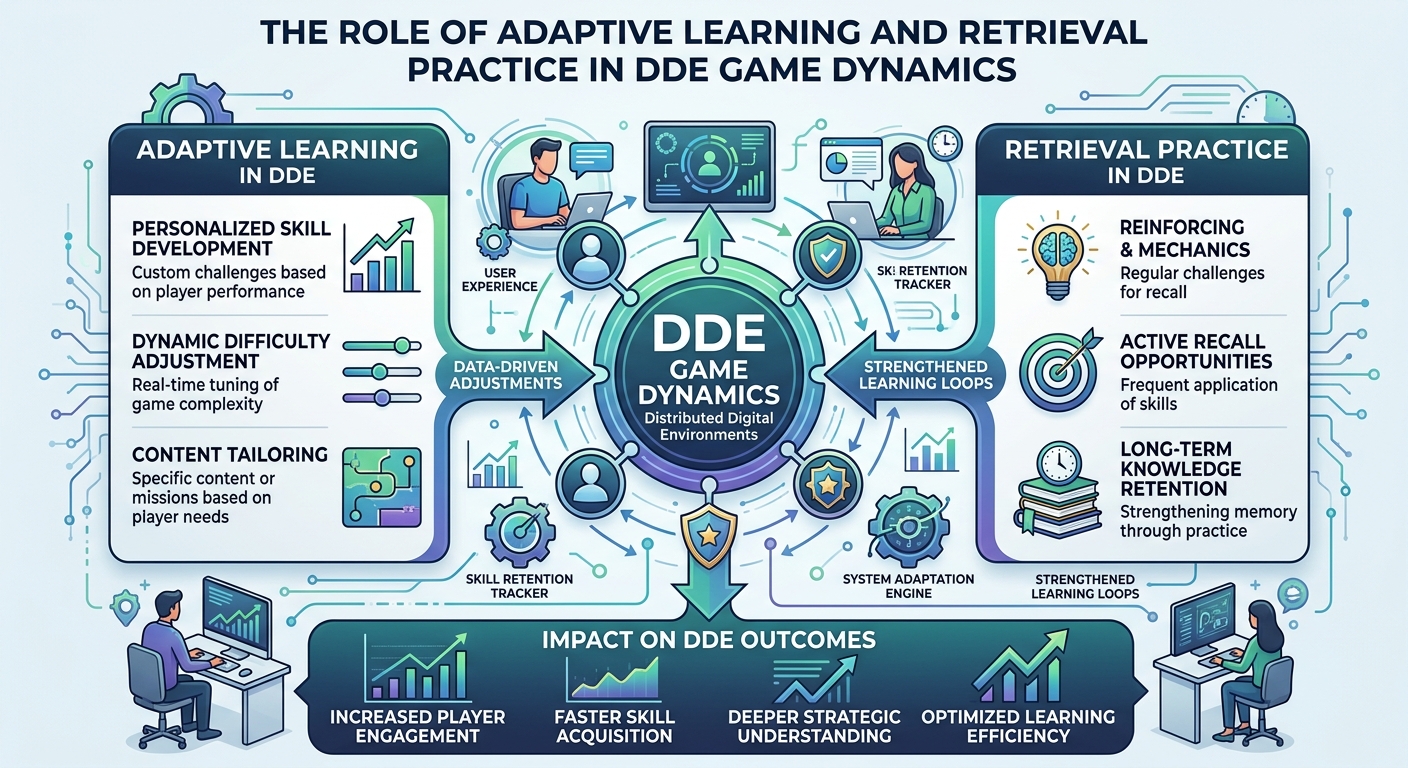
Adaptive Learning is the intelligent engine that personalizes the DDE journey. It's a methodology that continuously assesses a learner's proficiency, learning style, and progress, then dynamically adjusts the content, difficulty, and pace of instruction. In the context of DDE game dynamics, this means:
- Tailored Challenges: Learners receive tasks and scenarios that are precisely matched to their current skill level, preventing boredom from overly easy content and frustration from tasks that are too difficult.
- Efficient Skill-Gap Identification: The system pinpoints specific areas where a learner struggles, then provides targeted interventions or additional practice, ensuring no knowledge gaps are left unaddressed.
- Optimized Learning Paths: Instead of a one-size-fits-all approach, adaptive learning systems create unique pathways for each individual, maximizing the efficiency of their learning time.
- Enhanced Engagement: By keeping learners in their "zone of proximal development," adaptive learning sustains interest and motivation, a crucial element for the success of any gamified experience.
In industries such as Healthcare, adaptive learning within DDE games can personalize training for new clinical protocols, ensuring that nurses or doctors receive specific practice on areas where they demonstrate less proficiency. For Finance and Banking, it can customize training on complex regulatory compliance updates, focusing on the nuances most relevant to an individual's role and previous performance. This intelligent tailoring transforms generic training into a highly relevant and impactful experience, preventing wasted effort and maximizing resource utilization for a comprehensive learning management system.
Reinforcing Knowledge Through Active Recall: Retrieval Practice in DDE
While adaptive learning personalizes the journey, Retrieval Practice is the powerful mechanism that cements knowledge into long-term memory. Based on robust cognitive science, retrieval practice involves actively recalling information from memory rather than passively re-reading or re-watching it. In DDE game dynamics, this takes many forms:
- Spaced Quizzes and Challenges: Learners are regularly prompted to recall information or apply skills through short, interactive quizzes or scenario-based challenges distributed over time.
- Progressive Difficulty: As learners successfully retrieve information, the system can introduce more complex scenarios or integrate previously learned concepts, building on foundational knowledge.
- Immediate Feedback: Providing instant feedback on retrieval attempts helps learners correct misconceptions immediately, reinforcing correct understanding.
- "Flashcard" Mechanics: Digital flashcards or mini-games requiring recall are seamlessly integrated into the game flow, making retrieval practice an inherent part of play.
The act of retrieving information strengthens the neural pathways associated with that knowledge, making it easier to recall in the future. This is particularly vital in industries like Compliance and Risk-focused Training, where accurate and immediate recall of policies and procedures can prevent significant operational blunders. For Sales teams, regular retrieval practice on product features, objection handling, and customer profiles, perhaps through a AI Powered Authoring Tool, ensures they are always sharp and ready to engage prospects effectively.
The Synergistic Impact: Adaptive Learning and Retrieval Practice Combined
The true magic happens when adaptive learning and retrieval practice are seamlessly integrated within DDE game dynamics. They don't just coexist; they amplify each other:
- Adaptive learning identifies what a learner needs to practice, while retrieval practice provides the most effective method for doing so.
- The adaptive system can intelligently schedule retrieval practice sessions based on a learner's performance and the forgetting curve, ensuring optimal timing for recall.
- If a learner struggles with retrieval in a particular area, the adaptive system can provide remedial content or alternative explanations before re-testing.
- This creates a self-optimizing learning loop: assess, adapt, practice, recall, reinforce, and reassess.
The result is a learning experience that is not only highly engaging due to the gamified nature of the DDE, but also deeply effective in fostering long-term knowledge retention and skill mastery. For L&D leaders, this translates into tangible benefits: higher completion rates, demonstrable skill acquisition, improved on-the-job performance, and a clear return on investment from their learning programs, especially when deployed through a sophisticated Gamified LMS.
Practical Applications Across Industries
Compliance and Risk Management
In highly regulated environments, ensuring employees understand and adhere to complex policies is paramount. DDE games incorporating adaptive learning and retrieval practice can simulate real-world compliance scenarios, such as data privacy regulations or anti-money laundering protocols. The system adapts challenges based on individual performance, and regular retrieval practice ensures critical policies are not just understood, but remembered and applied correctly, mitigating organizational risk through Risk-focused Training.
Sales and Product Knowledge
Sales professionals need to be masters of product knowledge and objection handling. DDE games can simulate customer interactions, with adaptive learning tailoring scenarios to address specific knowledge gaps. Retrieval practice, perhaps through a AI Powered Authoring Tool, reinforces key selling points and competitive advantages, empowering sales teams to close deals more effectively.
Banking, Finance, and Insurance
From new product launches to evolving market regulations, professionals in these sectors require continuous, updated knowledge. Adaptive DDE ensures that training is hyper-relevant, addressing individual needs, while regular retrieval practice solidifies understanding of intricate financial instruments or complex insurance policies.
Healthcare and Pharma
Clinical accuracy, drug safety, and patient care protocols are non-negotiable. DDE games can simulate patient interactions or drug administration scenarios. Adaptive learning provides personalized feedback and remedial paths, and retrieval practice ensures critical procedures and drug information are immediately accessible to healthcare professionals.
Retail, Hospitality, Oil & Gas, Mining
Whether it's customer service excellence in retail, operational efficiency in hospitality, or stringent safety protocols in heavy industries, DDE, with its adaptive and retrieval-focused mechanics, ensures that practical skills are honed, and crucial information is retained for optimal on-the-job performance.
Maximizing Performance with Intelligent Learning Technologies
Implementing these advanced learning strategies requires robust technological infrastructure, often in the form of a modern learning management system. These platforms are designed to handle the complexity of personalized paths and spaced repetition, transforming how organizations approach talent development.
How do cutting-edge analytical tools enhance individual learning journeys within an enterprise learning management system? By continuously analyzing learner performance data, these systems dynamically adjust content, difficulty, and pacing. This ensures each individual receives the right challenge at the right time, optimizing engagement and knowledge acquisition.
Can advanced learning solutions effectively deliver specialized training to a geographically dispersed workforce? Absolutely. Modern cloud based learning management system platforms are designed for global scalability. They provide consistent, high-quality content delivery and tracking across diverse locations, ensuring all employees receive essential training, regardless of their physical presence.
What measurable impact do data-driven learning platforms have on organizational outcomes and individual skill development? These platforms provide granular insights into skill gaps, proficiency levels, and training effectiveness. By identifying areas for improvement and measuring progress, organizations can strategically deploy resources, accelerate talent development, and directly link learning initiatives to key business objectives, improving overall performance and reducing operational risks. This is precisely what a modern Microlearning LMS aims to achieve.
The Future of Enterprise Learning is Dynamic
For L&D leaders navigating the complexities of continuous upskilling and reskilling, the integration of adaptive learning and retrieval practice into DDE game dynamics represents a powerful leap forward. It moves beyond passive consumption to create a truly engaging, personalized, and effective learning experience that directly contributes to organizational success. By embracing these methodologies within a sophisticated LMS or learning content management system like MaxLearn LMS, businesses can unlock the full potential of their human capital, foster a culture of continuous improvement, and stay ahead in an ever-evolving market. The future of enterprise learning management lies in intelligent, dynamic, and learner-centric solutions, proving the true value of a robust learning management software and learning management solutions for a modern enterprise learning management strategy.


Comments
Post a Comment