The Mechanics and Dynamics of Successful Microlearning Gamification
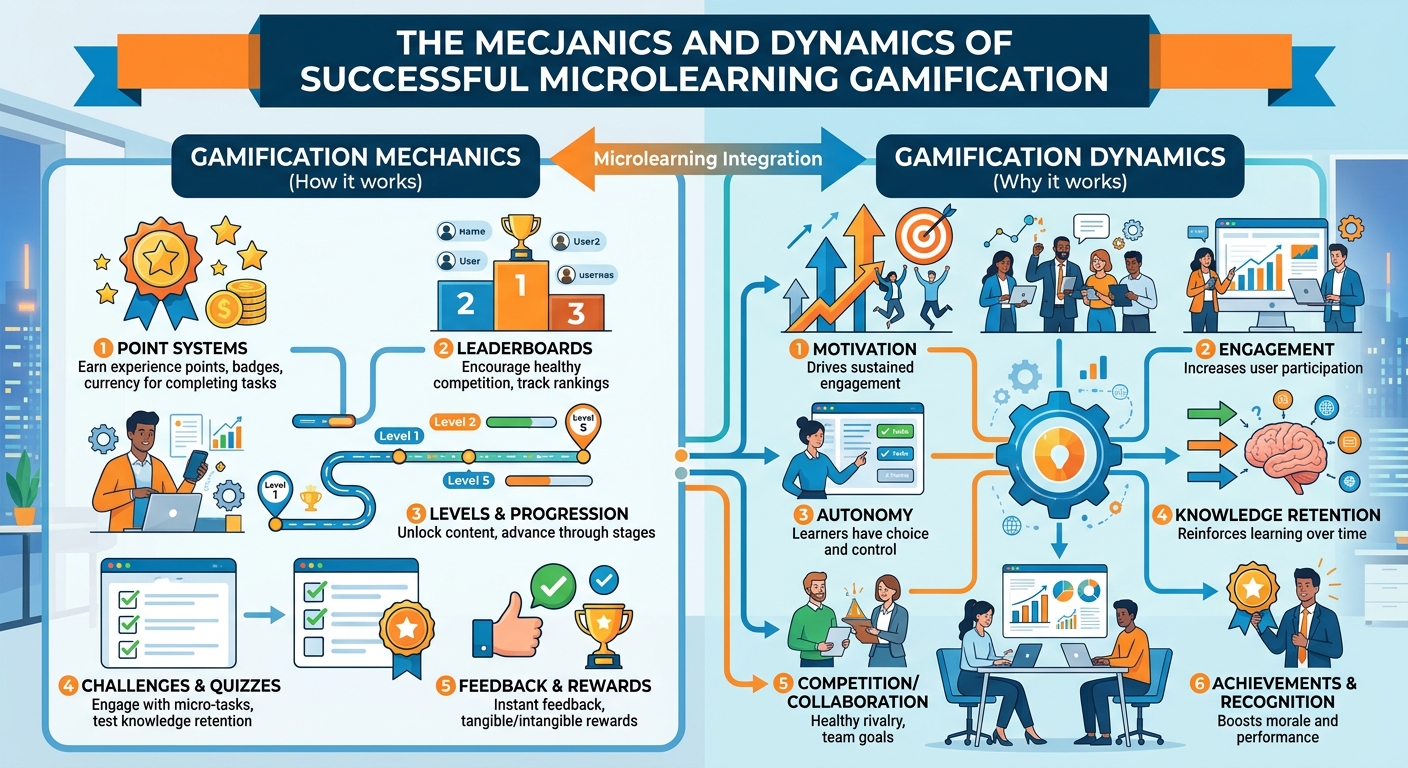
The Mechanics and Dynamics of Successful Microlearning Gamification
In today’s fast-paced corporate environment, the demands on learning and development (L&D) leaders are immense. Keeping employees engaged, compliant, and skilled requires innovative strategies that go beyond traditional training methods. Enter microlearning gamification – a powerful fusion designed to capture attention, boost retention, and drive measurable performance improvements across diverse industries, from compliance and sales to healthcare and finance.
For Vice Presidents, Directors, and Senior Managers in L&D, understanding the intricate mechanics and dynamic interplay of this approach is not just beneficial, but essential. It’s about leveraging psychology and technology to transform mundane training into compelling, memorable experiences that deliver tangible business growth.
The Power Duo: Microlearning and Gamification
Individually, microlearning and gamification have proven their worth. Microlearning, characterized by short, focused learning bursts (typically 3-10 minutes), aligns perfectly with the modern professional's limited time and shrinking attention span. It's digestible, accessible, and highly effective for just-in-time learning. A robust Microlearning LMS is key to delivering this efficiently.
Gamification, on the other hand, applies game-design elements and game principles in non-game contexts. It taps into our innate desire for achievement, competition, and reward, making learning inherently more motivating. When combined, these two strategies create a synergy that elevates engagement and drastically improves learning outcomes.
Deconstructing the Mechanics: Building Blocks of Engagement
Successful microlearning gamification isn't just about adding points; it's a carefully engineered system. Here are the core mechanics:
Clear Objectives and Micro-Goals
Every gamified micro-module must have a distinct, achievable learning objective. These micro-goals, such as "mastering a specific compliance regulation" or "identifying a key product feature," build towards larger learning outcomes. The clarity helps learners understand what they need to achieve and how it contributes to their overall progression.
Points, Badges, and Leaderboards (PBLs)
These are the foundational elements of many gamified experiences. Points provide immediate feedback on performance. Badges serve as visual recognition of achievements, skills gained, or milestones reached. Leaderboards foster healthy competition and highlight top performers, encouraging others to strive for excellence. A Gamified LMS will seamlessly integrate these features.
Challenges, Quests, and Missions
Microlearning units can be framed as small challenges or quests. For example, a sales team might complete a "customer objection handling mission," or a banking employee might undertake a "fraud detection challenge." These scenarios make learning practical and application-oriented, especially effective when delivered via a comprehensive LMS.
Immediate and Constructive Feedback
One of the most powerful aspects of gamification is instantaneous feedback. Learners know immediately if they've answered correctly, performed well, or need to revisit content. This iterative learning loop, critical in a learning management system, supports mastery and builds confidence.
Narrative and Storytelling
Contextualizing microlearning within a compelling narrative or storyline significantly boosts engagement. For instance, compliance training could be framed as a detective story, or healthcare modules as a patient journey. This makes the content more relatable and memorable. An advanced Learning content management system can help structure these narratives.
Progression and Levels
Breaking down complex topics into progressive levels provides a clear path for learners. Each completed level unlocks new challenges, building a sense of accomplishment and motivating continued learning. This structure is often a core feature of an enterprise learning management solution.
Social Interaction and Collaboration
Allowing learners to collaborate on challenges, share achievements, or compete in teams adds a vital social dimension. This fosters peer learning, knowledge sharing, and a sense of community, enhancing the overall learning experience within a learning management software platform.
The Dynamics of Successful Implementation: Making it Work
Beyond the mechanics, the success of microlearning gamification hinges on several dynamic factors:
Learner-Centric Design
Understanding your audience is paramount. For industries like pharma or oil and gas, where stakes are high, the gamified elements must be relevant and impactful, not just superficial. The design should cater to the specific needs, motivations, and pain points of your employees.
Seamless Platform Integration
A sophisticated lms learning management system is the backbone. It must effectively deliver micro-content, track progress, manage leaderboards, and issue rewards. Solutions like MaxLearn LMS provide the necessary infrastructure for a truly integrated and seamless learning journey. A powerful LCMS ensures that content is easily managed and updated.
Data-Driven Iteration and Optimization
One of the greatest advantages of a modern cloud based learning management system is its ability to collect vast amounts of data. L&D leaders must analyze engagement rates, completion times, and performance metrics to continuously refine and optimize the gamified experience. This iterative process ensures the learning remains effective and engaging.
Alignment with Business Objectives
For any L&D initiative, clear alignment with strategic business goals is critical. Whether it's improving sales performance, enhancing compliance adherence, or mitigating operational risks, microlearning gamification should directly contribute to these objectives. For example, implementing Risk-focused Training through gamified modules can significantly reduce incidents and improve safety in sectors like mining and hospitality.
The Intelligent Edge: AI in Microlearning Gamification
The future of microlearning gamification is inextricably linked with advanced technologies. Consider these transformative questions:
- How can advanced algorithms personalize learning paths within gamified modules, ensuring each employee receives content tailored to their specific skill gaps and learning style? This intelligent optimization makes learning highly relevant.
- What role does intelligent automation play in content creation for these experiences, helping L&D teams rapidly develop engaging, scenario-based micro-modules? An AI Powered Authoring Tool can dramatically accelerate the creation process.
- How can context-aware technologies enhance practical, on-the-job training modules, perhaps delivering relevant micro-challenges based on an employee's current location or task in industries like retail or healthcare?
Such capabilities, including Adaptive Learning, promise a new era of highly responsive and impactful training, making the overall learning management solutions even more dynamic.
Best Practices for L&D Leaders
- Start Small, Scale Smart: Pilot gamified microlearning in specific areas, gather feedback, and iterate before a full-scale rollout.
- Keep it Relevant: Ensure game mechanics serve the learning objective, not distract from it. Avoid gamification for gamification's sake.
- Meaningful Rewards: Rewards don't always have to be tangible. Recognition, skill acquisition, and career progression are powerful motivators.
- Continuous Engagement: Gamification isn't a one-time setup. Regularly introduce new challenges, update content, and refresh narratives to maintain interest.
- Accessibility and Inclusivity: Design games that are accessible to all employees, regardless of technical proficiency or disability.
Conclusion
The mechanics and dynamics of successful microlearning gamification offer L&D leaders a robust framework for building highly effective, engaging, and business-aligned training programs. By strategically combining bite-sized content with compelling game elements and leveraging advanced technology within a robust learning management system, organizations can foster a culture of continuous learning that drives performance, boosts employee satisfaction, and achieves critical business outcomes across every industry.
Embrace this powerful methodology to transform your L&D strategy and empower your workforce for future success.


Comments
Post a Comment