Retail and Hospitality Onboarding: Engaging Interpersonal and Musical-Rhythmic Learners
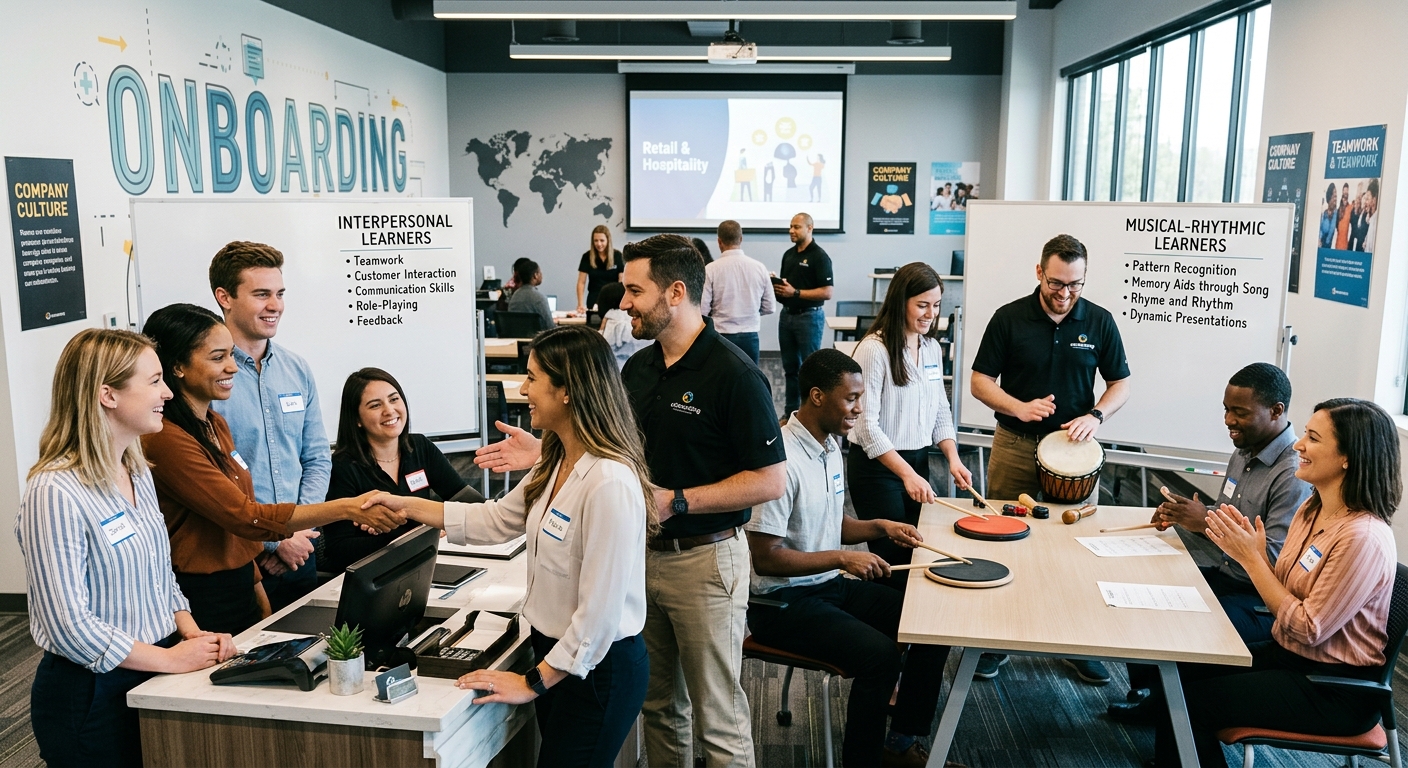
Retail and Hospitality Onboarding: Engaging Interpersonal and Musical-Rhythmic Learners
In the dynamic worlds of retail and hospitality, where employee turnover can be notoriously high and customer experience is paramount, effective onboarding is not just a formality—it's a strategic imperative. The initial days and weeks shape a new hire's perception of their role, their team, and the organization's culture. For Learning & Development (L&D) leaders, the challenge lies in crafting an onboarding experience that resonates with a diverse workforce, ensuring every learner feels seen, supported, and ready to excel. This article delves into how to specifically engage interpersonal and musical-rhythmic learners, unlocking their potential through tailored, modern onboarding strategies.
Understanding the Unique Needs of Social and Auditory Processors
Every individual brings a unique learning style to the table, and recognizing these differences is the first step toward inclusive and effective training. Among the most impactful for customer-facing and team-oriented industries like retail and hospitality are interpersonal and musical-rhythmic learners.
The Collaborative Power of Interpersonal Learners
Interpersonal learners, often referred to as "social learners," thrive on interaction, collaboration, and communication. They learn best through group activities, discussions, peer feedback, and mentorship. For these individuals, the presence of others is not a distraction but a catalyst for understanding and retention. In retail and hospitality, where teamwork, customer interaction, and service delivery are inherently social, leveraging this learning style can significantly enhance training effectiveness. They excel in environments that encourage empathy, negotiation, and building relationships, making them invaluable assets when properly integrated.
The Rhythmic Resonance of Musical-Rhythmic Learners
Musical-rhythmic learners process information through patterns, sounds, rhythm, and melody. They often remember concepts more easily when they are set to a tune, accompanied by a beat, or presented in a highly structured, sequential manner that has a natural flow. While seemingly niche, this learning style can be powerfully engaged, particularly for memorizing procedures, compliance requirements, or product features. Think jingles, mnemonic devices, or even the cadence of a well-told story. For service industries, where specific scripts, sequences of service, or operational routines are critical, appealing to this style can lead to remarkable retention rates and operational consistency.
Why a Tailored Approach to Onboarding is Crucial for Employee Retention and Performance
In today's competitive talent landscape, a one-size-fits-all onboarding approach simply doesn't cut it. Organizations that prioritize personalized learning experiences see tangible benefits: reduced turnover, faster time-to-proficiency, higher employee engagement, and ultimately, improved customer satisfaction. By consciously designing onboarding to engage interpersonal and musical-rhythmic learners, L&D teams can create a more inclusive, effective, and memorable journey for new hires. This translates directly into a more confident, competent, and committed workforce, ready to contribute positively from day one.
Strategic Onboarding: Engaging Social and Pattern-Oriented Learners
Developing an onboarding program that caters to these distinct learning styles requires creativity and a strategic blend of methodologies and technologies.
- For Interpersonal Learners:
- Structured Mentorship Programs: Pair new hires with experienced employees who can provide guidance, answer questions, and facilitate a smooth integration into the team culture.
- Collaborative Group Activities: Incorporate team-based problem-solving, role-playing customer scenarios, and group discussions on company policies or service standards. Utilize a Gamified LMS to set up team challenges and leaderboards that foster healthy competition and collaboration.
- Peer-to-Peer Learning Platforms: Create forums or channels where new hires can ask questions, share insights, and support each other's learning journey.
- Interactive Workshops: Focus on communication skills, conflict resolution, and teamwork through hands-on, interactive sessions.
- For Musical-Rhythmic Learners:
- Audio-Visual Content with Rhythmic Cues: Develop training videos or presentations that incorporate background music, sound effects, or clear rhythmic patterns to highlight key information.
- Mnemonic Devices and Jingles: Create catchy songs or rhymes to help new hires memorize complex product specifications, safety procedures, or steps in a service process.
- Storytelling with Flow: Present company history, values, or success stories with a strong narrative arc and rhythmic delivery that captures attention and aids recall.
- Pattern-Based Learning Modules: Design modules where information is presented in predictable, sequential patterns, making it easier for these learners to follow and retain. Consider using an Adaptive Learning platform that can deliver content in structured sequences.
Leveraging Modern Learning Technologies for Enhanced Engagement
Modern eLearning solutions provide the perfect infrastructure to implement these diverse strategies, ensuring scalability, consistency, and measurable impact across all locations and departments. An effective LMS is central to this effort.
Microlearning and Personalization: A Microlearning LMS breaks down complex information into bite-sized, easily digestible modules. This format is ideal for both interpersonal learners (who can discuss specific micro-lessons in groups) and musical-rhythmic learners (who benefit from short, focused content with clear patterns). Adaptive Learning further personalizes the experience, allowing content to be tailored to individual paces and preferred modalities, ensuring that an employee can revisit a topic through a different lens if the initial approach wasn't effective for their learning style.
Gamification for Motivation and Interaction: A Gamified LMS can transform compliance training and procedural instruction into engaging experiences. Leaderboards, badges, points, and team challenges tap directly into the competitive and collaborative spirit of interpersonal learners. For musical-rhythmic learners, the structured progression, clear rules, and rhythmic feedback (e.g., sound effects for correct answers) can be highly motivating. This is particularly valuable for essential yet often dry topics like Risk-focused Training, making it more engaging and memorable.
Intelligent Content Creation: With an AI Powered Authoring Tool, L&D teams can rapidly develop and deploy diverse content types—from interactive simulations and role-playing scenarios for interpersonal learners to audio snippets and animated explainers with synchronized rhythms for musical-rhythmic learners. Such tools can also help in suggesting content adaptations based on learner performance data.
Comprehensive Learning Management: A robust learning management system, whether a cloud based learning management system or an enterprise learning management solution, provides a centralized platform for all onboarding materials. This makes it easy to track progress, assign specific modules, and gather data on learner engagement and performance. For companies managing extensive training, a learning content management system (LCMS) like MaxLearn LMS ensures content is organized, up-to-date, and readily accessible, regardless of the learner's style or location. A comprehensive learning management software provides the necessary tools for L&D professionals to manage and optimize training programs effectively.
Transforming Onboarding: Anticipating and Answering Key Organizational Inquiries
What innovative approaches are transforming retail and hospitality onboarding across diverse geographical locations or multiple retail branches? Modern platforms enable global consistency with local customization. By housing all core content in a central lms learning management system, organizations can deploy standardized training while allowing local managers to add context-specific group activities or cultural nuances. This ensures a unified brand experience while respecting regional differences, making the onboarding scalable and locally relevant.
How do organizations track the success of diverse onboarding strategies to ensure optimal return on investment? The effectiveness of any training program hinges on measurement. Advanced learning management solutions offer detailed analytics on completion rates, time spent on modules, quiz scores, and even sentiment analysis from discussion forums. For interpersonal learners, metrics might include participation in group activities or mentor feedback. For musical-rhythmic learners, retention rates on pattern-based content or performance on procedural tasks can be tracked. Correlating these with early performance reviews, employee satisfaction surveys, and ultimately, retention rates provides a clear picture of success and highlights areas for continuous improvement and optimization.
How can learning technologies ensure compliance and reduce operational risks while keeping new hires engaged? Compliance training, especially in highly regulated sectors, can often be perceived as tedious. However, by integrating Risk-focused Training into gamified or interactive modules, new hires can learn critical regulations in an engaging way. For instance, an interpersonal learner might participate in a scenario-based group discussion about ethical dilemmas, while a musical-rhythmic learner might learn a compliance checklist through a memorable jingle or a visually patterned sequence. This approach not only ensures understanding but also fosters a culture of compliance from the outset, significantly reducing operational risks.
Conclusion
For L&D leaders in retail and hospitality, the quest for an onboarding program that truly engages and retains new talent is ongoing. By consciously designing experiences that cater to interpersonal and musical-rhythmic learners, organizations can move beyond generic training to create a deeply resonant and effective journey. Leveraging the power of a modern LMS, whether it's a dedicated Microlearning LMS, a Gamified LMS, or an enterprise learning management solution, enables the creation of personalized, engaging, and measurable onboarding programs. This not only sets new hires up for success but also builds a more adaptable, satisfied, and high-performing workforce, ready to deliver exceptional customer experiences and drive business growth.


Comments
Post a Comment