Inclusive Learning in the Workplace: Driving Equity and Engagement via Gardner’s Framework
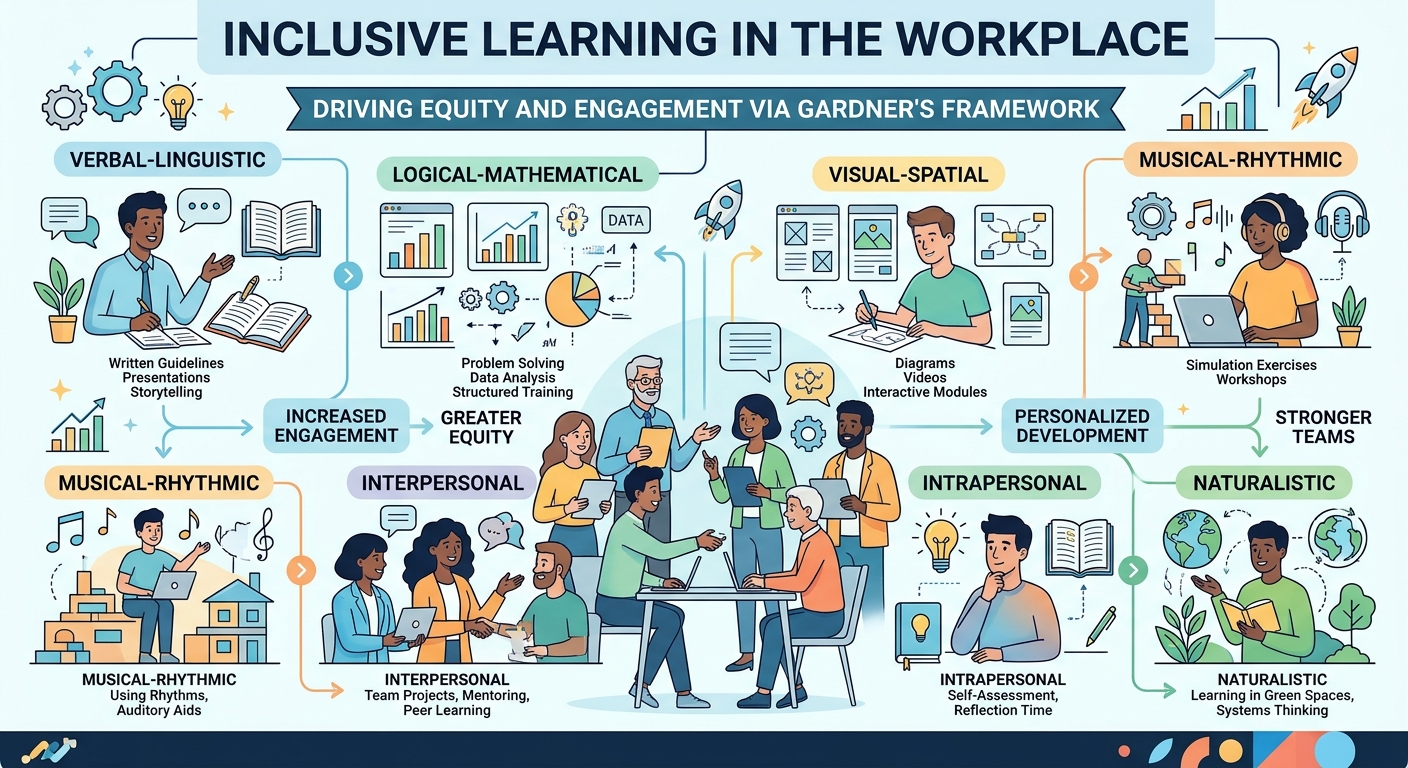
Inclusive Learning in the Workplace: Driving Equity and Engagement via Gardner’s Framework
In today's dynamic global landscape, fostering an inclusive workplace is no longer just a commendable goal; it's a strategic imperative. For Vice Presidents, Directors, and Managers of Learning & Development, the challenge lies in designing training programs that resonate with every employee, irrespective of their background, role, or preferred learning style. This is where the profound insights of Howard Gardner's Theory of Multiple Intelligences offer a powerful framework, enabling organizations across industries—from Banking and Finance to Pharma and Oil & Gas—to cultivate truly equitable and engaging learning environments. By embracing an inclusive approach to learning, businesses can unlock untapped potential, enhance team cohesion, and drive superior performance.
The traditional "one-size-fits-all" approach to corporate training is increasingly obsolete. With diverse workforces comprising individuals from various cultures, generations, and educational backgrounds, a more nuanced strategy is required. This article explores how L&D leaders can leverage Gardner's framework to design inclusive learning experiences, significantly boosting employee engagement and organizational equity, supported by modern learning management solutions and intelligent technologies.
Understanding Gardner's Multiple Intelligences in the Corporate Context
Howard Gardner's theory posits that intelligence is not a singular entity but a composite of distinct intellectual competencies. While initially applied in educational settings, its relevance extends seamlessly to corporate learning and development. By recognizing and catering to these diverse intelligences, L&D professionals can create more effective and impactful training.
Gardner identified eight primary intelligences:
- Linguistic Intelligence: The ability to use language effectively, both orally and in writing. (e.g., strong communicators, storytellers)
- Logical-Mathematical Intelligence: The capacity for logical reasoning, problem-solving, and numerical analysis. (e.g., analysts, engineers, finance professionals)
- Spatial Intelligence: The ability to perceive the visual-spatial world accurately and manipulate mental images. (e.g., designers, architects, those who understand complex diagrams)
- Bodily-Kinesthetic Intelligence: Expertise in using one's body to express ideas and feelings, and adeptness with objects. (e.g., surgeons, athletes, hands-on technicians, retail associates demonstrating products)
- Musical Intelligence: The capacity to discern pitch, rhythm, timbre, and tone. (While less direct in corporate training, it can influence engagement through auditory cues and patterns.)
- Interpersonal Intelligence: The ability to understand and interact effectively with others. (e.g., sales teams, HR professionals, team leaders)
- Intrapersonal Intelligence: The capacity for self-understanding and awareness of one's own feelings, motivations, and goals. (e.g., reflective learners, strategists, those focused on personal development)
- Naturalistic Intelligence: The ability to recognize and categorize patterns in nature. (Less common in typical corporate training but can apply to fields like environmental compliance or supply chain logistics impacting natural resources in industries like Oil & Gas or Agriculture.)
For L&D leaders, the objective isn't to label employees but to diversify learning content and delivery methods to appeal to this broad spectrum of cognitive strengths, ensuring every individual finds a pathway to success.
From Theory to Practice: Implementing Inclusive Learning Strategies
Translating Gardner's framework into actionable corporate training involves rethinking content design, delivery, and assessment. An effective Microlearning LMS can be instrumental in providing the flexibility needed for such an inclusive approach.
Designing for Diverse Intelligences:
- Linguistic Learners: Offer written materials, detailed guides, case studies, narrative-based scenarios for compliance training, and opportunities for discussion and debate.
- Logical-Mathematical Learners: Provide data analysis exercises, problem-solving simulations, flowcharts for process understanding (e.g., in banking or manufacturing), and structured coding challenges.
- Spatial Learners: Utilize infographics, interactive diagrams, video tutorials, 3D simulations (critical for areas like healthcare procedures or oil rig operations), and virtual reality experiences.
- Bodily-Kinesthetic Learners: Incorporate hands-on workshops, role-playing for sales or customer service, simulations, practical labs, and interactive modules that require physical input. A Gamified LMS can provide interactive elements that appeal to this group.
- Interpersonal Learners: Facilitate group projects, peer-to-peer coaching, collaborative problem-solving, and discussion forums within your learning content management system.
- Intrapersonal Learners: Offer self-paced modules, reflective journals, personalized learning paths, and opportunities for independent research and goal setting. Adaptive Learning technologies are particularly powerful here.
- Naturalistic Learners: Where applicable, use examples rooted in natural systems, environmental case studies, or draw analogies from the natural world to explain complex organizational concepts (e.g., ecosystems in business strategy).
The Role of Technology in Fostering Inclusive Learning
Modern eLearning solutions are pivotal in operationalizing Gardner's framework. An enterprise learning management system, especially a cloud based learning management system, acts as the central hub for delivering and tracking diverse learning experiences.
Personalized Learning Paths: A sophisticated Microlearning LMS allows learners to choose content formats that align with their preferred intelligence. Instead of a single video, offer the same content as an infographic, a written article, or an interactive simulation. This empowers employees to take ownership of their learning journey.
Interactive and Engaging Content: A Gamified LMS, for instance, can appeal to bodily-kinesthetic and logical-mathematical learners through challenges, quizzes, and points systems, making dry topics like compliance training more engaging. For industries with high stakes, like Banking, Pharma, or Oil & Gas, where Risk-focused Training is crucial, gamification can simulate real-world scenarios without actual consequences.
Data-Driven Adaptation: This is where the power of advanced algorithms comes into play. How can intelligent systems personalize learning at scale to cater to individual preferences and prior knowledge? By tracking learner progress, engagement with different content types, and assessment results, an Adaptive Learning platform can dynamically adjust the learning path, recommending resources that best suit an individual's style and current skill gaps. This ensures a highly relevant and efficient learning experience for every employee.
Content Creation and Accessibility: An AI Powered Authoring Tool can significantly streamline the creation of varied content formats, from text to interactive simulations, making it easier for L&D teams to cater to all intelligences. Furthermore, what's the role of sophisticated technology in ensuring learning content is accessible and culturally relevant for a diverse global workforce? AI can assist in translation, localization, and even identifying cultural nuances in content, ensuring equity for multinational organizations in industries like Retail or Hospitality.
Addressing Key Challenges with Advanced Solutions
L&D leaders frequently grapple with delivering effective training across vast and varied employee populations. A comprehensive learning management system (LMS) addresses these challenges head-on.
Consider the task of identifying precise training needs. How do advanced algorithms help organizations identify the most relevant content and delivery methods for specific roles and desired skill outcomes? By analyzing performance data, job descriptions, and even external market trends, intelligent algorithms within an LMS learning management system can pinpoint skill gaps and suggest tailored learning modules. This analytical capability is invaluable for targeted sales training, specific compliance mandates in finance, or health and safety protocols in mining.
The right learning management software offers a comprehensive suite of tools. From content delivery to analytics, a robust learning management solution ensures that diverse learning needs are met efficiently. Whether it's an Microlearning LMS for quick, digestible modules or a full-fledged enterprise learning management platform like MaxLearn LMS for extensive development programs, the goal remains the same: empower every learner.
Driving Equity and Engagement: The Tangible Benefits
Adopting Gardner's framework through inclusive learning powered by a modern LMS yields significant benefits for organizations:
- Increased Engagement: When learning content resonates with an individual's natural strengths, they are more likely to be engaged, motivated, and committed to their development. This translates to higher completion rates and better knowledge retention.
- Enhanced Equity: By providing multiple pathways to learning, organizations ensure that all employees have an equal opportunity to develop new skills and advance their careers, irrespective of their cognitive predispositions. This is crucial for fostering a truly equitable workplace.
- Improved Performance: Engaged and well-trained employees are more productive, innovative, and resilient. This directly impacts business outcomes, from increased sales in retail to improved safety records in heavy industry.
- Stronger Culture: An inclusive learning culture signals to employees that their individual contributions and unique abilities are valued, fostering a sense of belonging and psychological safety.
- Future-Proofing the Workforce: By continually developing diverse skills through tailored learning, organizations build a more adaptable and agile workforce ready to meet future challenges.
Conclusion
For L&D leaders striving to build a high-performing, equitable, and engaged workforce, integrating Howard Gardner’s Theory of Multiple Intelligences into learning strategy is a game-changer. Leveraging advanced learning management solutions like the MaxLearn LMS, with capabilities ranging from Microlearning LMS to Gamified LMS and Adaptive Learning, empowers organizations across all segments—from Healthcare to Hospitality—to deliver truly personalized and impactful learning experiences. By recognizing and celebrating the diverse ways people learn, we don't just train employees; we empower them to thrive, driving both individual growth and collective organizational success.
Embrace inclusive learning, and watch your workforce transform into a powerhouse of talent, innovation, and unwavering engagement.


Comments
Post a Comment