From Theory to Practice: Operationalizing DDE in Enterprise Microlearning LMS
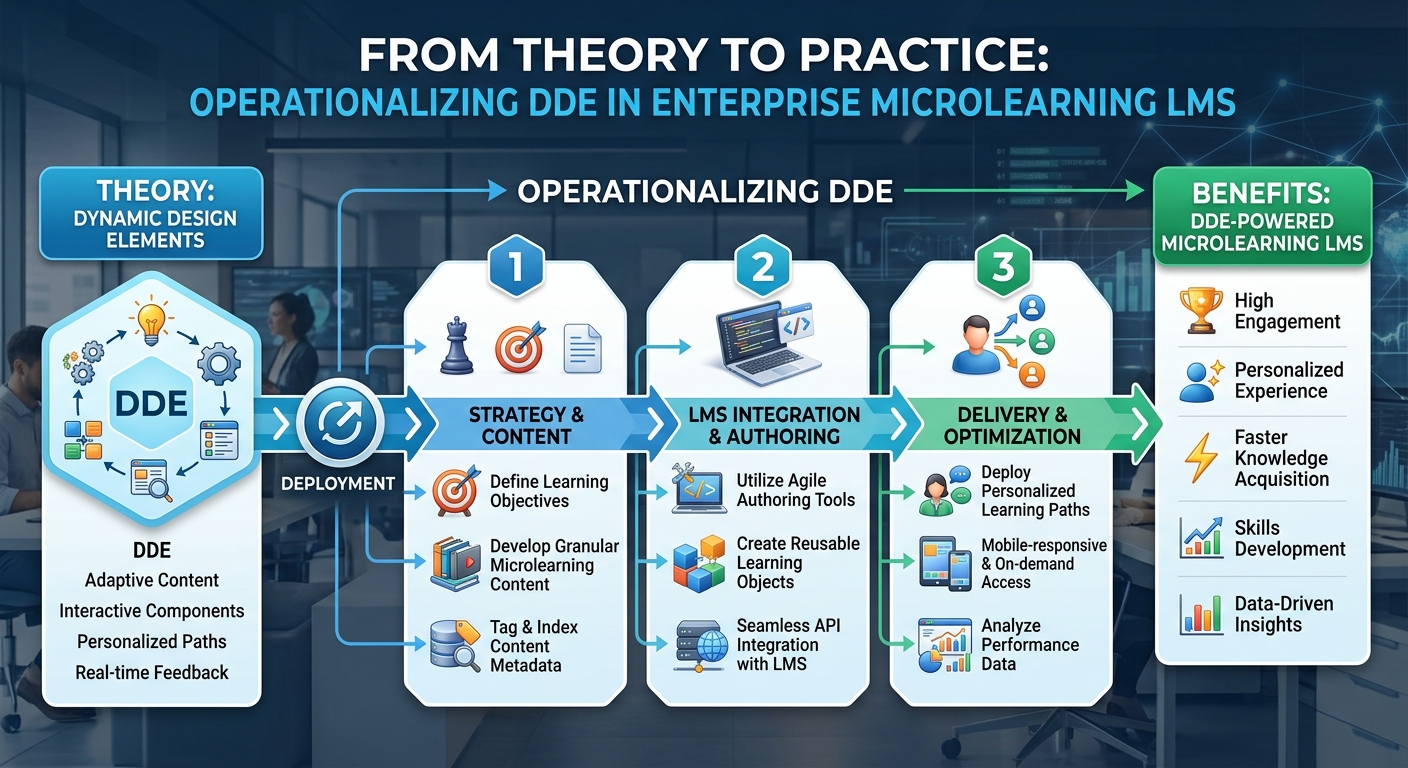
From Theory to Practice: Operationalizing DDE in Enterprise Microlearning LMS
In today's fast-paced corporate landscape, traditional learning and development models often struggle to keep pace with the dynamic needs of the modern workforce. Vice Presidents, Directors, and Senior Managers in L&D are constantly seeking innovative approaches to empower their teams, ensure compliance, boost sales performance, and foster continuous growth across diverse industries such as Banking, Finance, Insurance, Retail, Pharma, Healthcare, Hospitality, Oil and Gas, and Mining.
Enter DDE: Dynamic, Diverse, Evolving. This powerful framework encapsulates the essential characteristics of effective enterprise learning in the 21st century. It's no longer enough to offer static, one-size-fits-all training. Instead, organizations need a learning ecosystem that is agile, adaptable, and responsive to individual and organizational needs. The key to operationalizing DDE lies in leveraging the right technology, specifically a robust Microlearning LMS.
Understanding DDE: The New Paradigm for Enterprise Learning
The DDE framework provides a strategic lens through which L&D leaders can re-evaluate and transform their learning initiatives:
- Dynamic: Learning content and pathways must respond in real-time to business changes, individual performance, and evolving skill requirements. This means moving beyond rigid course structures to adaptable, data-driven learning experiences.
- Diverse: Learners come from varied backgrounds, roles, learning styles, and geographical locations. An effective learning management system must cater to this rich tapestry of needs with a wide array of content formats, delivery methods, and accessibility features.
- Evolving: Knowledge and skills are not static. The learning environment itself must continuously adapt, incorporate new insights, and foster a culture of perpetual growth. This requires tools that simplify content updates, feedback integration, and the proactive identification of future skill gaps.
For industries grappling with stringent regulations, like Compliance, Pharma, and Banking, or those driven by rapid innovation and customer experience, such as Sales and Retail, the ability to deliver relevant, timely, and engaging training is paramount. A comprehensive lms learning management system becomes the backbone for this transformation.
The Power of Microlearning in a DDE World
Microlearning is not just a trend; it's a strategic imperative for operationalizing DDE. Its inherent characteristics perfectly align with the framework:
- Bite-sized Content: Microlearning delivers information in short, digestible modules, making it ideal for busy professionals who need just-in-time knowledge.
- Flexibility and Accessibility: Learners can access content anytime, anywhere, on any device, catering to diverse work schedules and locations.
- Higher Engagement: Short, focused modules prevent cognitive overload and maintain learner attention, especially when combined with engaging elements like those found in a Gamified LMS.
- Rapid Updates: The modular nature of microlearning makes it incredibly easy to update specific pieces of content without overhauling an entire course, crucial for dynamic industries where information changes quickly.
An enterprise learning management system built on microlearning principles ensures that employees in sectors like Healthcare can quickly learn about new protocols, or those in Oil and Gas can get instant refreshers on safety procedures.
Bridging Theory to Practice: Operationalizing DDE with an Enterprise Learning Platform
Translating the DDE theory into actionable learning strategies requires a sophisticated learning management software capable of handling the complexities of large organizations.
Dynamic Content Delivery and Adaptation
To achieve dynamism, your learning content management system must offer personalized pathways. This goes beyond simple role-based assignments. It involves:
- Personalized Learning Paths: Utilizing learner data, performance metrics, and pre-assessments to recommend specific microlearning modules that address individual skill gaps or career aspirations. This is the essence of Adaptive Learning.
- Real-time Updates: For compliance-heavy industries, the ability to instantly update regulatory training and push these changes to relevant learners is non-negotiable. A modern LMS facilitates this without disrupting the learning flow.
- Contextual Learning: Delivering microlearning snippets at the point of need, whether through integrations with operational tools or performance support systems, makes learning highly dynamic and immediately applicable.
Embracing Diverse Learning Modalities and Needs
Diversity in DDE means recognizing that a sales professional's learning needs differ from a financial analyst's, or that a field worker in Mining requires different access options than an office-based employee in Insurance. A versatile cloud based learning management system should provide:
- Multi-format Content: Support for videos, podcasts, interactive simulations, infographics, quizzes, and short articles ensures that every learner can engage with content in their preferred style.
- Accessibility Features: Ensuring content is accessible to all, including those with disabilities, is a core component of diverse learning.
- Multilingual Support: For global enterprises, content availability in multiple languages is crucial for inclusivity and comprehension.
- Engagement Mechanisms: Integrating game-like elements through a Gamified LMS dramatically increases learner motivation and completion rates across all demographics.
Fostering Evolving Skills and Knowledge Bases
An evolving learning strategy ensures that employees are always future-ready. This requires an LCMS that supports:
- Continuous Skill Development: Moving away from one-off courses to continuous learning journeys aligned with career pathways and organizational competencies.
- Automated Content Refresh: Leveraging tools like an AI Powered Authoring Tool to quickly generate or update microlearning modules, ensuring content remains current and relevant.
- Feedback Loops and Iteration: A robust learning management system facilitates collecting learner feedback, analyzing content effectiveness, and iterating on modules to continuously improve.
- Risk-focused Training: Proactively identifying and addressing emerging risks through targeted microlearning, particularly critical in heavily regulated sectors like Banking, Finance, and Pharma.
Key Strategies for Successful DDE Implementation
- Data-Driven Insights: Utilize the analytics capabilities of your chosen MaxLearn LMS to track engagement, identify knowledge gaps, and measure the impact of microlearning on business outcomes.
- Cross-Functional Collaboration: Work closely with IT, subject matter experts, and business unit leaders to ensure learning content is accurate, relevant, and integrated into workflow.
- Iterative Approach: Start with pilot programs, gather feedback, and continuously refine your DDE strategy. Learning is an ongoing process, and so should be its implementation.
- Invest in the Right Platform: A sophisticated enterprise learning management solution is critical. Look for features that support personalization, diverse content types, easy updates, and robust analytics.
AI-Driven Insights for Optimal Learning Experience
Technology continues to advance, offering new ways to enhance how we learn and train. Leveraging intelligent systems can significantly bolster the DDE framework.
Q1: How can technology assist in tailoring learning experiences for diverse global teams, considering regional nuances and accessibility across various operational locations?
A1: Advanced platforms utilize intelligent algorithms to localize content, provide real-time translation, and adapt user interfaces based on geographical location and cultural preferences. They ensure content is delivered in formats compatible with varying network conditions and device capabilities, making learning equitable and accessible to every team member, no matter where they are situated.
Q2: What cutting-edge tools are available to help content creators keep training materials consistently relevant, impactful, and up-to-date in rapidly changing enterprise environments?
A2: Modern learning content creation tools, often enhanced with machine intelligence, can automate the process of generating new microlearning modules, suggest content updates based on industry trends or regulatory changes, and even analyze existing content for clarity and effectiveness. These systems empower L&D teams to maintain a highly pertinent and engaging library of learning resources with remarkable efficiency.
Q3: Where can organizations find advanced solutions to analyze complex learning patterns, anticipate future skill requirements, and continuously enhance the overall learning ecosystem for maximum business impact?
A3: Leading learning management solutions now incorporate sophisticated analytics and predictive modeling capabilities. These features analyze vast amounts of learner data to identify emerging skill gaps, recommend personalized learning pathways, and even forecast future training needs. Such platforms provide L&D leaders with actionable insights to strategically guide their learning investments and ensure their workforce remains highly skilled and adaptable.
Conclusion
Operationalizing DDE through an enterprise learning management system is no longer a luxury but a strategic imperative for L&D leaders. By embracing dynamic content, diverse modalities, and an evolving learning ecosystem, organizations can future-proof their workforce, ensure compliance, drive performance, and achieve sustainable growth. The synergy between DDE principles and a powerful Microlearning LMS creates an unparalleled opportunity to transform enterprise learning from theory into tangible, impactful practice. Invest in a future where learning is as agile and ambitious as your business.


Comments
Post a Comment