What Is the Difference Between the MDA and DDE Frameworks?
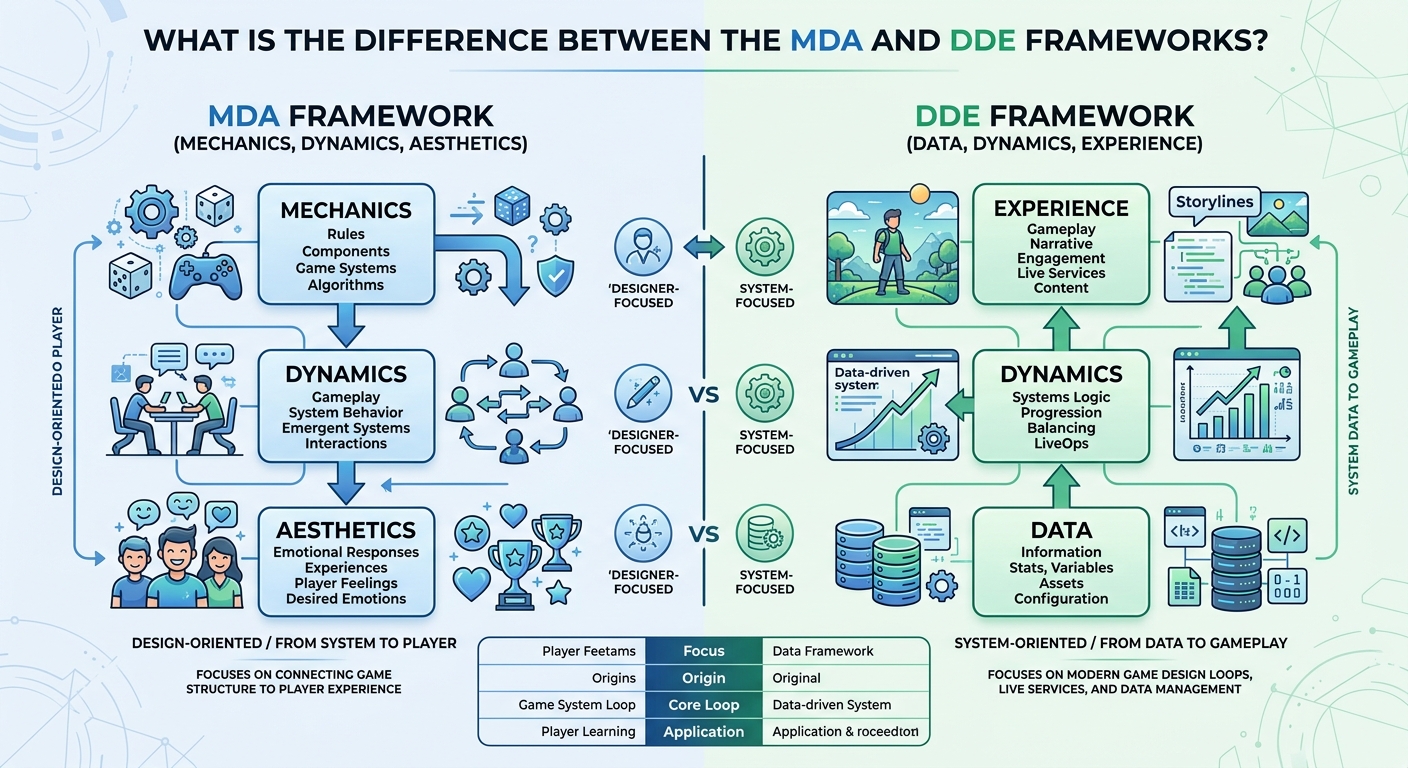
Navigating eLearning Frameworks: Understanding the Difference Between MDA and DDE
In the dynamic world of learning and development (L&D), selecting the right architectural framework for your eLearning initiatives is paramount. For Vice Presidents, Directors, and Senior Managers of L&D, understanding the underlying philosophies that drive content creation and deployment can be the difference between a successful, scalable training program and one riddled with inefficiencies. Today, we delve into two prominent frameworks often discussed in software development but increasingly relevant to sophisticated eLearning ecosystems: Model-Driven Architecture (MDA) and Domain-Driven Design (DDE).
While both aim to streamline development and enhance system quality, they approach these goals from distinct angles. Grasping these differences is crucial for making informed strategic decisions that impact everything from compliance training in banking to sales enablement in retail, or critical skill development in healthcare and oil & gas.
Model-Driven Architecture (MDA): The Blueprint for Platform Agnostic Learning
Model-Driven Architecture (MDA) is an approach that emphasizes the use of models to specify and design systems. At its core, MDA is about separating the business logic and functionality (the "what") from the technical implementation details (the "how"). It proposes the use of highly abstract models, independent of any specific technology platform, to describe the system's core features.
What is MDA?
In an MDA framework, development begins with a Platform-Independent Model (PIM), which captures the system's essential business rules and behavior without reference to specific execution environments. This PIM is then automatically or semi-automatically transformed into one or more Platform-Specific Models (PSMs), which are tailored for particular technologies – be it a web application, a mobile app, or a desktop client. Finally, code is generated from these PSMs.
MDA's Relevance to eLearning:
- Cross-Platform Deployment: Imagine developing a core compliance module that needs to be accessible on a desktop Microlearning LMS, a tablet, and a smartphone, all while maintaining consistent content and tracking. MDA allows L&D teams to define the learning objectives, content structure, and assessment logic once at a high level.
- Enhanced Reusability: Core learning components (e.g., specific risk assessment scenarios, product feature explanations, safety protocols) can be modeled independently and then reused across various courses and platforms, reducing redundant effort. This is particularly valuable in industries like finance or pharma where regulatory content is frequent and pervasive.
- Future-Proofing: As technology platforms evolve, the underlying PIM remains stable. New PSMs can be generated for emerging platforms with minimal disruption to the core learning content.
- Automation in Content Generation: With the right tooling, MDA can facilitate the automatic generation of various versions of learning content (e.g., different languages, accessibility formats) from a single source model, boosting efficiency for global enterprises.
Domain-Driven Design (DDE): Building Learning Around Core Business Realities
Domain-Driven Design (DDE), championed by Eric Evans, is a software development approach that places the primary focus on the business domain itself. It advocates for a deep understanding of the problem space, fostering close collaboration between domain experts and technical teams. DDE is less about technological abstraction and more about modeling complex business logic and rules as accurately as possible within the software.
What is DDE?
The core tenets of DDE involve creating a "ubiquitous language" – a shared vocabulary between technical and domain experts – to eliminate ambiguity. It emphasizes breaking down complex systems into "bounded contexts," which are explicit boundaries within which a particular model is defined and applicable. Within these contexts, entities, value objects, aggregates, and services are defined to reflect the real-world business concepts.
DDE's Relevance to eLearning:
- Deep Business Alignment: For highly specialized training, such as underwriting policies in insurance, specific drilling procedures in mining, or clinical trial protocols in healthcare, DDE ensures the eLearning content precisely mirrors the operational realities and terminology.
- Clarity in Complex Domains: By establishing a ubiquitous language, L&D professionals, subject matter experts (SMEs), and instructional designers can collaboratively define learning objectives and content that is free from misinterpretation. For example, a "customer account" means the exact same thing to the banking SME and the learning content developer.
- Targeted Learning Experiences: DDE helps in designing Gamified LMS modules or simulations that are deeply embedded in the learner's operational context, making the training immediately applicable and impactful.
- Risk Mitigation: In sectors like compliance or pharma, where specific processes and regulations are critical, DDE ensures that the training framework directly addresses these core business risks, promoting accurate and contextually relevant learning.
Key Differences: MDA vs. DDE in the L&D Landscape
While both frameworks aim for robust and maintainable systems, their fundamental philosophies lead to distinct applications in eLearning:
- Primary Focus: MDA focuses on separating concerns between platform and business logic for reusability and multi-platform deployment. DDE focuses on deeply understanding and modeling the core business domain.
- Level of Abstraction: MDA starts with high-level, platform-independent models and then specializes them. DDE starts with the concrete business domain and builds models that accurately represent its complexities.
- Driving Force: MDA is often driven by the need for technical flexibility and automated code generation. DDE is driven by the need for precision in representing complex business rules and processes.
- Use Case in L&D: MDA excels when the same core learning content needs to be deployed across a multitude of devices and technologies (e.g., basic product knowledge accessible everywhere). DDE is superior when the accuracy and contextual relevance of the learning content to a specific business process or industry regulation are paramount (e.g., complex financial instrument training).
Which Framework for Your L&D Strategy?
The choice between MDA and DDE, or more often, a hybrid approach, depends on your organization's specific needs and the nature of your eLearning portfolio.
- Choose MDA When:
- You need to deliver a wide range of content across numerous devices and operating systems.
- Reusability of core learning components across different courses and platforms is a high priority.
- You anticipate frequent technology platform changes but want your learning content to remain resilient.
- Your eLearning development process could benefit from significant automation in content generation and deployment.
- Choose DDE When:
- Your training involves highly complex, business-specific domains where accuracy and nuance are critical (e.g., advanced engineering, legal compliance, specialized medical procedures).
- There's a significant gap in understanding between your L&D team/instructional designers and your subject matter experts.
- The business logic and rules are intricate and central to the learning objectives, requiring precise modeling.
- You are developing training for a specific "bounded context" within your organization, where a unique vocabulary and set of rules apply.
Many organizations find success by adopting elements from both. For instance, an MDA-driven approach could define the overall structure and presentation layers for all training, while DDE principles could guide the development of specific, high-stakes modules within that structure, ensuring profound business relevance.
Strategic Insights for the Modern L&D Leader
Considering Algorithmic Efficiencies: How can smart technologies assist in choosing between these frameworks?
Intelligent learning platforms can analyze your content requirements, learner demographics, and deployment platforms to recommend the most efficient content architecture. An Adaptive Learning system, for example, might suggest an MDA-like approach for core knowledge delivery, leveraging its ability to render content across devices, while using DDE principles for highly specific, personalized learning paths driven by learner performance data. Advanced analytics in an AI Powered Authoring Tool can help identify patterns in content reuse and domain complexity, guiding framework selection.
Examining Global Learning Trends: What impact do universal learning dynamics have on framework selection?
The increasing demand for localized and culturally relevant training across global operations (e.g., for multinational retail chains or pharmaceutical companies) points towards a need for frameworks that support both adaptability and consistency. MDA's model-driven approach can facilitate the management of core content that is then translated and localized for diverse regions. DDE's emphasis on ubiquitous language ensures that even localized content maintains its core business meaning without distortion across different cultural contexts.
Enhancing Individualized Development: How do personalized learning paths influence framework implementation?
The drive for tailored learning experiences means that frameworks must support granular content delivery. DDE helps define the specific "building blocks" of knowledge relevant to individual roles or skill gaps within a business domain. When combined with MDA, these domain-specific learning components can then be automatically configured and delivered via various channels to create truly personalized and impactful learning journeys, ensuring learners get exactly the content they need, on the device they prefer, at the moment of need.
Leveraging a Modern Learning Platform
Regardless of whether your strategy leans towards Model-Driven Architecture or Domain-Driven Design, a robust LMS is essential. A sophisticated learning content management system acts as the backbone, facilitating the creation, deployment, and management of your eLearning assets. For organizations in highly regulated sectors, an enterprise learning management solution that supports complex content structures and audit trails is non-negotiable. Modern learning management software, particularly a cloud based learning management system, provides the scalability and flexibility needed to implement either framework effectively.
With an advanced MaxLearn LMS, L&D leaders can gain the tools to manage platform-independent learning models or precisely crafted domain-specific content. The right lms learning management system should not only host your training but also provide analytics to assess the impact of your chosen framework on learning outcomes, especially for Risk-focused Training, ensuring continuous improvement in your training strategy.
Conclusion
The distinction between MDA and DDE, while seemingly technical, offers profound insights for L&D leaders charting their organization's learning strategy. MDA provides the blueprint for scalable, platform-agnostic content creation, ideal for broad reach and technological resilience. DDE, conversely, offers a microscope for deeply embedding learning within the core business domain, ensuring unparalleled relevance and accuracy for specialized training. By strategically understanding and applying the principles of these frameworks, L&D professionals can build more effective, adaptable, and impactful learning ecosystems that truly drive business growth and competency across all segments, from hospitality to pharma.


Comments
Post a Comment