What Are the Three Core Elements of the DDE Framework?
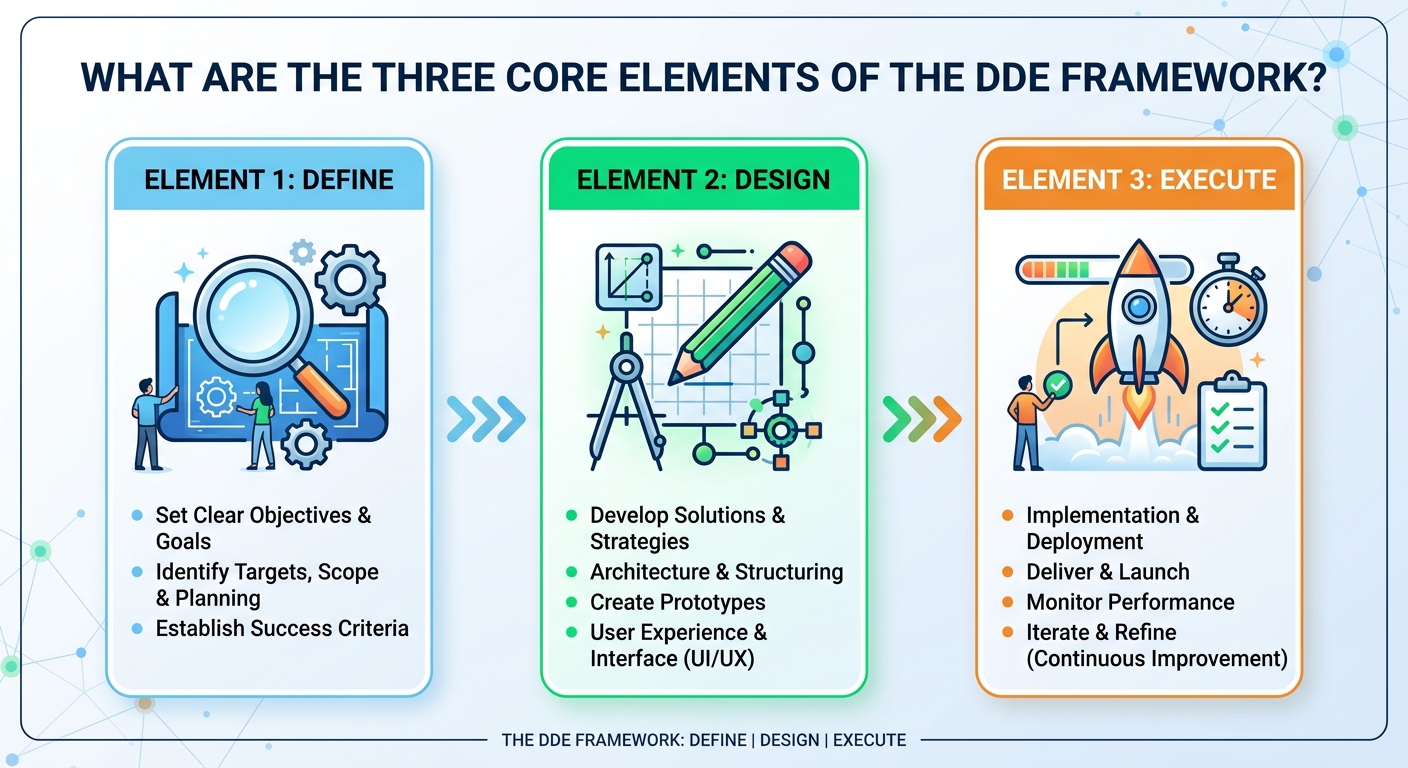
Unlocking Learning Potential: The Three Core Elements of the DDE Framework
In today's fast-evolving corporate landscape, the role of Learning & Development (L&D) has never been more critical. Vice Presidents, Directors, and Managers of L&D face the monumental task of not only delivering effective training but also ensuring it drives tangible business outcomes across diverse industries like Compliance, Sales, Banking, Finance, Insurance, Retail, Pharma, Healthcare, Hospitality, Oil and Gas, and Mining. To navigate this complexity, a robust and strategic approach is essential. This is where the DDE Framework comes into play, offering a structured methodology to transform your learning initiatives from reactive programs into proactive catalysts for growth.
The DDE Framework, standing for Discover, Design, and Engage, provides a comprehensive blueprint for developing impactful and sustainable learning experiences. It’s more than just a process; it's a strategic philosophy designed to align L&D with core business objectives, leveraging modern technology and methodologies to deliver measurable results. Let's delve into each core element and understand how they can revolutionize your organizational learning strategy.
Element 1: Discover – Unearthing Core Needs and Opportunities
The foundation of any successful learning program lies in a deep understanding of what needs to be learned, by whom, and why. The 'Discover' phase of the DDE Framework is dedicated to rigorous needs analysis, data collection, and strategic alignment. It’s about looking beyond surface-level requests to identify the root causes of performance gaps and the true opportunities for skill enhancement and knowledge transfer.
Strategic Needs Assessment and Data-Driven Insights
- Business Objectives Alignment: Collaborating with stakeholders across departments (e.g., Sales, Compliance, Operations) to align learning objectives with overarching business goals, such as increasing market share, improving regulatory adherence, or enhancing customer satisfaction.
- Audience Analysis: Gaining profound insights into your learners' existing knowledge, skill gaps, preferred learning styles, technological proficiency, and motivational factors. This includes understanding the specific challenges faced by different roles within your organization, from frontline retail staff to highly specialized healthcare professionals.
- Technology Landscape Audit: Assessing current learning technologies, including your existing Microlearning LMS, to understand capabilities and identify potential areas for enhancement or integration. This step is crucial for ensuring that future learning solutions can be seamlessly deployed.
- Performance Data Review: Analyzing performance metrics, incident reports, audit findings (especially critical in Compliance and Banking sectors), and feedback channels to pinpoint critical areas requiring intervention.
This discovery phase isn't merely about collecting information; it's about synthesizing it into actionable intelligence. It informs every subsequent step, ensuring that resources are allocated efficiently and that the resulting learning solutions are precisely targeted.
Question for L&D Leaders: How can L&D leaders leverage data and intelligent tools to gain a comprehensive understanding of their organizational learning needs and optimize their entire learning ecosystem for peak performance?
Element 2: Design – Crafting Impactful Learning Journeys
Once needs are thoroughly discovered, the 'Design' phase focuses on architecting the learning experience itself. This involves translating insights from the discovery phase into concrete learning objectives, content strategies, instructional methodologies, and assessment approaches. It’s where creativity meets pedagogy, ensuring that the learning is not only engaging but also effective in achieving desired outcomes.
Instructional Design and Content Development Excellence
- Learning Objective Definition: Articulating clear, measurable, achievable, relevant, and time-bound (SMART) learning objectives that directly address the identified performance gaps and business goals.
- Content Curation and Creation: Developing or curating high-quality, relevant learning content. This might involve transforming complex compliance regulations into digestible modules, creating realistic sales scenarios, or building interactive simulations for financial risk management. Modern approaches often favor modular, bite-sized content for better retention, supported by a robust Adaptive Learning strategy.
- Methodology Selection: Choosing appropriate instructional strategies, such as problem-based learning, case studies, simulations, blended learning, or social learning. Incorporating elements like Gamified LMS features can significantly boost engagement and knowledge retention, particularly in industries like Retail or Hospitality where motivation is key.
- Assessment Strategy: Designing effective assessment methods that genuinely measure learning and skill acquisition, from formative quizzes to summative performance evaluations.
- Leveraging Technology for Design: Utilizing advanced tools, including an AI Powered Authoring Tool, to streamline content creation, ensure consistency, and allow for rapid updates, which is crucial for sectors like Pharma and Healthcare with constantly evolving guidelines.
The design phase is iterative, often involving prototyping and testing with a small group of learners to gather feedback and refine the learning materials before full-scale deployment. It emphasizes creating experiences that resonate with the modern learner and drive practical application of knowledge.
Question for L&D Leaders: In what ways can advanced analytical capabilities and intelligent systems be utilized to craft highly personalized and effective learning content that adapts to individual learner progress and preferences?
Element 3: Engage – Delivering Impact and Sustaining Growth
The final, yet continuous, element of the DDE Framework is 'Engage.' This phase focuses on the effective delivery of the learning programs, fostering learner participation, measuring impact, and ensuring continuous improvement. It's about bringing the meticulously designed learning experience to life and ensuring it sticks.
Deployment, Engagement, and Continuous Improvement
- Strategic Deployment: Rolling out learning programs efficiently using a capable LMS or learning content management system that can handle various formats and reach a global workforce. A cloud based learning management system is often essential for enterprises spanning multiple regions and operational sites.
- Maximizing Learner Engagement: Implementing strategies to motivate learners and sustain their participation. This includes fostering a culture of continuous learning, providing incentives, facilitating social learning opportunities, and ensuring easy access to resources through a user-friendly learning management software.
- Performance Monitoring and Feedback: Continuously tracking learner progress, completion rates, and performance improvements post-training. Collecting feedback through surveys, focus groups, and direct observation helps to gauge the effectiveness of the training.
- Impact Measurement and Reporting: Quantifying the return on investment (ROI) of learning initiatives. This involves linking learning outcomes to key performance indicators (KPIs) such as reduced compliance violations, increased sales figures, improved safety records in Oil and Gas or Mining, or enhanced patient outcomes in Healthcare. Specific types of training, like Risk-focused Training, directly correlate with measurable risk reduction.
- Iteration and Optimization: Using data from performance monitoring and impact measurement to refine existing programs and inform future learning designs. This ensures that your enterprise learning management system remains dynamic and responsive to changing business needs.
The 'Engage' phase emphasizes that learning is not a one-time event but an ongoing journey. A robust lms learning management system becomes an indispensable tool here, serving as the backbone for delivery, tracking, and analysis.
Question for L&D Leaders: What strategies can L&D teams adopt to ensure their training initiatives are not only impactful locally but also culturally relevant and globally consistent across diverse operational environments, facilitated by smart deployment?
The DDE Framework in Practice: Driving L&D Excellence
Adopting the DDE Framework means building a proactive, data-driven, and learner-centric L&D function. It enables you to move beyond simply delivering courses to strategically shaping your workforce's capabilities and directly impacting your organization's bottom line. For L&D professionals, this framework provides a clear roadmap to:
- Enhance the relevance and effectiveness of all training programs.
- Optimize resource allocation by focusing on high-impact areas.
- Demonstrate the tangible value of L&D to senior leadership.
- Foster a culture of continuous learning and development.
- Leverage modern learning technologies, like the MaxLearn LMS, to their fullest potential.
By consistently applying the Discover, Design, and Engage elements, L&D leaders can transform their departments into strategic business partners, equipped to meet the demands of any industry and any challenge. The future of corporate learning is dynamic, and with the DDE Framework, your organization can be at the forefront of innovation and growth.


Comments
Post a Comment