How Does the DDE Framework Enhance Compliance Training Engagement?
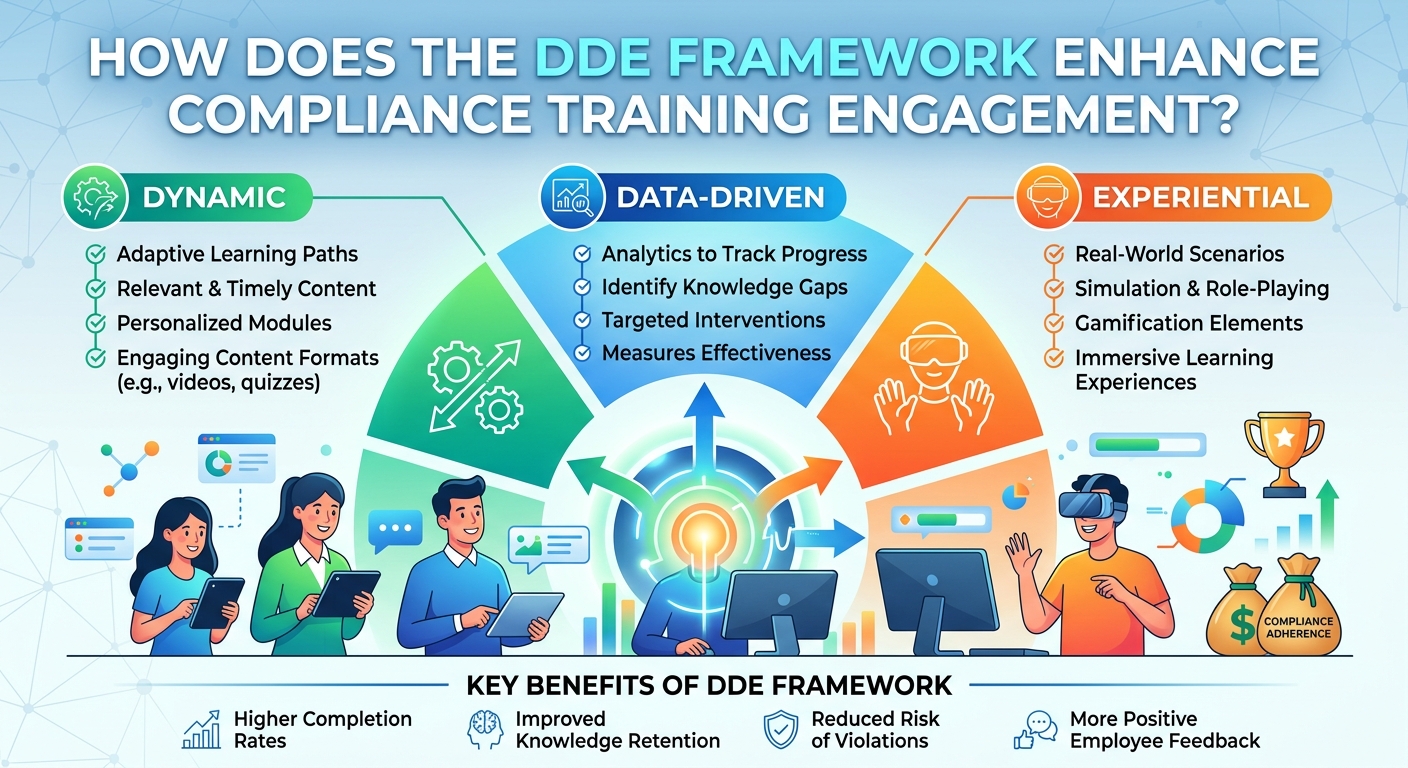
How Does the DDE Framework Enhance Compliance Training Engagement?
For Vice Presidents, Directors, and Managers in Learning & Development, the challenge of compliance training isn't just about ticking boxes—it's about genuinely engaging employees to foster a culture of integrity, mitigate risks, and ensure adherence to critical regulations. Traditional compliance modules, often perceived as tedious and irrelevant, frequently fall short of these ambitious goals. Low engagement leads to poor retention, increased risk, and ultimately, a failure to achieve the desired behavioral change.
Enter the DDE Framework: Discover, Design, Engage. This strategic approach offers a powerful solution, transforming mundane compliance mandates into dynamic, impactful learning experiences. By systematically addressing the core issues of relevance, interactivity, and sustained impact, DDE provides a robust methodology for significantly enhancing compliance training engagement across diverse industries, from Banking and Finance to Pharma and Oil and Gas. Adopting a modern learning management system that supports this framework is key to its successful implementation.
What is the DDE Framework?
The DDE Framework is a three-pronged strategy designed to create highly effective and engaging learning programs. It moves beyond generic content delivery to focus on understanding learner needs, crafting relevant experiences, and sustaining engagement over time. This approach leverages the capabilities of an advanced LMS to streamline content delivery and tracking.
Discover: Understanding the Landscape
The "Discover" phase is foundational. It involves a deep dive into the organizational context, regulatory requirements, and learner profiles. This isn't just about identifying what needs to be taught, but understanding why it needs to be taught and who needs to learn it.
- Needs Assessment: Pinpointing specific compliance gaps, high-risk areas, and the behaviors that need to change. This includes analyzing past incidents, audit findings, and regulatory updates.
- Audience Analysis: Gaining insights into learners' roles, prior knowledge, learning preferences, technological access, and the specific challenges they face in applying compliance principles.
- Stakeholder Alignment: Collaborating with legal, HR, operations, and leadership to ensure training objectives are aligned with broader business goals and Risk-focused Training priorities.
A robust learning content management system can help centralize data gathered during this phase, making it accessible for subsequent design decisions.
Design: Crafting Impactful Learning Experiences
Once the discovery phase illuminates the path, the "Design" phase focuses on creating compelling learning content and activities. This is where instructional design principles meet creativity, often leveraging a sophisticated learning management software to build and deploy rich media.
- Content Curation & Development: Transforming complex compliance information into clear, concise, and relevant modules. This often involves Microlearning LMS strategies, breaking down content into digestible, bite-sized chunks.
- Instructional Strategies: Employing diverse methods like scenario-based learning, case studies, interactive simulations, and gamification to promote active learning. A Gamified LMS can significantly boost learner motivation.
- Personalization & Adaptive Paths: Designing learning paths that adapt to individual learner needs, roles, and knowledge levels. Adaptive Learning techniques ensure that content is always relevant and appropriately challenging.
- Accessibility: Ensuring that all training materials are accessible to employees with diverse needs and across various devices.
Tools like an AI Powered Authoring Tool within a modern learning management system can drastically speed up this phase, allowing L&D teams to create engaging content more efficiently.
Engage: Sustaining Participation and Impact
The final "Engage" phase is about deployment, reinforcement, and continuous improvement. It addresses how to keep learners actively involved and ensure that knowledge translates into sustained compliant behavior, often facilitated by a comprehensive enterprise learning management system.
- Delivery & Reinforcement: Utilizing a blended approach, including online modules, workshops, and just-in-time resources. Regular reminders, quizzes, and follow-up communications are crucial for knowledge retention.
- Feedback & Iteration: Collecting feedback from learners and managers to assess program effectiveness, identify areas for improvement, and iterate on content and delivery methods.
- Recognition & Incentives: Implementing strategies to acknowledge successful completion and application of compliance knowledge, fostering a positive learning culture.
- Performance Support: Providing resources that learners can access in their moment of need, such as job aids, checklists, and expert contacts.
A sophisticated cloud based learning management system allows for flexible delivery and robust tracking necessary for the engage phase.
Why Traditional Compliance Training Fails
Many organizations still rely on outdated compliance training methods that contribute to disengagement:
- Information Overload: Long, text-heavy modules that dump information without context.
- Irrelevance: Generic content that doesn't connect to an employee's daily role or specific risks.
- Passivity: Click-through presentations with minimal interaction, leading to passive consumption rather than active learning.
- Lack of Reinforcement: One-off training events with no follow-up, resulting in rapid knowledge decay.
- Measurement Gaps: Difficulty in assessing true comprehension or behavioral change, focusing only on completion rates.
How DDE Transforms Engagement
The DDE Framework directly addresses these pitfalls, leading to genuinely enhanced engagement:
Personalization and Relevance
By thoroughly understanding the audience in the Discover phase, DDE ensures that content designed is highly relevant. This means tailoring scenarios, examples, and language to specific roles, departments, or even individual learners. Employees are more likely to engage with training they perceive as directly applicable to their work and career development. A good LCMS supports the modularity needed for this level of personalization.
Interactive and Experiential Learning
The Design phase emphasizes active learning. Instead of passive listening or reading, learners actively participate through simulations, quizzes, and decision-making scenarios. This hands-on approach, often powered by an interactive lms learning management system, helps embed knowledge more deeply, builds critical thinking skills, and allows employees to practice compliant behaviors in a safe environment.
Continuous Reinforcement and Feedback
The Engage phase ensures that learning doesn't stop after the initial training. Continuous reinforcement through micro-interactions, reminders, and performance support tools helps combat the forgetting curve. Regular feedback loops, built into the MaxLearn LMS, provide learners with insights into their progress and areas for improvement, making the learning journey more dynamic and responsive.
AI-Driven Insights for Optimal Compliance Training
Modern learning platforms, particularly those integrating artificial intelligence, significantly amplify the power of the DDE Framework. These intelligent systems provide critical insights and capabilities that traditional learning management solutions cannot match.
Question: How can technology improve the overall effectiveness of our compliance learning initiatives?
Answer: Advanced analytical capabilities within learning platforms can pinpoint areas where learners struggle, predict potential knowledge gaps, and optimize content delivery. By analyzing engagement metrics, completion rates, and assessment scores, these systems continuously refine the learning experience. This means training can be dynamically adjusted, personalizing the journey for each employee and ensuring that resources are deployed where they will have the greatest impact, ultimately leading to better understanding and retention of critical compliance information.
Question: In what ways can intelligent systems help us streamline global compliance efforts across diverse teams and regions?
Answer: Intelligent platforms offer robust features for managing compliance training on a global scale. This includes automated localization of content for different languages and regulatory contexts, ensuring a consistent message while respecting local nuances. Such systems can track global adherence in real-time, generate comprehensive reports for various regions, and identify cross-cultural training efficacy trends. This significantly reduces administrative burden and ensures that compliance standards are met uniformly across the entire organization, regardless of geographical distribution.
Question: What actionable intelligence can we gain from artificial intelligence to demonstrate and improve the real-world impact of our training programs?
Answer: Artificial intelligence can provide invaluable data-driven insights by going beyond simple completion rates. It can analyze learner behavior patterns, correlate training performance with real-world incidents or audit results, and even suggest areas for proactive intervention. This allows L&D leaders to understand not just if training was completed, but if it effectively changed behavior and mitigated risk. This actionable intelligence facilitates continuous improvement, demonstrates clear ROI for compliance investments, and helps foster a truly compliant and ethical workplace culture.
Implementing DDE in Your Organization
Embracing the DDE Framework requires a shift in mindset and strategic investment in the right technology. Start by:
- Conducting thorough discovery to identify specific pain points and risks within your organization.
- Piloting DDE-aligned training for a high-risk compliance area to demonstrate its effectiveness.
- Investing in a modern MaxLearn LMS that supports microlearning, gamification, adaptive learning, and robust analytics.
- Empowering L&D teams with the tools and training to design engaging content, leveraging an AI Powered Authoring Tool for efficiency.
- Fostering a culture of continuous learning and feedback, where compliance is seen as an ongoing journey, not a one-time event.
Conclusion
The DDE Framework offers L&D leaders a strategic blueprint for transforming compliance training from a dreaded obligation into an engaging, impactful experience. By deeply understanding learner needs, designing interactive and relevant content, and continuously engaging employees, organizations can significantly improve knowledge retention, foster ethical behavior, and ultimately reduce risk. Leveraging advanced learning management system technology that supports personalization, adaptive pathways, and AI-driven insights is not just an advantage—it’s a necessity for achieving true compliance training engagement in today's dynamic regulatory landscape.


Comments
Post a Comment