5 Key Metrics Every Compliance Director Should Track in 2026
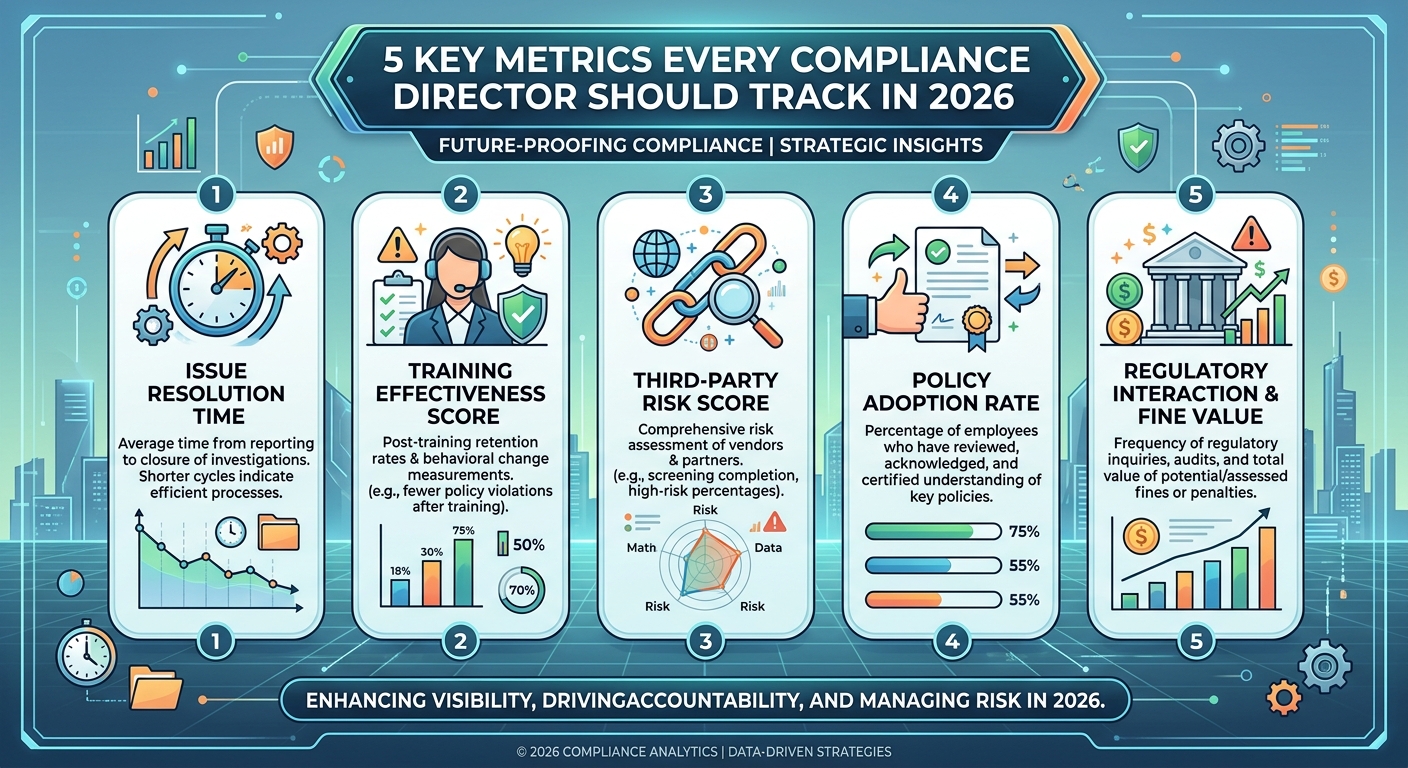
5 Key Metrics Every Compliance Director Should Track in 2026
In the rapidly evolving landscape of global regulations, technological advancements, and shifting workplace dynamics, the role of a Compliance Director has never been more critical – or complex. For Vice Presidents, Directors, and Senior Managers in Learning & Development, understanding what drives effective compliance is paramount. It’s no longer enough to simply react to incidents; the mandate for 2026 and beyond is proactive risk mitigation, cultural alignment, and demonstrable adherence across the entire enterprise.
The strategic value of a data-driven approach to compliance cannot be overstated. By meticulously tracking the right metrics, Compliance Directors can transform their departments from cost centers into strategic business partners, providing invaluable insights that protect brand reputation, ensure operational continuity, and foster a robust ethical framework. In this article, we’ll delve into five essential metrics that every forward-thinking Compliance Director should be tracking to navigate the complexities of 2026 and beyond, alongside how a powerful LMS can be their most vital ally.
The Evolving Mandate of Compliance Leadership
Gone are the days when compliance was solely about checklists and legal jargon. Today's Compliance Director must be an architect of trust, a data scientist, and a cultural champion, all rolled into one. They are tasked with safeguarding the organization against financial penalties, reputational damage, and operational disruptions. This expansive mandate necessitates a deep dive into actionable data, moving beyond surface-level observations to uncover root causes and predict future risks.
Leveraging advanced tools like a modern learning management system is crucial. An effective learning content management system or learning management software can provide the infrastructure needed to collect, analyze, and act upon critical compliance data, transforming raw numbers into strategic intelligence.
The Power of Data in Compliance
For L&D leaders, understanding the metrics that matter to Compliance Directors means aligning training strategies directly with business risk and regulatory requirements. It means moving from a reactive "training when needed" model to a proactive "continuous learning for risk mitigation" approach. This shift is powered by precise data, enabling organizations to develop Risk-focused Training that genuinely moves the needle.
5 Key Metrics Every Compliance Director Should Track in 2026
1. Compliance Training Completion & Proficiency Rates
This foundational metric goes beyond mere attendance. While completion rates are important, proficiency rates measure actual understanding and application of compliance knowledge. A high completion rate coupled with low proficiency indicates a significant training gap. For 2026, the focus shifts to granular analytics that demonstrate comprehension and behavioral change.
- Why it's crucial: Demonstrates the effectiveness of your compliance training programs and identifies areas where employees may struggle to grasp complex regulations. It's the first line of defense against non-compliance.
- How to track it: Utilize an advanced LMS or lms learning management system that incorporates quizzes, simulations, and real-world scenario assessments. Track not just if a course was finished, but the scores, time spent on challenging sections, and retention rates over time. An enterprise learning management solution with strong analytics will be invaluable here.
2. Policy Adherence & Incident Reduction
This metric directly ties training effectiveness to real-world outcomes. It tracks how well employees adhere to internal policies and external regulations, measured by the frequency and severity of compliance incidents, violations, and breaches. This includes everything from data privacy mishaps to ethical conduct breaches.
- Why it's crucial: This is the ultimate measure of success for any compliance program. A reduction in incidents signifies that policies are understood, training is effective, and the culture of compliance is strengthening.
- How to track it: Implement robust incident reporting systems and integrate them with your learning management solutions. Look for correlations between specific training modules and a decrease in related incidents. Post-incident analysis should feed directly back into refining Microlearning LMS content or Gamified LMS modules to address identified weaknesses.
3. Regulatory Change Readiness Index
In an era of dynamic regulatory environments, an organization's ability to adapt quickly to new or amended laws is a key indicator of compliance maturity. This metric assesses how swiftly and effectively the organization updates its policies, procedures, and training in response to regulatory shifts.
- Why it's crucial: Proactive adaptation prevents costly penalties and ensures continuous legal adherence. Being caught off guard by regulatory changes is a significant risk for any business.
- How to track it: Measure the time taken from a regulatory change announcement to the rollout of updated policies and corresponding training modules. Track employee acknowledgment of new policies and completion of relevant Adaptive Learning paths. An LCMS (Learning Content Management System) is vital here for rapid content updates and deployment.
4. Third-Party Risk Compliance Score
As supply chains and partnerships become more intricate, the compliance risks associated with third parties – vendors, partners, contractors – grow exponentially. This metric involves assessing and tracking the compliance posture of all third-party entities that interact with your organization.
- Why it's crucial: A weak link in your third-party network can expose your organization to significant legal, financial, and reputational risks. Your compliance is only as strong as that of your weakest partner.
- How to track it: Implement a standardized third-party risk assessment framework. Track due diligence completion rates, audit results, and any compliance issues identified with third parties. A dedicated MaxLearn LMS can extend compliance training and tracking to external partners, ensuring they meet your standards.
5. Culture of Compliance Engagement Index
Beyond policies and training, a strong compliance culture is driven by employee engagement and a shared understanding of ethical conduct. This metric measures the sentiment, awareness, and proactive participation of employees in upholding compliance standards.
- Why it's crucial: A positive compliance culture transforms employees into vigilant defenders of ethical practices, reducing the likelihood of misconduct and fostering a secure, trustworthy environment. It goes beyond rote learning to embed compliance in the organizational DNA.
- How to track it: Utilize anonymous surveys, feedback mechanisms, and sentiment analysis tools. Track participation in voluntary compliance initiatives, reporting of suspicious activities (whistleblower metrics), and engagement with compliance communications. An AI Powered Authoring Tool within your LMS can help create engaging, scenario-based content that fosters deeper engagement and ethical reasoning.
Integrating Advanced Intelligence for Smarter Compliance
The Compliance Director of 2026 isn't just a tracker of data; they are an interpreter and strategist, empowered by intelligent systems. Here’s how advanced analytics are transforming compliance intelligence:
Unlocking Deeper Insights with Advanced Analytics
Question: How can our learning content management system proactively identify emerging compliance risks across diverse regulations?
Answer: Intelligent algorithms analyze vast data sets from an LMS and external sources (regulatory updates, news, incident reports) to predict compliance hotspots. This allows the learning management software to flag potential areas of non-compliance before they materialize, recommending specific training interventions or policy adjustments. By understanding patterns and anomalies, the system transforms raw data into strategic intelligence, making compliance efforts more predictive than reactive.
Optimizing Training Pathways with Personalized Learning
Question: What are the most effective strategies for ensuring our workforce universally comprehends complex compliance requirements?
Answer: Personalized learning paths, often driven by an enterprise learning management system using Adaptive Learning, cater to individual learning styles, roles, and existing knowledge gaps. Instead of a one-size-fits-all approach, the system assesses each learner's proficiency and delivers targeted content. This ensures high comprehension rates and efficient use of training time, moving beyond mere completion to true understanding and retention.
Geospatial Compliance Intelligence
Question: How can our organization maintain consistent compliance standards across geographically dispersed teams and varied regulatory environments?
Answer: A sophisticated cloud based learning management system can map regulatory requirements to specific regions or jurisdictions. It delivers localized learning management system content, tracks compliance variances by location, and provides real-time alerts for region-specific regulatory changes. This ensures that global operations remain compliant with local laws while maintaining overarching corporate standards, offering a clear view of global compliance health.
Choosing the Right Tools
To effectively track these metrics and leverage advanced intelligence, organizations need a robust LMS. Solutions like MaxLearn LMS offer the comprehensive features necessary for compliance training, tracking, and reporting, ensuring that L&D teams can provide the data and insights Compliance Directors need.
Conclusion
For Compliance Directors, 2026 represents a pivotal year where data-driven strategies will separate leading organizations from their less agile counterparts. By focusing on these five key metrics – training effectiveness, incident reduction, regulatory readiness, third-party compliance, and cultural engagement – alongside leveraging intelligent learning management solutions, organizations can build truly resilient and ethical frameworks. For L&D professionals, aligning with these priorities means delivering training that is not just compliant, but genuinely impactful, measurable, and strategically vital to the organization's success and reputation.


Comments
Post a Comment