Why Next-Gen Compliance Engines Rely on Knowledge Graphs and Personalization
Unlocking Precision Compliance: Why Next-Gen Engines Leverage Knowledge Graphs and Personalization
For Vice Presidents, Directors, and Managers in Learning & Development, the landscape of compliance is a constantly shifting terrain. Gone are the days when a generic annual training module sufficed. Today's regulatory environment — spanning data privacy, financial regulations, healthcare mandates, and ethical conduct — demands an agile, intelligent, and highly effective approach. The challenge isn't just delivering information; it's ensuring comprehension, retention, and behavioral change across a diverse workforce. This is where next-generation compliance engines, powered by knowledge graphs and deep personalization, are fundamentally changing the game.
Traditional compliance training often feels like a checkbox exercise: a mandatory task that employees rush through, retaining minimal information. This generic, one-size-fits-all approach is not only inefficient but also leaves organizations vulnerable to significant risks. The modern enterprise, operating across multiple geographies and diverse business units, requires a system that understands context, identifies individual risk profiles, and delivers hyper-relevant learning experiences. It's about moving from broad strokes to laser-focused precision, and that precision is built on the twin pillars of knowledge graphs and personalization.
The Evolving Landscape of Compliance Education
The complexity of regulatory frameworks continues to grow exponentially. Industries from banking and finance to healthcare and retail face an onslaught of new rules, global standards, and heightened scrutiny. Furthermore, the shift to remote and hybrid work models has introduced new challenges in ensuring consistent compliance across distributed teams. Relying on outdated methods of compliance training is no longer a viable strategy for mitigating risk and fostering a culture of integrity. L&D leaders need tools that can keep pace with this dynamism and deliver impactful results.
The Power of Knowledge Graphs in Compliance Intelligence
What are Knowledge Graphs?
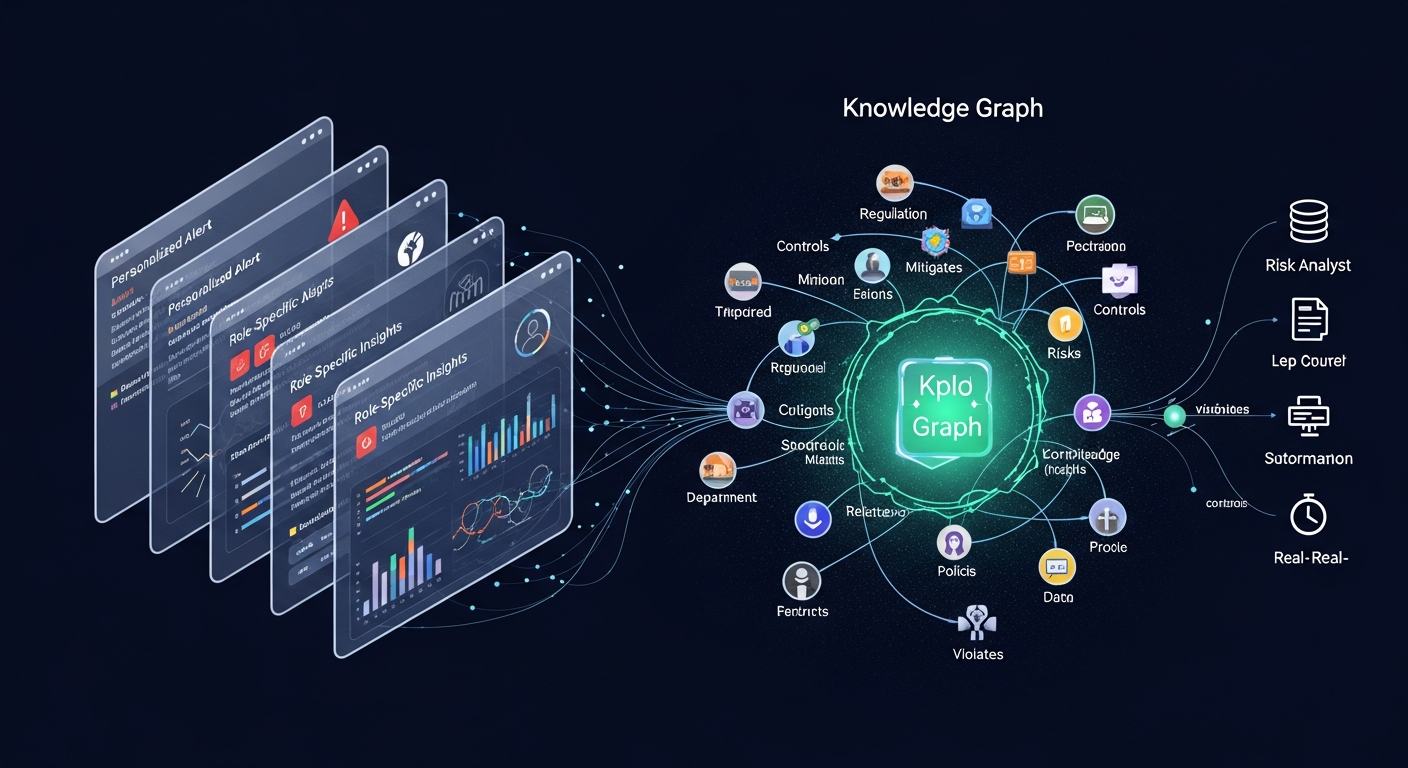
Imagine a vast, interconnected web of data, not just isolated pieces of information. A knowledge graph organizes data in a way that emphasizes relationships and context. Instead of a flat database of policies and incidents, a knowledge graph connects policies to specific regulations, regulations to job roles, job roles to potential risks, and risks to historical incidents or training modules. It's a semantic network that allows machines to "understand" and reason about information, much like the human brain connects concepts.
How Knowledge Graphs Transform Compliance
- Contextual Understanding: Knowledge graphs enable compliance engines to move beyond simple keyword matching. They understand the nuances of regulations, connecting specific clauses to internal policies, procedures, and even individual employee actions. This allows for far more accurate risk assessment and relevant content delivery.
- Dynamic Rule Interpretation: As regulations change, a knowledge graph can rapidly identify all affected policies, procedures, and training materials. This dynamic capability ensures that your compliance program remains current and responsive, without manual, time-consuming updates.
- Holistic Risk Identification: By linking various data points – regulatory requirements, internal controls, audit findings, employee roles, and past incidents – knowledge graphs provide a comprehensive view of an organization's compliance posture. This allows for Risk-focused Training, directing resources to areas of highest vulnerability.
- Enhanced Audit Trails and Explainability: The interconnected nature of a knowledge graph means that every compliance decision, every piece of advice, and every training recommendation can be traced back to its originating data points and relationships, providing unparalleled transparency and explainability for auditors.
Personalization: The Key to Effective Compliance Engagement
Why Generic Training Fails
The fundamental flaw of traditional compliance training is its generic nature. A compliance module on anti-money laundering, for instance, has vastly different implications for a front-line bank teller compared to a software engineer or a marketing specialist. Delivering the same content to everyone leads to disengagement, irrelevance, information overload, and ultimately, poor retention. Employees tune out because the content isn't directly applicable to their daily roles or risks.
How Personalization Revolutionizes Learning
Next-gen compliance engines leverage personalization to deliver targeted, impactful learning experiences:
- Role-Based Learning Paths: Content is tailored based on an employee's specific job function, department, geographical location, regulatory exposure, and past performance. This ensures that every learner receives only the most relevant and critical information, significantly reducing training time and increasing engagement.
- Performance-Adaptive Content: Utilizing data on learner progress, quiz scores, and past compliance incidents, the system dynamically adjusts the learning path. Struggling learners receive additional support or different content formats, while proficient learners can move ahead or delve into more advanced topics. This is the essence of Adaptive Learning.
- Just-in-Time Information Delivery: Instead of lengthy annual courses, compliance knowledge can be delivered in Microlearning LMS formats – short, digestible modules, tips, or reminders – exactly when an employee needs it, such as before approving a transaction or handling sensitive data.
- Engaging Learning Experiences: Personalization extends to the learning format itself. By incorporating interactive scenarios, real-world case studies relevant to the learner's role, and even Gamified LMS elements, compliance training becomes an engaging journey rather than a tedious chore.
The Synergy: Knowledge Graphs and Personalization in Action
The true power emerges when knowledge graphs and personalization work in concert. A knowledge graph provides the intelligent backbone, understanding the intricate web of compliance requirements and risks relevant to your organization. Personalization then acts as the intelligent delivery mechanism, ensuring that this precise, contextual knowledge reaches the right employee at the right time, in the most effective format.
For example, when a new data privacy regulation is introduced, the knowledge graph identifies all employee roles potentially affected. It then triggers personalized learning paths for each role, delivering specific AI Powered Authoring Tool generated modules that address their particular responsibilities and risks related to the new regulation. This ensures targeted learning without overburdening the entire workforce with irrelevant information, all managed seamlessly through an advanced LMS.
AI and the Future of Compliance: Addressing Key Insights
Modern compliance solutions, by integrating artificial intelligence, provide unprecedented capabilities for L&D leaders:
Driving Actionable Insights
Question: How can compliance technology help L&D leaders understand the real-world impact of their training programs and demonstrate tangible value to the executive board?
Answer: By leveraging knowledge graphs to correlate training completion rates, assessment scores, and engagement data with operational metrics like incident reports, audit findings, and regulatory fines, next-gen systems provide a holistic view of compliance effectiveness. This allows L&D to pinpoint areas of weakness, demonstrate ROI, and make data-driven decisions on where to invest further resources or refine content, ensuring strategic alignment with business objectives.
Optimizing Employee Engagement
Question: What role does advanced technology play in making compliance training more relevant, less burdensome, and ultimately more impactful for every employee, from entry-level staff to senior executives?
Answer: Through deep personalization driven by employee profiles and knowledge graph insights, these engines deliver contextually relevant, bite-sized learning directly to employees based on their specific roles, past performance, and current tasks. This approach drastically reduces training fatigue and increases information retention by making learning immediately applicable and engaging. It transforms compliance from a mandatory chore into a continuous, supportive learning experience that empowers employees.
Enhancing Adaptive Intelligence Operations
Question: How do modern compliance solutions enable organizations to anticipate and respond to regulatory changes proactively, rather than constantly playing catch-up?
Answer: By continuously monitoring regulatory landscapes globally and mapping new or updated requirements against internal policies, procedures, and training modules using knowledge graphs, these systems can flag potential non-compliance risks before they materialize. They can then automatically suggest necessary updates to policies, content for a learning management system, and even new training pathways, creating a truly adaptive and intelligent compliance framework that ensures organizational resilience and foresight.
Choosing the Right Platform for Your Organization
Implementing a next-gen compliance engine requires a robust foundation. Your learning management software must be capable of supporting these advanced functionalities. Look for a comprehensive learning management system that offers strong Learning content management system (LCMS) capabilities, seamless integration, and the intelligence to power personalized learning journeys. A cloud based learning management system, such as MaxLearn LMS, is essential for scalability and accessibility across your enterprise. Investing in the right enterprise learning management solution ensures that your compliance program is not just effective, but also a strategic asset.
Conclusion
For L&D leaders striving to elevate compliance from a mere obligation to a strategic advantage, the integration of knowledge graphs and personalization in next-gen compliance engines is non-negotiable. These powerful technologies empower organizations to navigate regulatory complexity with unprecedented precision, engage employees with highly relevant content, and proactively mitigate risks. By embracing these advancements, you can transform your compliance training into an intelligent, adaptive, and truly effective safeguard for your business, fostering a culture of informed and compliant excellence.


Comments
Post a Comment