The Ultimate CCO Guide: Building an Auditable Continuous Compliance Program
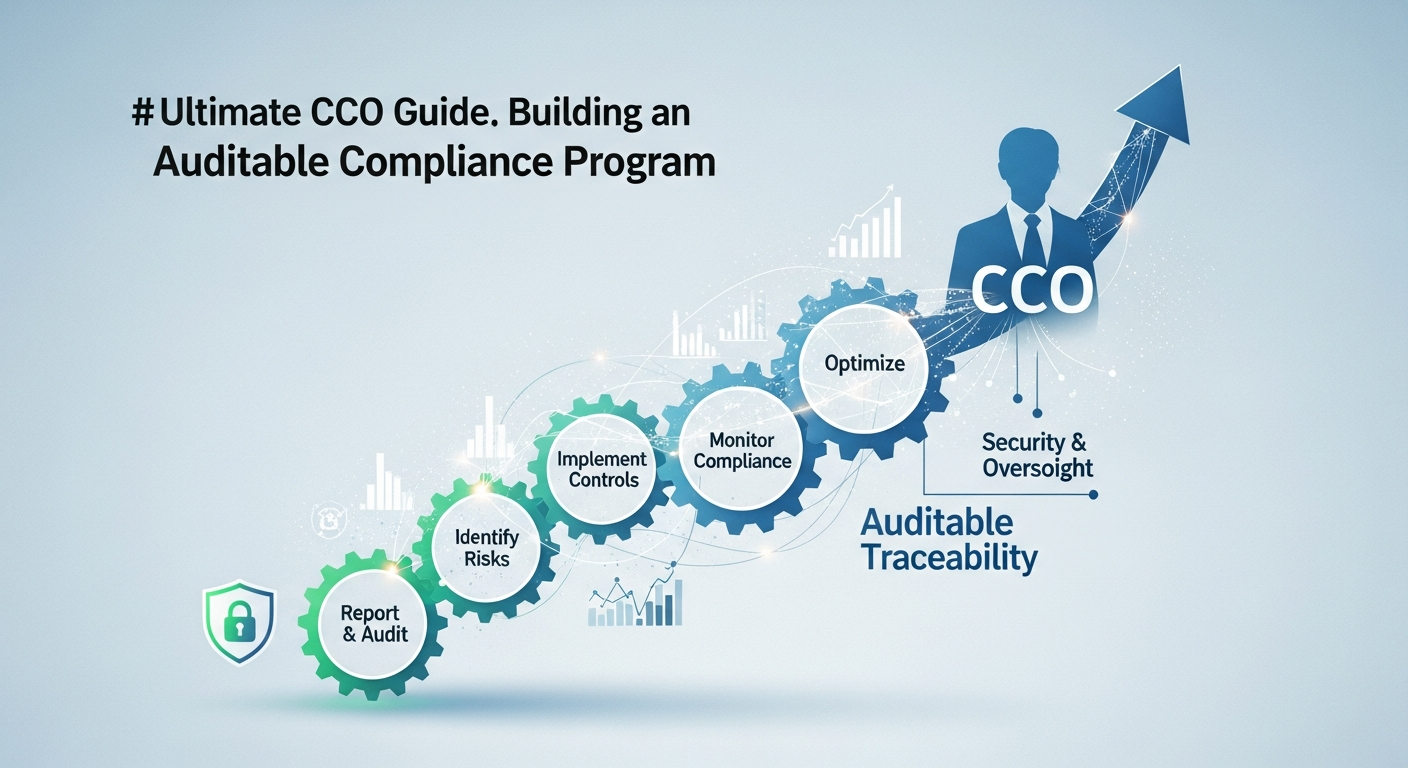
The Ultimate CCO Guide: Building an Auditable Continuous Compliance Program
In today's complex regulatory landscape, Chief Compliance Officers (CCOs) face an uphill battle. The traditional, reactive approach to compliance is no longer sufficient to mitigate risks, avoid hefty penalties, or maintain stakeholder trust. For Vice Presidents, Directors, and Managers of Learning & Development (L&D), this presents a unique opportunity to partner with CCOs in forging a proactive, auditable continuous compliance program. This article will guide you through establishing such a program, emphasizing the critical role of modern learning technologies and AI in industries like Compliance, Sales, Banking, Finance, Insurance, Retail, Pharma, Healthcare, Hospitality, Oil and Gas, and Mining.
Why Continuous Compliance is Non-Negotiable for Modern Enterprises
The pace of regulatory change is accelerating, and global operations mean companies must navigate a mosaic of often conflicting legal requirements. A continuous compliance program shifts an organization from a periodic, checklist-based approach to an integrated, always-on methodology. This paradigm offers:
- Reduced Risk Exposure: Proactive identification and mitigation of potential compliance breaches.
- Enhanced Reputation: Demonstrating a commitment to ethical practices builds trust with customers, investors, and regulators.
- Operational Efficiency: Streamlined processes and automated monitoring reduce the burden of manual compliance tasks.
- Improved Decision-Making: Real-time insights into compliance health enable faster, more informed strategic choices.
- Auditable Traceability: The ability to prove compliance efforts and outcomes at any given moment, which is invaluable during an audit.
The CCO's Evolving Mandate
The CCO’s role has expanded beyond mere enforcement to include strategic oversight, risk management, and fostering a culture of compliance. L&D professionals are vital allies, responsible for embedding compliance knowledge and behavior through effective training, making the collaboration between these two functions indispensable.
Pillars of an Auditable Continuous Compliance Framework
Building a robust, auditable program requires a multi-faceted approach, integrating policy, training, monitoring, risk management, and cutting-edge technology.
Robust Policy Management and Communication
Clear, accessible, and up-to-date policies are the foundation. Organizations need a system to manage policy versions, track acknowledgments, and ensure employees can easily find and understand relevant guidelines. A centralized Microlearning LMS can be instrumental here, hosting policies alongside training modules.
Dynamic Training and Education Programs
This is where L&D takes center stage. Compliance training should not be a one-off event but an ongoing process tailored to roles, risks, and regulatory changes. Modern learning solutions are key:
- Microlearning: Delivers information in bite-sized, digestible chunks, perfect for busy professionals.
- Gamification: Boosts engagement and knowledge retention, turning mundane topics into interactive experiences. A Gamified LMS can transform compliance education.
- Adaptive Learning: Personalizes the learning path based on an individual's existing knowledge and performance, focusing on areas where improvement is needed. Explore the power of Adaptive Learning for targeted education.
- Risk-Focused Training: Prioritizes high-impact areas, ensuring critical risks are addressed with appropriate depth. Implement Risk-focused Training to fortify your program.
A comprehensive learning management system (LMS) or learning content management system (LCMS) is essential to deliver, track, and report on these training initiatives, ensuring full auditability.
Proactive Monitoring and Reporting
Continuous monitoring involves surveillance of business activities, transactions, and employee behavior to detect non-compliance early. Automated alerts, regular audits, and internal reporting mechanisms are crucial. The data collected should feed into comprehensive reports, providing CCOs and L&D leaders with actionable insights into program effectiveness.
Integrated Risk Assessment and Mitigation
A continuous program constantly assesses new and evolving risks, whether from new products, markets, or regulatory updates. This includes performing regular risk assessments, implementing controls, and having robust incident response plans. L&D plays a role by providing training on emerging risks and new mitigation strategies.
Leveraging Technology for Automation and Insight
Technology underpins every pillar. From document management systems to advanced analytics, technological solutions streamline processes, reduce human error, and provide the data necessary for continuous improvement and audit defense. An enterprise learning management system offers crucial tools for L&D, while a cloud based learning management system provides flexibility and scalability.
A Step-by-Step Blueprint for Implementation
Implementing an auditable continuous compliance program is a journey, not a destination. Here’s how to approach it:
Phase 1: Comprehensive Assessment and Strategy Definition
- Current State Analysis: Identify existing compliance gaps, pain points, and areas of high risk.
- Define Compliance Objectives: Clearly articulate what the program aims to achieve, aligned with business goals.
- Stakeholder Alignment: Gain buy-in from senior leadership, legal, HR, IT, and L&D.
- Framework Design: Outline the policies, processes, and technology stack required.
Phase 2: Technology Integration and Content Development
- Select a Robust LMS: Choose an LMS that supports microlearning, gamification, adaptive paths, and comprehensive reporting. Ensure it acts as a true learning content management system.
- Content Creation: Develop engaging, role-specific compliance training modules. Leveraging an AI Powered Authoring Tool can significantly accelerate this process, ensuring content is always current and relevant.
- System Integration: Connect your learning management software with other critical business systems (e.g., HRIS, CRM) for seamless data flow.
Phase 3: Deployment, Monitoring, and Iteration
- Rollout & Communication: Launch the program with clear communication plans.
- Continuous Monitoring: Utilize the data from your learning management solutions and compliance tools to track performance, identify trends, and spot emerging risks.
- Regular Audits: Conduct internal audits to test the program's effectiveness and identify areas for improvement.
- Feedback Loops: Establish mechanisms for employee feedback on training and compliance processes.
- Iteration & Improvement: Continuously refine policies, training content, and monitoring strategies based on feedback, audits, and evolving regulations.
AI's Transformative Role in Ensuring Compliance Excellence
The advent of artificial intelligence offers unparalleled opportunities to elevate compliance programs, moving beyond mere adherence to true excellence. For L&D professionals, understanding these applications is crucial for collaborating with CCOs.
Harnessing AI to Uncover Knowledge Gaps
How can sophisticated digital platforms enhance an organization's ability to pinpoint specific areas where compliance knowledge might be lacking among employees? AI-driven analytics within an lms learning management system can analyze training performance data, quiz results, and even employee interactions with learning content. This allows L&D to identify common misconceptions, departments struggling with particular regulations, or individuals requiring additional support. By understanding where the weaknesses lie, training can be precisely targeted, minimizing wasted effort and maximizing impact. An AI Powered Authoring Tool, for instance, can then generate customized learning paths or content to address these identified gaps efficiently.
Delivering Contextually Relevant Compliance Education
What strategies can companies employ to deliver highly relevant compliance education that resonates with employees across various departments, locations, and regulatory landscapes? AI-powered systems can tailor learning content based on an employee's role, geographical location, regulatory exposure, and past training performance. This ensures that a sales representative in one region receives training specific to their market, while a finance professional in another gets content relevant to their financial regulations. This level of personalization, often delivered via a Microlearning LMS or a Gamified LMS, significantly improves engagement and retention, making compliance training more impactful. The underlying methodology of Adaptive Learning, powered by AI, makes this contextual delivery possible and highly effective.
Achieving Verifiable Compliance Effectiveness
Beyond merely checking boxes, how can businesses ensure their compliance training truly changes behavior and provides clear, documented proof of adherence for auditors? AI-driven analytics can go beyond completion rates to assess the actual application of knowledge. By analyzing post-training behavior patterns, incident reports, and real-world compliance outcomes, AI can provide CCOs with empirical evidence of training effectiveness. This allows for Risk-focused Training to be continuously refined and optimized, ensuring resources are directed where they have the most impact. A robust learning management system (LMS) with advanced reporting capabilities, especially an enterprise learning management solution like MaxLearn LMS, becomes the single source of truth for auditable compliance records, demonstrating not just that training happened, but that it led to measurable improvements in compliance behavior.
MaxLearn LMS: Your Partner in Continuous Compliance
For organizations seeking to build an auditable continuous compliance program, the right technology partner is paramount. MaxLearn LMS offers a comprehensive, cloud based learning management system designed to meet the rigorous demands of modern compliance. As an advanced learning content management system (LCMS), it facilitates the creation, delivery, and tracking of dynamic compliance training. With its capabilities for Microlearning LMS, Gamified LMS, and Adaptive Learning, MaxLearn empowers L&D professionals to deliver engaging, effective, and fully auditable compliance education. MaxLearn is more than just a learning management software; it's a strategic tool for continuous compliance.
Conclusion: Embrace Proactive Compliance for Sustainable Growth
Building an auditable continuous compliance program is a strategic imperative for CCOs and a critical responsibility for L&D leaders across all industries. By embracing proactive strategies, leveraging advanced learning management solutions like an enterprise learning management system, and harnessing the power of AI, organizations can move beyond reactive compliance to foster a deeply ingrained culture of integrity and accountability. This not only safeguards the business against regulatory pitfalls but also positions it for sustainable growth in an ever-evolving global market. Partner with technology that empowers your team, such as MaxLearn LMS, to transform your compliance journey.


Comments
Post a Comment