The Role of Bodily-Kinesthetic and Musical Intelligences in Modern E-Learning
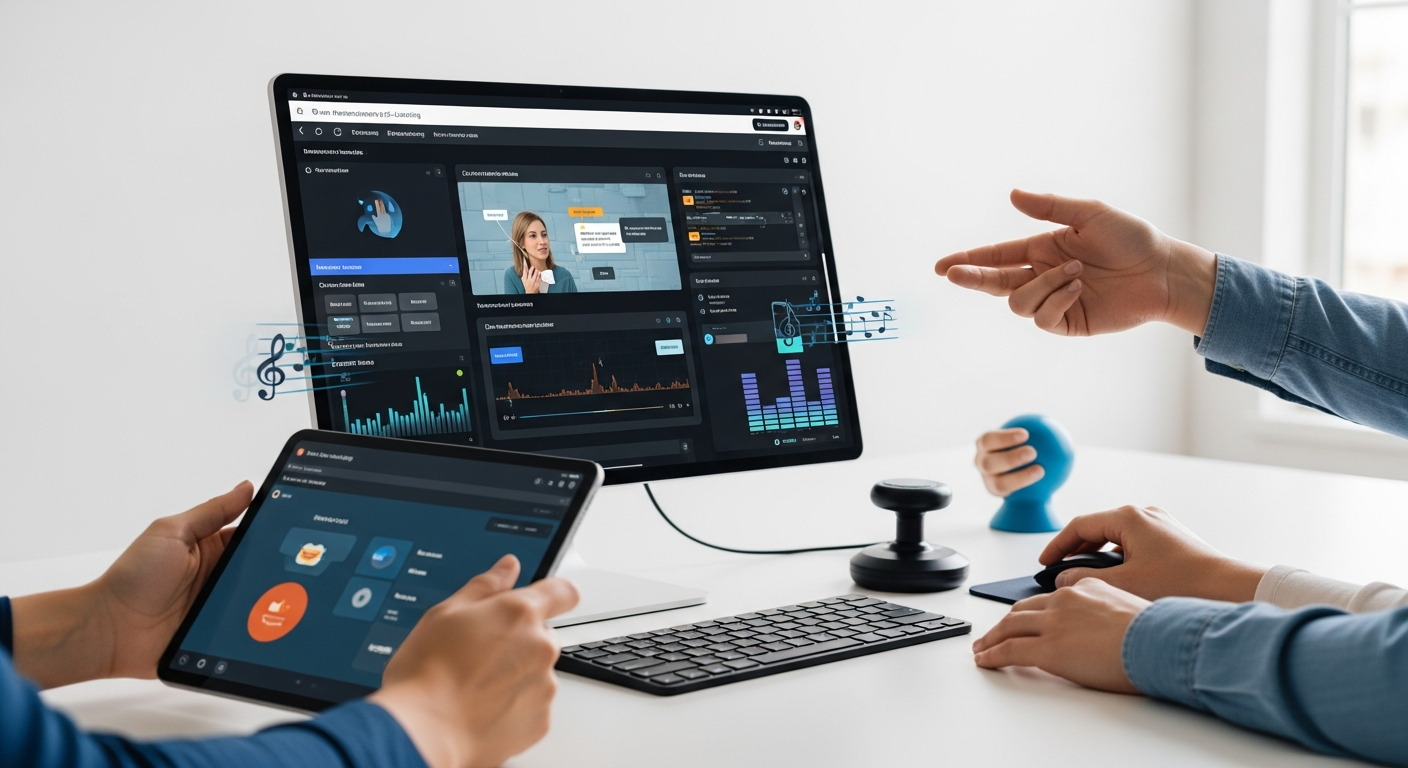
The Unseen Architects of Engagement: Bodily-Kinesthetic and Musical Intelligences in Modern E-Learning
In the dynamic landscape of modern corporate learning, L&D leaders face the perpetual challenge of crafting experiences that are not only informative but truly transformative. Traditional e-learning often leans heavily on linguistic and logical-mathematical intelligences, yet a significant portion of our workforce possesses strengths that lie beyond these conventional modes. Howard Gardner's theory of Multiple Intelligences offers a powerful lens through which to re-evaluate our instructional design strategies, particularly when it comes to leveraging Bodily-Kinesthetic and Musical Intelligences.
For Vice Presidents, Directors, and Senior Managers in L&D across diverse sectors like Compliance, Sales, Banking, Finance, Insurance, Retail, Pharma, Health care, Hospitality, Oil and Gas, and Mining, understanding and integrating these less-explored intelligences can unlock unprecedented levels of engagement, skill acquisition, and retention. This article delves into how these intelligences, often overlooked in digital environments, are becoming critical components of an effective Microlearning LMS and comprehensive learning strategy.
Beyond the Screen: Embracing Bodily-Kinesthetic Intelligence
Bodily-Kinesthetic intelligence is the capacity to manipulate objects and use a variety of physical skills. It involves a sense of timing and the perfection of skills through mind-body union. In an e-learning context, this might seem counterintuitive. How can we engage the body when learners are often seated in front of a screen?
Modern e-learning design is finding innovative ways. Think of complex operational training in Oil and Gas, intricate surgical procedures in Health care, or precise assembly lines in Retail and Manufacturing. For these industries, theoretical knowledge alone is insufficient. Learners need to 'do' to truly understand and master. This is where kinesthetic e-learning shines:
- Simulations and Virtual Reality (VR): Immersive environments allow learners to practice complex tasks, operate machinery, or handle difficult customer interactions in Sales, without real-world risk. For instance, a finance professional can practice trading scenarios, or a mining engineer can navigate a virtual mine site.
- Interactive Role-Playing: Beyond text-based scenarios, incorporating video-based role-playing or virtual avatars encourages learners to embody roles, practicing negotiation tactics in Banking or de-escalation in Hospitality.
- Gamified Learning: Gamified LMS platforms with interactive challenges, puzzles requiring physical input (like drag-and-drop sequencing), or even augmented reality (AR) applications can tap into the kinesthetic drive. Learners physically interact with the content, turning abstract concepts into tangible actions.
- Gesture-Based Controls: As technology advances, gesture recognition can allow learners to physically interact with content, mimicking real-world actions for compliance training or machinery operation.
By engaging learners physically, even within a digital realm, L&D professionals can significantly improve knowledge transfer and retention, leading to higher performance and reduced errors in critical functions. This active engagement creates a deeper, more memorable learning imprint than passive consumption.
The Soundtrack to Success: Leveraging Musical Intelligence
Musical intelligence involves skill in the performance, composition, and appreciation of musical patterns. This includes the capacity to recognize and compose musical pitches, tones, and rhythms. While often relegated to arts education, its potential in corporate e-learning is profound yet largely untapped.
Sound and music can profoundly influence mood, focus, and memory. For L&D leaders, integrating musical elements strategically can:
- Enhance Memory and Recall: Jingles, mnemonics, or rhythmic patterns can make complex policies in Compliance or new product features in Pharma more memorable. Think of how jingles stick in advertising – the same principle applies to learning.
- Improve Focus and Retention: Carefully selected background music (e.g., binaural beats, classical) can create an optimal learning environment, reducing distractions and improving concentration, particularly for lengthy training modules in areas like cybersecurity awareness or deep financial analysis.
- Set Emotional Tone: Music can be used to underscore the importance of certain topics, such as the gravity of ethical considerations in Banking or the urgency of safety protocols in Oil and Gas, creating a deeper emotional connection to the content.
- Provide Auditory Cues and Feedback: Distinct sounds can signal correct/incorrect answers, module completion, or progress milestones, providing non-intrusive feedback that reinforces learning without visual clutter.
- Structure and Pacing: Rhythmic pacing in narration or video segments can make content more engaging and easier to follow, breaking down complex topics into digestible, flowing segments.
The power of musical intelligence lies in its ability to engage the emotional and subconscious aspects of the brain, making learning a more holistic and less effortful experience. A well-designed learning management system can host and deliver such rich multimedia content seamlessly.
Strategic Integration for L&D Excellence
For L&D professionals, the goal is not merely to acknowledge these intelligences but to strategically integrate them into a holistic learning architecture. This requires a robust LMS or a powerful Learning content management system capable of delivering diverse content types and supporting innovative instructional design.
Designing for Impact:
- Adaptive Pathways: Employing Adaptive Learning technologies allows for personalized learning paths that cater to individual intelligence strengths. A learner strong in kinesthetics might receive more simulation-based modules, while a musically inclined individual might encounter more audio-rich content.
- AI-Powered Content Generation: An AI Powered Authoring Tool can assist in creating scenarios, developing interactive simulations, or even suggesting appropriate background music or rhythmic patterns for specific learning objectives. This significantly reduces content development time and cost.
- Focus on Risk-focused Training: In industries like Finance or Health care, where mistakes carry high stakes, kinesthetic simulations and musically reinforced memory aids can be invaluable for minimizing errors and ensuring adherence to critical protocols.
AI-Driven Innovations for Embodied and Rhythmic Learning
How can modern technological solutions, particularly artificial intelligence, help us create e-learning experiences that truly resonate with learners who thrive on movement and sound?
Artificial intelligence is a game-changer for designing dynamic, personalized learning experiences. For kinesthetic learners, AI can power advanced simulations and virtual reality environments that adapt in real-time to learner actions, providing immediate, context-sensitive feedback. Imagine AI-driven virtual mentors guiding a sales representative through a mock negotiation or an AI that can generate infinite variations of a compliance scenario, each requiring a physical response or a gesture. For musical intelligence, AI can analyze learning content and automatically compose or select appropriate background music, sound effects, or rhythmic cues that enhance comprehension and retention, dynamically adjusting based on learner engagement data or even biometric feedback. This moves beyond static content to truly interactive, responsive learning.
For our multinational organizations, how can we ensure these innovative, intelligence-based e-learning designs are culturally relevant and effective across diverse global teams?
Ensuring global relevance is paramount. AI-driven localization tools can translate and adapt content, but more importantly, they can analyze cultural nuances related to movement, gesture, and musical preferences. For instance, what constitutes appropriate background music or a culturally sensitive physical interaction in one region might differ significantly in another. AI can help identify these differences and offer alternative content suggestions. Furthermore, advanced learning management software allows for segmenting content delivery based on geographical or cultural profiles, ensuring that kinesthetic exercises or musical elements are always contextually appropriate and maximally effective for each specific learner segment within your enterprise learning management system.
Beyond current applications, what is the future potential for artificial intelligence to dynamically adapt and generate learning content that leverages these unique intelligences at scale?
The future potential is immense. AI is rapidly evolving towards generative capabilities that can dynamically create entire learning modules on the fly, tailored to an individual's intelligence profile and real-time performance. This could mean an AI not just selecting music, but composing unique sonic landscapes that evolve with the learning journey, or generating novel, interactive simulations that respond to complex physical inputs from the learner. An advanced cloud based learning management system powered by such AI could offer a truly bespoke learning experience, where content is not just personalized but procedurally generated to optimize engagement for every learner, regardless of their dominant intelligence. This will revolutionize how a learning management system supports human development.
The MaxLearn Advantage: A Holistic Approach
Implementing these advanced strategies requires a sophisticated and flexible learning management solution. A robust MaxLearn LMS, for example, serves as the central hub for delivering rich multimedia content, tracking learner progress in interactive simulations, and facilitating adaptive learning pathways. Its capabilities as an enterprise learning management platform allow L&D departments to deploy these intelligence-centric approaches across their entire organization, transforming everything from onboarding to continuous professional development.
From compliance training that utilizes interactive scenarios to sales training incorporating rhythmic recall aids, a modern lms learning management system empowers L&D leaders to build a learning ecosystem that resonates with every type of learner. The right learning management software is not just a delivery mechanism; it's an enabler for innovative pedagogy.
Conclusion
The integration of Bodily-Kinesthetic and Musical Intelligences into modern e-learning is no longer a fringe concept but a strategic imperative for L&D leaders aiming for superior learning outcomes. By thoughtfully incorporating simulations, gamification, and auditory design, powered by cutting-edge technology and robust platforms like MaxLearn LMS, organizations can unlock deeper engagement, enhance skill mastery, and foster a more adaptive and resilient workforce. This holistic approach ensures that every learner, regardless of their dominant intelligence, finds their rhythm and moves towards mastery in the digital age.


Comments
Post a Comment