The ROI of Adaptive Compliance Training: Cost Savings, Risk Reduction, and Time Saved
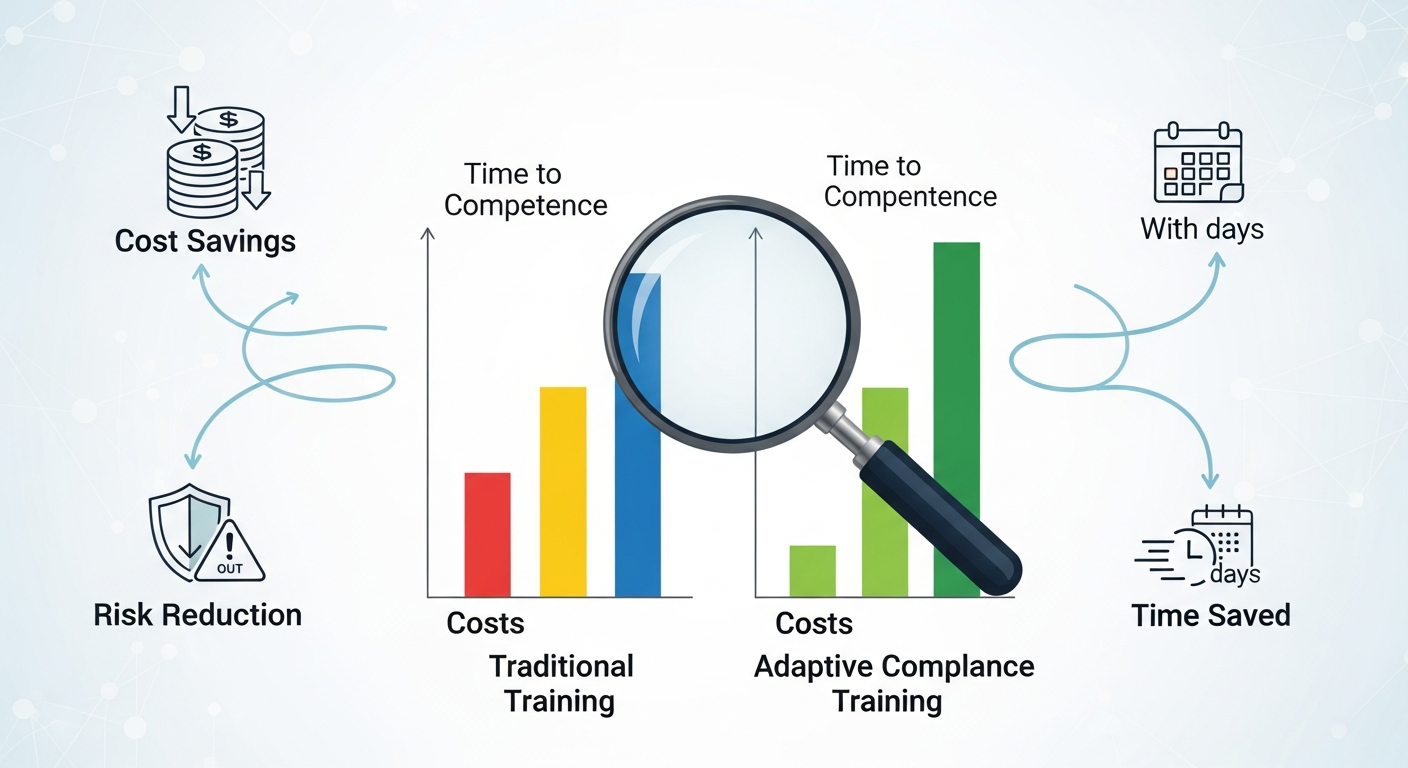
The ROI of Adaptive Compliance Training: Cost Savings, Risk Reduction, and Time Saved
For Vice Presidents, Directors, and Managers of Learning & Development, the phrase "compliance training" often evokes a mix of necessity and apprehension. It's a non-negotiable part of doing business, yet traditional approaches frequently struggle with engagement, retention, and demonstrating tangible value. The constant pressure to meet regulatory requirements, mitigate risks, and optimize resources leaves many L&D leaders searching for a more effective solution.
Enter adaptive compliance training. Far from a mere buzzword, it represents a strategic shift that promises not just adherence, but a significant return on investment (ROI) through substantial cost savings, robust risk reduction, and invaluable time efficiencies. This isn't just about ticking boxes; it's about transforming compliance from a necessary evil into a competitive advantage.
What is Adaptive Compliance Training?
Adaptive compliance training leverages technology to personalize the learning experience for each employee. Instead of a one-size-fits-all module, it uses pre-assessments, real-time feedback, and intelligent algorithms to deliver content precisely when and where it's needed. Learners skip what they already know and focus on areas where they need improvement. This approach ensures relevance, boosts engagement, and dramatically improves knowledge retention, making compliance not just understood, but truly internalized.
The Core Pillars of ROI: Driving Value Through Adaptation
The business case for adaptive compliance training rests on three powerful pillars: significant cost savings, profound risk reduction, and immense time efficiencies across the organization.
Cost Savings: Optimizing Your L&D Budget
Traditional compliance training can be a colossal drain on resources. Think about the hours spent on redundant content, the need for repeated training due to poor retention, and the administrative overhead. Adaptive compliance training directly addresses these inefficiencies:
- Reduced Training Hours: By allowing learners to bypass known material, adaptive platforms slash the actual time employees spend in training. This translates directly into more productive work hours, a quantifiable saving. Leveraging a Microlearning LMS, for instance, breaks down complex topics into bite-sized, digestible modules, further optimizing learning time.
- Improved Knowledge Retention and Reduced Re-training: Personalized learning paths, interactive content, and immediate feedback loops inherent in adaptive systems significantly enhance long-term memory and understanding. This means fewer instances of non-compliance due to forgotten information and less need for costly refresher training sessions.
- Optimized Resource Allocation: Adaptive platforms automate much of the administrative burden associated with compliance training – scheduling, tracking, reporting. This frees up L&D teams to focus on strategic initiatives rather than logistical tasks. Furthermore, the need for extensive in-person instruction, travel, and venue costs can be dramatically reduced.
- Lower Non-Compliance Fines and Penalties: The most direct cost saving comes from avoiding regulatory fines, legal fees, and reputational damage associated with compliance breaches. A truly effective training program is your best defense against these potentially catastrophic financial penalties.
Risk Reduction: Fortifying Your Organization Against Threats
Beyond monetary fines, compliance failures can lead to severe reputational damage, loss of customer trust, and even operational shutdowns. Adaptive compliance training is a proactive shield against these threats:
- Enhanced Understanding of Regulations: By ensuring every employee truly grasps the nuances of relevant policies and regulations, the likelihood of unintentional breaches decreases significantly. The system ensures mastery, not just exposure.
- Fewer Incidents and Data Breaches: Whether it's data privacy (GDPR, CCPA), anti-money laundering (AML), or workplace safety, well-trained employees are less prone to making critical errors. Adaptive training targets specific high-risk areas, providing focused remediation. Integrating Risk-focused Training within an adaptive framework ensures critical areas are never overlooked.
- Improved Legal Standing: In the event of an investigation or audit, robust, trackable, and demonstrably effective adaptive training records provide concrete evidence of due diligence, significantly bolstering your legal defense.
- Enhanced Organizational Reputation and Trust: A company known for its strong ethical standards and commitment to compliance enjoys greater trust from customers, partners, and regulators. This intangible asset can translate into long-term business growth and stability.
Time Saved: Efficiency for Everyone
Time is a precious commodity, especially in fast-paced industries like banking, finance, healthcare, and retail. Adaptive compliance training saves time for multiple stakeholders:
- For Employees: Gone are the days of sitting through hours of irrelevant content. Employees can complete their training more quickly and efficiently, focusing on tasks that contribute directly to business objectives. This respects their time and boosts morale.
- For L&D Teams: Automation of assignments, tracking, and reporting frees up L&D professionals from repetitive tasks, allowing them to focus on strategic content development and program optimization. A sophisticated `learning management system` handles the heavy lifting.
- Faster Time-to-Competency: New hires and employees transitioning to new roles can achieve compliance competency much faster, accelerating their productivity and contribution to the organization.
How Adaptive Training Delivers These Benefits
The power of adaptive compliance training stems from its underlying methodologies and technological backbone:
- Personalization and Efficiency: Leveraging diagnostic assessments, an adaptive platform identifies individual knowledge gaps and tailors a unique learning path. This prevents redundancy and maximizes learning impact.
- Engagement and Retention: Adaptive systems often incorporate interactive elements, real-world simulations, and scenario-based learning to make compliance less abstract and more engaging. A Gamified LMS, for instance, transforms mandatory training into an enjoyable and competitive experience, significantly boosting completion rates and retention.
- Data-Driven Insights: Advanced analytics within a modern `learning management system` provide L&D leaders with granular data on learner progress, content effectiveness, and areas of common weakness. This allows for continuous improvement and strategic adjustments. Platforms like MaxLearn LMS provide deep insights crucial for effective `enterprise learning management`.
- Scalability and Future-Proofing: A `cloud based learning management system` ensures that adaptive compliance training can be deployed rapidly across diverse teams, geographies, and regulatory landscapes. It simplifies content updates and ensures your training remains current with evolving regulations.
Integrating Advanced Technology for Enhanced Compliance Training
As L&D leaders look to maximize their compliance training impact, key questions arise about leveraging cutting-edge technology:
Organizations often wonder how technology can precisely target compliance gaps across diverse roles and departments. How can an advanced `learning management system` ensure that every employee, regardless of their position, receives precisely the training needed for their specific risk profile?
Advanced analytics within a modern `learning management system` can identify common knowledge gaps across different roles, allowing for hyper-targeted remediation modules. This ensures every employee receives precisely the training they need, without wasting time on what they already know. An effective `learning content management system` helps structure this individualized approach, creating a truly optimized learning experience.
A common question executives ask is how to ensure consistent compliance understanding and application across geographically dispersed teams, especially in global organizations within finance, pharma, or oil and gas.
Centralized `learning management software` hosted in the cloud ensures that all global employees access the same up-to-date content, regardless of their location. This allows for consistent deployment of `learning management solutions` while providing localized content where necessary, ensuring global adherence to regulations. This consistency is vital for maintaining a strong compliance posture across all operations.
Leaders frequently inquire about the overall effectiveness of their training investment – specifically, how to measure the real-world impact on behavior and reduce non-compliance incidents, moving beyond simple completion rates.
Beyond completion rates, adaptive platforms track engagement, progress, and even post-training performance data. This holistic view provides a clear picture of `lms learning management system` effectiveness. Paired with Adaptive Learning methodologies, an `LCMS` can continually refine content, driving tangible improvements in compliance behavior and minimizing costly errors. This comprehensive data allows L&D teams to demonstrate clear ROI.
The Future of Compliance Training is Adaptive
The landscape of compliance is ever-evolving. Regulations change, risks emerge, and the workforce adapts. Static, annual training programs simply cannot keep pace. The future demands dynamic, personalized, and continuously optimized learning experiences.
With an AI Powered Authoring Tool, L&D teams can rapidly create and update highly relevant compliance modules, ensuring that training content remains current and effective. Coupled with the power of adaptive delivery, organizations can move from reactive compliance to proactive risk mitigation and continuous learning. MaxLearn LMS stands at the forefront of this transformation, offering robust solutions for modern compliance training.
Conclusion
For L&D Vice Presidents, Directors, and Managers, the decision to invest in adaptive compliance training is a strategic imperative. It's an investment that delivers a clear and measurable ROI through significant cost savings from optimized training, robust risk reduction through enhanced knowledge and fewer incidents, and invaluable time efficiencies for employees and L&D teams alike.
By embracing adaptive methodologies and leveraging powerful `learning management system` technology, your organization can move beyond the burden of traditional compliance and cultivate a culture of proactive adherence, protecting your business and empowering your workforce.


Comments
Post a Comment