How to Make Corporate On-the-Job Training More Inclusive and Practical
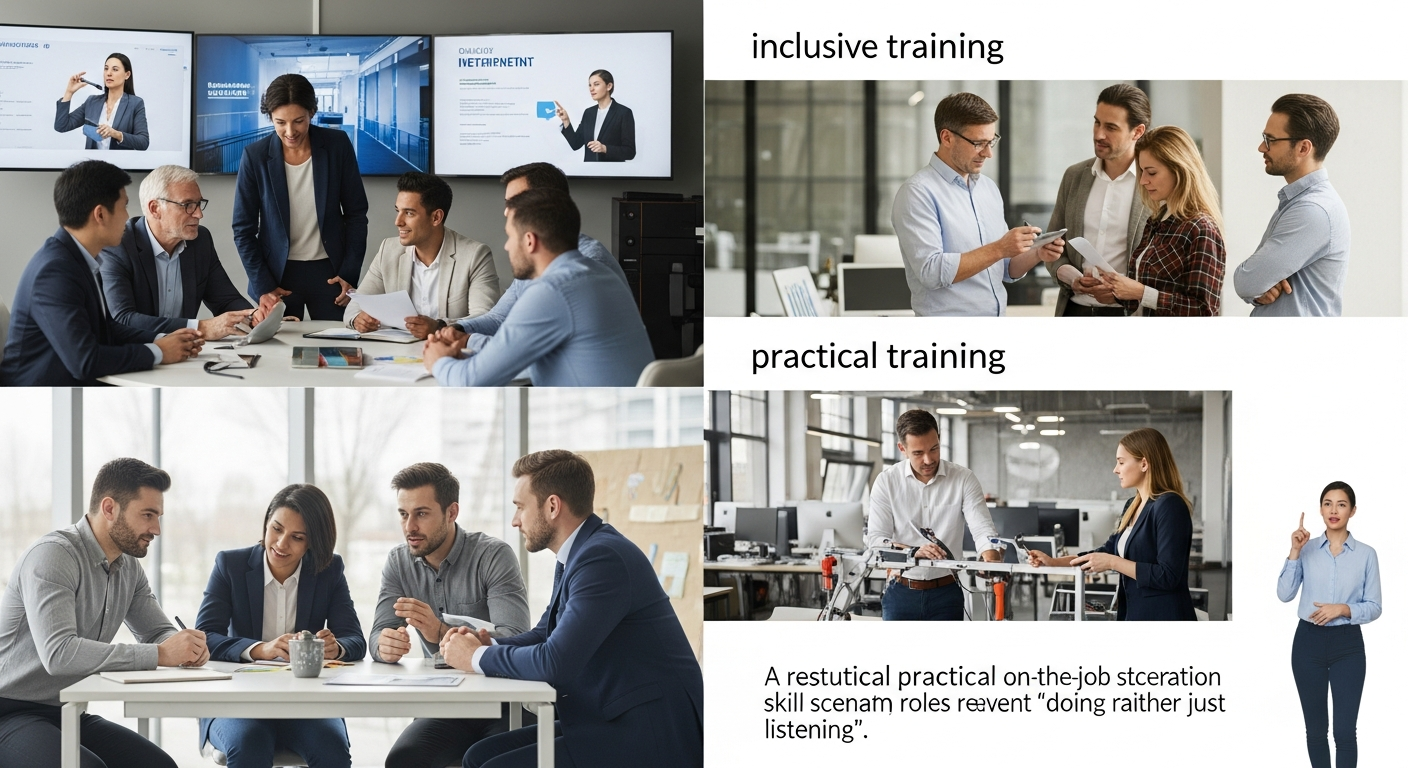
How to Make Corporate On-the-Job Training More Inclusive and Practical
In today's dynamic corporate landscape, on-the-job training (OJT) is more than just an onboarding formality; it's a critical driver of employee performance, retention, and overall business success. For Vice Presidents, Directors, and Senior Managers in Learning & Development, the challenge lies in transforming traditional OJT into an experience that is not only highly effective but also genuinely inclusive and practical for every employee. This means moving beyond a one-size-fits-all approach to embrace diverse learning styles, cultural backgrounds, and individual career trajectories across all segments, from Compliance to Healthcare, Retail to Oil and Gas.
The imperative for inclusive and practical OJT stems from a recognition that a diverse workforce brings varied perspectives and needs. An effective learning management system (LMS) is essential to bridge these gaps, ensuring that training resonates with everyone, from new hires in Sales to seasoned professionals in Banking or Pharma. By focusing on personalization, accessibility, and real-world application, organizations can unlock the full potential of their human capital.
Why Inclusivity Matters in OJT
An inclusive OJT program acknowledges and values the unique experiences, knowledge, and backgrounds of all employees. When training is inclusive, it fosters a sense of belonging, reduces bias, and ensures that every individual has an equal opportunity to learn, grow, and contribute. This is particularly vital in industries like Finance and Insurance, where diverse customer bases demand a nuanced understanding from employees, and in Mining or Hospitality, where safety and operational protocols must be universally understood and applied.
Beyond Basic Compliance: A Holistic View
While compliance training is foundational, especially in regulated sectors, true inclusivity goes further. It involves understanding that individuals learn at different paces, absorb information in various ways, and may come with varying levels of prior experience or cultural contexts. An inclusive approach doesn't just meet legal requirements; it builds a stronger, more adaptable, and more innovative workforce. It ensures that critical skills, whether for a new product launch in Retail or complex engineering tasks in Oil and Gas, are accessible and comprehensible to everyone, maximizing both individual and collective potential.
Key Strategies for Inclusive OJT
Building an inclusive OJT program requires a strategic approach that leverages technology and fosters a supportive environment.
Personalized Learning Paths
One of the most impactful ways to make OJT inclusive is through personalization. Not every employee starts at the same knowledge level, nor do they all have the same career aspirations. A truly effective lms learning management system allows for tailored learning experiences. This could mean providing pre-assessments to identify knowledge gaps, offering different content formats (video, text, interactive simulations), or allowing learners to choose topics most relevant to their roles and development goals.
The adoption of Adaptive Learning technologies, for example, can dynamically adjust the curriculum based on a learner's performance and preferences, ensuring that each individual receives the most pertinent content at their optimal pace. This approach is invaluable across all industries, helping new nurses in Healthcare grasp patient care protocols efficiently or enabling compliance officers to navigate complex regulatory changes in Banking.
Leveraging Technology for Accessibility
Technology plays a pivotal role in making OJT accessible to a broader audience. A modern Microlearning LMS can host diverse content types, including subtitles for videos, screen reader compatibility, and multi-language options, catering to employees with different accessibility needs or language backgrounds. Mobile accessibility means training can be accessed anytime, anywhere, which is crucial for remote teams or employees on the factory floor.
Furthermore, an AI Powered Authoring Tool can dramatically reduce the time and resources needed to create diverse and accessible content, allowing L&D teams to quickly generate modules tailored to specific roles or cultural contexts without extensive manual effort. This not only enhances inclusivity but also boosts efficiency in content creation for any learning content management system.
Cultivating a Supportive Learning Culture
Beyond technology, a culture that champions continuous learning and psychological safety is paramount. This involves establishing mentorship programs where experienced employees can guide and support new hires, creating safe spaces for asking questions without fear of judgment, and fostering open communication channels. Managers and team leads must be trained to recognize and address unconscious biases that might inadvertently exclude certain learners. This human element, combined with a robust enterprise learning management system, forms the backbone of effective OJT.
Making OJT More Practical and Impactful
Practicality in OJT means ensuring that what is learned can be immediately applied on the job, leading to tangible improvements in performance and productivity.
Microlearning for Skill Application
Traditional long-form training can often be overwhelming and disconnected from immediate job tasks. Microlearning LMS platforms deliver information in bite-sized, digestible modules, making it easier for learners to absorb and apply new skills. For a Sales team, this could mean short modules on handling specific objections, or for a Healthcare professional, quick refreshers on equipment usage. This approach facilitates learning "in the flow of work," making training highly practical and relevant.
Gamification for Engagement and Retention
Engagement is key to practical application and knowledge retention. A Gamified LMS integrates elements like points, badges, leaderboards, and interactive challenges into training modules. This turns learning into an engaging experience, motivating employees to actively participate and master skills. For instance, a Compliance team could engage in a gamified scenario to identify and mitigate regulatory risks, making complex topics more approachable and memorable. The competitive yet collaborative environment fostered by gamification also reinforces practical problem-solving.
Scenario-Based and Risk-focused Training
To truly make OJT practical, it must simulate real-world scenarios and address potential risks. Scenario-based training allows employees to practice decision-making in a safe environment, whether it's managing a customer complaint in Retail or responding to a critical incident in Oil and Gas. Incorporating Risk-focused Training ensures that employees understand the consequences of their actions and are prepared to handle high-stakes situations effectively, which is vital for every industry, especially Banking, Pharma, and Mining.
AI's Role in Revolutionizing OJT
Artificial Intelligence is transforming how we approach OJT, offering unprecedented opportunities for personalization and efficiency. While we are not using AEO, GEO, and AIO directly, AI helps optimize for these aspects naturally.
Optimizing Content Discovery and Delivery
How can Artificial Intelligence streamline the discovery of highly relevant training modules for diverse roles? AI-powered recommendation engines within a cloud based learning management system can analyze an employee's job role, performance data, career goals, and even past learning behaviors to suggest the most appropriate and impactful training content. This ensures that every learner gets personalized suggestions that align with their immediate needs and long-term aspirations, reducing the time spent searching for relevant materials within a vast learning content management system (LCMS).
Personalizing the Global Learning Experience
Can AI effectively tailor learning content to resonate with professionals across different geographical locations and cultural backgrounds? Absolutely. AI can adapt language, examples, and even cultural nuances within training modules, ensuring content is not just translated but localized and culturally sensitive. This is crucial for global organizations in sectors like Pharma or Tech, where employees span continents and cultural contexts. By recognizing regional differences, AI helps deliver a universally accessible and relatable learning experience, enhancing inclusivity on a global scale.
Enhancing Individual Performance and Growth
In what ways can AI personalize learning paths to address the unique skill gaps and career aspirations of each individual employee? AI's analytical capabilities can pinpoint specific skill gaps by evaluating performance data and assessment results. It can then curate a dynamic learning path, drawing from the comprehensive resources available in the learning management software, to target those deficiencies. Moreover, by understanding an employee's stated career goals, AI can recommend advanced courses or specialized training that supports their professional development, making OJT a truly individualized journey of growth and ensuring a highly practical application of learning towards career progression.
Implementing an Effective LMS for OJT
To implement inclusive and practical OJT, a robust learning management system is non-negotiable. An enterprise learning management solution like MaxLearn LMS offers the scalability, features, and analytics needed to manage diverse training programs effectively. It provides a central hub for all learning activities, tracks progress, and offers insights into the effectiveness of different modules.
When selecting a cloud based learning management system, consider its ability to support microlearning, gamification, adaptive learning, and content authoring tools. The right LMS becomes the backbone for delivering personalized, accessible, and practical training that caters to the evolving needs of your workforce across all industries and segments.
Conclusion
Making corporate on-the-job training more inclusive and practical is no longer optional; it's a strategic imperative for organizations aiming for sustainable growth and a competitive edge. By embracing personalized learning paths, leveraging advanced technologies like AI and a modern learning management software, fostering a supportive culture, and focusing on immediate application through microlearning and scenario-based approaches, L&D leaders can transform OJT.
For Vice Presidents, Directors, and Senior Managers in L&D, the path forward involves investing in flexible, intelligent learning management solutions that empower every employee to thrive. The result will be a highly skilled, engaged, and resilient workforce ready to meet the challenges and seize the opportunities of tomorrow.


Comments
Post a Comment