How to Build Better Retention Maps Using Gardner's Psychological Concepts
How to Build Better Retention Maps Using Gardner's Psychological Concepts
For Vice Presidents, Directors, Senior Managers, and Managers in Learning & Development, the ultimate measure of success isn't just course completion rates, but the enduring impact of learning on performance. In today's dynamic business environment, across industries from Compliance to Sales, Banking to Pharma, and Health Care to Oil and Gas, ensuring employees not only absorb information but retain it long-term is paramount. This is where the concept of a retention map becomes invaluable – a strategic framework for understanding where knowledge falters and how to reinforce it.
However, many traditional retention maps often fall short, failing to account for the diverse ways individuals learn and process information. To truly elevate your organization’s learning retention, we need to look beyond generic approaches and embrace the profound insights offered by Howard Gardner's Theory of Multiple Intelligences. By integrating Gardner's psychological concepts, L&D leaders can design more sophisticated, effective, and human-centric retention strategies, ensuring critical skills stick, whether it's for Risk-focused Training in finance or complex operational procedures in mining.
Understanding the Essence of Retention Maps
A retention map, in an L&D context, is more than just a schedule of refresher training. It's a comprehensive strategy to combat the 'forgetting curve.' It identifies key pieces of information, critical skills, and compliance knowledge that employees must retain. It then plots interventions, spaced repetitions, and reinforcement activities to ensure this knowledge remains active and accessible over time. The goal is to minimize performance gaps, reduce errors, and ensure consistent application of learned material in real-world scenarios, which is crucial for every sector, from retail customer service to hospitality management.
The challenge lies in making these maps effective for every learner. People don't learn or forget in a uniform manner. This is precisely where Gardner’s groundbreaking work offers a transformative lens for L&D professionals.
Gardner's Theory of Multiple Intelligences: A Foundation for Deeper Learning
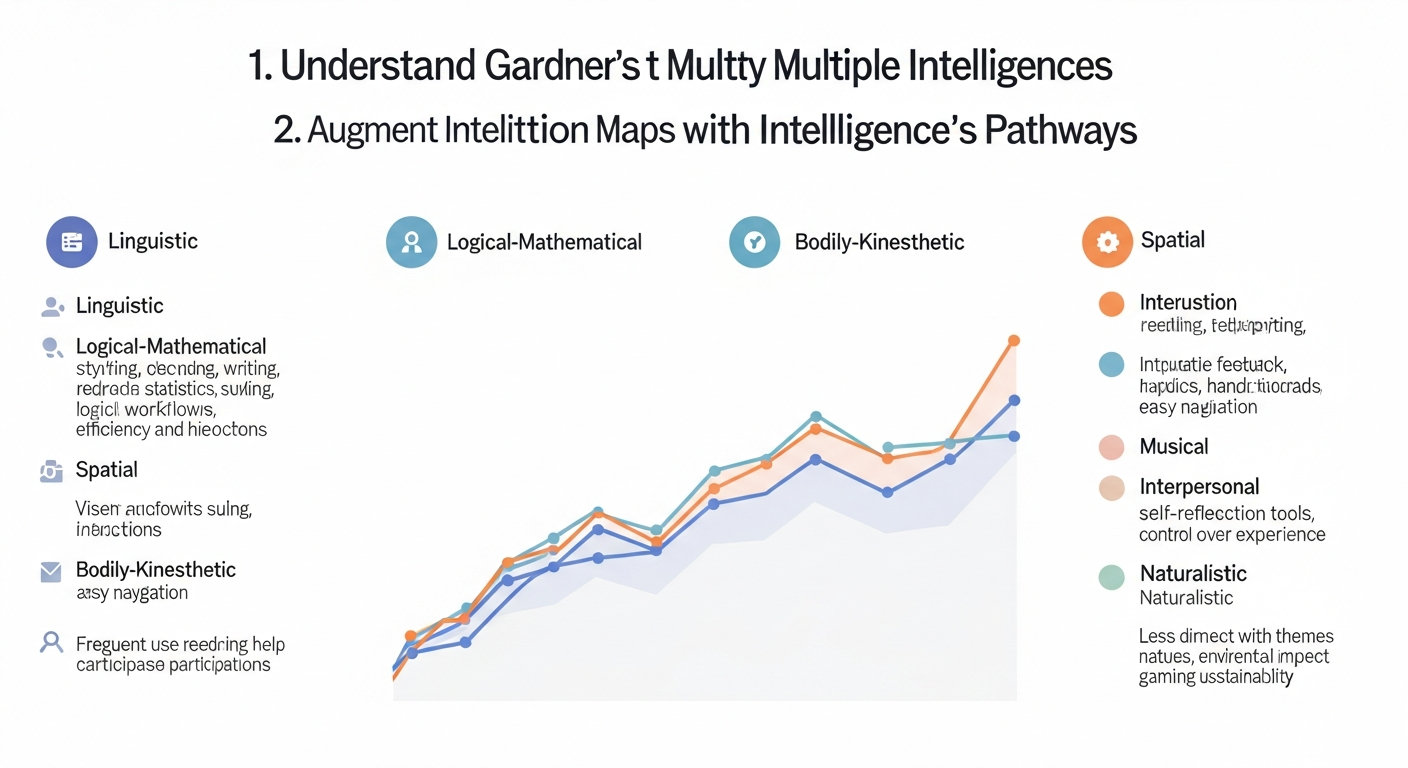
Howard Gardner, a developmental psychologist, challenged the traditional view of intelligence as a single, fixed capacity. Instead, he proposed that individuals possess at least eight distinct intelligences, each representing a different way of interacting with the world and processing information. These are:
- Linguistic Intelligence: Word smarts; sensitivity to language, meaning, and order.
- Logical-Mathematical Intelligence: Number/reasoning smarts; ability to think conceptually and abstractly.
- Spatial Intelligence: Picture smarts; ability to think in three dimensions and visualize.
- Bodily-Kinesthetic Intelligence: Body smarts; ability to manipulate objects and express oneself physically.
- Musical Intelligence: Music smarts; ability to discern rhythm, pitch, and timbre.
- Interpersonal Intelligence: People smarts; ability to understand and interact effectively with others.
- Intrapersonal Intelligence: Self smarts; ability to understand oneself, one's emotions, and motivations.
- Naturalistic Intelligence: Nature smarts; ability to recognize and categorize elements of the natural world.
For L&D, this theory is a revelation. It suggests that a one-size-fits-all training approach will inevitably leave many learners disengaged and, critically, less likely to retain information. By designing learning experiences that appeal to a broader range of intelligences, we can significantly enhance engagement, comprehension, and ultimately, long-term retention. This diversified approach is the cornerstone for building truly resilient retention maps.
Applying Gardner to Craft Intelligence-Rich Retention Maps
To leverage Gardner’s insights for your retention maps, consider how each intelligence can be addressed in your learning content and reinforcement strategies:
Linguistic Intelligence: The Power of Narrative and Clear Communication
Learners strong in linguistic intelligence thrive on words. For them, retention improves with compelling narratives, clear instructions, concise written materials, and opportunities for discussion. Incorporate storytelling, case studies, and engaging written summaries in your Microlearning LMS modules to reinforce key concepts. Think compliance policies explained through engaging scenarios, not just dry text.
Logical-Mathematical Intelligence: Data, Patterns, and Problem-Solving
These learners seek logic, patterns, and cause-and-effect relationships. Their retention is boosted by analytical exercises, data-driven examples, problem-solving simulations, and opportunities to break down complex issues. In banking and finance, this means using real-world financial models or risk assessment simulations rather than just theoretical explanations.
Spatial Intelligence: Visuals, Simulations, and Design
Visual learners benefit from imagery, diagrams, maps, and simulations. Their retention maps should include infographics, interactive 3D models (for fields like engineering or healthcare), flowcharts, and virtual reality experiences. An LMS with robust media capabilities is essential here.
Bodily-Kinesthetic Intelligence: Hands-on Practice and Experience
These individuals learn by doing. Retention for them is maximized through role-playing, hands-on labs, simulations, interactive exercises, and experiential learning. For sales training, this means practice pitches; for healthcare, simulated patient interactions; for manufacturing, virtual machinery operation. A Gamified LMS can provide interactive scenarios that cater to this intelligence.
Musical Intelligence: Rhythm, Sound, and Memory Aids
While less common in corporate training, musical intelligence can be subtly integrated. Using rhythmic mnemonics, audio-based summaries, or even background music in certain learning segments can aid retention for some. Consider creating short, memorable audio snippets for critical alerts or procedures.
Interpersonal Intelligence: Collaboration and Social Learning
These learners thrive in group settings, discussions, and collaborative projects. Retention maps should include peer coaching, group problem-solving, team-based assignments, and social learning features within your learning management system. This is particularly effective for developing leadership or team management skills.
Intrapersonal Intelligence: Reflection and Self-Paced Learning
Self-aware learners benefit from opportunities for reflection, self-assessment, and independent study. Provide journaling prompts, self-paced modules, and personalized learning paths. An Adaptive Learning platform can be incredibly effective here, allowing learners to control their pace and focus.
Naturalistic Intelligence: Contextual and Real-World Relevance
These learners connect best with real-world examples and practical applications. Integrate case studies that reflect their actual work environment, provide contextual learning scenarios, and demonstrate how learned concepts apply to their daily tasks. For employees in oil and gas or agriculture, this means learning directly tied to environmental factors or field conditions.
Leveraging Technology to Power Your Intelligence-Driven Retention Maps
Implementing a sophisticated, intelligence-driven retention map requires more than just diverse content; it demands the right technology. A modern LMS, such as a cloud based learning management system, is no longer just a content repository but a strategic tool for personalized learning and effective knowledge retention.
- A Microlearning LMS excels at delivering varied content types in short, digestible bursts, perfect for addressing different intelligences without overwhelming learners. It allows for quick visual refreshers (spatial), short problem-solving challenges (logical), or brief narrative explanations (linguistic).
- A Gamified LMS can weave in elements like badges, leaderboards, and interactive simulations that appeal to bodily-kinesthetic and logical learners, driving engagement and repeat interaction crucial for retention.
- Adaptive Learning platforms are pivotal. They can dynamically adjust content and learning paths based on a learner's performance and identified intelligence strengths, ensuring the most effective reinforcement for each individual. Imagine an enterprise learning management system that customizes content delivery based on a pre-assessment of learning preferences.
- An AI Powered Authoring Tool can dramatically accelerate the creation of diverse content formats. This enables L&D teams to quickly generate scenarios, quizzes, visual aids, and interactive elements tailored to multiple intelligences, populating your learning content management system with rich, varied material.
These technologies transform a static retention map into a dynamic, responsive learning ecosystem, providing a significant advantage for any organization using a powerful lms learning management system like MaxLearn LMS. The capabilities of a modern LCMS are truly game-changing for retention.
Building Your Enhanced Retention Maps: A Strategic Approach
For L&D leaders, integrating Gardner’s concepts into retention maps involves a structured process:
- Assess Your Workforce's Learning Profiles: While formal assessments might be lengthy, qualitative observations and feedback from your learning management software can provide insights into which content types resonate most.
- Diversify Content Strategy for Key Knowledge Areas: For critical topics (e.g., compliance regulations, product features, safety protocols), create multiple reinforcement modules targeting different intelligences. A core concept could have a linguistic explanation, a logical problem, a spatial infographic, and a bodily-kinesthetic simulation.
- Leverage Advanced Learning Technology: Invest in learning management solutions that support rich media, adaptive paths, and interactive elements. A comprehensive learning management system is non-negotiable for this strategy.
- Implement Spaced Repetition with Varied Formats: Instead of just repeating the same quiz, alternate content types for reinforcement. For example, a linguistic recap, followed by a spatial infographic, then a logical case study.
- Continuously Measure and Adapt: Utilize the analytics from your LMS to identify which reinforcement methods are most effective for specific topics or learner groups. Refine your retention map based on this data.
Addressing Key L&D Questions with an Intelligent Approach
How can L&D leaders effectively pinpoint and address specific knowledge gaps within a geographically dispersed team?
Modern learning platforms with robust analytics can track individual and team performance, highlighting areas needing reinforcement regardless of location. These systems can then recommend tailored content designed to appeal to various learning preferences, ensuring targeted intervention across diverse global workforces.
What strategies can optimize learning paths for employees with varied job roles and preferred learning styles to ensure maximum skill acquisition?
Employing adaptive learning technology, combined with diverse content formats designed around psychological principles, allows for highly personalized and effective training experiences. By analyzing engagement with different content types, the system can guide learners toward methods best suited for their individual strengths and role requirements.
How can organizations accurately forecast the impact of new training initiatives on long-term employee performance and retention?
Advanced enterprise learning management systems leverage data science to analyze learning trends, correlate training completion with performance metrics, and provide insights into future retention outcomes. By observing which intelligence-specific interventions lead to sustained knowledge, L&D can predict and refine the effectiveness of future programs.
Conclusion
Building better retention maps is not merely about scheduling reminders; it’s about understanding the intricate psychology of how humans learn and remember. By thoughtfully applying Gardner’s Theory of Multiple Intelligences, L&D professionals can move beyond generic training to create truly engaging, effective, and enduring learning experiences. Paired with cutting-edge learning technologies—from Microlearning LMS platforms to Adaptive Learning systems and AI Powered Authoring Tool capabilities—you can construct retention maps that not only prevent knowledge decay but actively foster a culture of continuous and deeply embedded learning across all sectors of your organization. This strategic shift will undoubtedly lead to higher performance, reduced risk, and a more skilled, confident workforce.


Comments
Post a Comment