How Does Microlearning Improve Regulatory Compliance Retention Rates?
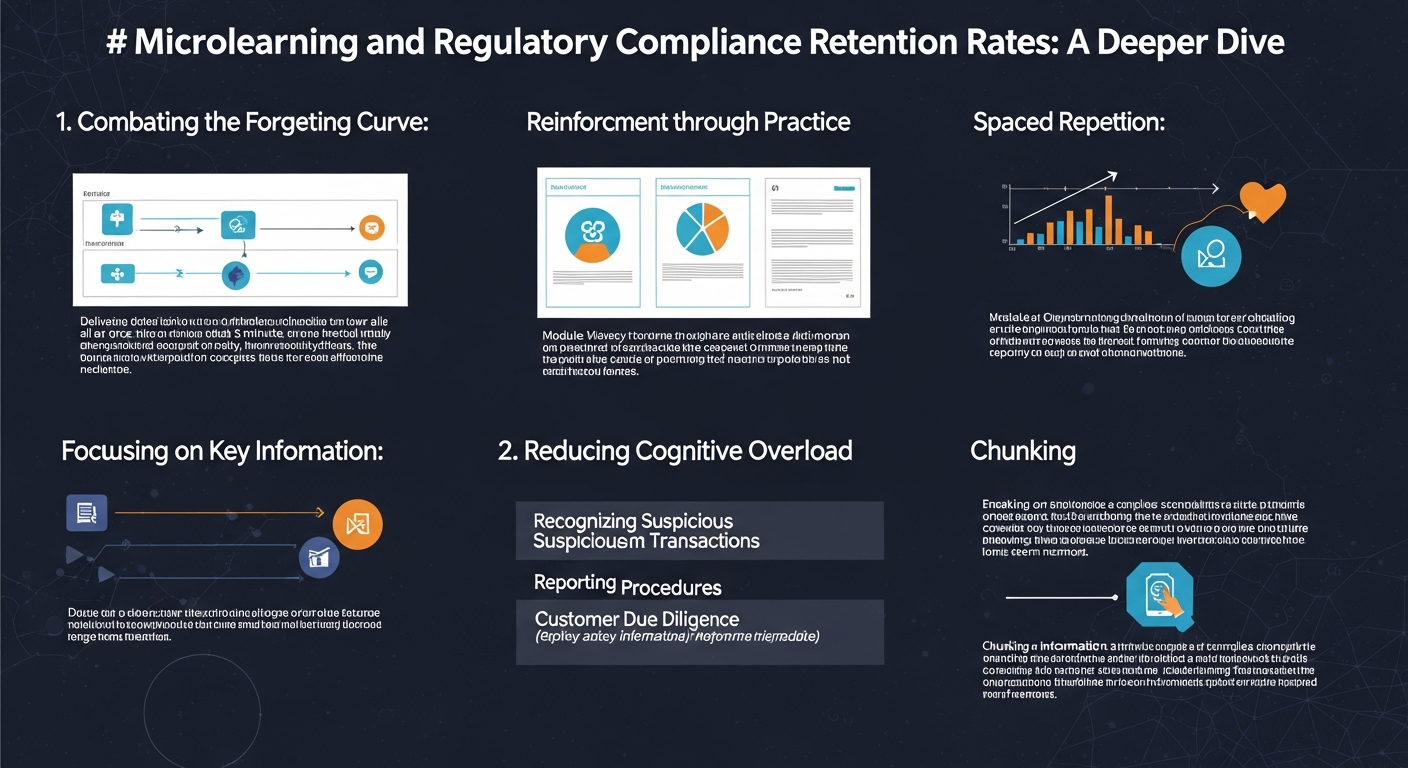
How Does Microlearning Improve Regulatory Compliance Retention Rates?
For Vice Presidents, Directors, and Managers of Learning & Development, the landscape of regulatory compliance is a constant, evolving challenge. Across industries like banking, finance, insurance, healthcare, pharma, and even oil and gas, ensuring employees not only understand but also retain critical compliance information is paramount. The stakes are high: non-compliance can lead to hefty fines, reputational damage, and even legal action. Yet, traditional, lengthy compliance training often falls short, struggling with engagement and, crucially, retention rates.
This is where microlearning emerges as a powerful, transformative solution. By delivering information in bite-sized, digestible modules, microlearning doesn't just make compliance training more bearable; it fundamentally enhances how employees learn, remember, and apply vital regulatory knowledge, directly impacting retention rates and overall organizational compliance.
The Compliance Conundrum: Why Traditional Methods Fail
Think back to the last time your organization rolled out a mandatory, hours-long compliance module. For many L&D professionals, the scenario is familiar:
- Information Overload: Drowning learners in a deluge of complex rules and policies leads to cognitive overload, where crucial details are quickly forgotten.
- Disengagement: Monotonous, passive learning experiences featuring endless slides and legal jargon fail to capture attention, resulting in employees merely clicking through content without true understanding.
- Lack of Relevance: Generic, one-size-fits-all training doesn't always resonate with individual job roles or daily tasks, making it difficult for employees to connect the dots between policy and practice.
- Poor Recall: Without reinforcement or practical application, even well-presented information fades from memory over time, especially when not immediately needed.
These challenges contribute to low retention rates, leaving organizations vulnerable to compliance breaches and undermining the significant investment made in training. An effective Microlearning LMS can be the game-changer.
Microlearning: A Paradigm Shift for Compliance Training
Microlearning is an approach to learning that delivers content in small, focused bursts, typically lasting a few minutes. For regulatory compliance, this means breaking down complex topics into easily consumable modules, each addressing a single learning objective. This shift offers several profound benefits:
- Reduced Cognitive Load: By focusing on one concept at a time, microlearning prevents overwhelming the learner, allowing for deeper processing and better understanding.
- Enhanced Engagement: Short, interactive modules are inherently more engaging than lengthy courses. They fit into busy schedules and cater to modern attention spans.
- Improved Accessibility: Learners can access microlearning modules on demand, on any device, making it easy to fit training into their workflow exactly when needed.
- Targeted Learning: Content can be highly specific to roles, risks, or new regulations, ensuring relevance and immediate applicability.
How Microlearning Enhances Regulatory Compliance Retention Rates
The core advantage of microlearning in compliance lies in its ability to significantly boost information retention. Here's how:
Cognitive Load Reduction
Our brains are not designed to absorb vast amounts of complex information in one sitting. Microlearning respects this cognitive limitation. By presenting regulatory content in small, digestible chunks – perhaps a 3-minute video on anti-money laundering indicators or a 5-minute interactive quiz on data privacy regulations – learners can fully process and integrate each piece of information before moving on. This prevents mental fatigue and ensures that critical compliance details are actually learned, not just skimmed.
Spaced Repetition and Recall
One of the most effective learning strategies is spaced repetition. Microlearning platforms excel at facilitating this by delivering short, targeted refreshers at optimal intervals. Instead of a single annual compliance course, employees receive small doses of reinforcement throughout the year. This could be a quick scenario-based module, a quiz, or a short explainer video. This regular revisiting of material strengthens neural pathways, moving information from short-term to long-term memory, which is crucial for remembering nuanced regulatory requirements.
Engagement Through Interactivity and Gamification
Passive learning leads to passive retention. Microlearning, especially when powered by a Gamified LMS, prioritizes active learning. Interactive elements like drag-and-drop exercises, decision-making simulations, mini-quizzes, and scenario-based challenges transform compliance from a chore into an engaging activity. When learners actively participate, their brains are more engaged, leading to better encoding of information and vastly improved recall. A robust learning content management system is key here.
Just-in-Time Learning and Practical Application
Regulatory compliance is not just about knowing the rules; it's about applying them correctly in real-world situations. Microlearning supports just-in-time learning, allowing employees to access relevant compliance information precisely when they need it – perhaps before handling a customer query about data privacy or before executing a financial transaction. This immediate application of knowledge solidifies understanding and retention far more effectively than theoretical learning alone. This approach aligns perfectly with an enterprise learning management strategy.
The Role of an Advanced LMS in Microlearning Compliance
To truly unlock the power of microlearning for compliance, organizations need more than just scattered content. A sophisticated learning management system (LMS) is the backbone. A specialized Microlearning LMS provides the infrastructure to create, deliver, manage, and track these bite-sized learning experiences. Key features of an optimal learning management software for compliance include:
- Robust Content Management: An LCMS (learning content management system) or learning management solutions enable easy creation, storage, and retrieval of microlearning modules.
- Personalized Learning Paths: Leveraging Adaptive Learning capabilities, an LMS can tailor compliance paths based on an employee's role, previous knowledge, performance on assessments, and identified risk areas. This ensures employees receive training most relevant to their specific compliance obligations.
- Powerful Authoring Tools: An AI Powered Authoring Tool can dramatically speed up the creation of engaging microlearning content, transforming complex regulatory text into interactive modules quickly and efficiently.
- Advanced Analytics and Reporting: A modern cloud based learning management system provides crucial insights into completion rates, assessment scores, areas of difficulty, and overall compliance readiness. This data allows L&D teams to identify knowledge gaps and refine their training strategy proactively. MaxLearn LMS is an example of such a comprehensive solution.
Strategic Implementation: Making Microlearning Work
Implementing microlearning for compliance requires a strategic approach:
- Identify Critical Compliance Gaps: Use audit results, incident reports, and risk assessments to pinpoint areas where employees struggle with compliance. This informs the focus of your microlearning modules. This is the essence of Risk-focused Training.
- Break Down Complex Topics: Deconstruct large compliance topics into their smallest, independent learning objectives. Each objective should be a potential microlearning module.
- Focus on Application: Design modules that encourage active decision-making and practical application, using scenarios relevant to the learner's daily tasks.
- Integrate with Workflow: Make sure microlearning is easily accessible within the employee's workflow, perhaps via a dedicated compliance learning portal or integrated into existing operational systems.
Leveraging Intelligence for Optimal Compliance Training
In today's fast-paced regulatory environment, the ability to smartly optimize and adapt compliance training is crucial for L&D leaders. Intelligent platforms are now instrumental in ensuring information retention.
Enhancing Learner Engagement and Understanding
As L&D leaders, you might ask: "How can smart platforms ensure our compliance training consistently captures and holds learner attention, making information stick effectively across diverse teams and complex regulatory subjects?"
By leveraging advanced analytics, intelligent learning systems continuously monitor learner interactions, completion rates, and assessment performance. These systems identify engagement patterns, pinpoint content that causes learner drop-off, and recommend adjustments to module design or delivery. They can suggest optimal timing for delivering specific content and even personalize the learning journey to keep each employee invested and improve their understanding, directly leading to better retention.
Ensuring Global Consistency and Local Relevance
A key challenge for multinational organizations is often articulated as: "Given our international presence, how can technology help us deliver regulatory compliance training that is both globally consistent in core principles and locally relevant in specific requirements?"
Sophisticated learning management solutions use intelligent content tagging and localization features. They can dynamically present region-specific content based on a learner's geographical location or assigned role, ensuring adherence to diverse legal frameworks (e.g., GDPR in Europe, HIPAA in the US) while maintaining overarching corporate compliance standards. This adaptability ensures that training is always pertinent, avoiding information that is irrelevant or even contradictory to local regulations.
Predicting and Adapting to Evolving Compliance Needs
Forward-thinking L&D leaders often ponder: "As regulations constantly evolve, how can we leverage cutting-edge tools to anticipate future compliance training needs and prevent potential risks before they materialize?"
Modern Microlearning LMS platforms, particularly those with an AI Powered Authoring Tool, can analyze vast amounts of data, including regulatory updates, industry news, internal audit results, and even external legal advisories. This predictive capability allows the system to forecast potential compliance gaps and recommend proactive Risk-focused Training module development. This strategic foresight enables organizations to stay ahead of regulatory changes, significantly reducing the risk of non-compliance and ensuring continuous readiness.
Conclusion
For L&D Vice Presidents, Directors, and Managers, the shift to microlearning for regulatory compliance is not just a trend; it's a strategic imperative. It addresses the inherent limitations of traditional training, fostering deeper engagement, improved recall, and long-term retention of critical information. By adopting a modern Microlearning LMS that incorporates features like Gamified LMS elements, Adaptive Learning pathways, and an AI Powered Authoring Tool, organizations across all regulated industries can transform their compliance training from a reactive burden into a proactive, highly effective mechanism for continuous employee development and robust regulatory adherence. Investing in this approach ensures not only compliance but also a more knowledgeable, engaged, and resilient workforce.


Comments
Post a Comment