Why Should L&D Professionals Combine VARK and Microlearning?
Elevating Corporate Learning: Why L&D Professionals Must Combine VARK and Microlearning
In today's fast-paced corporate environment, where information overload is the norm and employee time is a precious commodity, traditional training methods often fall short. Learning and Development (L&D) professionals are constantly seeking innovative strategies to maximize engagement, retention, and the overall impact of their training programs. The solution isn't just about delivering content; it's about delivering the right content, in the right way, and at the right time. This is where the powerful combination of VARK learning styles and microlearning comes into play, offering a transformative approach for Vice Presidents, Directors, and Senior Managers overseeing L&D initiatives across diverse industries like Compliance, Sales, Banking, Finance, Insurance, Retail, Pharma, Health care, Hospitality, Oil and Gas, and Mining.
Understanding VARK: The Foundation of Personalized Learning
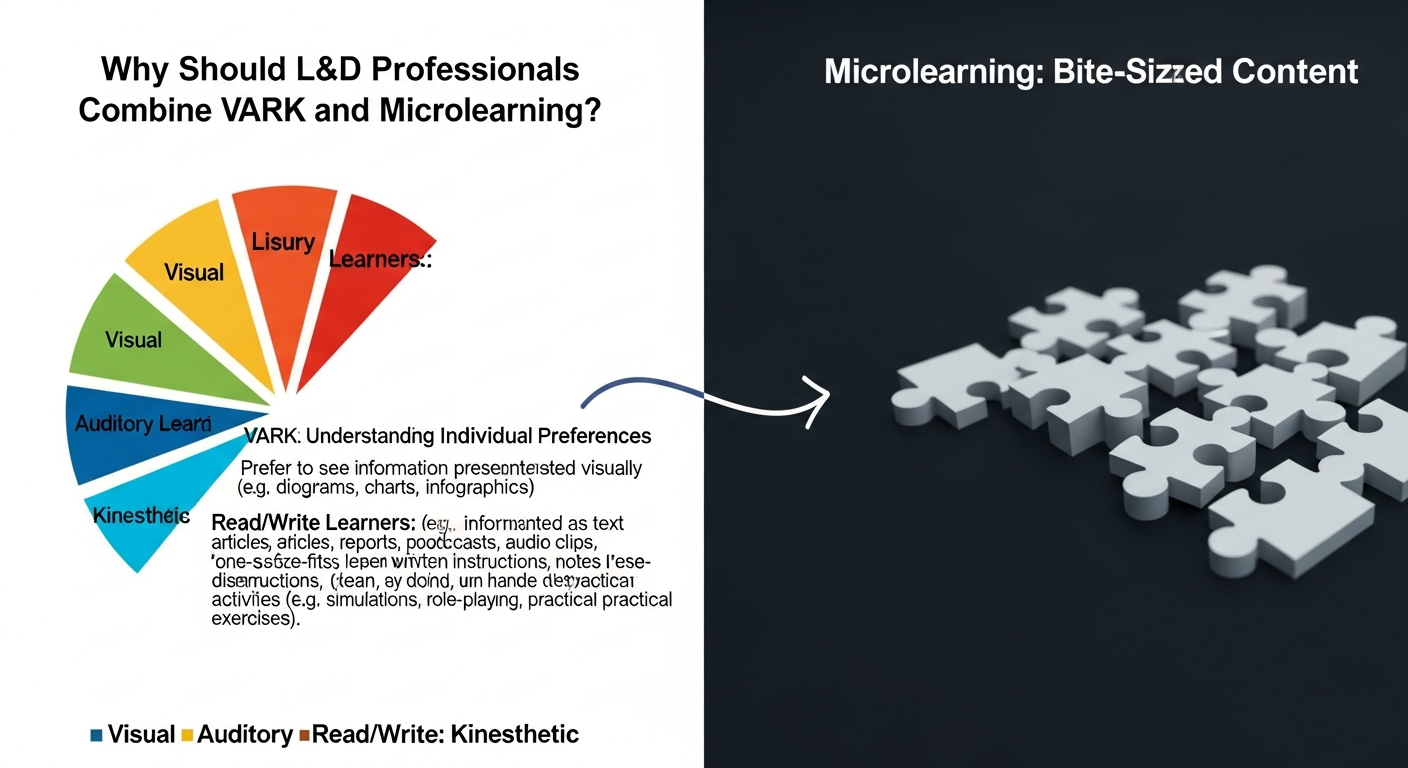
VARK is an acronym representing Visual, Auditory, Read/Write, and Kinesthetic learning styles – a model developed by Neil Fleming to help individuals understand their preferred methods of information intake. Recognizing these styles is critical for L&D, as it allows for the customization of learning experiences to better suit individual preferences, leading to more effective knowledge acquisition and skill development.
- Visual (V) Learners: Prefer to see information presented graphically through charts, diagrams, infographics, videos, and demonstrations.
- Auditory (A) Learners: Best understand information when it's heard, such as through lectures, discussions, podcasts, or audio explanations.
- Read/Write (R) Learners: Thrive on text-based information, preferring to learn by reading manuals, articles, summaries, and taking notes.
- Kinesthetic (K) Learners: Learn by doing, experiencing, and interacting. They benefit from hands-on activities, simulations, role-playing, and practical applications.
Ignoring these fundamental differences can result in disengaged learners, poor comprehension, and ultimately, a reduced return on your training investment.
The Power of Microlearning: Bite-Sized, Targeted Knowledge
Microlearning refers to the delivery of learning content in small, digestible chunks, typically lasting from 3 to 10 minutes. This approach aligns perfectly with modern learning habits, catering to shrinking attention spans and busy schedules. Far from being a fleeting trend, microlearning has cemented its place as a cornerstone of effective corporate training, particularly when supported by a robust Microlearning LMS.
The benefits of microlearning are profound:
- Increased Engagement: Short, focused modules prevent cognitive overload and maintain learner interest.
- Improved Retention: Information delivered in small bursts is easier to process, recall, and apply.
- Flexibility and Accessibility: Learners can access content anytime, anywhere, on any device, fitting learning into their workflow.
- Cost-Effectiveness: Easier to produce, update, and deploy, leading to significant savings in content development.
- Targeted Learning: Addresses specific knowledge gaps or skills, making learning highly relevant.
For organizations utilizing an enterprise learning management system, incorporating microlearning can revitalize their entire learning content management system, transforming it into a dynamic hub for continuous skill development.
The Synergy: VARK Meets Microlearning for Optimal Impact
Combining VARK learning styles with microlearning isn't merely a strategic move; it's an imperative for L&D leaders aiming for truly impactful and inclusive training. This fusion allows organizations to create a rich, multi-modal learning experience that caters to every individual preference, ensuring no learner is left behind.
Tailoring Content for Each VARK Style with Microlearning
A well-designed lms learning management system, particularly a cloud based learning management system like MaxLearn LMS, can become the engine for delivering VARK-optimized microlearning:
- For Visual Learners: Microlearning excels here with short explainer videos, animated infographics, interactive diagrams, and image-rich presentations. A brief visual guide on a new compliance procedure or a product feature can be highly effective.
- For Auditory Learners: Podcasts, short audio clips explaining complex concepts, interviews with subject matter experts, or concise audio summaries of policies can be integrated. Imagine a 5-minute audio briefing on a new banking regulation.
- For Read/Write Learners: Provide concise articles, detailed summaries, bullet-point lists of key takeaways, and short quizzes that require written responses. A brief document outlining the essential steps of a sales process works well.
- For Kinesthetic Learners: This is where interactive micro-simulations, quick drag-and-drop exercises, scenario-based quizzes, and mini-games truly shine. A Gamified LMS can provide immediate feedback and a hands-on experience for topics like operating new machinery in Oil and Gas or practicing customer service in Hospitality.
By offering choices within a single learning module, or by structuring a learning path with diverse micro-content types, L&D professionals can empower learners to engage with material in their most effective way. This approach transforms a generic learning management software into a truly personalized learning management system.
Benefits for L&D Professionals and Organizations
The strategic integration of VARK and microlearning offers a multitude of advantages for L&D professionals at the managerial and executive levels:
- Superior Engagement and Retention: Learners are more likely to complete training and retain information when it aligns with their preferred style and is delivered in manageable chunks.
- Enhanced Learner Satisfaction: A personalized learning experience significantly boosts morale and empowers employees, fostering a positive learning culture.
- Higher ROI on Training Investments: Effective learning translates directly to improved performance, compliance adherence, and productivity, demonstrating clear value to stakeholders.
- Agility and Adaptability: Microlearning modules are easier to update, ensuring training remains current in rapidly evolving industries like Pharma or Finance. This allows for Risk-focused Training to be deployed swiftly.
- Scalability Across Global Operations: A robust learning management system (LMS) or Learning Content Management System (LCMS) facilitates the delivery of diverse micro-content to a global workforce, respecting individual learning preferences across different regions.
Implementing VARK and Microlearning: A Practical Approach
To successfully combine VARK and microlearning, L&D leaders should consider the following:
- Assess Learning Preferences: Utilize initial assessments or surveys to understand the dominant learning styles within your organization.
- Curate Diverse Content: Develop or source a variety of microlearning content types (videos, audio, text, interactive exercises) for each topic. An AI Powered Authoring Tool can significantly streamline this process, helping create multi-modal content quickly.
- Leverage an Advanced LMS: Implement a modern Microlearning LMS that supports diverse content formats, tracks learner progress, and offers analytics. A Gamified LMS can further enhance engagement, particularly for Kinesthetic learners.
- Adopt Adaptive Learning Paths: Design learning journeys that can dynamically adjust based on a learner's identified VARK style and performance, serving up the most appropriate micro-content.
- Iterate and Optimize: Continuously gather feedback and analyze data from your learning management software to refine content and delivery strategies.
Intelligent Systems and Personalized Learning: Questions and Answers
How can intelligent systems enhance personalized learning paths?
Intelligent systems leverage sophisticated algorithms to analyze a learner's interactions, performance, and declared preferences. Based on this data, they can dynamically recommend specific microlearning modules, present content in preferred formats (e.g., more videos for a visual learner), and even suggest remediation paths, essentially creating a unique, optimized journey for each individual. This moves beyond simple content delivery to proactive, tailored instruction.
What role do smart algorithms play in content delivery?
Smart algorithms are crucial for effective content delivery by automatically tagging, categorizing, and recommending microlearning assets. They can match content to specific learning styles, identify skill gaps, and even predict future learning needs based on an employee's role or career trajectory. For example, if an employee is consistently excelling in interactive simulations, the system might push more Kinesthetic-focused micro-challenges to keep them engaged and continuously developing.
How do advanced analytics contribute to optimizing learning experiences?
Advanced analytics provide L&D leaders with deep insights into learning effectiveness. By tracking engagement rates with different microlearning formats, completion times, assessment scores, and even the frequency of content access, analytics can identify what works best for various learner groups and specific topics. This data empowers L&D teams to make informed decisions about content refinement, instructional design, and overall strategy, ensuring continuous improvement of the learning experience and maximizing the impact of the entire learning management system.
Conclusion
The combination of VARK and microlearning is not just a strategic advantage; it’s a necessity for L&D professionals committed to fostering a culture of continuous learning and driving organizational success. By understanding how your employees prefer to learn and delivering knowledge in digestible, relevant chunks, you can create a truly engaging, effective, and efficient learning ecosystem. Embrace this powerful synergy to transform your corporate training from a compliance requirement into a cornerstone of competitive advantage, ensuring your workforce is not just trained, but truly empowered to excel.


Comments
Post a Comment