Why Does Multimodal Microlearning Improve Employee Knowledge Retention?
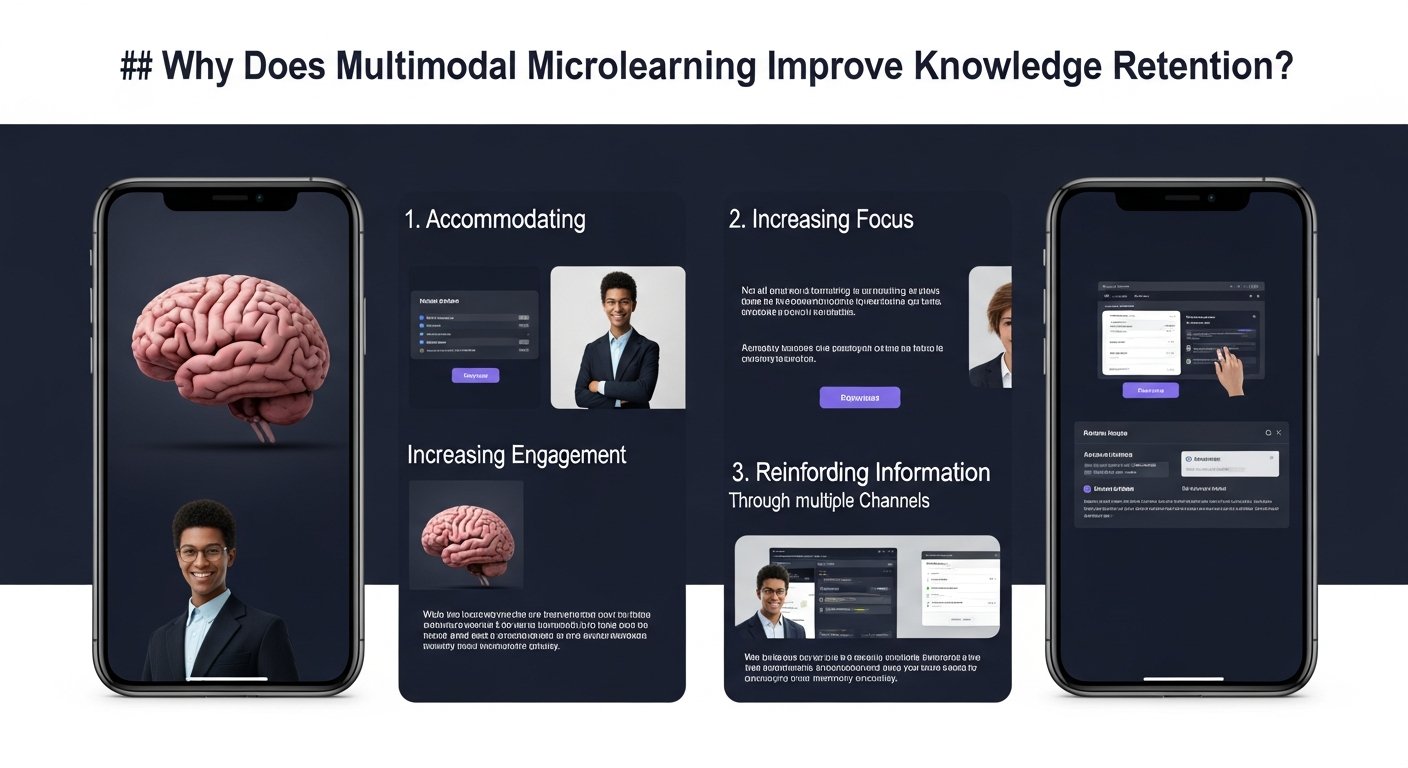
Why Does Multimodal Microlearning Improve Employee Knowledge Retention?
In today's fast-paced business environment, the continuous upskilling and reskilling of employees are paramount. Yet, for many L&D professionals—from Vice Presidents to Managers across industries like Compliance, Sales, Banking, Finance, Insurance, Retail, Pharma, Healthcare, Hospitality, Oil and Gas, and Mining—a persistent challenge remains: how to ensure that training translates into lasting knowledge retention. Traditional, lengthy training modules often lead to information overload and rapid forgetting. The solution gaining significant traction, proving its efficacy through modern pedagogical approaches, is multimodal microlearning.
For organizations seeking to maximize their training investment, understanding the profound impact of multimodal microlearning on knowledge retention is not just beneficial, it's essential. This approach leverages diverse content formats delivered in bite-sized segments, aligning perfectly with contemporary learning habits and cognitive science principles. A robust Microlearning LMS is often the cornerstone for successful implementation.
Understanding Multimodal Microlearning
At its core, microlearning involves delivering information in short, focused bursts, typically ranging from 3 to 10 minutes. This contrasts sharply with traditional hour-long sessions, making learning more manageable and less intimidating for busy professionals. The "multimodal" aspect refers to the use of various media types—video, audio, infographics, interactive quizzes, simulations, and text—to convey information.
When combined, these two elements create a powerful learning experience. Imagine a sales team learning about a new product feature through a 2-minute explainer video, followed by an interactive quiz, and then a quick infographic summarizing key benefits. This diverse exposure caters to different learning styles and reinforces concepts through multiple sensory pathways.
The Cognitive Science Behind Enhanced Retention
Our brains are not designed to absorb vast amounts of information in a single sitting and retain it indefinitely. Cognitive load theory suggests that our working memory has limited capacity. Overwhelm leads to reduced comprehension and poor recall. Multimodal microlearning directly addresses this by:
Reducing Cognitive Load:
Shorter modules mean less information to process at once, allowing learners to focus and fully grasp concepts without mental fatigue.Boosting Engagement:
Varied media keeps learners actively involved, preventing monotony. Engagement is a critical precursor to attention, and sustained attention is vital for transferring information from working memory to long-term memory.Facilitating Spaced Repetition:
Microlearning modules are ideal for periodic reinforcement. Repeating concepts over time, through different modalities, helps solidify neural connections and combats the "forgetting curve." This is where an Adaptive Learning system truly shines, tailoring repetition based on individual performance.Catering to Multiple Learning Styles:
Some employees are visual learners, others auditory, and many benefit from kinesthetic interaction. Multimodal delivery ensures that information is presented in a way that resonates most effectively with each individual.
Key Benefits for L&D Leaders
For those managing employee development, the advantages extend beyond just better recall:
Improved Performance:
Employees who retain knowledge are more likely to apply it effectively in their roles, leading to measurable improvements in productivity, compliance, and customer satisfaction. This is especially critical in industries like Compliance and Healthcare, where accurate knowledge can prevent significant errors.Enhanced Employee Engagement:
Modern learners expect flexible, relevant, and engaging training. Multimodal microlearning delivers on all fronts, fostering a positive learning culture. Incorporating elements of a Gamified LMS can further boost motivation and participation.Faster Time-to-Competency:
With easier access to specific, targeted information, employees can quickly acquire new skills or refresh existing ones, reducing the time it takes to become proficient in new tasks or systems.Measurable Impact:
The granular nature of microlearning allows for precise tracking of learning progress and performance, enabling L&D teams to identify knowledge gaps and refine content with greater accuracy. A comprehensive learning management software can provide these insights.Cost-Efficiency:
While initial development might require creativity, the reusability of microlearning assets and the reduced need for costly, disruptive long-form training can lead to significant long-term savings.
Implementing Multimodal Microlearning Effectively
Success with this approach hinges on the right strategy and tools. A modern learning management system (LMS) or enterprise learning management platform is crucial. Look for a cloud based learning management system that supports a wide range of content formats and offers robust analytics. A dedicated Microlearning LMS is specifically designed to manage and deliver these short, varied modules efficiently.
Consider leveraging tools that streamline content creation. An AI Powered Authoring Tool can dramatically accelerate the development of diverse, engaging microlearning content, from converting existing materials into interactive formats to generating new quizzes and scenarios. This significantly enhances the capabilities of your learning content management system.
For industries like Banking and Finance, where regulatory changes are constant, or Pharma and Healthcare, where safety protocols are paramount, adopting Risk-focused Training through multimodal microlearning ensures critical information is absorbed and retained. This proactive approach mitigates potential compliance issues and fosters a culture of informed decision-making.
Innovating with AI in Employee Knowledge Retention
The synergy between artificial intelligence and multimodal microlearning creates unprecedented opportunities for enhancing knowledge retention. AI algorithms can personalize learning paths, recommend content, and even predict areas where a learner might struggle, offering timely interventions.
How does AI revolutionize learning content creation and delivery?
AI-driven platforms can rapidly generate diverse content formats, from interactive simulations to personalized video summaries. This significantly reduces development time and ensures content is always fresh and relevant. An AI-powered authoring tool can dramatically accelerate the creation of engaging materials tailored for microlearning, enabling your LCMS to handle a wider array of content types efficiently.
Can artificial intelligence really improve how much employees remember?
Absolutely. AI algorithms analyze individual learning patterns, identify knowledge gaps, and recommend optimal content sequences and revision schedules. By leveraging data, AI ensures that each learner receives the right information at the right time, reinforcing memory pathways and significantly boosting long-term recall. This intelligent reinforcement is a game-changer for any lms learning management system.
How can learning systems adapt to diverse regional or global employee needs?
Modern learning platforms, especially those powered by advanced analytics, can tailor content based on a user's location, language, cultural context, and local regulations. This ensures relevance and compliance, whether an employee is in New York, London, or Singapore, making global training programs more effective and localized. This capability makes any learning management solution more powerful for multinational corporations.
What innovative technologies support personalized learning experiences?
Beyond AI, technologies like machine learning, natural language processing, and advanced analytics are key. These empower learning systems to offer highly individualized paths, recommending content based on performance, role, and even expressed preferences, leading to a truly personalized educational journey. MaxLearn LMS is an example of a platform that harnesses these technologies for superior learning outcomes.
Conclusion
For L&D leaders striving to build a highly skilled, knowledgeable, and adaptable workforce, multimodal microlearning is no longer a niche concept but a strategic imperative. By embracing this approach, supported by advanced learning management software and AI, organizations can move beyond simply delivering training to genuinely fostering enduring knowledge retention. This translates into tangible business benefits, from improved compliance in regulated industries to enhanced sales performance and greater overall operational efficiency. Investing in a robust learning management system like MaxLearn LMS is an investment in your employees' potential and your organization's future success.


Comments
Post a Comment