What is a Player-Subject in Gamified Workplace Learning?
What is a Player-Subject in Gamified Workplace Learning?
In the dynamic landscape of modern corporate learning, traditional training models are rapidly being superseded by innovative approaches that prioritize engagement, intrinsic motivation, and measurable outcomes. Among these, gamified learning stands out as a powerful methodology. But to truly harness its potential, L&D leaders must understand a pivotal concept: the "Player-Subject." This article delves into what it means to be a player-subject within gamified workplace learning, why this paradigm shift is crucial for your organization, and how modern learning technologies empower its realization.
Defining the Player-Subject in Workplace Learning
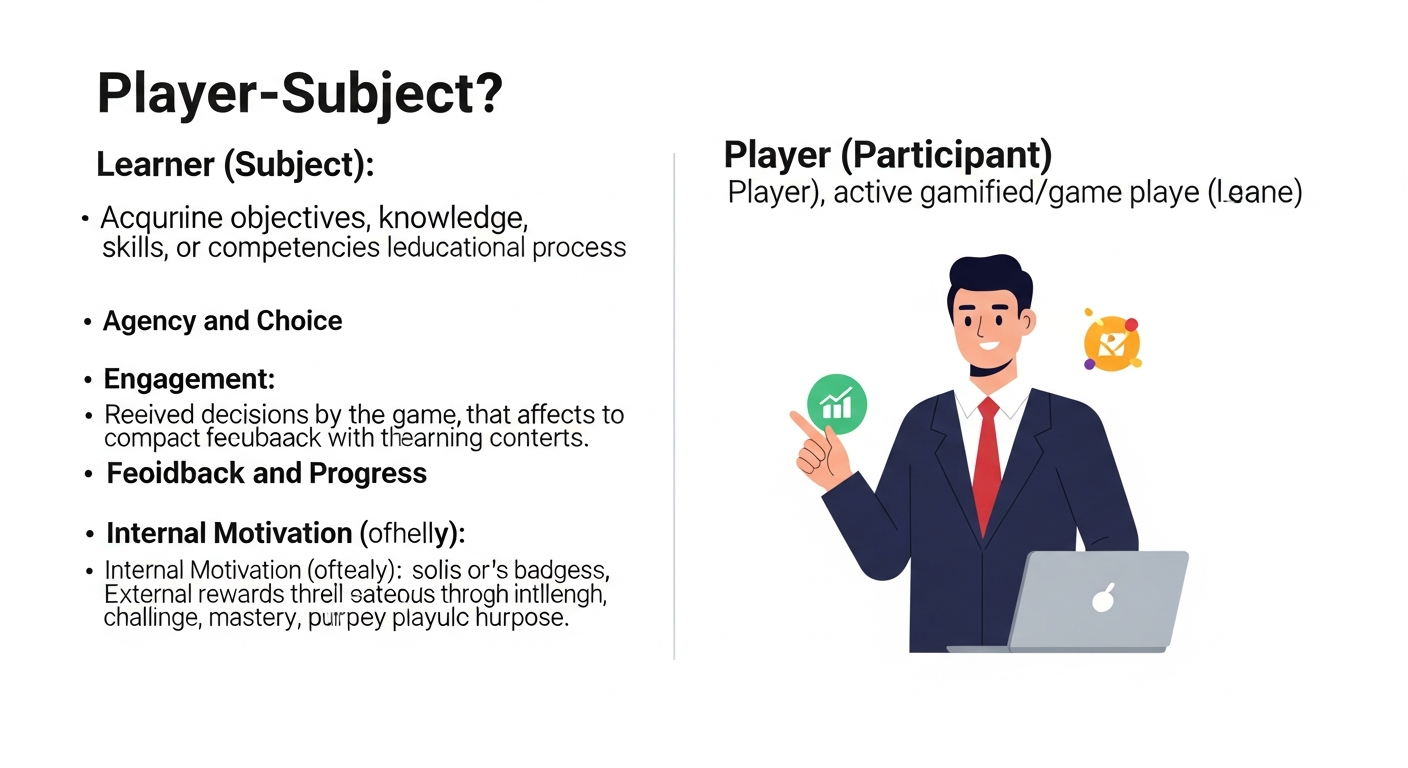
At its core, the player-subject is a dual identity for the learner within a gamified environment. They are not merely passive recipients of information but active participants (the "player") who are also the central focus and beneficiary of the learning process (the "subject"). This distinction moves beyond viewing an employee as a "learner" or "trainee" and elevates them to an empowered individual shaping their educational journey.
Consider the difference:
- Traditional Learner: Often seen as a vessel to be filled with knowledge. Participation might be mandatory, motivation extrinsic (e.g., job requirement), and feedback generic.
- Player-Subject: Engages with learning content, challenges, and interactions as they would a well-designed game. They make choices, experience consequences, receive immediate feedback, and are intrinsically motivated by progress, achievement, and mastery. Their unique journey and performance are the very data points that inform and refine the learning system.
This dual role emphasizes agency, turning learning into an experience rather than a task. It's about designing an environment where employees feel challenged, supported, and personally invested in their growth, similar to how they engage with a captivating game.
Why the Player-Subject Paradigm Matters for L&D
Embracing the player-subject perspective offers significant advantages for any organization committed to effective enterprise learning management and employee development.
Enhanced Engagement and Motivation
When employees transform into player-subjects, their engagement skyrockets. The principles of game design—such as clear goals, immediate feedback, progress visualization, and rewards—tap into innate human drivers for achievement and recognition. This intrinsic motivation leads to more active participation, higher completion rates, and a genuine desire to learn, moving beyond mere compliance.
Deeper Learning and Retention
Gamified experiences encourage active problem-solving, decision-making, and application of knowledge in simulated scenarios. This experiential learning, central to the player-subject model, fosters deeper understanding and significantly improves knowledge retention compared to passive methods. The iterative nature of games—trial, error, feedback, retry—mirrors the most effective learning cycles.
Personalized Learning Journeys
Modern learning management system platforms, especially those offering Adaptive Learning, are built to cater to the player-subject. They track individual progress, preferences, and performance, adjusting content and challenges in real-time. This ensures each employee receives a learning path tailored to their unique needs and pace, optimizing their development.
Performance Improvement and ROI
Ultimately, a highly engaged player-subject workforce translates directly into improved business outcomes. Whether it's better sales performance, enhanced compliance adherence, or superior customer service, the skills and knowledge acquired through gamified learning are more readily applied on the job. This directly impacts key performance indicators, demonstrating a clear return on investment for the learning management software.
Elements Cultivating the Player-Subject Experience
To cultivate effective player-subjects, a well-designed gamified learning environment must incorporate several key elements:
Meaningful Goals & Challenges
Clearly defined objectives and progressively challenging tasks that align with real-world job responsibilities make the learning relevant and purposeful.
Clear Feedback & Progress Tracking
Immediate, actionable feedback helps player-subjects understand their performance and adjust their strategies. Visible progress indicators, like progress bars or badges, reinforce achievement.
Autonomy & Choice
Allowing player-subjects some control over their learning path, such as choosing modules or challenge types, increases ownership and motivation.
Social Interaction & Collaboration
Opportunities for collaboration, competition, and peer recognition foster a sense of community and enhance engagement, leveraging the social aspects inherent in many games.
Skill-Building & Mastery Paths
Designing learning paths that build skills incrementally towards mastery provides a sense of accomplishment and continuous growth, a core driver for any player.
The Role of Technology: Powering the Player-Subject
Realizing the full potential of the player-subject model necessitates robust technological infrastructure. A sophisticated Gamified LMS is foundational. These systems are designed to:
- Deliver engaging content, often in Microlearning LMS formats for agile and focused learning.
- Integrate game mechanics like points, badges, leaderboards, and quests seamlessly.
- Provide comprehensive tracking and analytics to monitor player-subject performance and engagement.
- Facilitate social learning and collaboration tools.
Addressing L&D Challenges with Smart Solutions:
L&D leaders often grapple with ensuring training relevance, personalization, and measurable impact. Here's how advanced technology and the player-subject approach address these:
- Ensuring Global Relevance: Considering a company's global footprint, how can L&D ensure training resonates and remains relevant across diverse geographical locations and cultural contexts? Modern learning content management system platforms, especially those with robust content localization features, enable the creation of universally applicable core content while allowing for regional adaptations. This ensures cultural sensitivity and regulatory compliance, making learning meaningful whether a participant is in London or Tokyo, optimizing the reach of your enterprise learning management system.
- Maximizing Individual Growth: With a workforce spanning multiple generations and skill levels, what advanced strategies can personalize learning to maximize individual growth and overall team performance? The implementation of an Adaptive Learning system is key. By leveraging data on individual progress, preferences, and performance gaps, these systems dynamically adjust the learning path, content difficulty, and even the type of challenges presented. This highly tailored approach ensures each player-subject receives the most impactful training at the right time, powered often by an AI Powered Authoring Tool for efficient content generation.
- Measuring Tangible Impact: How can L&D leaders effectively measure the tangible impact and return on investment of gamified learning initiatives beyond simple completion rates? Advanced analytics within a sophisticated Gamified LMS provide deep insights. Beyond traditional metrics, these systems track player behavior, engagement patterns, skill application in simulated environments, and correlate learning outcomes with business KPIs. This data-driven approach allows for continuous optimization and clear demonstration of value to stakeholders, reinforcing the value of a cloud based learning management system like MaxLearn LMS.
Practical Applications Across Industries
The player-subject model thrives across diverse sectors:
- Compliance (Banking, Finance, Healthcare): Transform dry regulatory training into engaging scenarios where player-subjects make decisions, face consequences, and learn from mistakes in a safe environment. Risk-focused Training becomes interactive and memorable.
- Sales (Retail, Pharma): Use simulations and challenges to practice sales pitches, product knowledge, and objection handling, turning sales professionals into competitive player-subjects honing their skills.
- Hospitality & Retail: Gamify onboarding and customer service training, allowing new hires to virtually navigate scenarios and earn badges for mastering customer interactions.
- Oil & Gas, Mining: Simulate safety protocols and complex operational procedures, turning critical training into interactive drills where player-subjects make critical decisions in high-stakes virtual environments.
An effective learning management system, whether an LMS or an LCMS, empowers these transformations.
Conclusion
The concept of the player-subject represents a fundamental evolution in how we approach workplace learning. It shifts the focus from passive instruction to active, empowered participation, leveraging intrinsic motivation and the power of game design to create truly effective educational experiences. For L&D Vice Presidents, Directors, and Managers seeking to elevate their learning programs, embrace engagement, and drive measurable business outcomes, understanding and cultivating the player-subject is not just an advantage—it's a necessity. By strategically implementing robust learning management solutions and a powerful lms learning management system, organizations can unlock a new era of employee development and organizational success.


Comments
Post a Comment