Visual, Auditory, Read, Kinesthetic: Perfecting the Mix in Microlearning
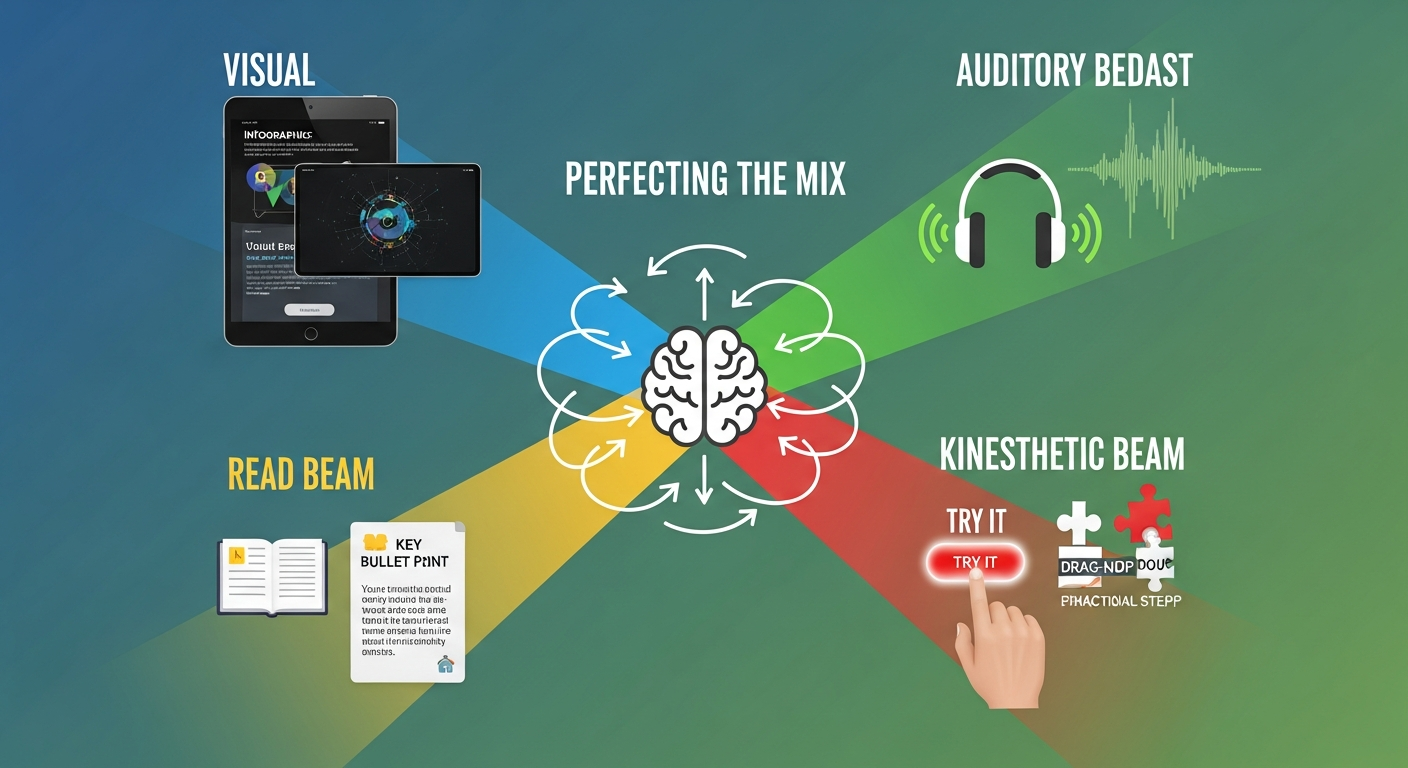
Visual, Auditory, Read, Kinesthetic: Perfecting the Mix in Microlearning
In today's fast-paced corporate world, where knowledge needs to be absorbed quickly and retained effectively, Learning & Development (L&D) leaders face a perpetual challenge: how to deliver impactful training that resonates with a diverse workforce. From Compliance and Sales to Banking, Finance, Insurance, Retail, Pharma, Healthcare, Hospitality, Oil and Gas, and Mining industries, the demand for efficient, engaging, and scalable learning solutions is universal. Enter microlearning – a powerful methodology delivering bite-sized content focused on specific learning objectives. But to truly unlock its potential, L&D professionals must master the art of integrating various learning styles: Visual, Auditory, Read/Write, and Kinesthetic (VARK).
For Vice Presidents, Directors, and Senior Managers in L&D, understanding and strategically deploying the VARK model within a microlearning framework isn't just a best practice; it's a strategic imperative. It ensures higher engagement, better knowledge retention, and ultimately, a more competent and productive workforce. This article explores how to perfect this mix, leveraging modern technology and intelligent design to create a robust and adaptive learning environment.
Understanding the VARK Model in L&D
The VARK model categorizes learners based on their preferred modes of interacting with information. While most individuals exhibit a blend of these preferences, a strong understanding of each can inform content design, making microlearning experiences more targeted and effective.
Visual Learners
Visual learners prefer to learn through seeing. They process information best when it's presented with images, diagrams, charts, graphs, videos, and spatial arrangements. For these learners, microlearning modules packed with infographics, short animated explanations, demonstrative videos, and clear visual summaries are highly effective. Think of a brief animated explainer for a new compliance procedure or a flowchart detailing a sales process.
Auditory Learners
Auditory learners thrive on hearing information. They absorb knowledge through lectures, discussions, podcasts, audio recordings, and verbal instructions. Microlearning for auditory learners should include short audio clips, podcasts explaining complex financial concepts, narrated presentations, or even brief Q&A sessions. Voiceovers in video content are also crucial for this group, ensuring that they can listen and learn even when visual elements are present.
Read/Write Learners
Read/Write learners prefer to engage with text. They learn best through reading articles, reports, manuals, textbooks, and writing notes, summaries, or essays. Microlearning content for these individuals should feature concise articles, bullet-point summaries of key policies, short interactive quizzes that require written responses, and easily digestible text-based guides. For industries like Pharma or Banking, where detailed procedural knowledge is critical, well-structured text is indispensable.
Kinesthetic Learners
Kinesthetic learners learn by doing, experiencing, and practicing. They prefer hands-on activities, simulations, role-playing, demonstrations, and real-world examples. Microlearning for kinesthetic learners can include interactive simulations of customer service scenarios, virtual reality (VR) modules for equipment operation in Oil and Gas, gamified quizzes, drag-and-drop activities, or short practical exercises that mimic real-world tasks. An Gamified LMS can be particularly effective in catering to this learning style, driving engagement through interactive challenges.
Why a Blended VARK Approach is Crucial for Microlearning Success
While an individual may have a primary learning preference, a truly effective learning environment caters to all styles. Relying solely on one mode can alienate a significant portion of your workforce. Here’s why a blended VARK approach in microlearning is critical:
- Universal Engagement: A multi-modal approach ensures that every learner finds content that resonates with their preferred style, leading to higher engagement rates across the organization.
- Enhanced Retention: Presenting information through multiple sensory channels reinforces learning, leading to deeper understanding and better long-term retention. This is vital for critical areas like Risk-focused Training.
- Complex Topic Mastery: Many corporate topics, particularly in Compliance, Finance, or Healthcare, are inherently complex. Combining visual aids, auditory explanations, textual summaries, and interactive practice solidifies comprehension.
- Diverse Workforce Needs: Modern organizations are melting pots of different backgrounds, experiences, and learning preferences. A blended approach ensures inclusivity and accessibility for all employees.
- Adaptive Skill Development: Different skills might be best taught through different modalities. For instance, a safety procedure might benefit from a visual demonstration and kinesthetic practice, while a legal update might require strong read/write components.
Crafting the Perfect VARK Microlearning Mix
The key to perfecting the mix lies in thoughtful instructional design. It's not about cramming all four styles into every 3-minute module, but rather creating a coherent learning path where different modules and content types cater to different preferences, often within the same learning journey.
- Strategic Chunking: Break down complex topics into smaller, digestible micro-modules. Each module can then focus on a specific learning objective, utilizing the most appropriate VARK style or a combination thereof.
- Content Variety: Leverage a rich palette of content formats. Don't just rely on text; integrate short videos, infographics, interactive quizzes, audio summaries, and mini-simulations. A robust Microlearning LMS will provide the versatility to host diverse content types.
- Interactive Elements: Incorporate questions, polls, drag-and-drop exercises, and decision-making scenarios that encourage kinesthetic engagement even in predominantly visual or auditory content.
- Storytelling and Context: Use real-world scenarios and narratives to make content more relatable and memorable across all learning styles.
Leveraging Technology: The Role of AI in Perfecting the Mix
Modern eLearning platforms, especially those powered by artificial intelligence, are revolutionizing how L&D leaders can implement and perfect the VARK mix. An advanced LMS (learning management system) or LCMS (Learning Content Management System) offers the tools to deliver highly personalized and adaptive learning experiences.
Artificial intelligence can analyze learner data, including previous performance, engagement patterns, and even explicit learning style preferences, to dynamically tailor the microlearning experience. This intelligent content curation ensures that each employee receives the most effective mix of content formats. A cloud based learning management system can leverage AI to provide personalized paths for every user, making it a powerful learning management software for large enterprises.
Common Questions for Personalized Learning
Q: How can AI ensure each learner receives content best suited to their individual style and needs?
A: AI-powered platforms employ algorithms to create dynamic, Adaptive Learning paths. By tracking a learner's interactions, completion rates, and assessment scores, AI can infer their preferred learning modalities and suggest microlearning modules (videos, audio, text, simulations) that align with those preferences. This personalized approach, often supported by an enterprise learning management system, ensures maximum engagement and effectiveness for every user.
Scaling Global Training with Intelligent Systems
Q: How can AI-driven microlearning deliver consistent, effective training across diverse geographical locations and cultures?
A: AI significantly enhances the scalability of global training. An intelligent learning management solution can automate content localization, translating and adapting microlearning modules for different languages and cultural nuances. For instance, an AI Powered Authoring Tool can quickly generate variations of a microlearning module, ensuring visual elements, audio narratives, and textual content are culturally appropriate and accessible, making a single lms learning management system effective worldwide.
Optimizing Training Effectiveness with Data Insights
Q: What insights can AI provide to continuously improve microlearning programs and learner outcomes?
A: AI provides unparalleled analytics for L&D leaders. It can pinpoint which microlearning modules are most engaging, which content formats lead to the best retention, and where learners struggle. This data-driven feedback loop allows for continuous optimization of the VARK mix. By analyzing performance across various industries—from Health care to Hospitality—an AI-enhanced MaxLearn LMS helps refine content, identify skill gaps, and prove the ROI of training initiatives. This makes the learning content management system a strategic asset.
Implementing the Mix: Practical Considerations
For L&D VPs and Directors, successfully implementing a VARK-blended microlearning strategy requires careful planning:
- Content Audits: Review existing training materials to identify gaps and opportunities for incorporating different VARK modalities.
- Instructional Design Expertise: Invest in or upskill your team in instructional design principles that focus on multi-modal content creation.
- Platform Selection: Choose a modern learning management system that supports a wide range of media types, offers robust analytics, and preferably integrates AI capabilities for personalization and automation.
- Pilot Programs: Launch pilot microlearning programs with diverse content mixes to gather feedback and iterate before a full rollout.
- Continuous Measurement: Regularly assess learner performance, engagement, and satisfaction to refine your VARK strategy over time.
The Future of Learning: Agile, Adaptive, and Engaging
Perfecting the mix of Visual, Auditory, Read/Write, and Kinesthetic elements in microlearning is not merely about ticking boxes; it's about creating a dynamic, learner-centric ecosystem. By strategically combining these modalities, supported by the analytical power and personalization capabilities of AI, L&D leaders can build training programs that are not only efficient and scalable but profoundly effective.
The result is a workforce that is better equipped, more engaged, and ready to meet the evolving demands of any industry. Embrace the VARK model, empower it with technology, and transform your organization's learning landscape.


Comments
Post a Comment