Understanding Gardner’s 9 Intelligences: A Guide for L&D Professionals
Understanding Gardner’s 9 Intelligences: A Guide for L&D Professionals
In the dynamic landscape of corporate learning and development, the "one-size-fits-all" approach is rapidly becoming a relic of the past. As L&D Vice Presidents, Directors, Senior Managers, and Managers, your mandate is clear: cultivate highly skilled, adaptable, and engaged workforces across diverse sectors like Compliance, Sales, Banking, Finance, Insurance, Retail, Pharma, Health care, Hospitality, Oil and Gas, and Mining. To achieve this, a deeper understanding of how individuals learn, process information, and demonstrate proficiency is not just beneficial—it's imperative.
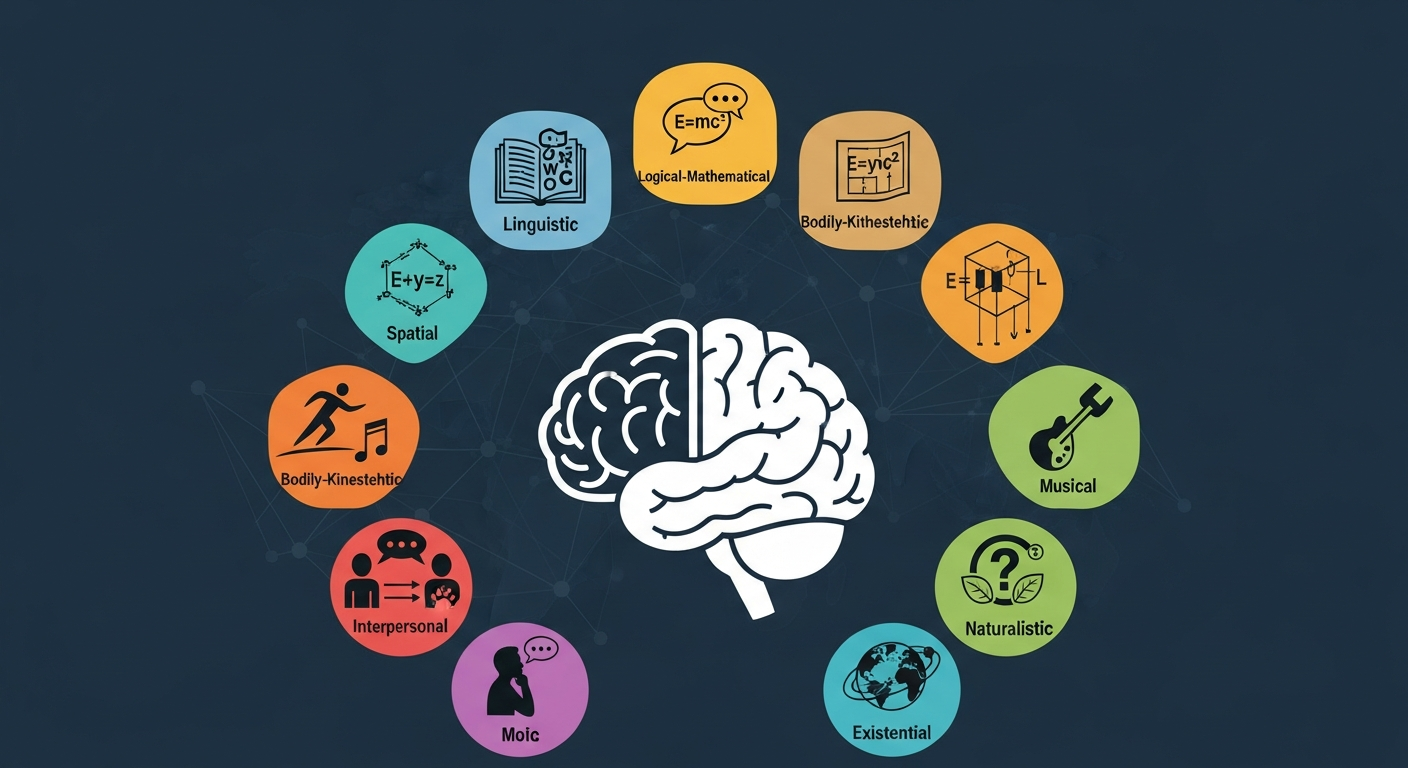
Enter Dr. Howard Gardner’s Theory of Multiple Intelligences. While often discussed in educational circles, its implications for organizational learning are profound. This framework challenges the traditional, narrow view of intelligence, positing instead that humans possess at least nine distinct intelligences. For L&D professionals, embracing this perspective unlocks new possibilities for designing highly effective, engaging, and inclusive learning experiences that truly resonate with every employee.
Beyond the IQ Score: Unpacking Gardner's Theory of Multiple Intelligences
First introduced in 1983, Gardner’s theory revolutionized our understanding of cognitive ability. He argued that the traditional IQ test, primarily measuring linguistic and logical-mathematical skills, failed to capture the full spectrum of human intellect. Instead, he proposed that intelligence is not a single, monolithic entity but rather a collection of relatively autonomous intellectual capacities. Each individual possesses all nine intelligences to varying degrees, with certain ones being more dominant. Recognizing these strengths allows L&D to move beyond rote memorization and embrace diverse modalities that cater to innate talents.
Why does this matter for modern L&D? In today's competitive environment, where talent development directly impacts bottom-line performance, understanding learner diversity is a strategic advantage. It enables you to craft learning programs that not only transfer knowledge but also foster deeper understanding, improve retention, and boost practical application. Leveraging a robust LMS or a sophisticated MaxLearn LMS becomes crucial in delivering these varied experiences.
The 9 Intelligences: A Deep Dive for L&D Architects
Let's explore each intelligence and its practical implications for designing impactful corporate training.
1. Linguistic Intelligence (Word Smart)
- Characteristics: Strong verbal communication, writing, reading, storytelling, and language comprehension.
- L&D Strategies: Case studies, debates, role-playing, written assignments, storytelling, podcasts, detailed manuals, and interactive discussions.
Question: What strategies can L&D deploy to tailor learning experiences that truly speak to the unique cognitive strengths and developmental needs of every employee, particularly those who thrive with verbal and written content?
Answer: By incorporating rich textual resources, interactive forums, and opportunities for written and spoken responses, L&D can cater effectively to linguistic learners. Utilizing an AI Powered Authoring Tool can help generate diverse text-based content quickly.
2. Logical-Mathematical Intelligence (Number/Reasoning Smart)
- Characteristics: Excels at problem-solving, calculations, critical thinking, identifying patterns, and scientific reasoning.
- L&D Strategies: Data analysis exercises, simulations, logic puzzles, strategic planning scenarios, coding challenges, and statistical interpretation.
Question: How do we ensure our learning programs resonate with the full spectrum of learner preferences across diverse organizational roles, including those who excel at logical deduction and problem-solving?
Answer: Integrate problem-based learning, analytics challenges, and scenario-driven modules that require critical decision-making. These can be effectively delivered through a modern learning content management system.
3. Spatial Intelligence (Picture Smart)
- Characteristics: Strong visual memory, good sense of direction, enjoys drawing, interpreting maps, and understanding 3D concepts.
- L&D Strategies: Infographics, flowcharts, mind maps, video tutorials, virtual reality (VR) simulations, augmented reality (AR) training, and visual guides.
4. Bodily-Kinesthetic Intelligence (Body Smart)
- Characteristics: Learns best by doing, good motor skills, enjoys physical activities, and prefers hands-on experiences.
- L&D Strategies: Role-playing, simulations (especially for Sales, Health Care, Oil & Gas), practical workshops, hands-on equipment training, gamified experiences, and practical exercises. A Gamified LMS can be highly effective here.
5. Musical Intelligence (Music Smart)
- Characteristics: Sensitive to rhythm, pitch, tone, and melody; enjoys creating or listening to music.
- L&D Strategies: Using background music in videos, jingles for memorization, rhythm-based exercises, or even creating sound effects for interactive modules.
6. Interpersonal Intelligence (People Smart)
- Characteristics: Excellent social skills, empathy, communication, collaboration, and understanding others' motives.
- L&D Strategies: Group projects, team-based simulations, mentoring programs, peer coaching, collaborative learning platforms, and discussion forums. This is crucial for sectors like Sales and Hospitality.
7. Intrapersonal Intelligence (Self Smart)
- Characteristics: Strong self-awareness, understanding of one's own emotions, motivations, and goals; independent learners.
- L&D Strategies: Self-paced modules, reflective journals, goal-setting exercises, personalized learning paths, and independent research projects. Adaptive Learning excels in catering to these individuals.
8. Naturalistic Intelligence (Nature Smart)
- Characteristics: Connects with nature, recognizes patterns in the natural world, enjoys classifying and categorizing.
- L&D Strategies: Environmental case studies (relevant for Oil & Gas, Mining, Pharma), analogies from nature, data classification exercises, and recognizing patterns in complex systems.
9. Existential Intelligence (Life Smart)
- Characteristics: Inclination to ponder deep questions about life, purpose, and meaning; philosophical thinking.
- L&D Strategies: Ethical discussions (especially in Compliance, Banking, Finance), exploring the 'why' behind company mission, values-based training, and reflective discussions on impact.
Question: In an increasingly interconnected business landscape, how can L&D leaders design content that transcends cultural nuances and delivers consistent, effective learning outcomes for teams operating across different regions, while also addressing deeper questions of purpose and ethics?
Answer: By integrating philosophical discussions on corporate values and ethical dilemmas, coupled with highly localized contextual examples, L&D can engage learners with existential intelligence across global teams. A cloud based learning management system facilitates this global reach.
Implementing Gardner's Framework with Modern Learning Solutions
Translating Gardner’s theory into actionable L&D strategies requires the right tools. A modern learning management system (LMS) is the cornerstone of this endeavor. An enterprise learning management system, especially one like MaxLearn LMS, provides the flexibility to host a diverse array of content formats:
- Varied Content Formats: A powerful learning management software allows you to upload videos, interactive simulations, audio podcasts, written guides, and practical exercises, ensuring that every intelligence is addressed.
- Adaptive Learning Paths: Advanced learning management solutions can dynamically adjust content and pathways based on learner performance and stated preferences. This personalization is key to catering to individual intelligence strengths.
- Gamified LMS: Gamification elements appeal strongly to bodily-kinesthetic and logical-mathematical intelligences, making learning more engaging and competitive.
- Microlearning LMS: Delivering content in bite-sized, targeted modules allows learners to consume information in formats and durations that suit their preferred learning styles, enhancing retention and application.
- AI Powered Authoring Tool: These tools streamline the creation of diverse content, from text to interactive simulations, making it easier to build multi-modal learning experiences tailored to different intelligences.
- Collaborative Features: Forums, group projects, and peer-to-peer learning tools within an LCMS nurture interpersonal intelligence.
- Data Analytics: A robust lms learning management system provides insights into which content types are most effective for different groups, allowing for continuous optimization. This is vital for Risk-focused Training, ensuring high-stakes knowledge transfer is effective.
The Strategic Advantage for L&D Leaders
For L&D professionals, understanding and applying Gardner’s framework means moving from simply delivering training to architecting true learning ecosystems. By acknowledging and nurturing all nine intelligences, you can:
- Boost engagement and motivation across your workforce.
- Improve knowledge retention and skill application.
- Foster a more inclusive and equitable learning environment.
- Develop a more versatile and resilient talent pool capable of navigating complex challenges in any industry.
- Ensure compliance and reduce risk through more effective and resonant training methods.
The future of L&D is personalized, adaptive, and deeply empathetic to the learner’s unique cognitive profile. Embrace Gardner’s Multiple Intelligences theory, empower your teams with cutting-edge learning technology, and transform your organization into a powerhouse of continuous growth and innovation.


Comments
Post a Comment