Smarter Microlearning: How to Match Content Formats to Employee Learning Styles
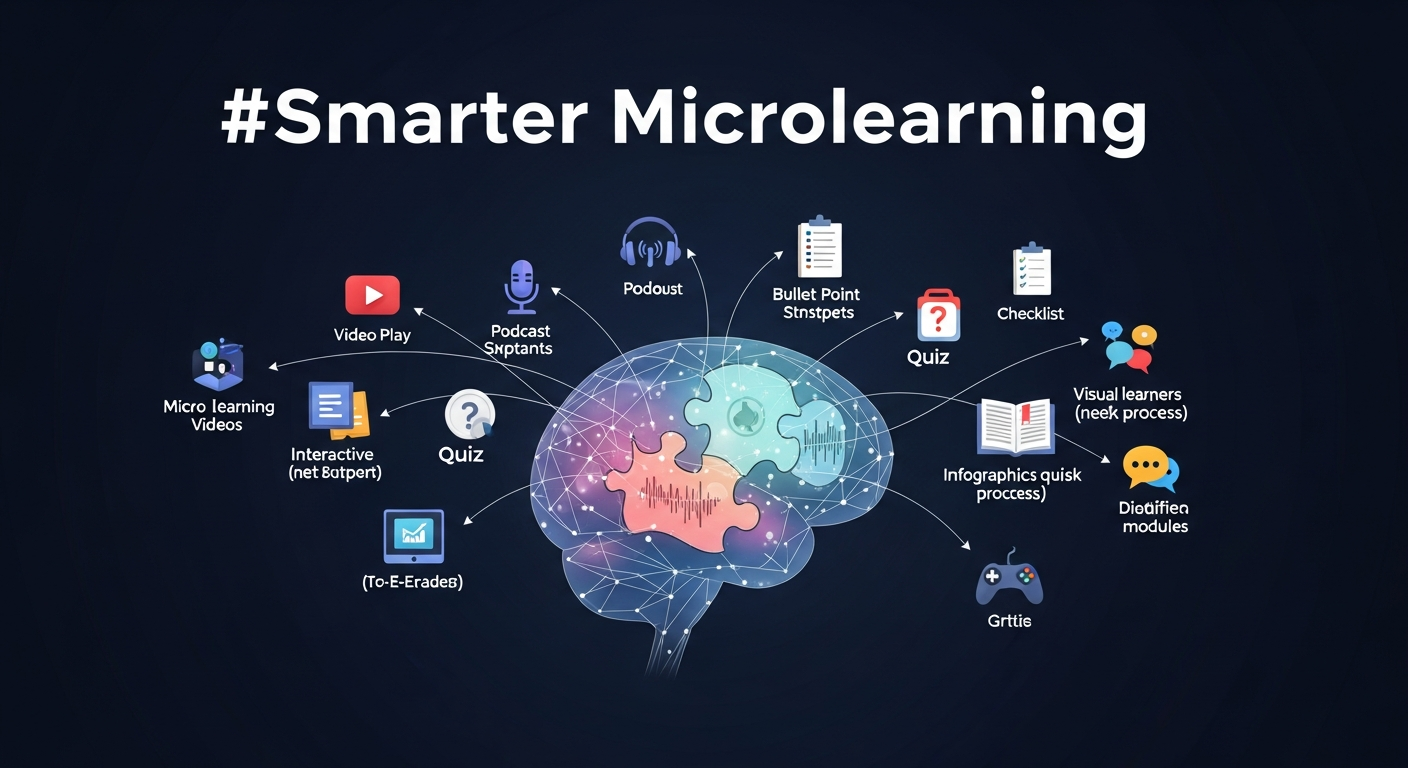
Smarter Microlearning: How to Match Content Formats to Employee Learning Styles
In today's fast-paced corporate environment, effective employee training is no longer a luxury but a strategic imperative. For L&D Vice Presidents, Directors, and Managers across sectors like Compliance, Sales, Banking, Finance, Insurance, Retail, Pharma, Health care, Hospitality, Oil and Gas, and Mining, the challenge is clear: how do we deliver impactful learning that truly resonates with a diverse workforce? The answer increasingly lies in smarter microlearning, specifically by meticulously matching content formats to individual employee learning styles.
Traditional long-form courses often struggle to capture and retain attention. Modern employees, accustomed to on-demand information, thrive on concise, relevant, and immediately applicable content. This is where the power of microlearning shines, but its true potential is unlocked when the delivery method aligns seamlessly with how an individual best absorbs information. An effective Microlearning LMS is central to achieving this level of personalization.
Understanding the Modern Learner and Microlearning's Appeal
The concept of microlearning involves breaking down complex topics into bite-sized, digestible modules, typically lasting a few minutes. This approach is perfectly suited for busy professionals who need just-in-time knowledge without disrupting their workflow. Its appeal is universal, from a sales representative needing quick product updates to a healthcare professional reviewing a new protocol, or a mining engineer brushing up on safety procedures.
However, merely delivering short bursts of information isn't enough. The effectiveness of microlearning skyrockets when the format—be it video, infographic, quiz, or simulation—is tailored to the learner's inherent preferences. This move from one-size-fits-all training to personalized learning is transforming how organizations approach talent development.
Decoding Employee Learning Styles
While individuals often exhibit a blend of preferences, understanding primary learning styles can guide content development. Broadly, these can be categorized:
- Visual Learners: Prefer to see information presented through images, diagrams, charts, and videos.
- Auditory Learners: Absorb information best through listening, such as spoken instructions, podcasts, or discussions.
- Kinesthetic Learners: Learn by doing, experiencing, and interacting with content through simulations, hands-on activities, or role-playing.
- Reading/Writing Learners: Prefer to learn through text-based materials, notes, articles, and written assignments.
Recognizing these styles allows L&D leaders to design a richer, more engaging learning ecosystem. A comprehensive learning management system (LMS) can facilitate the deployment of this diverse content, acting as the central hub for all learning activities.
Matching Content Formats for Maximum Impact
Let's explore how to align specific microlearning content formats with various learning styles:
For the Visual Learner: See to Understand
- Short Animated Videos: Perfect for explaining complex concepts like new financial regulations, compliance procedures, or product features in an engaging, digestible format.
- Infographics & Visual Summaries: Ideal for conveying data, statistics, or process flows quickly, such as market trends in retail or safety checklists in hospitality.
- Interactive Simulations (Visual Focus): While kinesthetic, visually rich simulations allow learners to 'see' the consequences of their choices, vital for Risk-focused Training in banking or oil and gas.
For the Auditory Learner: Hear to Learn
- Audio Podcasts & Narrated Explainers: Great for 'on-the-go' learning, like a brief update on sales techniques, customer service tips, or pharmaceutical drug details.
- Virtual Discussions & Expert Interviews: Short audio clips of leadership insights or peer best practices can provide valuable context and learning for managers.
- Brief Audio Summaries: A quick recap of key takeaways from a longer module for reinforcement.
For the Kinesthetic Learner: Do to Discover
- Interactive Quizzes & Gamified Modules: A Gamified LMS allows learners to actively participate, test their knowledge on the spot, and receive immediate feedback—essential for practicing new skills in any industry.
- Scenario-Based Simulations: Placing learners in realistic situations, such as handling a difficult customer in retail or responding to an emergency in healthcare, allows them to apply knowledge practically.
- Drag-and-Drop Activities: Effective for sequence learning, like assembly steps in manufacturing or transaction processes in banking.
For the Reading/Writing Learner: Read and Reflect
- Concise Articles & How-To Guides: Quick references for specific tasks, such as operating new equipment or navigating a new software feature.
- Interactive Checklists & Job Aids: Provide structured information for procedures, ensuring consistency in tasks like flight pre-checks or compliance audits.
- Reflection Prompts: Encourage learners to internalize information by writing down their understanding or action plans, fostering deeper retention.
The Technological Edge: Leveraging Your LMS for Smarter Microlearning
Implementing a sophisticated microlearning strategy demands robust technological infrastructure. A modern learning management software is indispensable. A cloud based learning management system offers the flexibility and scalability needed to support diverse content formats and a global workforce across all industries.
Question: How can artificial intelligence personalize learning content for each employee?
An enterprise learning management system equipped with AI capabilities can analyze learner data, including their performance, engagement patterns, and even implied learning style preferences. This allows the system to recommend specific microlearning formats and content that are most likely to resonate with and benefit an individual. An AI Powered Authoring Tool, for instance, dramatically speeds up the creation of diverse microlearning modules tailored for various roles, from banking to hospitality, optimizing content delivery for sales training.
Question: What types of microlearning content are most effective for improving employee performance and knowledge retention?
The most effective microlearning formats are those that directly align with individual learning preferences and the specific knowledge required. For instance, an interactive simulation for a kinesthetic learner practicing a new medical procedure, or a concise video explaining a complex financial product for a visual learner, will yield better results. When combined with an Adaptive Learning approach, an LMS learning management system can dynamically adjust the learning path, ensuring learners receive content in the most impactful format, thus boosting retention and overall performance.
Question: Is microlearning effective for a globally distributed workforce, and how do we ensure cultural relevance?
Absolutely. Microlearning's bite-sized nature makes it highly adaptable for diverse schedules and time zones, a critical factor for organizations with employees spanning multiple regions like those in Oil and Gas or international Finance. With the right learning content management system (LCMS), content can be easily localized and translated, providing culturally appropriate and relevant training to every employee, no matter their geographical location. MaxLearn LMS excels at managing and distributing such diverse content globally.
Implementing a Smarter Microlearning Strategy
For L&D leaders, the journey to smarter microlearning involves several key steps:
- Assess Learner Needs: Understand your workforce's demographics, roles, and preferred ways of learning. Surveys, focus groups, and even existing performance data can provide insights.
- Curate Diverse Content Formats: Don't just stick to videos. Invest in a variety of content types, from interactive quizzes to audio snippets, ensuring there's something for everyone.
- Leverage Advanced LMS Features: Utilize the full capabilities of your learning management system (LMS). Features like personalized learning paths, analytics dashboards, and mobile accessibility are crucial for delivery and tracking.
- Measure Impact and Iterate: Track engagement, completion rates, knowledge retention, and ultimately, business outcomes. Use these insights to refine your microlearning strategy continuously.
Conclusion
The future of corporate learning is personalized, agile, and deeply engaging. By embracing smarter microlearning and consciously matching content formats to employee learning styles, L&D leaders can significantly enhance the effectiveness of their training programs. This tailored approach, powered by advanced learning management solutions, not only boosts engagement and knowledge retention but also directly contributes to improved performance, compliance adherence, and overall business growth across every industry. It's time to move beyond generic training and truly empower your workforce with learning that speaks their language, in a format they truly understand.


Comments
Post a Comment