Multiple Intelligences vs. Learning Styles: Why the Distinction Matters for LMS
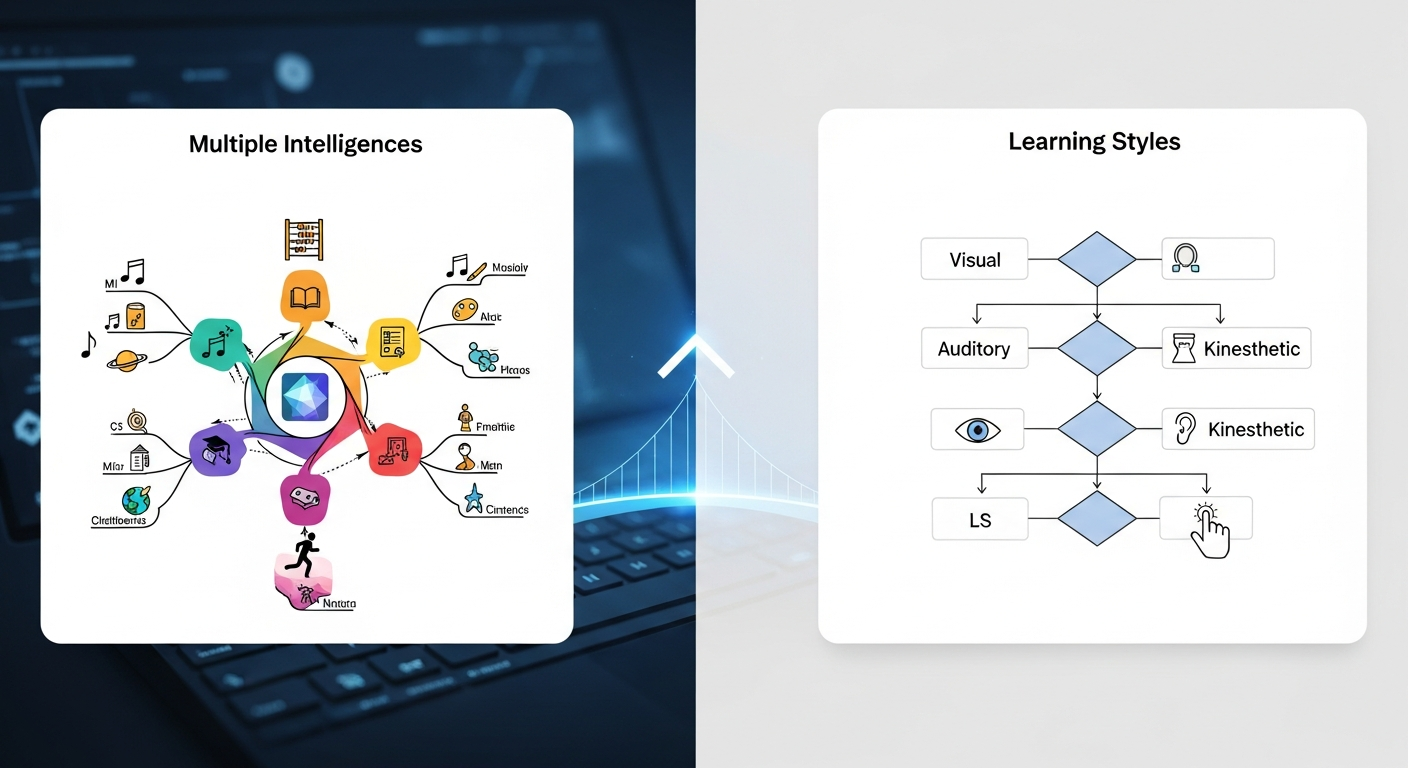
Multiple Intelligences vs. Learning Styles: Why the Distinction Matters for LMS
For Vice Presidents, Directors, and Managers in Learning & Development, navigating the landscape of effective training methodologies is a constant challenge. In the pursuit of maximizing skill acquisition and retention, two terms often arise: "Multiple Intelligences" and "Learning Styles." While frequently used interchangeably, understanding the fundamental difference between these concepts is not merely an academic exercise; it’s a critical distinction that profoundly impacts the design, implementation, and success of your LMS strategy.
In industries ranging from Compliance, Sales, and Banking to Finance, Insurance, Retail, Pharma, Healthcare, Hospitality, Oil and Gas, and Mining, the effectiveness of an LMS directly translates to business outcomes—be it improved compliance rates, increased sales, reduced risk, or enhanced patient care. Equipping your workforce with the right knowledge and skills demands an informed approach, one that moves beyond popular misconceptions to embrace evidence-backed learning principles within your learning management system.
Deconstructing the Differences: Multiple Intelligences
Introduced by Dr. Howard Gardner in 1983, the theory of Multiple Intelligences proposes that intelligence is not a single, monolithic entity, but rather a collection of distinct cognitive abilities or "intelligences." Gardner initially identified seven, later expanding to nine:
- Linguistic Intelligence: The ability to use language effectively, both orally and in writing.
- Logical-Mathematical Intelligence: The capacity for logical thinking, problem-solving, and mathematical reasoning.
- Spatial Intelligence: The ability to think in three dimensions and perceive the visual world accurately.
- Bodily-Kinesthetic Intelligence: Skill in using one’s whole body or parts of the body to solve problems or fashion products.
- Musical Intelligence: The capacity to discern pitch, rhythm, timbre, and tone.
- Interpersonal Intelligence: The ability to understand and interact effectively with others.
- Intrapersonal Intelligence: The capacity to understand oneself—one's feelings, motivations, and goals.
- Naturalistic Intelligence: The ability to recognize and categorize plants, animals, and other features of the natural world.
- Existential Intelligence: The capacity to ponder deep questions about life, death, and existence.
Crucially, Gardner's theory posits that individuals possess these intelligences in varying degrees. They represent different ways in which people demonstrate their intellectual strengths and potential. An LMS designed with Multiple Intelligences in mind seeks to engage a broader range of these innate abilities, fostering deeper understanding and more robust skill development.
Deconstructing the Differences: Learning Styles
Learning Styles, in contrast, refer to various theories that attempt to categorize how individuals prefer to receive and process information. One of the most common models is VARK (Visual, Auditory, Read/Write, Kinesthetic). This theory suggests that people learn best when information is presented in a format that aligns with their preferred style:
- Visual Learners: Prefer images, diagrams, videos, and graphical representations.
- Auditory Learners: Benefit from listening to lectures, discussions, and audio recordings.
- Read/Write Learners: Learn best through reading text and writing notes.
- Kinesthetic Learners: Thrive with hands-on activities, simulations, and practical experience.
While intuitively appealing, the concept of learning styles has faced significant scrutiny within educational psychology. Numerous meta-analyses and research reviews have concluded that there is little to no empirical evidence to support the idea that tailoring instruction to an individual's self-reported learning style improves learning outcomes. In fact, consistently catering to a single "style" might even limit a learner's ability to engage with information presented in other formats, hindering their overall cognitive flexibility.
Beyond Preference: The Impact on Training Efficacy
The distinction is vital: Multiple Intelligences describe *what* a person is good at, their cognitive strengths. Learning Styles describe *how* a person prefers to learn, a preference that does not necessarily correlate with improved performance. For an LMS strategy, this means:
- Designing for Intelligences: When you design training that leverages multiple intelligences, you're tapping into a learner's inherent capabilities. A Spatial learner might grasp a complex process faster through an interactive simulation; a Logical-Mathematical learner excels with problem-solving scenarios. By offering diverse content formats and learning activities, your learning content management system strengthens various cognitive pathways, leading to more profound and transferable learning.
- Avoiding the Learning Styles Trap: Focusing solely on learning styles can be counterproductive. If an Auditory learner is only ever given audio content, they may struggle when confronted with visual data in their professional role. A robust learning management software should expose learners to a rich variety of content types, encouraging them to develop proficiency across different modes of information processing.
The goal is not to pigeonhole learners but to provide a rich, multi-faceted learning experience that challenges and develops a range of cognitive abilities. This approach aligns perfectly with the capabilities of a modern learning management solutions.
Transforming LMS Design with Intelligences in Mind
An effective cloud based learning management system should provide a smorgasbord of learning experiences, allowing individuals to engage with content in ways that resonate with their intellectual strengths while also challenging them in areas where they might be less dominant. This is where the power of an advanced enterprise learning management solution truly shines:
- Diverse Content Formats: A Microlearning LMS naturally supports this, offering short, focused modules that can be video-based (Spatial), audio podcasts (Linguistic/Musical), interactive quizzes (Logical-Mathematical), or practical simulations (Bodily-Kinesthetic).
- Interactive and Experiential Learning: A Gamified LMS can provide challenges, scenarios, and role-playing opportunities that engage Bodily-Kinesthetic, Logical-Mathematical, and Interpersonal intelligences.
- Personalized Learning Paths: While not strictly tailoring to "styles," Adaptive Learning within an LMS can guide learners through content types that optimize their demonstrated understanding, rather than just their preference. If a learner consistently performs well after engaging with visual content for complex topics, the system can offer more such resources.
- Collaborative Features: Forums, group projects, and peer reviews within the LMS foster Interpersonal intelligence, crucial for team-based industries like Sales and Hospitality.
- Self-Reflection Tools: Journaling prompts or reflective questions encourage Intrapersonal intelligence, particularly valuable in fields requiring critical self-assessment like Healthcare or Compliance.
- AI-Powered Authoring: An AI Powered Authoring Tool can assist L&D teams in rapidly generating varied content—from video scripts to interactive exercises—that caters to a broader spectrum of intelligences, making content creation more efficient and diverse.
Real-World Impact Across Industries
The benefits of an intelligence-aware LMS are profound and measurable:
- Compliance, Banking, Finance, Insurance: Complex regulations and risk assessments can be understood through logical-mathematical simulations, linguistic analysis of policy documents, and interpersonal scenarios on ethical conduct. Risk-focused Training becomes more effective by addressing multiple cognitive approaches to potential threats.
- Sales, Retail, Hospitality: Training on customer interaction (Interpersonal), product features (Linguistic), and service delivery (Bodily-Kinesthetic through role-play) ensures well-rounded employees.
- Pharma, Healthcare: Learning anatomy through 3D models (Spatial), understanding drug interactions via logical pathways, and practicing patient communication (Linguistic, Interpersonal) leads to better patient outcomes.
- Oil and Gas, Mining: Safety procedures can be mastered through spatial visualization of equipment, logical sequence understanding, and bodily-kinesthetic practice in VR simulations.
By leveraging an advanced LCMS like MaxLearn LMS, organizations can deploy learning experiences that truly empower their workforce across all these critical sectors.
Intelligent Insights for Future-Proofing Learning
How can an advanced digital learning platform pinpoint precise training needs for individual roles?
Modern learning platforms leverage sophisticated analytics and machine learning algorithms. By continuously tracking an employee's performance in courses, assessments, and even on-the-job application (when integrated), the system can identify specific skill gaps. It moves beyond generic course assignments to recommend targeted modules and learning paths that address individual strengths and areas for improvement, ensuring every employee receives the most relevant and impactful training for their current role and career trajectory.
What advanced capabilities help tailor learning content to each employee's unique cognitive strengths?
Beyond simple preferences, intelligent learning systems can observe how employees interact with different content formats and which formats lead to the best comprehension and retention. If an employee consistently performs better after engaging with interactive simulations for problem-solving tasks, the system can prioritize and suggest more such content for similar challenges. This dynamic adaptation ensures that learning is delivered in formats that genuinely leverage an individual's intellectual abilities, rather than just their stated preference, promoting deeper engagement and more effective skill development.
In what ways can cutting-edge technology enhance a comprehensive understanding of workforce development and skill acquisition?
Cutting-edge technology, particularly machine learning and big data analytics, provides L&D leaders with a holistic view of workforce capabilities. By analyzing learning trajectories, assessment results, and correlating them with business performance metrics, these systems can predict future skill requirements, identify emerging talent, and reveal the most effective training methodologies. This comprehensive understanding allows organizations to proactively develop their talent pool, ensuring they remain competitive and resilient in a rapidly evolving market.
Conclusion
The distinction between Multiple Intelligences and Learning Styles is far more than semantic; it is foundational to building truly effective and impactful learning programs. L&D leaders must move beyond the allure of simplistic "learning styles" and instead focus on developing comprehensive LMS strategies that cater to the broad spectrum of human intelligences. By offering diverse, engaging, and challenging learning experiences, you not only improve individual skill sets but also cultivate a more adaptable, intelligent, and capable workforce, ready to drive success in any industry.
Re-evaluate your current LMS and content strategy through this lens. The future of learning is about harnessing true cognitive diversity, not limiting it.


Comments
Post a Comment