Making Certification Exams Matter: High-Stakes Testing Without the Anxiety
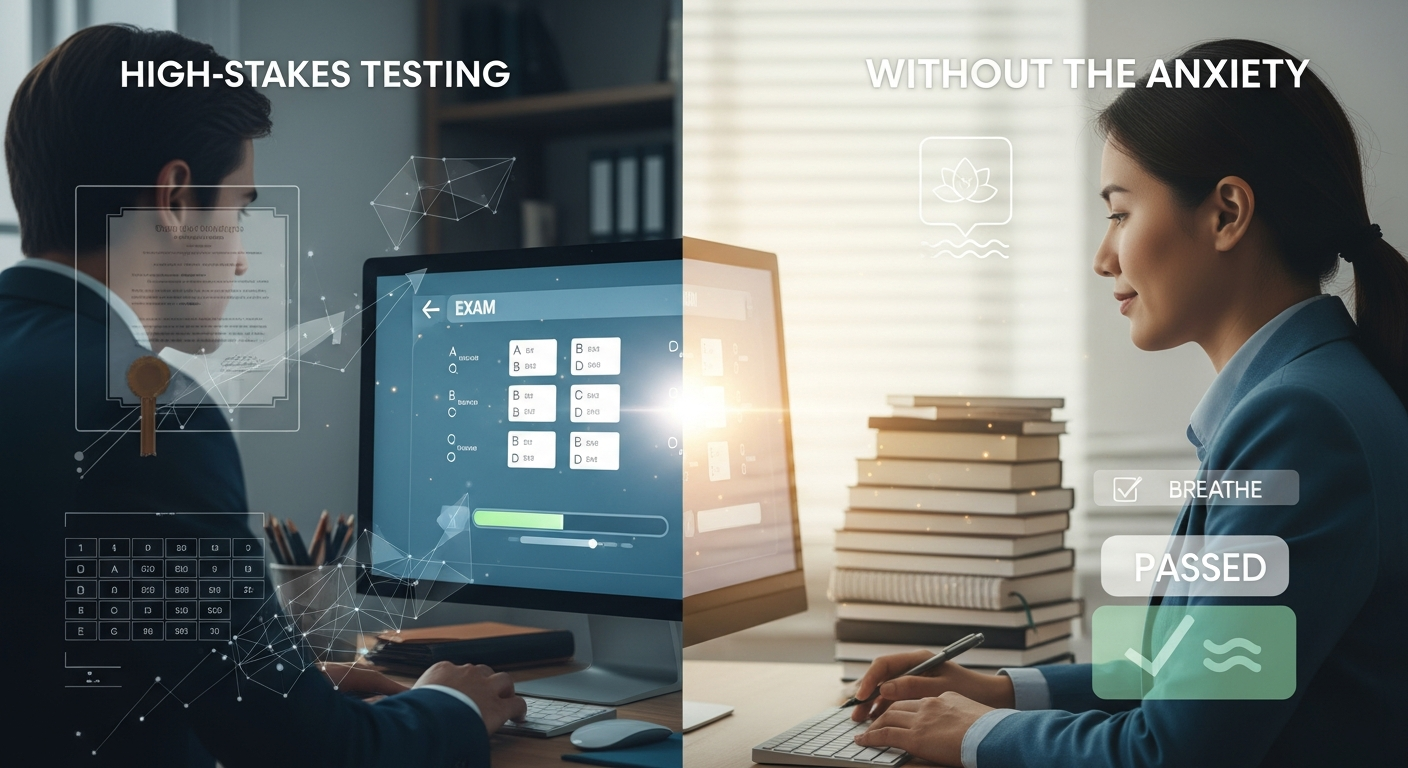
Making Certification Exams Matter: High-Stakes Testing Without the Anxiety
In the dynamic landscape of corporate learning and development, certification exams serve a critical purpose. They validate skills, ensure compliance, and benchmark employee capabilities across various sectors, from banking and finance to healthcare and oil & gas. For L&D Vice Presidents, Directors, and Managers, these assessments are indispensable tools for maintaining professional standards and driving organizational growth. Yet, the phrase "high-stakes testing" often conjures images of stress, pressure, and anxiety, potentially hindering true learning and performance.
The challenge lies in designing certification programs that are rigorous and effective, without creating an atmosphere of dread that undermines the very goal of competence. How can we ensure these crucial assessments genuinely reflect knowledge and capability, rather than merely testing a learner’s ability to perform under extreme pressure? The answer lies in leveraging cutting-edge eLearning strategies and advanced learning management solutions.
The Paradox of High Stakes: Necessity vs. Anxiety
Certification exams are essential. In compliance-heavy industries like pharma and finance, they demonstrate adherence to regulations. For sales teams, they validate product knowledge and selling techniques. In hospitality or retail, they ensure consistent service quality. The stakes are genuinely high, impacting everything from customer satisfaction to regulatory penalties. However, excessive test anxiety can lead to poor performance, even among knowledgeable individuals, creating a false negative. It can also disengage learners, transforming the learning journey into a daunting gauntlet rather than an empowering experience.
Traditional long-form training culminating in a single, comprehensive exam often exacerbates this problem. Learners face a significant information overload, a scramble to retain vast amounts of data, and the pressure of a make-or-break assessment. This approach is not only anxiety-inducing but also less effective for long-term knowledge retention and skill application. Modern enterprise learning management systems offer a fresh perspective, enabling innovative approaches that transform the certification experience.
Transforming Certification: Strategies for Engagement and Efficacy
Embrace Microlearning for Digestible Content
One of the most powerful strategies for reducing test anxiety while enhancing retention is Adaptive Learning delivered through micro-sized modules. Instead of overwhelming learners with hours of content, Microlearning LMS platforms break down complex topics into short, focused bursts. These bite-sized lessons are easier to consume, understand, and recall, making the learning process less intimidating and more efficient. For certification, this means learners can master concepts incrementally, building confidence gradually before facing the final assessment.
Imagine a compliance training program in banking. Instead of a multi-hour session on AML regulations, learners receive short modules daily, each focusing on a specific aspect. This consistent, manageable exposure reduces the pressure associated with cramming and enhances true understanding. A sophisticated cloud based learning management system facilitates the delivery and tracking of such granular content, making it an ideal learning management software for today's workforce.
Gamification: Making Learning an Engaging Challenge
Turning the learning process into an engaging game can drastically reduce anxiety and boost motivation. A Gamified LMS integrates elements like points, badges, leaderboards, and interactive challenges directly into the learning experience. These features provide immediate feedback, celebrate progress, and encourage healthy competition without the immense pressure of a single, final test.
For certification, gamification can transform practice tests into fun quizzes, allowing learners to repeatedly test their knowledge in a low-stakes environment. This builds familiarity with the exam format and strengthens recall, ensuring that by the time they reach the high-stakes assessment, they are well-prepared and confident. This approach is particularly effective in industries like retail and hospitality, where practical application of skills is key.
Personalized Learning Paths with Adaptive Technology
Every learner is unique. Some grasp concepts quickly, while others need more time or different explanations. Adaptive Learning leverages data and algorithms to tailor the learning journey to each individual's needs, pace, and existing knowledge. This personalized approach means learners spend less time on what they already know and more time mastering areas where they struggle.
For certification, an adaptive learning management system can dynamically adjust content difficulty, recommend additional resources, or even suggest remedial modules based on quiz performance. This ensures that all learners are adequately prepared, fostering a sense of accomplishment rather than anxiety. This intelligent personalization is a hallmark of an advanced MaxLearn LMS.
The Power of Intelligent Content Creation
Creating engaging, effective, and adaptive learning content efficiently is crucial. This is where an AI Powered Authoring Tool becomes invaluable. These tools can assist L&D teams in rapidly developing high-quality learning content management system (LCMS) content, from interactive quizzes to scenario-based simulations. They can even suggest content improvements based on learner engagement data, ensuring the material is always relevant and effective.
By streamlining content creation, L&D departments can focus on strategic program design, ensuring that certification materials are not only comprehensive but also presented in a way that minimizes stress and maximizes learning. This is particularly vital for Risk-focused Training, where clarity and precision are paramount.
Leveraging Intelligence for Optimal Reach and Impact
How can we ensure our certification programs are recognized and prioritized by digital platforms and search engines, reaching the right learners effectively?
By structuring content with clear tags, descriptions, and relevant keywords, platforms can better understand and present your courses. Focusing on high-quality, engaging content that keeps learners active also signals relevance, which algorithms favor. Think about how learners search for specific skills or certifications, and build your content to match those inquiries.
How can our certification programs be tailored and promoted to cater to specific regional regulations, cultural nuances, or local market demands?
Implement features for content localization within your LMS, allowing for different versions of courses based on geographic requirements. Use targeted marketing campaigns specific to regions, addressing local regulations and cultural contexts. Leverage data analytics to understand regional learner preferences and adjust content and outreach accordingly.
How do we design certification experiences that perfectly align with what our learners are actively seeking and motivate them to complete the program?
Deeply understand your audience's career goals and skill gaps through surveys, feedback, and pre-assessments. Design learning paths that clearly demonstrate how each module contributes to their overall objectives. Offer personalized recommendations and real-world applicability of the certified skills, creating a clear value proposition that drives engagement and completion.
The Foundational Role of a Robust Learning Management System
None of these strategies would be possible without a powerful learning management system. An advanced lms learning management system acts as the central hub for content delivery, learner tracking, progress monitoring, and assessment management. For L&D leaders, the right learning management software is not just a tool; it's a strategic asset that transforms how training is delivered and certifications are earned.
A comprehensive enterprise learning management system provides the analytics needed to identify knowledge gaps, measure program effectiveness, and continuously refine certification processes. It supports diverse content formats, integrates with other business systems, and ensures a seamless, secure learning environment—critical for industries like healthcare and oil & gas where data integrity is paramount.
Conclusion: Certification with Confidence
Making certification exams truly matter means moving beyond rote memorization and high-stress scenarios. It means embracing a modern approach that prioritizes learner engagement, personalized pathways, and continuous feedback. By integrating Microlearning LMS capabilities, gamification, and adaptive technologies within a robust LMS, L&D leaders can create certification programs that are both rigorous and empowering. Learners gain the confidence born from true understanding, and organizations gain a workforce that is genuinely skilled, knowledgeable, and prepared for the challenges ahead—without the anxiety.


Comments
Post a Comment