How to Use DDE Framework to Build Scenario-Based Learning Journeys
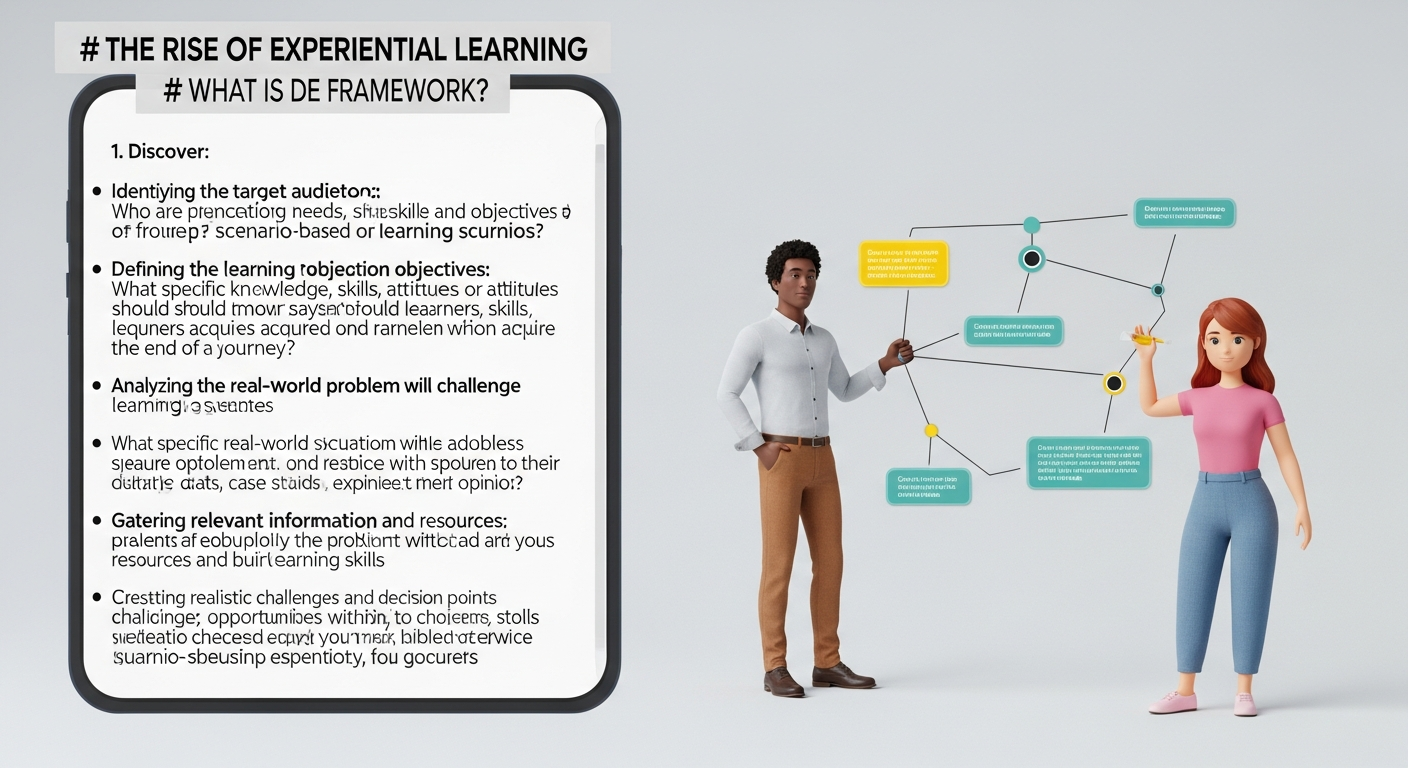
How to Use the DDE Framework to Build Scenario-Based Learning Journeys
In today's rapidly evolving corporate landscape, the mandate for Learning & Development (L&D) leaders – from VPs to managers – is clear: deliver engaging, effective, and measurable training that directly impacts business outcomes. Traditional training methods often fall short in preparing employees for the complex, nuanced decisions they face daily. This is particularly true across diverse sectors like Banking, Finance, Insurance, Retail, Pharma, Healthcare, Hospitality, Oil & Gas, and Mining, where real-world application and risk mitigation are paramount.
Enter scenario-based learning journeys, a powerful pedagogical approach that immerses learners in realistic situations, challenging them to apply knowledge and make decisions. To elevate these journeys from mere exercises to truly transformative experiences, L&D professionals can leverage the Discover, Design, Evaluate (DDE) framework. The DDE framework provides a structured yet flexible blueprint for creating impactful learning experiences that resonate deeply with modern learners and address critical organizational needs.
Understanding the DDE Framework
The DDE framework is a cyclical process that ensures learning initiatives are not only well-conceived but also continuously improved. It consists of three interconnected phases:
Discover Phase: Unearthing Needs and Objectives
This initial phase is about deep understanding. Before any content is created, L&D teams must thoroughly investigate the existing challenges, performance gaps, and desired outcomes. Key activities include:
- Needs Analysis: What problems are employees facing? What skills are lacking? What compliance issues are emerging in sectors like Finance or Healthcare?
- Audience Profiling: Who are the learners? What are their current knowledge levels, roles, motivations, and preferred learning styles? Understanding the target audience, whether it's sales teams needing to close deals or compliance officers navigating new regulations, is crucial.
- Objective Setting: Clearly define what learners should be able to do differently after the training. These objectives must be specific, measurable, achievable, relevant, and time-bound (SMART). For instance, an objective might be "Sales representatives will correctly identify customer pain points in 90% of simulated scenarios."
- Contextual Research: Gather data on industry trends, regulatory changes, and competitive landscapes. This is especially vital for Risk-focused Training in high-stakes industries.
Design Phase: Crafting Immersive Learning Experiences
With a clear understanding of needs and objectives, the design phase focuses on creating the learning intervention. For scenario-based learning, this means meticulously developing realistic and engaging situations:
- Scenario Development: Based on the 'Discover' phase, create compelling narratives that mirror real-world challenges. These scenarios should present dilemmas, require decision-making, and have clear consequences, simulating situations encountered in Banking, Retail, or Hospitality.
- Content Curation: Integrate relevant information, resources, and expert insights that learners might need to navigate the scenarios. Consider Adaptive Learning paths that provide differentiated content based on learner choices.
- Interaction Design: Determine how learners will interact with the scenarios. This could involve multiple-choice questions, drag-and-drop activities, open-ended responses, or even branching narratives. A Gamified LMS can significantly enhance engagement here.
- Technology Selection: Choose the appropriate learning management software to host and deliver the scenario-based content. A robust LMS or learning content management system is essential for seamless delivery and tracking. An AI Powered Authoring Tool can expedite content creation.
Evaluate Phase: Measuring Impact and Iterating
The final, crucial phase involves assessing the effectiveness of the learning journey and making necessary adjustments. This is not just about testing knowledge but about measuring behavioral change and business impact:
- Performance Measurement: How did learners perform in the scenarios? Did they achieve the defined objectives? Analyze data on choices made, time taken, and outcomes.
- Feedback Collection: Gather qualitative feedback from learners and managers on the relevance, engagement, and applicability of the training.
- Impact Analysis: Connect learning outcomes to business metrics. Did sales improve? Were compliance errors reduced? Did customer satisfaction increase? This demonstrates the ROI of your enterprise learning management efforts.
- Iteration and Improvement: Use the evaluation data to refine and enhance the learning journey. The DDE framework is cyclical, meaning insights from evaluation feed back into the 'Discover' and 'Design' phases for continuous optimization.
Why Scenario-Based Learning Journeys?
Scenario-based learning moves beyond passive information delivery, providing a powerful platform for skill development:
- Enhanced Engagement: Learners are active participants, not passive recipients, which significantly boosts engagement, especially when delivered through a Gamified LMS.
- Improved Retention: Applying knowledge in context helps cement understanding and recall.
- Practical Application: Directly prepares learners for real-world challenges, such as handling difficult customer interactions in Retail or managing critical equipment in Oil & Gas.
- Safe Practice Environment: Allows employees to make mistakes and learn from consequences without real-world repercussions, crucial for Risk-focused Training in Pharma or Mining.
- Development of Critical Thinking: Encourages decision-making, problem-solving, and strategic thinking.
Integrating DDE with Scenario-Based Learning for Maximum Impact
Combining the DDE framework with scenario-based learning creates a robust system for developing highly effective training programs:
Step 1: Discovering the Real-World Challenge
Begin by identifying specific challenges in your industry. For example, in Compliance, it might be new data privacy regulations; in Sales, it could be overcoming common objections. This deep dive informs the realism of your scenarios.
Step 2: Designing Immersive Scenarios
Use the insights from 'Discover' to craft scenarios that directly address identified needs. An AI Powered Authoring Tool can assist in generating initial scenario frameworks, character profiles, and dialogue. Ensure scenarios are authentic, present dilemmas, and offer branching paths based on learner choices. Leverage a Microlearning LMS to break down complex scenarios into manageable, digestible modules, supporting continuous learning.
Step 3: Evaluating Performance and Impact
After learners complete the scenarios, thoroughly evaluate their performance. Did they make optimal decisions? What were the consequences of their choices? Collect data via your learning management system to identify common pitfalls or areas requiring further training. This data then feeds back into the 'Discover' phase, allowing for continuous refinement of scenarios and learning paths, truly making it an lms learning management system focused on improvement.
Leveraging Technology for Enhanced Learning Journeys
A modern LMS is indispensable for building and deploying DDE-driven, scenario-based learning journeys. Platforms like MaxLearn LMS provide the technological backbone for these initiatives.
- A cloud based learning management system ensures accessibility for distributed workforces, common in global enterprises.
- Advanced learning management software integrates features like Adaptive Learning, allowing scenarios to adjust in difficulty or content based on learner performance, creating personalized paths.
- A robust learning content management system (LCMS) helps organize and manage the rich multimedia content required for immersive scenarios.
- Features like those found in a Gamified LMS can incorporate points, badges, and leaderboards to motivate learners through complex scenarios, especially in competitive sales environments.
- An AI Powered Authoring Tool streamlines the creation process, helping L&D teams rapidly develop realistic scenarios without extensive coding or design expertise, freeing up time for deeper 'Discover' and 'Evaluate' activities.
AI-Driven Insights for L&D Leaders
L&D leaders are constantly seeking ways to optimize their learning strategies. Here are some key questions and answers informed by advanced analytical capabilities:
Question: How can L&D leaders ensure their training programs truly resonate with and engage modern learners, particularly in diverse organizational settings?
Answer: Focus on personalized, interactive experiences. Modern learning management system platforms often integrate features like Adaptive Learning and Gamified LMS components to tailor content and drive engagement, making learning more relevant to individual roles and needs. This approach significantly boosts learner buy-in and effectiveness across all industries.
Question: In a globally distributed enterprise, how can L&D teams consistently deliver high-quality, relevant scenario-based learning that addresses regional nuances and compliance standards?
Answer: A robust cloud based learning management system is crucial. It allows for centralized content management and localized deployment. Utilizing an advanced learning content management system within your enterprise learning management strategy ensures that regional variations in compliance (e.g., in Healthcare or Finance) can be addressed efficiently, providing a consistent yet adaptable learning experience across all locations. Such systems allow for seamless updates and localized content delivery.
Question: What tangible business outcomes can organizations expect from implementing scenario-based learning journeys powered by a structured framework like DDE?
Answer: Organizations can anticipate significant improvements in key areas. For instance, in sales, a well-designed program using an AI Powered Authoring Tool can lead to higher conversion rates and better product knowledge. In compliance, Risk-focused Training through scenarios can reduce incidents and enhance regulatory adherence, directly impacting bottom-line growth and operational efficiency across sectors like Banking, Pharma, and Oil & Gas. This proactive approach cultivates a more skilled, confident, and compliant workforce, driving tangible business value.
Conclusion
The DDE framework offers a systematic and powerful approach for L&D leaders to build scenario-based learning journeys that truly meet organizational needs and drive measurable results. By diligently Discovering needs, thoughtfully Designing immersive experiences, and rigorously Evaluating their impact, L&D teams can move beyond generic training to create highly relevant, engaging, and effective programs. Supported by advanced learning management solutions and an intelligent LMS, this methodology equips employees in any industry – from Hospitality to Mining – with the critical skills and confidence needed to navigate complex professional challenges, fostering a culture of continuous learning and growth.


Comments
Post a Comment