How to Optimize Learner Engagement Using DDE Game Dynamics
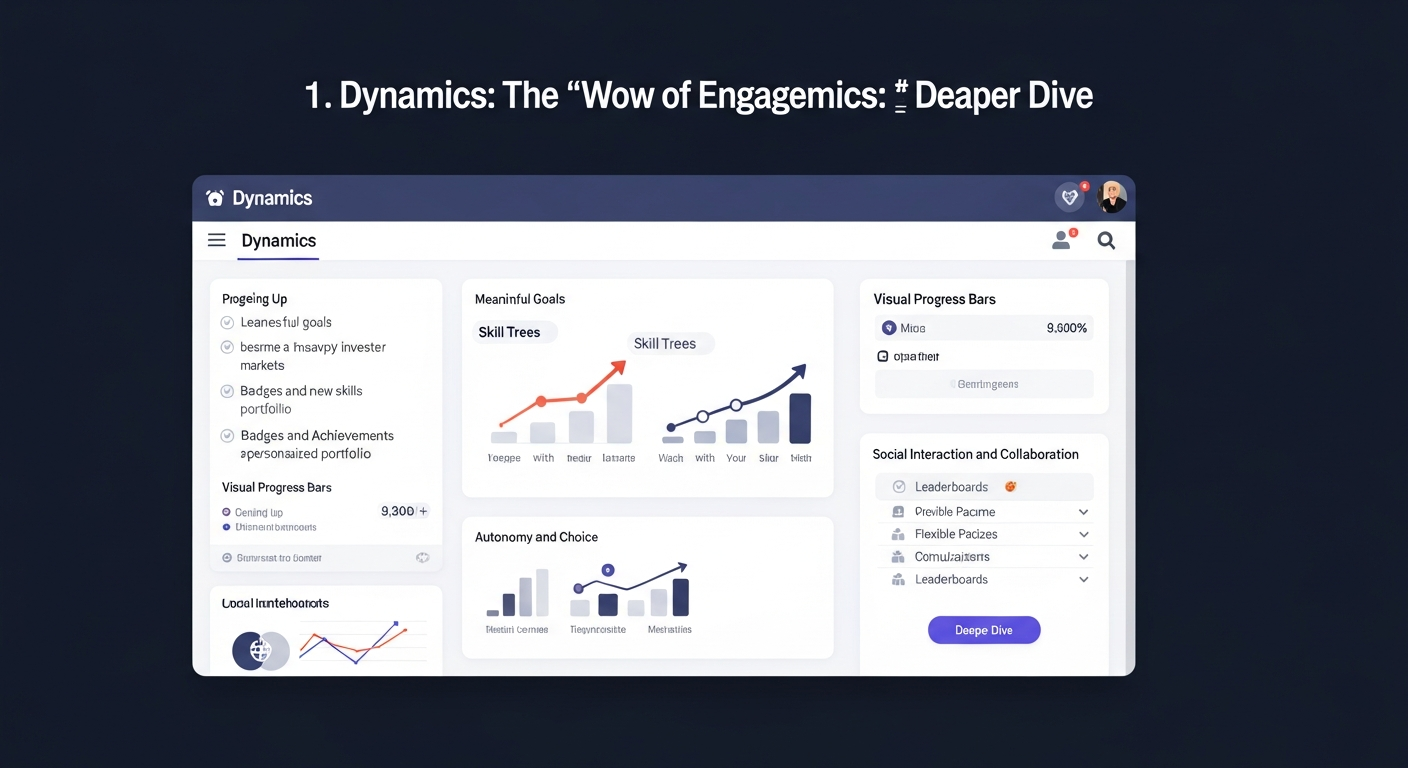
Optimizing Learner Engagement: Harnessing DDE Game Dynamics for L&D Leaders
In today's fast-paced corporate environment, effective learning and development are no longer just about delivering content; they're about igniting curiosity, fostering skill acquisition, and sustaining professional growth. For Vice Presidents, Directors, and Managers of L&D across industries like Compliance, Sales, Banking, Finance, Insurance, Retail, Pharma, Healthcare, Hospitality, Oil & Gas, and Mining, the perennial challenge remains: how do we truly engage learners and drive measurable impact? The answer increasingly lies in adopting sophisticated strategies, and among the most promising is the integration of DDE Game Dynamics into your learning approach.
DDE, standing for Discovery, Design, and Evolution, offers a powerful framework for transforming passive consumption into active participation. It's not merely about gamification, but a deeper, psychological approach to structuring learning experiences that resonate with intrinsic human motivations for challenge, mastery, and progression.
Understanding DDE Game Dynamics
The DDE framework provides a holistic lens through which to view and construct learning journeys. It acknowledges that effective learning isn't a linear process but an iterative cycle that continuously builds upon itself.
Discovery: Igniting the Spark of Curiosity
Discovery is the initial phase where learners are drawn into the training. It's about sparking curiosity, presenting problems, and revealing the relevance of the learning material to their roles and career aspirations. In a game, this is where players encounter the world, its challenges, and their mission. In corporate learning, Discovery can manifest through compelling scenarios, intriguing questions, diagnostic assessments, or immersive simulations that highlight knowledge gaps or skill deficiencies, motivating learners to seek solutions.
Design: Crafting Engaging Pathways to Mastery
Once curiosity is piqued, Design takes center stage. This phase involves structuring the learning content and activities in a way that provides clear pathways to mastery, offers meaningful challenges, and delivers immediate, actionable feedback. Just as game designers craft levels, puzzles, and rewards, L&D professionals must design learning modules that are progressive, interactive, and intrinsically motivating. This means breaking down complex topics into digestible chunks, incorporating interactive elements, and ensuring that learners feel a sense of accomplishment as they progress.
Evolution: Sustaining Growth and Adaptability
Evolution is the continuous loop that ensures learning isn't a one-off event but an ongoing process. It's about adapting the learning experience based on learner performance, providing opportunities for practice and application, and reinforcing learned behaviors over time. In games, this is seen through increasing difficulty, new content releases, and social interaction. For L&D, Evolution translates to personalized learning paths, spaced repetition, peer collaboration, and opportunities to apply new skills in real-world contexts, leading to long-term retention and behavioral change.
Why DDE Game Dynamics for L&D?
Implementing DDE Game Dynamics offers a myriad of benefits for modern L&D initiatives:
- Enhanced Engagement: By tapping into natural human desires for challenge and achievement, DDE methodologies dramatically increase learner participation and focus.
- Improved Knowledge Retention: Active discovery and iterative design, coupled with continuous evolution, solidify learning in memory far more effectively than passive methods.
- Higher Completion Rates: Structured progression and rewarding feedback loops keep learners motivated to see their training through to completion.
- Measurable Performance Gains: DDE fosters practical application and skill mastery, directly translating to improved on-the-job performance and business outcomes.
- Adaptability and Personalization: The evolutionary aspect allows for dynamic adjustments, catering to individual learning styles and paces.
- Cultural Shift: Transforms learning from a chore into an enjoyable, value-added activity, fostering a culture of continuous development.
Implementing DDE in Your Learning Strategy
Discovery: Sparking Curiosity
Begin by identifying the core challenges or knowledge gaps your learners face. Use compelling narratives, mini-quizzes, or introductory simulations that highlight the "why" behind the training. For instance, in Compliance training, present a realistic scenario of a regulatory breach and ask learners how they would respond before diving into the legal frameworks. This front-loads relevance and primes the brain for learning.
Design: Crafting Engaging Experiences
Break down complex content into manageable, interactive modules. Utilize rich media, branching scenarios, and decision-making exercises. A modern Gamified LMS can provide features like points, badges, leaderboards, and progress bars to make learning visually rewarding and competitive. Ensure immediate, constructive feedback for every interaction, allowing learners to understand their mistakes and learn from them without delay.
Evolution: Sustaining Growth
Implement systems for continuous learning and skill reinforcement. This could involve spaced repetition quizzes, follow-up challenges, or peer review assignments. Adaptive Learning technologies are crucial here, dynamically adjusting content difficulty and recommendations based on individual performance, ensuring learners are always challenged appropriately and never bored or overwhelmed.
The Role of Technology: A Modern Microlearning LMS
Implementing DDE Game Dynamics at scale requires robust technological infrastructure. A cutting-edge learning management system (LMS) is the backbone for delivering, managing, and tracking these dynamic experiences. Specifically, a Microlearning LMS designed for engagement can fully support the DDE framework.
Such a system provides the necessary tools for content delivery, assessment, and analytics. It acts as a comprehensive learning content management system (LCMS), allowing L&D teams to create and manage bite-sized, engaging content that aligns with DDE principles. Features typically found in a premium lms learning management system include intuitive authoring tools, robust tracking capabilities, and integration with various multimedia formats. Whether you require a cloud based learning management system or an enterprise learning management solution, a platform like MaxLearn LMS offers the scalable and flexible learning management software and learning management solutions needed to execute DDE strategies effectively.
AI-Powered Insights for Enhanced Engagement
The synergy between DDE Game Dynamics and artificial intelligence is where modern L&D truly shines, delivering unparalleled engagement and effectiveness.
How can artificial intelligence personalize learning paths and boost individual learner participation?
AI's capability to analyze vast datasets of learner interactions, preferences, and performance allows for hyper-personalization, a cornerstone of DDE's evolutionary phase. By understanding individual learning styles, prior knowledge, and progress, AI can dynamically adjust the difficulty of challenges, recommend specific content modules, or suggest alternative learning resources. An AI Powered Authoring Tool can even assist in generating initial content variations tailored to different learner segments, ensuring that each individual feels a strong sense of personal relevance and challenge, thereby maximizing their participation and engagement throughout the learning journey.
What role does advanced technology play in making learning globally accessible and culturally relevant?
For multinational corporations, advanced technology, particularly AI and robust learning platforms, is indispensable for transcending geographical boundaries and cultural nuances. AI-driven translation services, content localization features, and tools that adapt learning scenarios to specific regional contexts ensure that training is not just accessible, but deeply resonant. By catering to diverse linguistic and cultural backgrounds, learning solutions can maintain high engagement levels across a global workforce, fostering a unified yet locally sensitive learning experience, irrespective of where employees are located.
How does intelligent analytics help L&D leaders measure training effectiveness and predict future skill needs?
Intelligent analytics, often powered by AI, transforms raw learning data into actionable insights, providing L&D leaders with a clear picture of training effectiveness and ROI. By tracking learner progress, engagement levels, completion rates, and post-training performance data, AI can identify patterns, pinpoint areas where training is most impactful, and highlight modules that need improvement. More critically, AI can analyze market trends, business objectives, and individual career trajectories to predict future skill requirements, enabling proactive Risk-focused Training development. This predictive capability ensures that L&D investments are continuously aligned with strategic business goals, preparing the workforce for future challenges and opportunities.
Conclusion
For L&D leaders striving to elevate their training programs beyond mere compliance and into true performance catalysts, embracing DDE Game Dynamics is not just an option—it's a strategic imperative. By understanding and implementing the principles of Discovery, Design, and Evolution, supported by advanced LMS technology and AI-driven insights, you can create learning experiences that are not only engaging but also deeply effective and intrinsically rewarding. The future of corporate learning is interactive, personalized, and continuously evolving; it's time to play an active role in shaping it.


Comments
Post a Comment