How to Combine Spaced Repetition with the DDE Framework for Max Retention
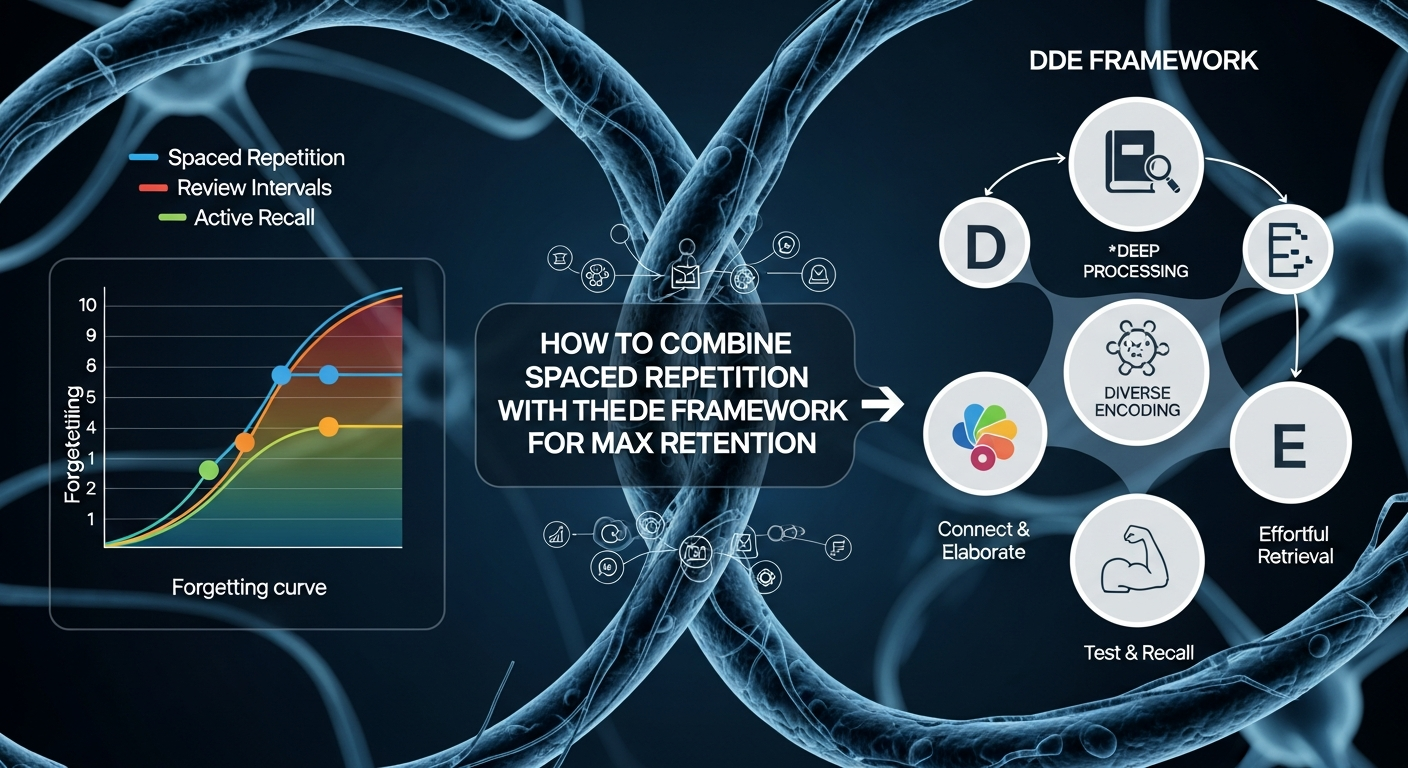
How to Combine Spaced Repetition with the DDE Framework for Max Retention
In the dynamic world of corporate learning and development, the ultimate goal isn't just to deliver training; it's to ensure lasting knowledge retention and effective skill application. For Vice Presidents, Directors, and Managers of L&D across industries like Compliance, Sales, Banking, Finance, Insurance, Retail, Pharma, Healthcare, Hospitality, Oil and Gas, and Mining, this challenge is particularly acute. High-stakes training demands that information sticks. The good news? Combining two powerful methodologies – Spaced Repetition and the Define, Develop, Embed (DDE) Framework – offers a formidable solution to achieve maximum retention and unlock the true potential of your learning management system.
Imagine a learning ecosystem where every piece of crucial information isn't just learned once but strategically reinforced over time, deeply embedding into your employees' long-term memory. This isn't a futuristic dream; it's an achievable reality when these frameworks are integrated effectively within a robust LMS.
Understanding Spaced Repetition: The Science of Sticking Power
Spaced Repetition is an evidence-based learning technique rooted in cognitive psychology, specifically countering the "forgetting curve" identified by Hermann Ebbinghaus. It involves reviewing previously learned material at increasing intervals over time. Instead of cramming, learners revisit content just before they are likely to forget it, strengthening neural pathways and transferring information from short-term to long-term memory.
- Enhanced Recall: By strategically prompting recall, it forces active retrieval, which is far more effective than passive re-reading.
- Efficiency: It optimizes study time by focusing on the most challenging material and less on already mastered concepts.
- Long-Term Mastery: Ideal for complex topics in compliance, financial regulations, or healthcare protocols where deep understanding and recall are non-negotiable.
For L&D professionals, integrating Spaced Repetition into your learning management solutions means moving beyond one-off training events to a continuous learning journey.
Introducing the DDE Framework: A Structured Approach to Learning Design
The Define, Develop, Embed (DDE) Framework provides a structured approach to designing and delivering effective learning experiences. It ensures that training is not only relevant and engaging but also deeply integrated into an employee's daily work and long-term knowledge base.
Define: Setting the Foundation
This initial phase focuses on clearly articulating learning objectives and identifying the specific knowledge, skills, and behaviors learners need to acquire. It involves thorough needs analysis, audience assessment, and mapping desired outcomes to business goals. What problem are we trying to solve? What specific performance gaps need addressing? This phase is crucial for ensuring that the learning content management system is populated with purpose-driven content.
Develop: Crafting Engaging Content and Delivery
Once objectives are defined, the develop phase involves creating and curating the actual learning materials. This includes designing courses, modules, assessments, and activities. It emphasizes using appropriate instructional strategies, media types, and delivery methods to engage learners effectively. Modern learning management software often facilitates the creation and deployment of diverse content, from microlearning modules to comprehensive courses.
Embed: Ensuring Application and Retention
The embed phase is perhaps the most critical for retention. It focuses on strategies that help learners apply new knowledge and skills in their work context and ensure that the learning is sustained over time. This includes practice opportunities, real-world application, coaching, performance support tools, and crucially, reinforcement mechanisms. Without effective embedding, even the best-developed content can quickly be forgotten.
The Synergy: Combining Spaced Repetition with DDE for Unmatched Retention
The true power emerges when Spaced Repetition is woven into each stage of the DDE Framework, transforming a linear process into a continuous, reinforcing cycle.
Define Phase with Spaced Repetition
Even at the definition stage, consider how content will be chunked for spaced delivery. Identify core concepts that will require regular revisiting. When defining objectives for a new product training or compliance module, categorize information based on its criticality and potential for forgetting, signaling which elements will be prioritized for spaced review.
Develop Phase with Spaced Repetition
This is where the learning content is created with Spaced Repetition in mind. Instead of a single, lengthy course, break down complex topics into digestible, self-contained Microlearning LMS modules. These short bursts of learning are ideal for spaced delivery. Utilize a Gamified LMS to make spaced review activities engaging and competitive, turning reinforcement into a rewarding experience rather than a chore. Integrate quizzes, flashcards, and short scenarios that can be deployed at strategic intervals by your enterprise learning management system.
Embed Phase with Spaced Repetition
The embed phase is where Spaced Repetition truly shines. After initial training, the lms learning management system should automatically schedule follow-up questions, short quizzes, or brief scenario-based challenges at increasing intervals. This could be daily for the first week, then weekly, then monthly. Adaptive Learning technologies can personalize these review schedules based on individual learner performance, pushing content where they struggle most and reducing repetition for mastered topics. This continuous reinforcement ensures that critical knowledge, whether about a new sales technique or a vital safety protocol, remains top of mind and readily accessible.
AI-Driven Retention: The Future is Now
The integration of artificial intelligence further amplifies the effectiveness of combining Spaced Repetition and DDE, particularly within a sophisticated cloud based learning management system.
What advanced strategies are available to optimize employee learning paths?
AI-powered platforms revolutionize learning by personalizing content delivery and review schedules. They can analyze learner performance data to predict knowledge decay for specific topics and individuals, then automatically push targeted spaced repetition content. This dynamic adjustment ensures that each employee receives the right information at the optimal time, maximizing retention and minimizing wasted effort. An AI Powered Authoring Tool can even help L&D teams rapidly create tailored microlearning modules and spaced repetition questions based on initial course content, streamlining content development significantly.
How can financial institutions enhance compliance training effectiveness across diverse global teams?
For organizations with global operations, like financial institutions or pharmaceutical companies, ensuring uniform compliance and skill levels is paramount. An intelligent LCMS (Learning Content Management System) can deliver standardized core content while adapting spaced repetition schedules to local regulations or cultural nuances. By leveraging AI, the system can identify common areas of confusion or non-compliance across different regions, allowing L&D to proactively deploy targeted Risk-focused Training and spaced repetition quizzes. This ensures that critical compliance knowledge is not only learned but continuously reinforced and applied consistently across the entire enterprise.
What steps should an L&D leader take to implement a highly effective knowledge retention program immediately?
Start by auditing your existing training content to identify key knowledge points suitable for spaced repetition. Next, select an advanced learning management system that supports automated spaced repetition and microlearning delivery, such as MaxLearn LMS. Pilot a program with a critical training area, like onboarding for new hires or a specific compliance module. Focus on breaking down content into bite-sized pieces for initial learning and then using the system to schedule automated, adaptive recall activities. Regularly review analytics to fine-tune intervals and content, ensuring continuous improvement in retention rates.
Benefits for L&D Leaders
Implementing a strategy that combines Spaced Repetition with the DDE Framework, powered by a sophisticated learning management system, offers significant advantages for L&D leaders:
- Improved ROI on Training: Higher retention means employees are more effective, faster, and make fewer errors, leading to tangible business outcomes.
- Enhanced Compliance & Reduced Risk: In industries like banking, healthcare, and pharma, consistent knowledge recall of regulations and procedures is vital for mitigating risks.
- Faster Skill Acquisition & Application: Employees spend less time relearning and more time applying what they've learned, boosting productivity.
- Increased Employee Engagement & Satisfaction: Learning becomes less overwhelming and more manageable, leading to a more positive and effective learning experience.
Choosing the Right Learning Solution
To effectively implement these strategies, selecting the right lms learning management system is paramount. Look for a platform that inherently supports microlearning, offers robust content management, and ideally, incorporates AI-driven adaptive learning and automated spaced repetition features. A comprehensive MaxLearn LMS, for instance, is designed to facilitate this integrated approach, providing the tools necessary for L&D professionals to build powerful, retention-focused training programs.
The days of one-and-done training are behind us. For L&D leaders striving for excellence, combining Spaced Repetition with the DDE Framework within an intelligent learning management system is the blueprint for achieving maximum retention, driving performance, and securing a truly knowledgeable workforce. Embrace this synergy to transform your corporate learning landscape and empower your employees with enduring expertise.


Comments
Post a Comment