How to Apply Gardner's Multiple Intelligences Theory to Microlearning
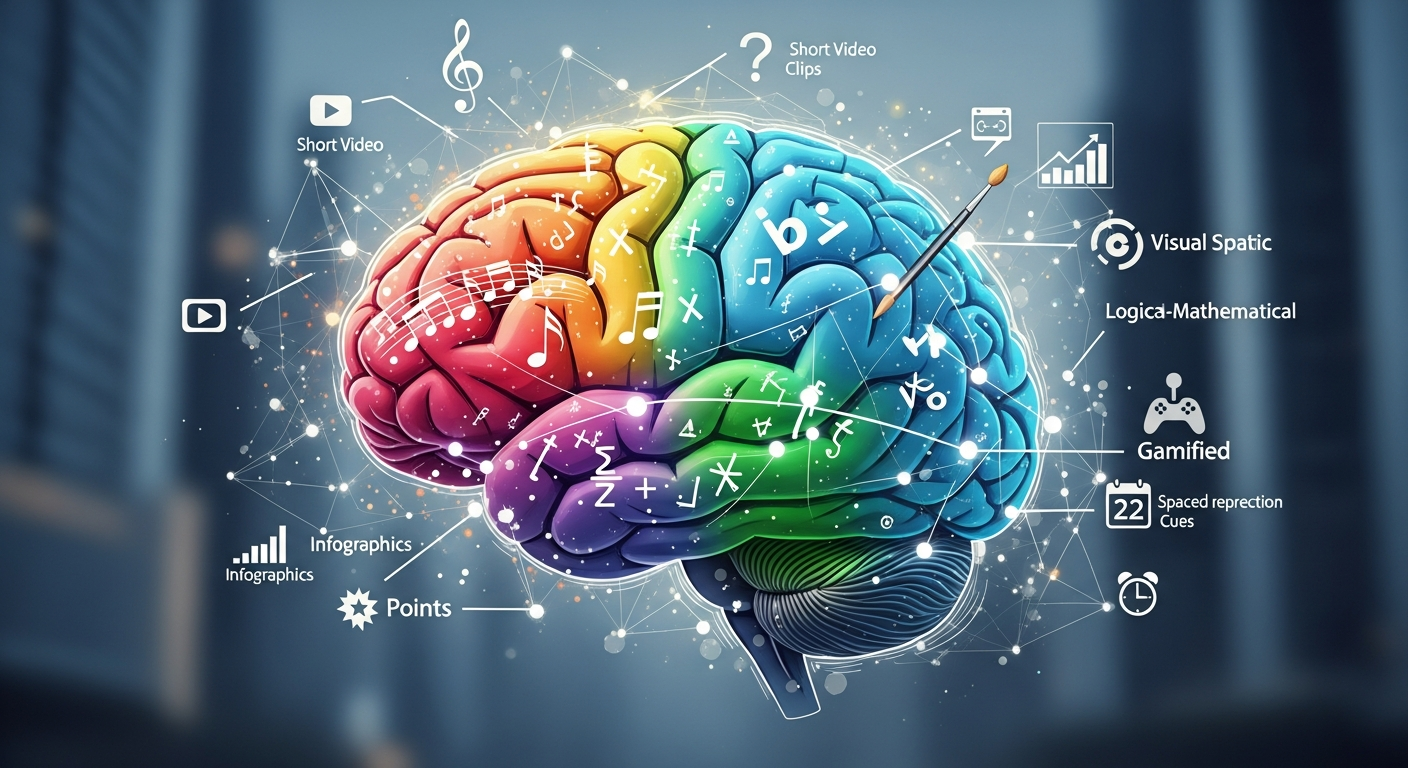
How to Apply Gardner's Multiple Intelligences Theory to Microlearning
In today's fast-paced corporate landscape, Learning & Development (L&D) leaders face the continuous challenge of engaging a diverse workforce with varying learning preferences. From ensuring compliance in banking and finance to driving sales effectiveness in retail and pharmaceutical sectors, or fostering safety in oil and gas, traditional one-size-fits-all training models often fall short. The solution lies in a more nuanced approach, one that recognizes individual strengths and delivers content efficiently.
Enter two powerful educational concepts: Howard Gardner's Theory of Multiple Intelligences and Microlearning. By strategically combining these frameworks, L&D professionals can create highly personalized, impactful, and memorable learning experiences that resonate deeply with every learner, regardless of their dominant intelligence type or industry.
Understanding Gardner's Multiple Intelligences Theory
Howard Gardner's groundbreaking theory posits that intelligence is not a singular, monolithic entity but rather a collection of distinct "intelligences," each with its own set of capabilities and characteristics. Recognizing these different ways of thinking and processing information is the first step toward creating truly inclusive and effective training programs.
- Linguistic Intelligence: The ability to use language effectively, both orally and in writing. Think writers, speakers, lawyers.
- Logical-Mathematical Intelligence: Skill in logical reasoning, problem-solving, and numerical analysis. Common in scientists, engineers, accountants.
- Spatial Intelligence: The capacity to think in images and pictures, to visualize accurately and abstractly. Architects, artists, navigators often excel here.
- Bodily-Kinesthetic Intelligence: Expertise in using one's whole body or parts of the body to solve problems or fashion products. Dancers, athletes, surgeons.
- Musical Intelligence: The ability to recognize and compose musical patterns, tone, and rhythm. Musicians, composers.
- Interpersonal Intelligence: The capacity to understand and interact effectively with others. Leaders, educators, salespeople.
- Intrapersonal Intelligence: The ability to understand oneself, including one's own emotions, motivations, and goals. Therapists, entrepreneurs.
- Naturalistic Intelligence: The ability to recognize, classify, and understand various aspects of the environment. Biologists, environmentalists.
The Power of Microlearning in Modern L&D
Microlearning delivers short, focused bursts of content designed for rapid consumption and immediate application. Typically lasting anywhere from 2 to 10 minutes, these modules tackle specific learning objectives, making them ideal for reinforcing concepts, teaching new skills, or providing just-in-time support. It's a highly effective strategy for today's busy professionals across all sectors, from healthcare to hospitality.
A robust Microlearning LMS or any modern LMS (Learning Management System) facilitates the delivery and tracking of these bite-sized lessons, making it an indispensable tool for any `learning management software` strategy. Such systems help boost learner engagement, improve knowledge retention, and provide the flexibility needed for a global workforce.
Question: How can organizations personalize training for diverse teams to enhance learning outcomes?
Answer: By understanding the varied learning styles inherent in a diverse workforce, L&D teams can curate specific microlearning content types. This ensures that whether a learner thrives with visuals, data, or hands-on practice, their training path aligns with their natural intellectual strengths, leading to greater comprehension and application.
Integrating Multiple Intelligences with Microlearning Strategies
The synergy between microlearning and Multiple Intelligences theory is profound. By designing microlearning modules that cater to different intelligences, L&D leaders can create a truly adaptive and engaging learning environment. This approach is particularly beneficial for critical areas like Risk-focused Training in financial institutions or complex procedural training in pharma and manufacturing.
Linguistic Intelligence: Crafting Clear Narratives
For learners strong in linguistic intelligence, microlearning can include short, engaging articles, concise summaries of policies or procedures, powerful storytelling examples (e.g., customer success stories in sales), or bite-sized audio explanations. Think quick reads on new compliance regulations or brief email best practices.
Logical-Mathematical Intelligence: Problem-Solving in Miniatures
Microlearning designed for this group should feature quick problem-solving scenarios, interactive data analysis exercises, logical puzzles, or rapid-fire quizzes that test comprehension of complex processes. Examples include micro-simulations for financial modeling or diagnostic troubleshooting steps for technical roles.
Spatial Intelligence: Visual Learning at a Glance
Visual learners thrive with microlearning modules that incorporate infographics, short animated explainer videos, interactive diagrams, virtual tours of new facilities, or visual checklists. This is highly effective for explaining complex machinery in mining or new product features in retail.
Bodily-Kinesthetic Intelligence: Learning by Doing (Briefly)
Microlearning for kinesthetic learners can involve short interactive simulations, brief step-by-step video demonstrations (e.g., how to use a new POS system or medical device), quick drag-and-drop exercises, or even augmented reality snippets. A Gamified LMS often provides excellent tools for this, turning learning into an active, engaging experience.
Musical Intelligence: Rhythmic Reinforcement
While less common in corporate training, musical intelligence can be tapped through jingles for memorizing key information, background music in short video modules to set a mood, or even mnemonic devices delivered through rhythmic patterns. This can be subtle but effective for recalling sequences or categories.
Interpersonal Intelligence: Collaborative Snippets
Microlearning can foster interpersonal intelligence through short collaborative tasks, peer feedback prompts on brief case studies, discussion forum prompts, or quick role-playing exercises captured via video. This is invaluable for refining communication skills in sales or customer service in hospitality.
Intrapersonal Intelligence: Self-Reflection in Small Doses
For learners strong in intrapersonal intelligence, microlearning offers opportunities for self-reflection through brief journaling prompts, self-assessment quizzes, goal-setting exercises within a module, or personalized feedback loops. This complements an Adaptive Learning approach, allowing learners to tailor their path based on self-awareness.
Naturalistic Intelligence: Real-World Relevance
Microlearning can connect to naturalistic intelligence by integrating real-world scenarios, case studies drawn from the natural environment (e.g., supply chain logistics tied to natural resource management), or training that emphasizes sustainability and environmental impact, particularly relevant in industries like oil and gas or manufacturing.
Implementation Best Practices for L&D Leaders
To effectively leverage Multiple Intelligences within a microlearning framework, L&D leaders need a strategic approach:
- Conduct Learner Assessments: Utilize brief surveys or pre-assessments to understand the predominant intelligence types within your teams.
- Diversify Content Formats: Ensure your `learning content management system` supports a wide array of formats – videos, infographics, interactive quizzes, short articles, audio clips.
- Leverage Technology: An AI Powered Authoring Tool can dramatically speed up the creation of diverse microlearning content, allowing for rapid iteration and personalization.
- Curate Learning Paths: Design personalized learning journeys where learners can choose micro-modules that align with their preferred intelligence, while still meeting core objectives. A robust `enterprise learning management` strategy should guide this.
- Measure Impact: Track completion rates, engagement levels, and performance improvements to continuously optimize your microlearning strategy.
Question: What are the benefits of a geographically dispersed workforce using tailored learning paths within their specific job roles?
Answer: For a global enterprise, personalized microlearning paths mean that an employee in a specific region, say for mining operations, receives training optimized for their local context and preferred learning style, leading to higher engagement, better skill application, and more consistent performance across the entire organization, from compliance in finance to sales effectiveness in retail.
Question: What is the impact of advanced technology on individual learning preferences and organizational knowledge retention?
Answer: Advanced technology, including AI and machine learning, revolutionizes the ability to analyze learning data, identify individual preferences, and dynamically recommend microlearning content tailored to each employee. This not only significantly boosts individual engagement and understanding but also dramatically improves long-term organizational knowledge retention by making learning more relevant and accessible.
The MaxLearn Advantage: A Holistic Approach
A sophisticated MaxLearn LMS or any top-tier `lms learning management system` provides the backbone for such an innovative L&D strategy. By offering a comprehensive `learning management software` solution that supports diverse content formats, `cloud based learning management system` accessibility, and powerful analytics, it transforms how organizations approach training. A modern `LCMS` (Learning Content Management System) within an `enterprise learning management` solution allows for efficient content creation, organization, and delivery, making the integration of Multiple Intelligences into microlearning not just a possibility, but a scalable reality.
Driving Engagement and Performance
By consciously designing microlearning content through the lens of Gardner's Multiple Intelligences, L&D leaders can transcend the limitations of traditional training. This approach fosters a learning environment where every employee feels understood, engaged, and empowered to excel. The result is a more competent, adaptable, and motivated workforce, driving superior business outcomes across all industries, from healthcare to oil and gas, and everything in between.


Comments
Post a Comment