How Does the DDE Framework Improve Corporate Gamification?
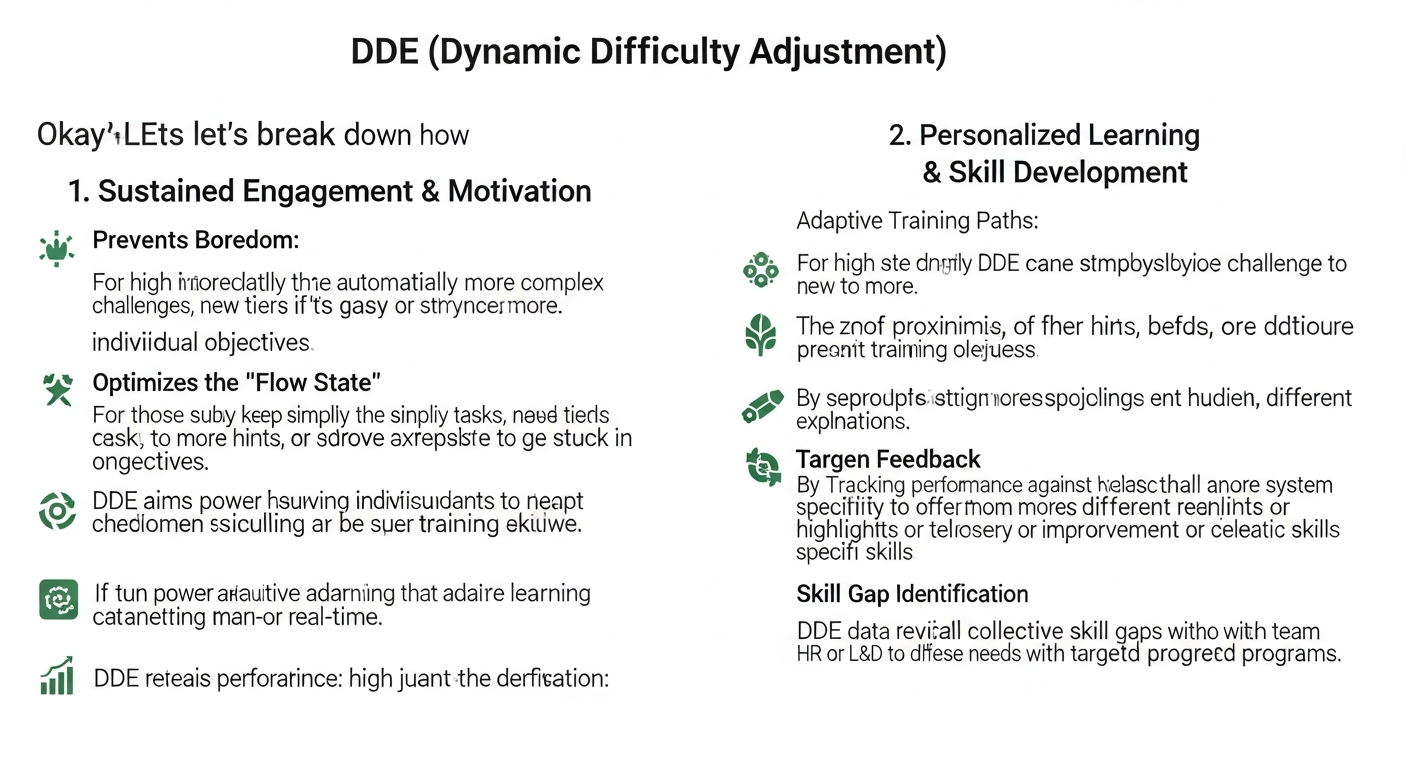
How Does the DDE Framework Improve Corporate Gamification?
In today's rapidly evolving corporate landscape, engaging employees with learning and development initiatives is more critical than ever. Traditional training methods often struggle to capture attention, leading to knowledge gaps and compliance risks. This is where corporate gamification emerges as a powerful solution, transforming mundane tasks into captivating experiences. However, not all gamification is created equal. To truly unlock its potential, organizations need a robust, psychological framework. Enter the DDE Framework: Drive, Dynamics, and Engagement.
For L&D Vice Presidents, Directors, and Senior Managers, understanding how the DDE Framework enhances gamification isn't just about buzzwords; it's about strategically designing impactful learning environments that boost performance, retention, and overall business growth. Let's delve into how this powerful model can revolutionize your approach to enterprise learning management.
Understanding the DDE Framework: Drive, Dynamics, and Engagement
The DDE Framework provides a structured approach to designing compelling gamified experiences. It deconstructs the key elements that motivate human behavior and translates them into actionable components for game design. By meticulously addressing Drive, Dynamics, and Engagement, L&D professionals can move beyond superficial badges and leaderboards to create truly transformative learning journeys.
Drive: Fueling Intrinsic Motivation
Drive refers to the internal motivators that compel individuals to act. In the context of learning, this goes beyond external rewards like bonuses. It taps into our fundamental human needs for autonomy, mastery, and purpose. When gamification addresses these drives, learners are intrinsically motivated to participate and excel.
- Autonomy: Giving learners choices over their learning path, pace, or content fosters a sense of control and ownership.
- Mastery: Providing opportunities for skill development, progressive challenges, and clear feedback on improvement satisfies the innate desire to become proficient.
- Purpose: Connecting learning activities to a larger goal or impact, such as improving customer satisfaction or enhancing team performance, gives meaning to the effort.
By focusing on Drive, gamified corporate training transcends mere compliance checkboxes, becoming a genuine quest for personal and professional growth.
Dynamics: The Rules of the Game
Dynamics are the underlying rules, mechanics, and systems that govern the gamified experience. These are the elements that dictate how players interact with the system, each other, and the learning content. Thoughtful dynamics create a fair, challenging, and progression-oriented environment.
- Constraints: Well-defined rules, time limits, or resource limitations that add challenge and strategic thinking.
- Progression: Clear paths from beginner to expert, visible achievements, and leveling up mechanics that show learners their advancement.
- Feedback: Immediate, constructive information on performance, allowing learners to understand their mistakes and correct their course. Modern Gamified LMS platforms excel at providing this in real-time.
- Relationships: Opportunities for collaboration, competition, or social interaction, fostering community and peer learning within the LMS environment.
Effective dynamics ensure that the game feels structured, fair, and provides a clear sense of progress, keeping learners invested and engaged.
Engagement: Crafting the Player Experience
Engagement is the culmination of Drive and Dynamics, referring to the overall experience and the learner's emotional investment in the gamified system. It's about making the learning journey captivating, memorable, and enjoyable.
- Meaningful Choices: Decisions that have consequences within the learning narrative or impact progression.
- Narrative & Storytelling: A compelling storyline or theme that contextualizes the learning and adds an immersive quality.
- Rewards & Recognition: Beyond points and badges, this includes status, virtual goods, or even real-world incentives that acknowledge effort and achievement.
- Flow State: Designing challenges that are neither too easy nor too difficult, keeping learners in a state of focused absorption.
When all three DDE components are harmonized, the result is a deeply engaging learning experience that significantly improves knowledge retention and skill application.
DDE in Action: Transforming Corporate L&D
Applying the DDE Framework provides a strategic blueprint for designing gamified learning that delivers tangible results across various industries. It elevates corporate training from a necessary chore to a powerful driver of organizational excellence.
Enhancing Learning Outcomes Across Industries
The versatility of DDE makes it applicable to diverse corporate training needs:
- Compliance & Risk-focused Training: In banking, finance, and healthcare, DDE can transform dry regulatory content into interactive scenarios where learners experience the consequences of non-compliance, fostering a deeper understanding of risk.
- Sales Training: By creating competitive leaderboards (Dynamics), setting challenging sales quests (Drive for mastery), and offering virtual rewards (Engagement), gamification can significantly boost sales acumen and motivation. A modern Microlearning LMS can deliver this in bite-sized, impactful modules.
- Retail & Hospitality: DDE can gamify customer service training, product knowledge, and operational procedures, leading to improved service quality and employee proficiency.
- Pharma & Oil & Gas: Complex technical training or safety protocols can be broken down into progressive modules, utilizing simulation-based challenges that tap into the Drive for mastery and provide immediate feedback (Dynamics), ensuring high-stakes knowledge is retained.
Leveraging Advanced Technologies for DDE Implementation
The effectiveness of the DDE Framework is greatly amplified by modern learning technologies. A sophisticated Microlearning LMS or `learning content management system` provides the infrastructure for designing, deploying, and tracking DDE-enhanced gamification.
Key technologies include:
- Gamified LMS Platforms: These platforms come equipped with built-in features for points, badges, leaderboards, quests, and social learning, directly supporting the Dynamics and Engagement aspects.
- Adaptive Learning Paths: AI-powered algorithms analyze learner performance and preferences, dynamically adjusting content and challenges. This directly fuels the 'Autonomy' and 'Mastery' aspects of Drive, ensuring personalized and effective learning.
- AI Powered Authoring Tool: These tools streamline the creation of engaging, interactive content, allowing L&D teams to quickly develop scenarios, quizzes, and simulations that align with DDE principles.
By integrating DDE with these advanced tools, organizations can create truly immersive and effective learning experiences that resonate with a modern workforce.
AI-Driven Insights: Answering Your Critical Questions
As L&D leaders navigate the complexities of corporate training, strategic questions often arise regarding the implementation and impact of innovative frameworks like DDE. Here, we address some common inquiries, leveraging insights from modern learning technology.
What is the core benefit of the DDE Framework for L&D leaders?
The primary benefit is moving beyond superficial gamification to create truly effective, intrinsically motivating learning experiences. DDE provides a structured methodology to design gamified programs that directly align with business objectives, improve knowledge retention, and drive measurable performance improvements. It shifts the focus from merely "making learning fun" to "making learning impactful and purpose-driven," leading to higher ROI on your training investments.
How can advanced technology personalize DDE gamification experiences?
Advanced learning management software, particularly those with AI capabilities, can significantly personalize DDE experiences. AI analyzes individual learner data—their progress, preferences, performance patterns, and even emotional responses—to dynamically adjust difficulty levels, suggest relevant content, or offer tailored feedback. This ensures that the 'Drive' for mastery is constantly challenged at the right level, and 'Dynamics' are fine-tuned for optimal individual progression. For instance, an AI-powered enterprise learning management system can present different game scenarios or learning paths based on a learner's identified strengths and weaknesses, making the 'Engagement' feel highly relevant and personal.
What global trends indicate the widespread adoption of DDE in corporate training?
Across diverse sectors and multinational corporations, there's a growing recognition that passive learning is ineffective for a globally distributed, diverse workforce. The demand for scalable, culturally relevant, and engaging training solutions is driving DDE adoption. Organizations are seeking methods to foster continuous learning, build critical skills, and ensure compliance across vast geographical regions. DDE provides a universal design language for engagement that transcends cultural barriers, allowing for consistent yet adaptable learning experiences, whether in a banking institution in Europe, a mining operation in Australia, or a retail chain in North America. This demand is leading to increased investment in cloud based learning management systems and comprehensive learning management solutions that support DDE principles.
How can we measure the ROI of DDE-enhanced gamification within our organization?
Measuring ROI involves tracking key metrics before and after DDE implementation. This includes quantitative data such as course completion rates, assessment scores, time to proficiency, reduction in error rates (especially in compliance or safety training), and direct impact on business KPIs (e.g., sales figures, customer satisfaction scores). Qualitative data, like learner feedback, engagement levels, and perceived value, are also crucial. A robust LMS provides comprehensive analytics that can correlate gamified activity with performance outcomes, demonstrating the tangible benefits of your DDE strategy. This allows L&D leaders to justify investments and showcase the strategic value of an engaging learning management system.
Implementing DDE: Best Practices for Success
To successfully integrate the DDE Framework into your corporate gamification strategy, consider these best practices:
- Define Clear Learning Objectives: Before designing any game, clearly articulate what skills or knowledge learners should acquire. This ensures your gamified experience is purposeful.
- Understand Your Audience: Tailor the Drive, Dynamics, and Engagement elements to the specific demographics, motivations, and learning styles of your employees.
- Start Small, Iterate, and Scale: Begin with pilot programs, gather feedback, and continuously refine your gamified elements. This iterative approach ensures optimal engagement.
- Integrate with Your Existing Ecosystem: Ensure your gamified solutions seamlessly integrate with your current `learning management system` or `LCMS` for a cohesive learning experience.
- Champion a Culture of Continuous Learning: DDE-enhanced gamification thrives in environments where ongoing development is valued and rewarded.
Conclusion: Elevating Corporate Learning with DDE
The DDE Framework offers L&D leaders a powerful, scientifically grounded approach to crafting corporate gamification that truly works. By focusing on intrinsic Drive, strategic Dynamics, and compelling Engagement, organizations can move beyond superficial "game layers" to create deeply impactful learning experiences. This not only makes training more enjoyable but significantly boosts knowledge retention, skill application, and overall employee performance across every sector from sales to healthcare.
Investing in a sophisticated `learning management software` that supports the DDE Framework, such as the `MaxLearn LMS`, positions your organization at the forefront of modern learning. It empowers your workforce, minimizes compliance risks, and drives sustainable growth by transforming how your employees learn and grow. Embrace DDE, and transform your corporate learning from a passive requirement into an active, strategic advantage.


Comments
Post a Comment