How the DDE Framework Transforms Employee Training Retention
How the DDE Framework Transforms Employee Training Retention
In today’s rapidly evolving corporate landscape, the adage "knowledge is power" has never been more relevant. Yet, for many organizations, the challenge isn't merely delivering training, but ensuring that knowledge truly sticks and translates into sustained performance improvement. Vice Presidents, Directors, and Managers of Learning & Development understand this dilemma acutely: significant investment goes into employee training, but often, retention rates fall short. This leads to a continuous cycle of re-training, decreased efficiency, and a failure to meet critical business objectives, especially across industries like Compliance, Sales, Banking, Finance, Insurance, Retail, Pharma, Healthcare, Hospitality, Oil and Gas, and Mining.
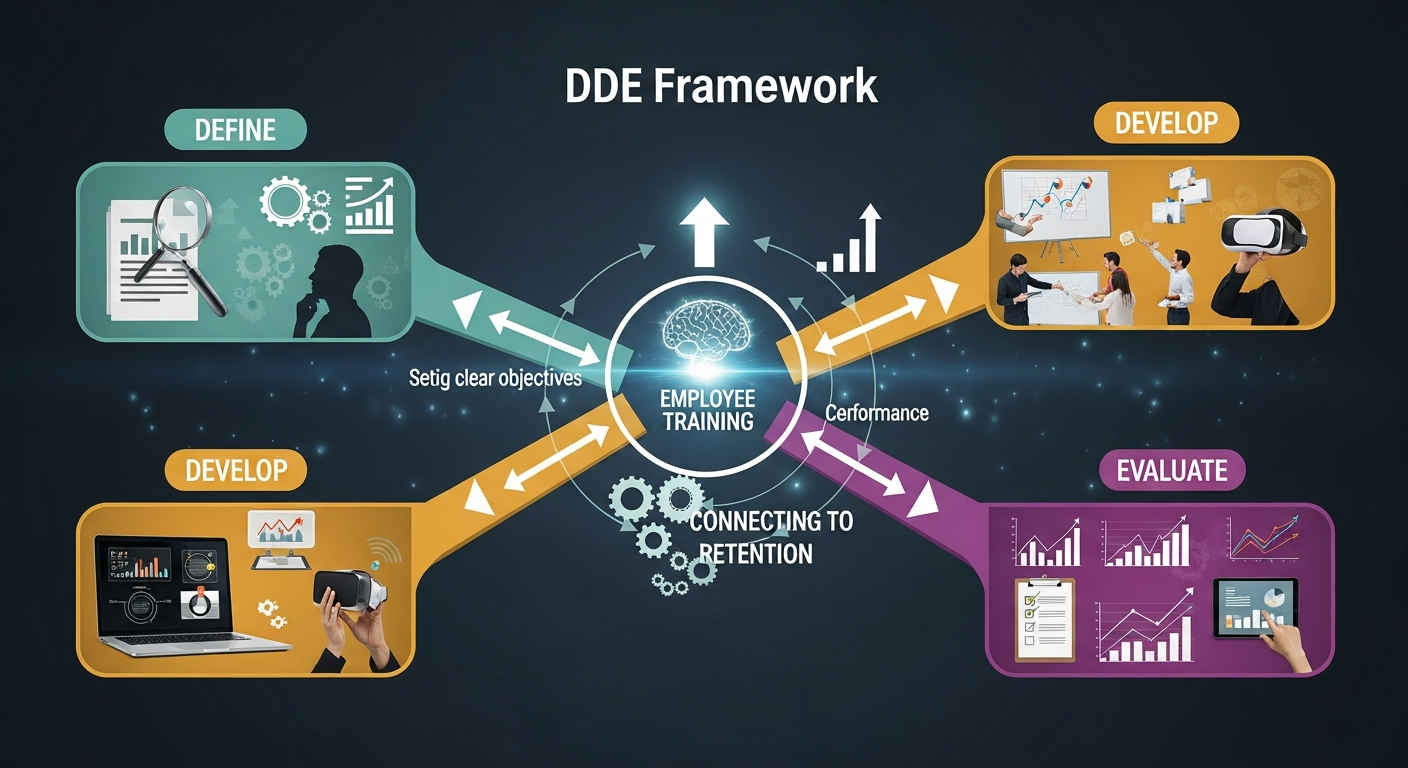
The solution lies not in simply more training, but in smarter, more strategic training design and delivery. Enter the DDE Framework: Discover, Design, Engage. This comprehensive approach is revolutionizing how organizations tackle employee training retention, ensuring that every learning initiative delivers maximum impact and enduring value. By leveraging a robust Microlearning LMS and other advanced LMS capabilities, L&D leaders can transition from reactive training to a proactive, results-driven model.
Understanding the DDE Framework: A Holistic Approach to Learning
The DDE Framework provides a structured, three-phase methodology designed to optimize every stage of the training lifecycle. It moves beyond traditional "one-size-fits-all" training modules, embracing a learner-centric strategy that is highly adaptable and data-driven. This framework, supported by cutting-edge Gamified LMS features and sophisticated analytics, empowers organizations to dramatically improve knowledge retention and application.
Phase 1: Discover – Unearthing Learning Needs with Precision
The foundation of effective training retention lies in a deep understanding of what learners truly need. The "Discover" phase is about meticulously identifying skill gaps, performance deficiencies, and future competencies required for individual roles and organizational goals. This goes beyond simple surveys; it involves leveraging data analytics to pinpoint specific areas where employees struggle or where new skills are critically needed.
Consider the diverse employee roles across a global enterprise. Optimizing learning paths for each requires a granular view of their current capabilities and future potential. Modern learning management system platforms provide the telemetry to analyze performance data, identify learning trends, and even predict future skill requirements. For instance, in a financial institution, data might reveal that customer service representatives consistently face challenges with new regulatory updates. This insight informs targeted training development rather than generic modules. This data-driven approach ensures that learning interventions are not just relevant but essential, significantly boosting learner buy-in and the likelihood of retention.
Utilizing a comprehensive MaxLearn LMS allows L&D teams to gather invaluable insights from employee performance, engagement with existing content, and feedback loops. This intelligent analysis forms the bedrock for designing truly impactful learning experiences that resonate with learners and address real business needs. A powerful LCMS becomes indispensable here, organizing and categorizing content based on these discovered needs.
Phase 2: Design – Crafting Impactful Learning Experiences
Once needs are discovered, the "Design" phase focuses on creating compelling and effective learning content. This is where innovation in instructional design meets technological advancements to foster personalization and engagement. The goal is to move away from passive learning and towards interactive, memorable experiences.
Artificial intelligence plays a transformative role in personalizing learning experiences for maximum impact. Imagine an AI Powered Authoring Tool that can suggest content modules based on a learner's past performance, role, and even preferred learning style. This level of personalization, often facilitated by Adaptive Learning capabilities within a sophisticated learning management software, ensures that each employee receives training that is directly relevant and challenging at their individual level. This tailored approach drastically improves comprehension and long-term retention.
Key design elements include:
- Microlearning: Breaking down complex topics into bite-sized, easily digestible modules. This is particularly effective for busy professionals in industries like healthcare or sales, where time is a premium.
- Gamification: Incorporating game-like elements such as points, badges, leaderboards, and challenges to make learning fun and competitive. A Gamified LMS can significantly boost engagement and completion rates.
- Interactive Content: Utilizing simulations, virtual reality (VR), augmented reality (AR), and interactive quizzes to provide hands-on experience and immediate feedback.
- Scenario-Based Training: Placing learners in realistic situations to practice decision-making and problem-solving skills, crucial for Risk-focused Training in sectors like banking or oil and gas.
By employing a modern learning content management system, L&D teams can efficiently create, update, and deploy these diverse content types, ensuring high-quality, engaging training experiences that directly contribute to retention.
Phase 3: Engage – Sustaining Learner Involvement and Retention
The final phase, "Engage," focuses on maintaining learner involvement post-training and ensuring that new knowledge is applied and retained over time. This is where continuous learning strategies and a supportive learning ecosystem prove vital. An effective lms learning management system facilitates this ongoing interaction.
Sustaining engagement goes beyond the initial training module. It involves creating a culture of continuous learning and providing avenues for ongoing skill reinforcement. Many global compliance standards, from GDPR in Europe to industry-specific regulations in pharma or finance, require not just initial training but also regular updates and re-certifications. An adaptive and personalized training approach, supported by a cloud based learning management system, is essential to meet these diverse and evolving requirements effectively, even across different geographical regions.
Strategies for sustained engagement include:
- Reinforcement Learning: Regular quizzes, refresher courses, and spaced repetition techniques to cement knowledge.
- Community of Practice: Forums, peer-to-peer learning, and collaborative projects that allow learners to apply and discuss their knowledge.
- Performance Support Tools: Just-in-time resources, job aids, and quick reference guides available at the point of need.
- Feedback Loops: Soliciting learner feedback and incorporating it into future training designs, making employees feel heard and valued.
- Mentorship and Coaching: Pairing learners with experienced professionals to guide their application of new skills.
For large organizations, an enterprise learning management system is crucial for orchestrating these complex engagement strategies across a diverse workforce, ensuring consistent quality and measurable outcomes. This comprehensive approach transforms temporary learning into permanent retention and skill mastery.
The DDE Framework in Action Across Industries
The DDE Framework's versatility makes it applicable across a wide array of industries, each with unique training needs:
- Compliance & Finance: For managing complex regulations and ensuring adherence to legal frameworks, the DDE framework ensures employees not only understand policies but can also apply them in real-world scenarios, crucial for Risk-focused Training.
- Sales & Retail: Equipping teams with up-to-date product knowledge, sales techniques, and customer service skills that directly impact performance. A Microlearning LMS is particularly effective here for rapid deployment of new product information.
- Healthcare & Pharma: Critical for clinical protocol training, patient safety, and drug knowledge, where retention can be a matter of life and death.
- Hospitality & Oil and Gas: Ensuring consistent service quality, safety protocols, and operational efficiency through highly interactive and scenario-based training.
Regardless of the industry, a robust suite of learning management solutions, such as the MaxLearn LMS, provides the technological backbone necessary to implement and scale the DDE Framework effectively, ensuring that training retention becomes a competitive advantage.
Measuring Success: Metrics for Retention
The DDE Framework is not just about process; it's about measurable outcomes. L&D leaders must track key metrics to gauge the effectiveness of their training retention strategies:
- Completion Rates: Are employees finishing their assigned training?
- Knowledge Retention Scores: Post-training assessments and refresher quizzes indicate how much information is being retained over time.
- Performance Improvement: Direct correlation between training and on-the-job performance metrics (e.g., sales figures, compliance adherence, error rates).
- Skill Application: Observing how learners apply new skills in their daily tasks and problem-solving.
- Employee Feedback: Qualitative insights into the relevance and impact of the training.
- Reduced Re-training Costs: A clear indicator of successful long-term retention.
An advanced learning management system provides the analytics dashboards and reporting tools necessary to monitor these metrics, offering continuous insights for optimizing the DDE cycle.
Conclusion
For L&D professionals striving to move beyond merely delivering content to truly embedding knowledge, the DDE Framework offers a clear, actionable roadmap. By systematically Discovering needs, Artfully Designing experiences, and Strategically Engaging learners, organizations can fundamentally transform their employee training retention. This integrated approach, powered by advanced learning management solutions like a comprehensive MaxLearn LMS, ensures that every training dollar spent contributes to a highly skilled, adaptable, and engaged workforce. Embrace the DDE Framework to unlock the full potential of your employees and drive sustainable business growth.


Comments
Post a Comment