Enhancing Knowledge Retention: A Scientific Approach to VARK and Microlearning
Enhancing Knowledge Retention: A Scientific Approach to VARK and Microlearning
In today's fast-paced corporate environment, knowledge is currency. For Vice Presidents, Directors, and Managers in Learning & Development (L&D), ensuring that crucial information not only reaches employees but also sticks is a paramount challenge. High turnover, skill gaps, and evolving compliance standards across industries like Banking, Finance, Insurance, Retail, Pharma, Health care, Hospitality, Oil and Gas, and Mining demand more than just delivering content; they demand effective knowledge retention. This article delves into a scientific approach, leveraging the VARK learning styles and the power of microlearning, to elevate retention rates and drive business success.
The Cognitive Challenge of Knowledge Retention
Our brains are constantly bombarded with information. The Ebbinghaus Forgetting Curve, a century-old concept, illustrates how quickly we forget newly learned information if it's not reinforced. Traditional long-form training often struggles against this natural human tendency, leading to wasted resources and unfulfilled learning objectives. The goal for any modern L&D professional is to counteract this curve, ensuring that employees not only understand complex topics, from sales methodologies to critical compliance procedures, but can also recall and apply them when needed.
Understanding VARK: Tailoring Learning to Individual Styles
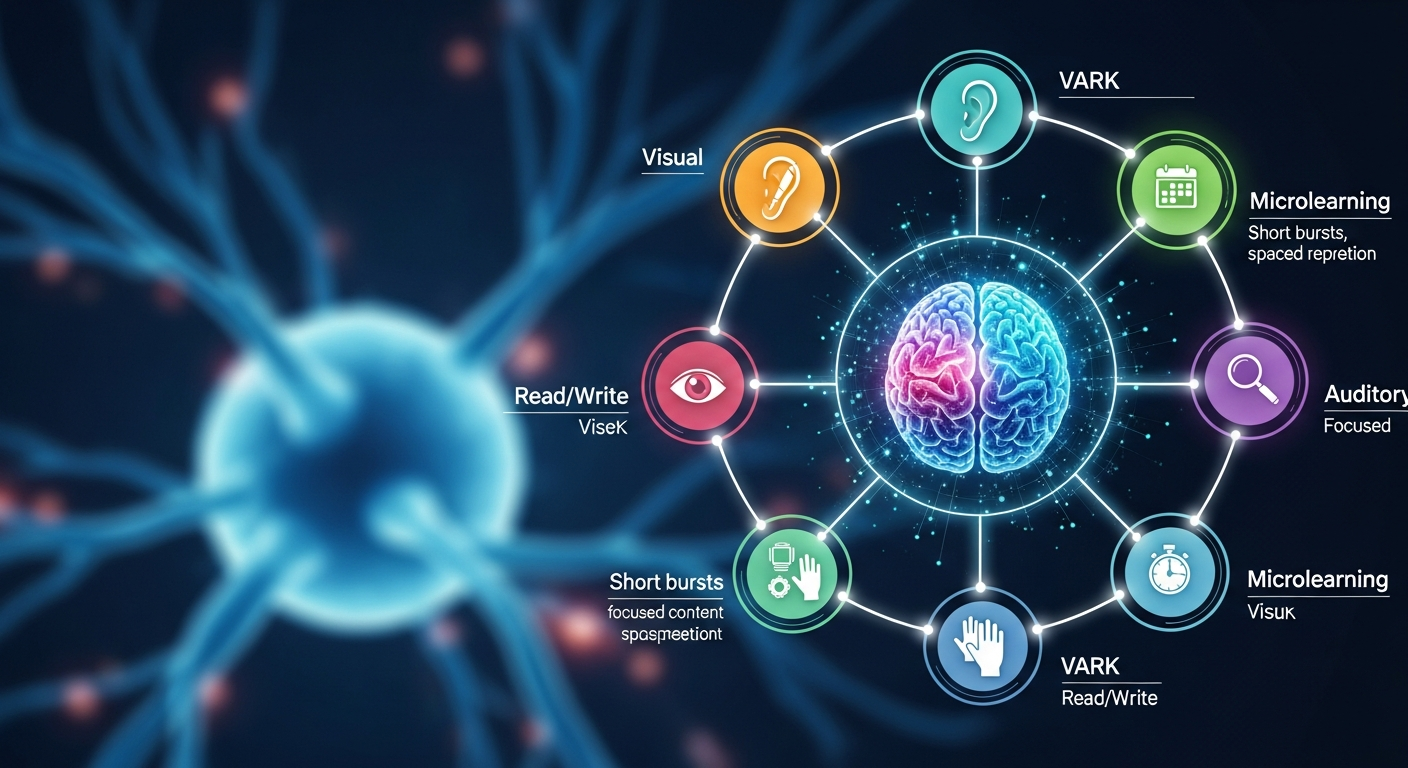
The VARK model, developed by Neil Fleming, categorizes learning preferences into four primary types: Visual, Aural, Read/Write, and Kinesthetic. While often debated in pedagogical circles, understanding these preferences offers a valuable framework for diversifying learning content and maximizing engagement. A truly effective learning management system should be capable of supporting diverse content formats to cater to these styles.
The Four VARK Modalities:
- Visual (V): Learners prefer seeing information through diagrams, charts, graphs, flowcharts, and videos. They benefit from visual aids that simplify complex data.
- Aural (A): These learners absorb information best by hearing it. Lectures, discussions, podcasts, and audio recordings are highly effective for them.
- Read/Write (R): Learners prefer text-based information. Manuals, reports, essays, lists, and note-taking are their preferred methods. They thrive on reading and writing about the subject matter.
- Kinesthetic (K): These individuals learn by doing. Hands-on activities, simulations, role-playing, practical exercises, and real-world case studies resonate most with them.
By identifying and catering to these preferences, L&D teams can significantly enhance engagement and comprehension. Consider a scenario in the healthcare industry where new protocols need to be absorbed. A visual learner might benefit from an infographic, while a kinesthetic learner would thrive in a simulated patient interaction. How might advanced algorithms identify and adapt to individual learning preferences across a large workforce, ensuring each employee receives the most effective format?
The Power of Microlearning for Sustained Impact
Microlearning is the delivery of learning content in small, digestible chunks, typically ranging from 2-10 minutes. This approach aligns perfectly with modern attention spans and the demands of a busy professional life. Its effectiveness isn't just anecdotal; it's rooted in cognitive science principles.
Scientific Principles Underpinning Microlearning:
- Spaced Repetition: Microlearning facilitates the spaced repetition of key information over time, directly combating the forgetting curve. Regular, short refreshers prevent knowledge decay.
- Reduced Cognitive Load: By breaking down complex topics, microlearning prevents cognitive overload, allowing learners to focus on one concept at a time and integrate it more effectively. This is crucial for topics like intricate financial regulations or complex sales processes.
- Immediate Application: The brevity of microlearning modules often lends itself to immediate application, reinforcing learning through practice.
- Enhanced Engagement: Short, focused modules are less daunting and more engaging, increasing completion rates and learner satisfaction. A Gamified LMS can further boost this engagement.
In industries like Pharma, where constant updates on drug efficacy or regulatory compliance are essential, microlearning provides a rapid and effective way to disseminate vital information without disrupting workflow. Can artificial intelligence effectively pinpoint the most impactful microlearning content for specific job roles and individual performance gaps?
Synergizing VARK and Microlearning for Unparalleled Retention
The true magic happens when VARK preferences are combined with microlearning strategies. This integrated approach allows L&D professionals to create a highly personalized, efficient, and effective learning ecosystem that significantly boosts knowledge retention.
Practical Applications:
- For Visual Learners: Deploy short animated videos explaining complex processes (e.g., a banking transaction flow, an oil rig safety procedure), interactive infographics summarizing key data, or bite-sized decision trees.
- For Aural Learners: Offer 3-5 minute podcasts on industry updates, short audio explanations of new policies, or expert interviews covering specific topics like advanced sales techniques.
- For Read/Write Learners: Provide concise executive summaries, quick reference guides, flashcards with key terms, or short articles detailing new compliance requirements.
- For Kinesthetic Learners: Implement brief simulations (e.g., a customer service interaction, equipment troubleshooting in mining), interactive quizzes, drag-and-drop exercises, or quick role-playing scenarios.
This tailored delivery ensures that each employee receives information in the format most conducive to their learning style, maximizing their ability to absorb and recall. Considering a globally distributed team in the hospitality sector, how can technology ensure culturally relevant and location-specific learning delivery, accounting for diverse learning preferences?
Implementing a Scientific Approach in Your L&D Strategy
For L&D leaders, the practical implementation of VARK and microlearning requires robust technological infrastructure and a strategic shift in content creation. A powerful Microlearning LMS is key to delivering these diverse learning experiences efficiently. Such a cloud based learning management system acts as a central repository and delivery platform, crucial for an enterprise learning management strategy.
Key Implementation Steps:
- Assess Learning Preferences: While formal VARK tests can be used, observing preferences through existing training feedback or offering diverse options can also provide insights. A sophisticated Adaptive Learning platform can even infer preferences based on learner interaction data.
- Curate or Create Microlearning Content: Develop a library of short, focused modules in various formats. This could range from videos for a sales team learning a new product to interactive checklists for field workers in Oil and Gas. An AI Powered Authoring Tool can significantly expedite this process.
- Leverage a Modern Learning Platform: An integrated learning content management system (LCMS) or a comprehensive learning management software, like MaxLearn LMS, is essential. It should support multimedia content, provide robust analytics, and facilitate easy content distribution.
- Implement Spaced Repetition: Schedule follow-up micro-modules or quizzes at increasing intervals after initial training to reinforce learning over time. This is especially vital for Risk-focused Training in sectors like Finance and Insurance.
- Measure and Iterate: Continuously monitor completion rates, assessment scores, and on-the-job performance to refine your approach. The analytics provided by a modern learning management system (LMS) are invaluable here.
Implementing effective learning management solutions is not just about having an LMS; it's about deploying an lms learning management system that empowers strategic learning. Whether it's for compliance training, product knowledge for retail, or complex machinery operation in mining, a scientific approach combining VARK and microlearning, supported by the right technology, promises superior outcomes.
Conclusion
For L&D Vice Presidents, Directors, and Managers, the imperative to enhance knowledge retention is clear. By embracing a scientific approach that acknowledges individual VARK learning styles and harnesses the cognitive benefits of microlearning, organizations can transcend traditional training limitations. This strategy not only improves recall and application of critical knowledge but also fosters a more engaged, skilled, and adaptable workforce across all industries. Investing in a robust learning management software that supports these methodologies is not just an expense; it's a strategic investment in your organization's future growth and resilience.


Comments
Post a Comment