Designing for All: How to Craft Inclusive Microlearning Strategies With Gardner’s Theory
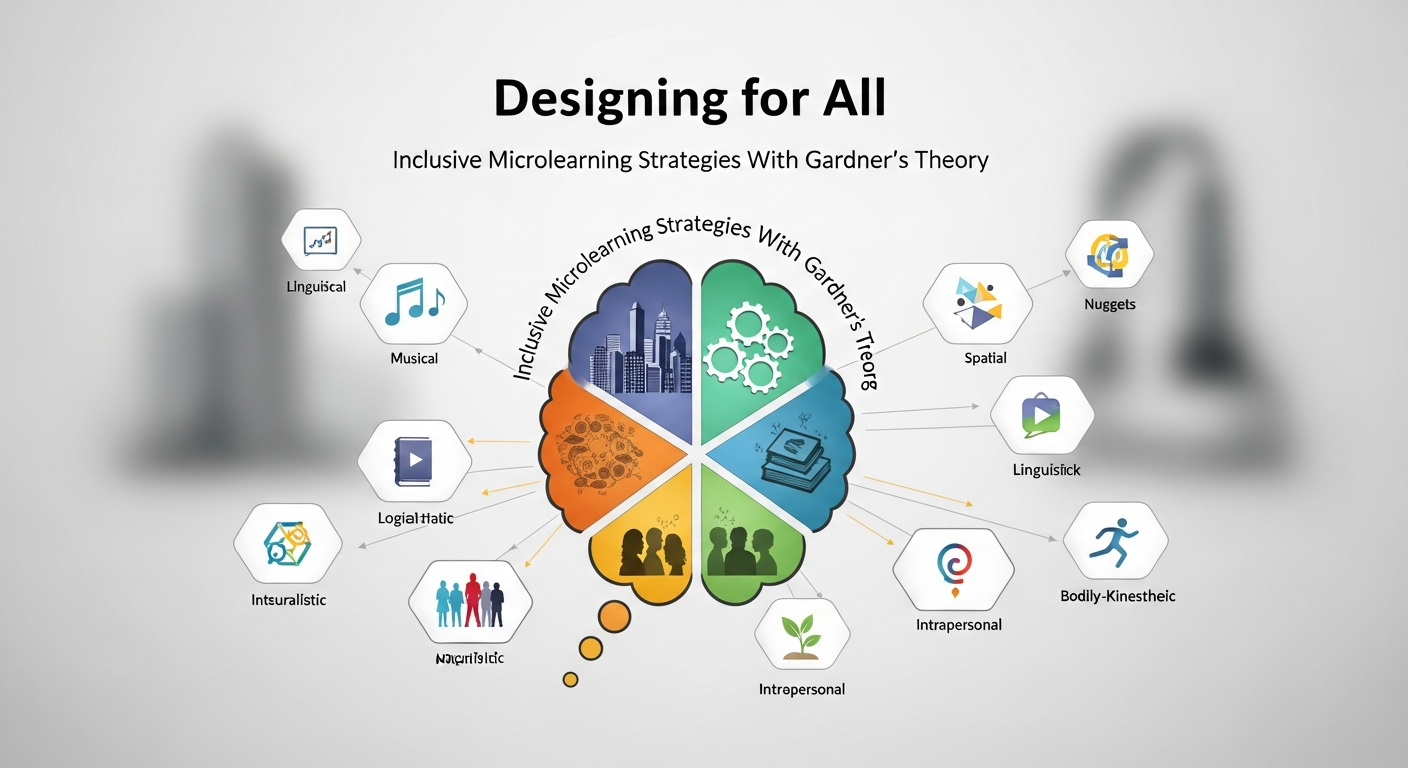
Designing for All: How to Craft Inclusive Microlearning Strategies With Gardner’s Theory
In today's fast-paced corporate world, fostering a truly inclusive and effective learning environment is paramount for L&D leaders. The workforce is more diverse than ever, comprising individuals with unique backgrounds, experiences, and crucially, distinct ways of learning. As Vice Presidents, Directors, and Senior Managers of Learning & Development, you understand that a one-size-fits-all approach to training often falls short, leading to disengagement, lower retention, and missed opportunities for growth across industries like Compliance, Sales, Banking, Finance, Insurance, Retail, Pharma, Healthcare, Hospitality, Oil and Gas, and Mining.
This challenge is where the strategic integration of microlearning with Howard Gardner's Theory of Multiple Intelligences becomes a game-changer. By acknowledging and catering to diverse cognitive strengths, L&D can design training that resonates deeply with every employee. Coupled with a powerful Microlearning LMS, this approach transforms learning from a mandatory task into an engaging and empowering experience for all.
Understanding Gardner’s Theory of Multiple Intelligences
Howard Gardner's groundbreaking theory posits that intelligence is not a singular, monolithic entity but rather a collection of distinct intelligences, each representing a different way of interacting with the world and processing information. While traditional education often prioritizes linguistic and logical-mathematical intelligences, a truly inclusive strategy must embrace all eight (and sometimes more) recognized intelligences:
- Linguistic Intelligence (Word Smart): The ability to think in words and use language to express meaning.
- Logical-Mathematical Intelligence (Logic Smart): The capacity to carry out mathematical operations and analyze problems logically.
- Spatial Intelligence (Picture Smart): The potential to recognize and use patterns of wide space and more confined areas.
- Bodily-Kinesthetic Intelligence (Body Smart): The ability to use one's body to solve problems or create products.
- Musical Intelligence (Music Smart): The capacity to appreciate, compose, and perform musical patterns.
- Interpersonal Intelligence (People Smart): The ability to understand and interact effectively with others.
- Intrapersonal Intelligence (Self Smart): The capacity to understand oneself—one's own feelings, fears, and motivations.
- Naturalistic Intelligence (Nature Smart): The ability to recognize, categorize, and draw upon features of the environment.
By understanding these varied strengths, L&D professionals can move beyond generic content, crafting learning experiences that truly connect with each individual.
The Power of Microlearning for Diverse Learners
Microlearning, characterized by short, focused learning modules (typically 3-10 minutes), is inherently suited for inclusive design. Its bite-sized nature caters to busy schedules, shorter attention spans, and the need for just-in-time information. When combined with Gardner's theory, microlearning becomes a highly adaptable tool:
- Flexibility: Learners can access content when and where it suits them best, accommodating different work rhythms and learning preferences.
- Variety of Formats: Microlearning thrives on diverse content types—videos, infographics, short quizzes, interactive simulations—perfect for engaging multiple intelligences.
- Targeted Learning: Each micro-module can be designed to specifically target a particular learning objective, often through a format that appeals to one or more intelligences.
- Reduced Cognitive Load: Breaking down complex topics into smaller chunks makes learning less daunting and more digestible for everyone, regardless of their primary intelligence.
Moreover, an Adaptive Learning approach, driven by microlearning, can dynamically adjust content based on a learner's progress and expressed preferences, further enhancing inclusivity and effectiveness.
Crafting Inclusive Microlearning Strategies: Applying Gardner’s Theory
Here’s how L&D leaders can leverage Gardner’s theory to design microlearning content that resonates with every intelligence:
Engaging Linguistic and Logical-Mathematical Learners
- Linguistic: Offer concise articles, quick reading exercises, short storytelling videos, bulleted summaries, or interactive quizzes that test comprehension through word association and definition.
- Logical-Mathematical: Design mini case studies, short problem-solving simulations, data interpretation challenges, or logic puzzles. Focus on cause-and-effect scenarios relevant to your industry, whether it's understanding financial regulations in Banking or interpreting sales data.
Stimulating Spatial and Bodily-Kinesthetic Learners
- Spatial: Utilize visually rich infographics, animated explainers, short explainer videos, interactive diagrams, virtual tours of equipment (for Pharma or Oil & Gas), or process flowcharts. Visual metaphors can simplify complex compliance procedures or product features.
- Bodily-Kinesthetic: Implement brief, interactive simulations, role-playing scenarios (for Sales or Hospitality training), drag-and-drop exercises, virtual reality snippets for hands-on tasks, or guided physical exercises (e.g., proper lifting techniques in Retail or Healthcare). A Gamified LMS is particularly effective here, turning learning into an engaging, active experience.
Connecting with Musical and Interpersonal Learners
- Musical: While less common, consider using mnemonic songs for remembering complex policies, jingles for branding, or incorporating specific background music to enhance focus during certain modules.
- Interpersonal: Facilitate short collaborative exercises, peer-review modules, quick forum discussions on specific topics, scenario-based team challenges, or brief video snippets featuring multiple perspectives on a problem (e.g., ethical dilemmas in Finance or Healthcare).
Empowering Intrapersonal and Naturalistic Learners
- Intrapersonal: Provide self-reflection prompts, short journaling activities, personalized goal-setting exercises, self-assessment quizzes with immediate feedback, or opportunities to choose their learning path through curated micro-modules.
- Naturalistic: Integrate real-world examples, short field studies (if applicable), micro-modules on environmental impact, pattern recognition exercises derived from real-world data (e.g., market trends in Insurance or Retail), or case studies involving natural processes relevant to Pharma or Mining.
Leveraging Technology for Inclusive Microlearning
Modern learning management system platforms are indispensable for executing these diverse strategies. A robust learning management software offers:
- Centralized content management (an efficient LCMS).
- Support for a multitude of content formats (video, audio, text, interactive).
- Personalized learning paths based on learner profiles and progress.
- Powerful analytics to track engagement and comprehension across different learning styles.
For an L&D leader managing an enterprise learning management system, choosing a scalable, cloud based learning management system like MaxLearn LMS is crucial to deliver effective, inclusive lms learning management system experiences.
AI Integration for Enhanced Inclusivity
Artificial intelligence further amplifies the inclusivity of microlearning strategies:
Q: How can artificial intelligence help identify and cater to individual learning preferences based on Gardner's theory?
A: AI algorithms can analyze learner interactions, performance, and preferred content types to infer their dominant intelligences. This enables the platform to suggest or even generate content tailored to their specific strengths, optimizing engagement and retention. An AI Powered Authoring Tool can even assist in creating such varied content efficiently.
Q: Can intelligent systems personalize the delivery of microlearning content across different geographic locations and cultural contexts?
A: Absolutely. AI can adapt content delivery based on geographical data, cultural nuances, and language preferences. This ensures the material is not only relevant but also culturally sensitive and accessible to a global workforce, breaking down barriers of location and background.
Q: What role do advanced analytics play in evaluating the effectiveness of inclusive microlearning strategies for an organization's overall objectives?
A: Sophisticated analytical tools track learner progress, engagement levels, and completion rates across diverse content types. By correlating these metrics with business outcomes, organizations can gain deep insights into which microlearning approaches are most effective for different groups, allowing for continuous optimization and demonstrable ROI.
Benefits for L&D Leaders and Organizations
Implementing inclusive microlearning strategies, supported by a comprehensive learning management system, offers significant advantages:
- Increased Engagement & Retention: When learning feels personalized and relevant, employees are more likely to participate and retain information.
- Improved Performance: Targeted training that aligns with individual strengths leads to better skill application and higher productivity.
- Enhanced Compliance & Reduced Risk: For industries like Compliance, Finance, or Healthcare, ensuring every employee grasps critical information through varied methods is essential. This forms the bedrock of effective Risk-focused Training.
- Stronger Learning Culture: Acknowledging and valuing diverse learning styles fosters an environment where continuous learning is embraced, not endured.
- Demonstrable ROI: Better engagement and performance translate directly into tangible business outcomes, proving the value of your L&D investments.
Choosing the Right Learning Management System
To truly empower your inclusive microlearning initiatives, selecting the right lms learning management system is critical. Look for learning management solutions that offer:
- Comprehensive support for diverse media types and interactive content.
- Robust personalization features, including adaptive pathways.
- Advanced analytics to track individual and group progress against specific learning intelligences.
- Scalability for your enterprise learning management needs.
- Ease of use for both administrators and learners – a true cloud based learning management system.
A platform like MaxLearn LMS, functioning as a complete Learning content management system, is designed to meet these demands, providing the tools necessary to craft and deliver engaging, inclusive, and effective microlearning at scale.
Conclusion
The future of corporate learning is undeniably inclusive. By strategically integrating microlearning with Gardner’s Theory of Multiple Intelligences, L&D leaders can move beyond generic training to create highly personalized, engaging, and impactful learning experiences for every employee. Embracing this holistic approach, supported by an advanced LMS, not only enhances individual growth but also propels organizational success across all segments and industries. It’s time to design for all, unlocking the full potential of your diverse workforce.


Comments
Post a Comment