Building Better Training Assets: How to Operationalize the DDE Framework
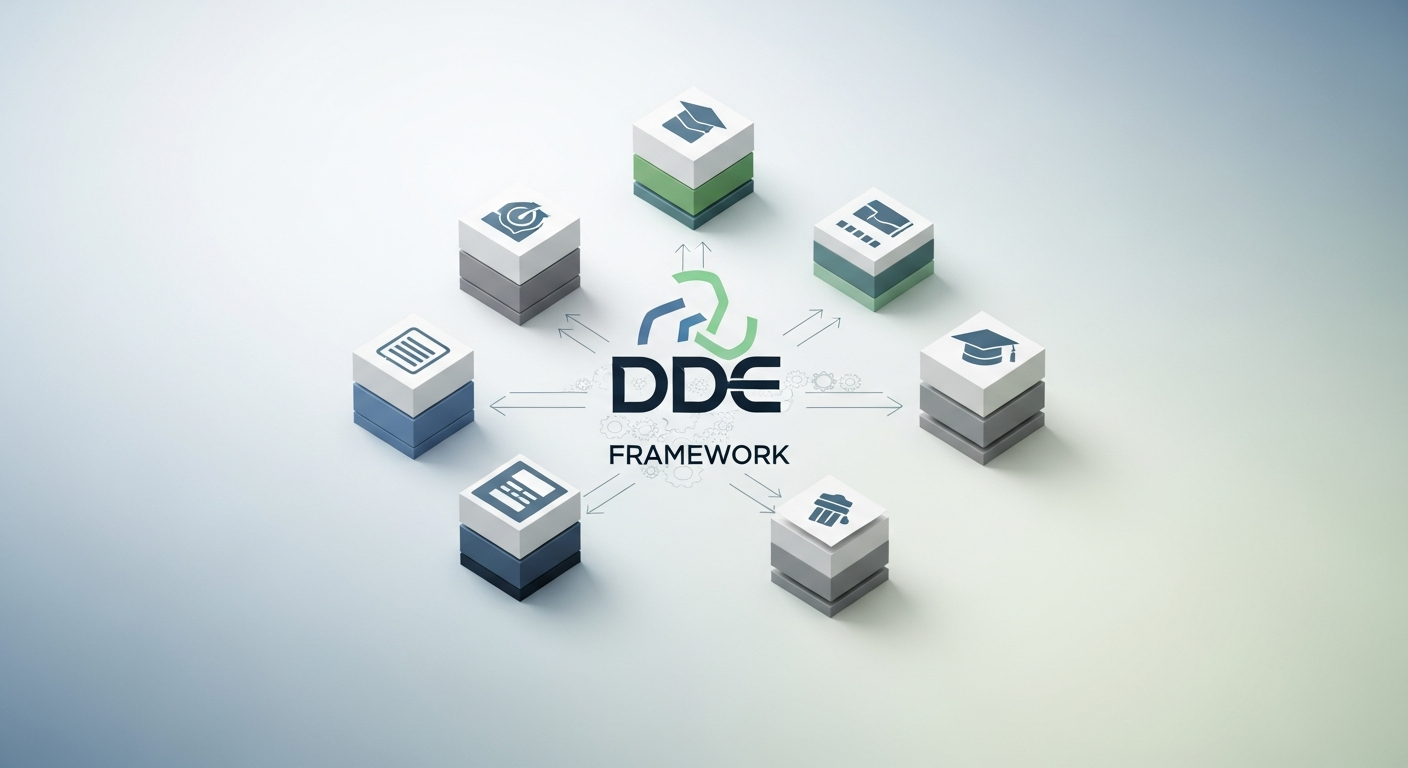
Building Better Training Assets: How to Operationalize the DDE Framework
For Vice Presidents, Directors, and Senior Managers in Learning & Development, the quest for highly effective, scalable, and impactful training assets is ceaseless. In today's dynamic business environment, from the intricate regulations of Banking and Finance to the rapid innovations in Pharma and Healthcare, and the complex supply chains in Retail, or the rigorous safety standards in Oil and Gas and Mining, successful training isn't just about knowledge transfer—it's about driving measurable business outcomes.
This pursuit often leads L&D leaders to a foundational yet powerful methodology: the Discover, Design, Evaluate (DDE) framework. While many understand DDE conceptually, the true competitive advantage comes from operationalizing it—embedding it deeply into the fabric of your L&D strategy to consistently build better training assets.
Understanding the DDE Framework
The DDE framework provides a structured approach to creating learning experiences that are relevant, engaging, and impactful. It’s a cyclical process that ensures continuous improvement and alignment with organizational goals.
Discover: The Foundation of Relevance
The first phase, Discover, is critical. It involves thoroughly understanding the learning needs, target audience, performance gaps, and business objectives. This isn't just about asking what people want to learn, but identifying what they need to learn to perform better and achieve strategic goals. For instance, in Compliance, this might mean understanding new regulatory requirements; in Sales, it could be identifying skill gaps in closing complex deals; or in Hospitality, pinpointing areas for enhancing guest experience.
Design: Crafting Impactful Solutions
Once needs are discovered, the Design phase focuses on creating the learning solution. This includes outlining learning objectives, structuring content, selecting appropriate instructional strategies, and determining the delivery format. This is where raw information transforms into a coherent and engaging learning journey. Considerations might include developing scenarios for Microlearning LMS modules in a retail environment or designing interactive simulations for risk management in finance.
Evaluate: Measuring Success and Refining
The final, but equally crucial, phase is Evaluate. Here, the effectiveness of the training is measured against the initial objectives identified during Discover. This includes assessing learner engagement, knowledge retention, behavior change, and ultimately, the impact on business performance. The insights gained from evaluation feed back into the Discover phase, making DDE an iterative loop of continuous improvement.
Operationalizing DDE: A Strategic Imperative
Operationalizing DDE means moving beyond a theoretical understanding to a practical, repeatable, and scalable process. It means leveraging technology, data, and collaborative efforts to embed this framework into every training initiative.
Phase 1: Deep Dive into Discovery
For L&D leaders, effective discovery hinges on robust data collection and analysis. It requires proactively identifying shifts in market demands, technological advancements, and internal performance metrics.
- Data-Driven Needs Analysis: Moving beyond surveys to analyzing performance data, customer feedback, and industry trends.
- Strategic Stakeholder Collaboration: Engaging business unit heads, HR, and front-line managers from the outset to ensure alignment and buy-in.
Question: How can advanced analytical tools help L&D identify the most impactful training interventions?
Answer: By processing vast amounts of organizational data—including performance reviews, sales figures, customer satisfaction scores, and employee engagement metrics—sophisticated analytical tools can uncover subtle patterns and correlations. These insights pinpoint specific skill gaps or knowledge deficiencies that, when addressed through targeted training, are most likely to yield significant improvements in productivity, compliance adherence, or business growth. This data-driven approach shifts L&D from reactive training to proactive, strategic investment.
Phase 2: Precision in Design & Development
Operationalizing the design phase involves creating a systematic approach to content creation that prioritizes learner engagement and measurable outcomes. This is where innovation in learning methodologies truly shines.
- Modular Content Creation: Breaking down complex topics into bite-sized, digestible modules for improved retention and flexibility. This is where a Microlearning LMS proves invaluable.
- Engaging Learning Experiences: Incorporating interactive elements, simulations, and real-world scenarios. Leveraging a Gamified LMS can significantly boost learner motivation and completion rates across industries from sales to healthcare.
- Personalized Learning Paths: Utilizing data to adapt content to individual learner needs and preferences. Adaptive Learning techniques ensure that training is always relevant and challenging at the right level for each employee, whether they're in finance or manufacturing.
- Leveraging Technology for Efficiency: Employing an AI Powered Authoring Tool can dramatically speed up content creation, ensure consistency, and allow L&D teams to focus on strategy rather than repetitive tasks.
Question: In what ways can intelligent platforms customize learning pathways for a globally dispersed workforce?
Answer: Intelligent platforms analyze a learner's location, language preferences, regulatory environment, and cultural context. They can then automatically serve up content that is localized, culturally sensitive, and compliant with regional standards. For a global enterprise, this means consistent messaging while respecting local nuances, ensuring all employees receive relevant and effective training, regardless of their geographic location or operational segment.
Phase 3: Robust Evaluation & Iteration
Operationalizing evaluation means moving beyond smile sheets to comprehensive impact assessments. This requires clear metrics and a commitment to continuous improvement.
- Kirkpatrick Model and Beyond: Measuring not just reaction and learning, but behavior change and business results.
- Feedback Loops: Establishing clear channels for learner and manager feedback to inform subsequent iterations.
- Connecting Training to Risk-focused Training: For industries like Banking, Pharma, and Oil & Gas, demonstrating how training mitigates operational, compliance, or safety risks is paramount.
The Role of Technology in Operationalizing DDE
A robust LMS (Learning Management System) is the backbone of an operationalized DDE framework. It provides the infrastructure to manage, deliver, and track training assets effectively.
- A modern learning management system should function as a comprehensive learning content management system (LCMS), integrating content creation, delivery, and analytics.
- Look for learning management software that offers advanced features like adaptive learning, gamification, and robust reporting capabilities.
- A cloud based learning management system provides the scalability and accessibility needed for diverse organizations, from a growing retail chain to a multinational pharmaceutical company.
- For large organizations, an enterprise learning management solution, such as a powerful MaxLearn LMS, is essential to centralize learning initiatives, manage complex user groups, and ensure consistent training delivery across all departments and geographies.
- Effective learning management solutions streamline the entire DDE process, providing an integrated platform to discover needs, design compelling content, and evaluate impact with precision. Investing in the right lms learning management system is crucial for maximizing your L&D ROI.
Question: What strategies can systems employ to tailor learning experiences to individual employee needs and career aspirations?
Answer: Systems leverage individual learner data—such as past performance, skill assessments, job role, and stated career goals—to dynamically adjust content, pace, and difficulty. This includes recommending specific courses, modules, or resources that directly address identified skill gaps or align with professional development objectives. By providing personalized pathways, these systems foster greater engagement and accelerate individual growth, leading to a more skilled and motivated workforce.
Benefits of an Operationalized DDE Framework
Implementing the DDE framework effectively yields significant advantages for L&D leaders and their organizations:
- Improved Learner Engagement: Highly relevant and well-designed content leads to better participation and retention.
- Enhanced Business Outcomes: Training directly tied to strategic goals translates into measurable improvements in performance, productivity, and profitability.
- Stronger Compliance & Risk Mitigation: Especially critical in industries like Banking, Finance, and Pharma, an operationalized DDE ensures that regulatory and safety training is always current and effective.
- Increased Efficiency & ROI: By focusing resources on high-impact training and continuously refining programs, L&D achieves a higher return on investment.
- Agility and Adaptability: The iterative nature of DDE allows L&D to quickly respond to changing business needs, market shifts, and emerging technologies.
Conclusion
For L&D Vice Presidents, Directors, and Managers, operationalizing the Discover, Design, Evaluate (DDE) framework is no longer an option but a strategic imperative. It's the blueprint for building training assets that don't just educate, but empower, transform, and drive tangible business success across every industry—from Compliance to Sales, Healthcare to Hospitality. By integrating robust data analysis, innovative learning technologies, and a commitment to continuous improvement, L&D leaders can elevate their function from a support service to a strategic partner in organizational growth and resilience.
Embrace the DDE framework, operationalize its principles, and watch your training assets become the engine of your organization's future success.


Comments
Post a Comment