Why Should Instructional Designers Switch From MDA to DDE Framework?
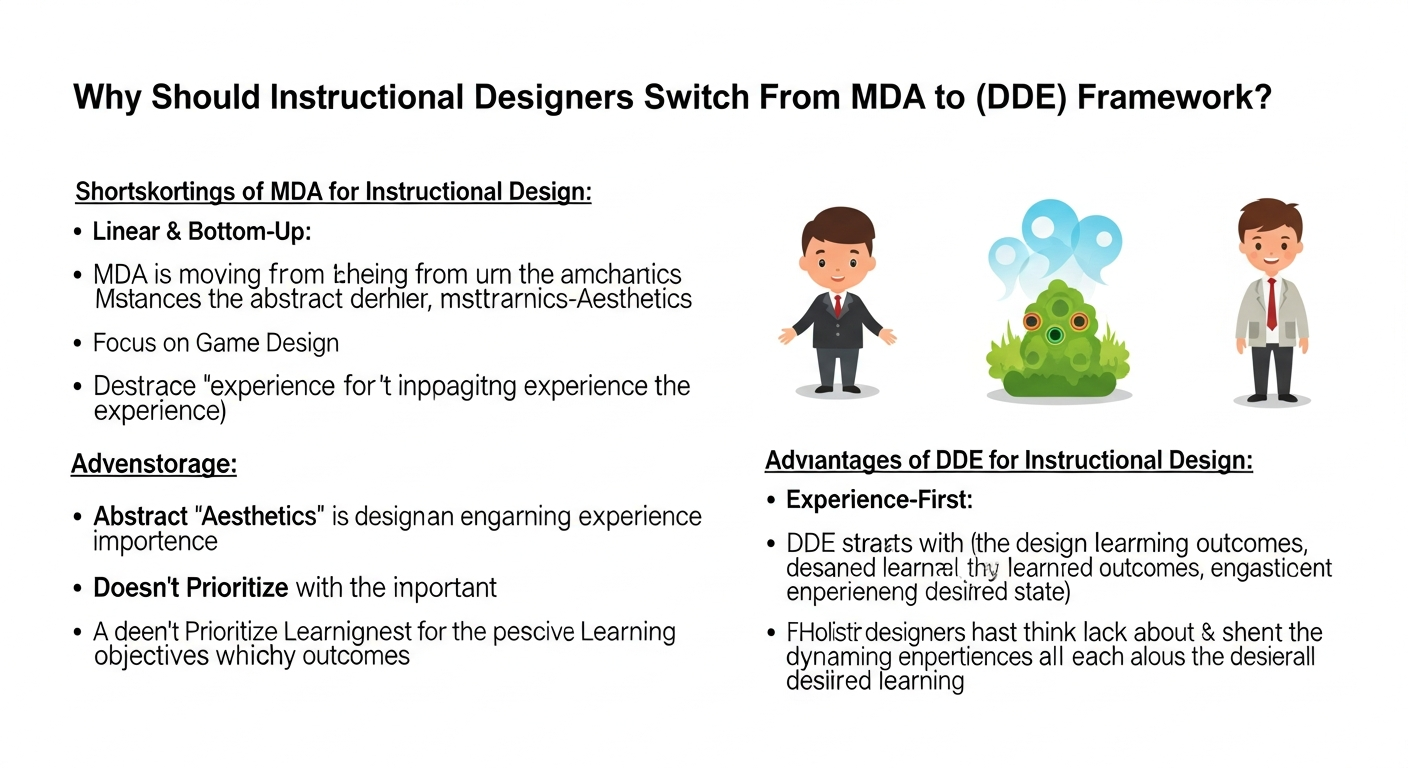
Why Instructional Designers Should Switch From MDA to DDE Framework
In the dynamic landscape of corporate learning and development, the methodologies we employ to design and deliver training are constantly evolving. For Vice Presidents, Directors, and Senior Managers of L&D, staying ahead of these shifts isn't just beneficial—it's imperative for driving business outcomes. Historically, many organizations, especially across Compliance, Sales, Banking, Finance, Insurance, Retail, Pharma, Healthcare, Hospitality, Oil and Gas, and Mining sectors, have relied on the Modular Design Approach (MDA) for their learning content management system strategies. While MDA offered a structured foundation, its limitations are becoming increasingly apparent in an era demanding agility, personalization, and measurable impact. The time has come for instructional designers and L&D leaders to embrace a more advanced paradigm: the Data-Driven and Dynamic Engagement (DDE) Framework.
Understanding the Traditional: The Modular Design Approach (MDA)
The Modular Design Approach, at its core, involves breaking down learning content into distinct, self-contained modules. Each module typically addresses a specific topic or skill, allowing for standardized content creation and easier assembly into various courses. This approach has served organizations well for decades, offering several perceived advantages:
- Standardization: Ensures consistent messaging and quality across different training programs.
- Scalability: Modules can be reused and rearranged, making it easier to scale training for large workforces.
- Simplicity: Content creation can be streamlined, as designers focus on individual modules rather more complex interconnected structures.
- Ease of Maintenance: Updating a specific piece of information only requires revising the relevant module.
However, the rapid pace of technological change, the demand for hyper-personalized learning experiences, and the need for demonstrable ROI have exposed MDA's inherent weaknesses. Its rigidity often leads to a one-size-fits-all approach, where learners are passive recipients of information rather than active participants in their development. This can result in lower engagement, decreased knowledge retention, and a struggle to adapt quickly to new compliance regulations, market shifts, or product updates.
Embracing the Future: The Data-Driven and Dynamic Engagement (DDE) Framework
The DDE Framework represents a significant leap forward, shifting the focus from static content delivery to a continuous cycle of design, deployment, analysis, and refinement. It's an agile, learner-centric approach that leverages data analytics, behavioral insights, and advanced technologies to create highly engaging, personalized, and effective learning experiences. A robust Microlearning LMS or any cutting-edge enterprise learning management platform is often a cornerstone for implementing such a framework.
Key Pillars of the DDE Framework:
- Data-Driven Insights: Utilizes learner analytics to understand preferences, performance, gaps, and engagement patterns, informing design decisions.
- Dynamic Content: Content is not static but adapts based on learner progress, needs, and real-time feedback. This often involves elements of Adaptive Learning.
- Engagement Focus: Prioritizes interactive, experiential, and social learning methods to keep learners actively involved. A Gamified LMS can be particularly effective here.
- Iterative Design: Embraces continuous improvement, allowing for rapid prototyping, testing, and refinement of learning interventions.
- Seamless Technology Integration: Leverages modern learning management software, AI Powered Authoring Tool, and other emerging technologies to enhance delivery and impact.
Why the Shift to DDE is Imperative for L&D Leaders
For L&D professionals seeking to demonstrate tangible value and future-proof their training strategies, moving to DDE is not just an option—it's a strategic necessity. Here’s why:
1. Enhanced Personalization and Relevance
In today's diverse workforce, a generic approach falls short. DDE allows instructional designers to tailor learning pathways based on individual roles, existing knowledge, and performance data. This hyper-relevance ensures learners receive precisely what they need, when they need it, dramatically improving the effectiveness of any learning management system implementation.
2. Improved Learner Engagement and Retention
By focusing on dynamic and interactive elements, DDE combats learner apathy. Whether through simulations, branching scenarios, or competition, active participation leads to deeper understanding and better retention. This is crucial for complex topics in industries like Finance or Healthcare, where knowledge application is critical. Using a modern LMS with engagement features can elevate the experience.
3. Agility and Responsiveness to Business Needs
Business environments, particularly in Compliance, Sales, and Pharma, are in constant flux. New regulations, product launches, or market shifts require immediate training updates. DDE's iterative nature and reliance on an agile learning management system enable rapid content deployment and modification, ensuring that training remains current and impactful. This allows an organization to use its learning content management system to react quickly.
4. Data-Backed Decision Making
With DDE, every learning interaction generates data. This data, analyzed through your chosen learning management solutions, provides invaluable insights into what works and what doesn't. L&D leaders can use this to optimize resources, justify budgets, and demonstrate clear ROI for their training initiatives. This moves beyond anecdotal evidence to verifiable impact, a critical aspect for enterprise learning management.
5. Leveraging Advanced Technologies
DDE inherently supports the integration of cutting-edge tools. From AI-driven recommendations to virtual reality simulations, modern platforms, including a robust cloud based learning management system, enable these technologies to be seamlessly woven into the learning fabric, creating richer and more immersive experiences.
6. Optimized Resource Utilization
By understanding learner needs through data, L&D teams can allocate resources more effectively, focusing on areas that truly require intervention and avoiding the creation of unnecessary or ineffective content. This efficiency is a hallmark of a well-implemented LCMS.
7. Mitigating Risk Effectively
For high-stakes industries such as Banking, Insurance, or Pharma, compliance training is paramount. DDE, especially when combined with Risk-focused Training, ensures that critical knowledge gaps are quickly identified and addressed, significantly reducing potential liabilities and maintaining regulatory adherence.
Practical Implementation: Making the Transition
Transitioning from MDA to DDE requires a strategic approach. It's not merely a software upgrade but a cultural shift. Organizations should:
- Invest in Modern Learning Technologies: Adopt a flexible and data-rich MaxLearn LMS or a similar enterprise-grade learning management system that supports DDE principles.
- Upskill Instructional Designers: Equip teams with skills in data analytics, UX/UI design, and agile methodologies.
- Fostering a Culture of Experimentation: Encourage continuous testing, feedback, and iteration in design and delivery.
- Start Small, Scale Smart: Pilot DDE on specific critical training programs, demonstrate success, and then expand.
Addressing Key Concerns for L&D Leaders
Optimizing Training Efficiency Across Diverse Regions: A Digital Approach
Many global organizations grapple with delivering consistent yet localized training. By leveraging data-driven design and a versatile LMS, L&D teams can identify common knowledge gaps across regions while also pinpointing unique local requirements. Automated content translation, cultural adaptation modules, and performance tracking tools—often powered by sophisticated algorithms—can significantly streamline content deployment and management. This ensures that a single design philosophy can adapt to specific regional needs, maximizing efficiency and impact everywhere.
Quantifying the Business Impact of Advanced Learning Methodologies
Demonstrating the return on investment for innovative learning strategies is a top priority for L&D leaders. With a DDE framework, the focus shifts to measurable outcomes. By tracking learner performance, completion rates, knowledge retention, and direct correlations to business KPIs (e.g., sales numbers, compliance adherence rates, reduced errors, improved customer satisfaction), organizations can build a robust case for their training programs. The continuous data feedback loop allows for real-time adjustments, ensuring that resources are always directed towards initiatives with the highest potential for impact and clearly showcasing the value of adopting a new learning management software.
The Evolving Role of Human Expertise in Automated Learning Environments
As advanced tools and platforms take on more of the routine content creation and personalization tasks, the role of human instructional designers transforms rather than diminishes. Their expertise becomes even more critical in areas that technology cannot replicate: deep understanding of human psychology, creative problem-solving, empathy, strategic thinking, and crafting compelling narratives. Instructional designers transition from content creators to learning architects, data interpreters, and strategic partners, focusing on high-level design, innovative problem-solving, and ensuring that the technology serves the human learning experience effectively. This evolution enhances the impact of the entire learning management system ecosystem.
Conclusion
The shift from the Modular Design Approach to the Data-Driven and Dynamic Engagement Framework is not just a trend; it's a fundamental re-imagining of how organizations, particularly those in high-stakes sectors, approach learning and development. For L&D Vice Presidents, Directors, and Senior Managers, embracing DDE means moving beyond simply delivering courses to strategically impacting performance, fostering a culture of continuous learning, and future-proofing their workforce. By adopting modern learning management solutions and empowering instructional designers with new tools and methodologies, your organization can unlock unparalleled levels of engagement, efficiency, and measurable business success. The future of learning is dynamic, data-driven, and intrinsically linked to innovative instructional design.


Comments
Post a Comment