What is the Role of an Antagonist in Microlearning Game Design?
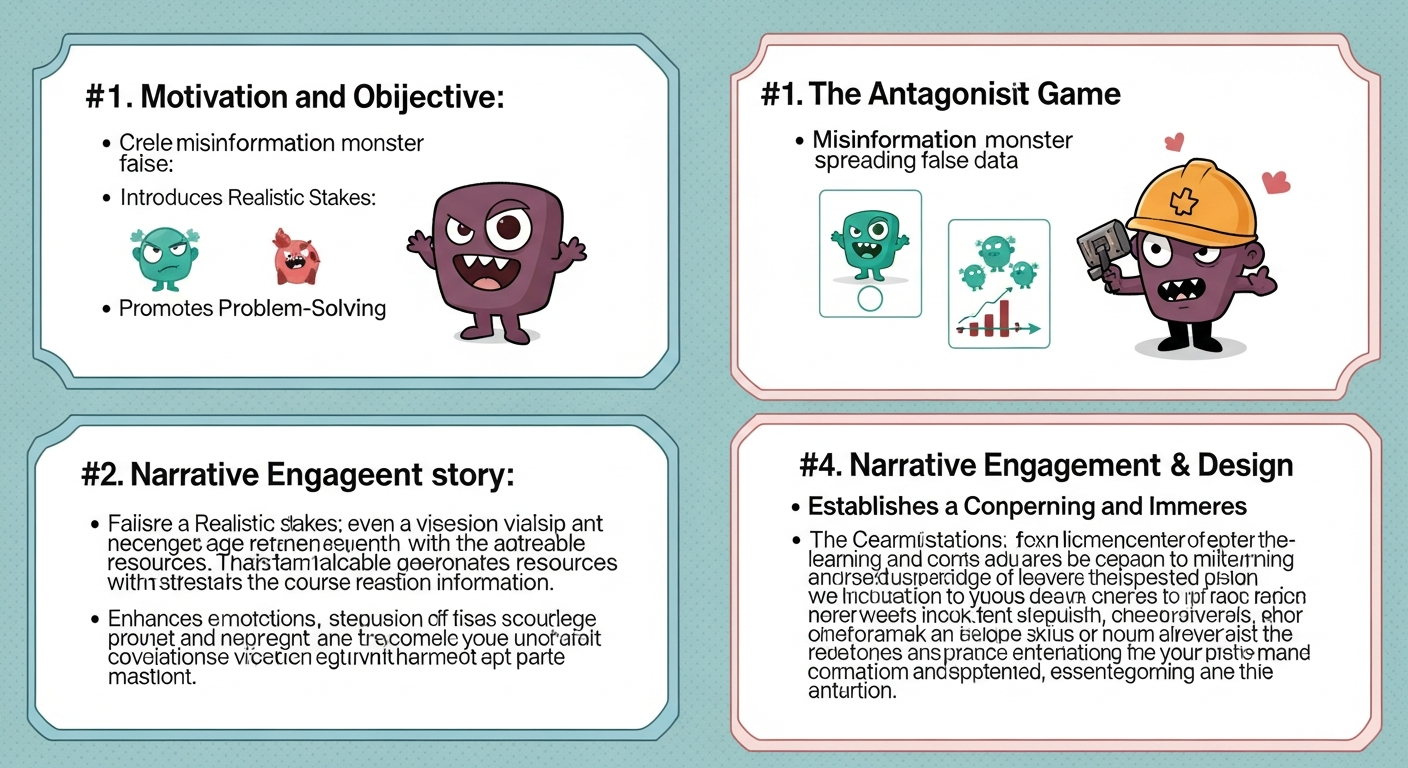
Unleashing Engagement: The Pivotal Role of Antagonists in Microlearning Game Design
In the dynamic landscape of corporate learning and development, L&D leaders are constantly seeking innovative strategies to boost engagement, knowledge retention, and skill application. Microlearning has emerged as a powerhouse for delivering bite-sized, impactful training, and when coupled with game design principles, its potential skyrockets. But what if we told you that one of the most underutilized tools in your microlearning game design arsenal isn't a new technology, but a timeless narrative device: the antagonist?
Often perceived as solely belonging to the realm of fiction, an antagonist, when strategically integrated, can transform passive learning into an immersive, challenge-driven experience. For Vice Presidents, Directors, and Senior Managers overseeing training initiatives in sectors like Compliance, Sales, Banking, Finance, Insurance, and Healthcare, understanding this role can unlock unprecedented levels of learner motivation and performance.
What is Microlearning Game Design?
Before diving into the antagonist's role, let's briefly define our core concepts. Microlearning LMS platforms are designed to deliver learning content in short, focused bursts, typically 3-10 minutes in duration. This approach aligns perfectly with modern attention spans and busy work schedules, making knowledge acquisition efficient and accessible. When we infuse game design into this, we're not just creating quizzes; we're building interactive experiences that leverage game mechanics like points, badges, leaderboards, and challenges to motivate learners.
A truly effective Gamified LMS transcends simple reward systems. It crafts a narrative, presents meaningful choices, and provides immediate feedback. This blend is particularly potent for complex subjects or critical skill development, ensuring that information is not just consumed but actively applied and retained. The ultimate goal is to move beyond mere information transfer to genuine behavioral change and skill mastery.
The Untapped Power of an Antagonist
In storytelling, the antagonist is the force that opposes the protagonist, creating conflict and driving the narrative forward. In microlearning game design, this concept translates powerfully. An antagonist isn't necessarily a cartoon villain; it's any obstacle, challenge, misconception, or even a rival that the learner (our protagonist) must overcome to achieve a learning objective. Think of it as the 'why' behind the learning – the problem that needs solving, the risk that needs mitigating, or the competitor that needs outmaneuvering.
Without an antagonist, a learning game can feel like a series of disconnected tasks. With one, it gains purpose, urgency, and a compelling reason for the learner to engage deeply. It shifts the learning from "answer this question" to "defeat this challenge by applying what you've learned." This fundamental shift taps into intrinsic human motivators: problem-solving, competition, and the desire for mastery.
How Antagonists Supercharge Microlearning Engagement
- Motivation Through Challenge: An antagonist provides a clear, defined obstacle. Learners are naturally motivated to overcome challenges, especially when success leads to tangible progress or rewards within the game. This creates a compelling 'push' to acquire and apply knowledge.
- Narrative Immersion: Even in a short microlearning module, an antagonist can introduce a mini-narrative. This narrative context makes abstract concepts more relatable and memorable. For instance, in a compliance training, the antagonist might be a 'data breach threat' that the learner must thwart by correctly applying security protocols.
- Skill Application & Practice: The antagonist's actions or existence demand that learners actively use their skills and knowledge. This isn't passive absorption; it's active problem-solving, critical for deep learning and retention. Overcoming the antagonist often requires specific strategic thinking or decision-making, reinforcing the learning objectives.
- Feedback & Reiteration: Failing to overcome an antagonist provides immediate, impactful feedback. This isn't just a wrong answer; it's a 'setback' that encourages reflection, review, and a renewed attempt, fostering a powerful iterative learning cycle. The stakes feel higher, making the learning more resonant.
- Emotional Connection: The struggle against an antagonist can evoke emotions like frustration, determination, and ultimately, triumph. These emotional responses are crucial for memory encoding and recall, making the learning experience stickier and more impactful than rote memorization.
Designing Effective Antagonists for L&D
Crafting antagonists for professional learning environments requires nuance and strategic thinking. Here's how to do it effectively:
- Relevance is Key: The antagonist must directly relate to the real-world challenges, risks, or competitors faced by your employees. For Risk-focused Training, this could be a 'compliance auditor' or a 'market downturn.' In sales, it might be a 'skeptical prospect' or a 'competitor's aggressive offer.'
- Dynamic Difficulty: Antagonists can evolve. As a learner progresses through microlearning modules, the challenges posed by the antagonist can increase in complexity, mimicking real-world professional growth and adapting to the learner's improving skills, a hallmark of Adaptive Learning.
- Subtlety Over Spectacle: Not every antagonist needs to be a dramatic villain. It can be an abstract concept like 'inefficiency,' a 'looming deadline,' or a 'bug in the system.' The antagonist’s role is to create a compelling challenge, not necessarily a grand narrative.
- Clear Learning Objectives: Ensure that overcoming the antagonist directly requires the application of the specific knowledge or skills outlined in your learning objectives. The challenge should be solvable with the provided training.
- Feedback Loops: Design the game so that learner actions against the antagonist provide clear, immediate feedback. Did their strategy work? Why or why not? What needs to change for the next attempt?
Practical Examples Across Industries
- Compliance: An 'unethical offer' from a client, or a 'data breach attempting to steal information' that the learner must stop by applying privacy regulations.
- Sales: A 'stubborn customer objection' that the learner must overcome using learned negotiation tactics, or a 'competitor attempting to steal market share' requiring strategic product positioning.
- Banking/Finance: A 'fraudster attempting to phish client data' that employees must identify and report, or a 'volatile market trend' requiring accurate financial analysis.
- Healthcare: A 'misleading symptom' that could lead to an incorrect diagnosis, or a 'hospital-acquired infection' that the learner must prevent through strict protocols.
- Retail: A 'difficult customer complaint' requiring empathetic resolution, or 'inventory shrinkage' that needs to be tracked and prevented.
Integrating Antagonists with Modern Learning Technologies
The effective deployment of antagonists in microlearning is significantly enhanced by modern learning management solutions. A robust cloud based learning management system can host these interactive modules, track learner progress, and provide analytics on how well employees are overcoming challenges. Features within a lms learning management system like customizable gamification elements allow L&D teams to design and implement these antagonist-driven scenarios with ease.
Furthermore, an enterprise learning management system integrated with an AI Powered Authoring Tool can dramatically streamline the creation of diverse and relevant antagonist scenarios. Imagine an AI generating realistic 'customer service dilemmas' or 'IT security threats' tailored to specific job roles and current industry challenges. This enables L&D to scale personalized, challenge-based training across large organizations efficiently.
The synergy between well-designed antagonists and powerful platforms like MaxLearn LMS, which often function as a comprehensive LCMS (Learning Content Management System), ensures that your learning content management system not only delivers information but also facilitates impactful, experiential learning through engaging adversaries. This transforms a simple learning management system into a dynamic training ecosystem.
Common Questions Answered for L&D Leaders
How can antagonists improve learning retention?
Antagonists create a problem-solving context that makes learning more active and memorable. The emotional engagement and the necessity to apply knowledge under pressure (even simulated) strengthen neural pathways, leading to better long-term retention than passive consumption.
Are antagonists suitable for all types of microlearning content?
While particularly effective for skill-based training, compliance, and decision-making scenarios, antagonists can be adapted for almost any content. Even for informational content, an antagonist could be a 'misconception' or 'outdated information' that the learner must correct or update.
What's the difference between a 'challenge' and an 'antagonist' in game design?
A challenge is a general obstacle. An antagonist is a specific, often personified (or conceptually personified) force or entity that creates challenges and directly opposes the learner's goals. An antagonist brings a narrative element and often a dynamic quality that a static challenge might lack.
How do I measure the effectiveness of an antagonist in my training?
Effectiveness can be measured by learner engagement rates, completion rates, performance on in-game challenges against the antagonist, and ultimately, post-training performance indicators. Analytics from your learning management software can track how learners interact with these challenging scenarios and their success rates.
Can antagonists be used in sensitive or serious topics like compliance?
Absolutely. In sensitive topics, antagonists can be highly effective. For compliance, the antagonist could be the 'risk of a breach' or 'ethical dilemma' that the learner must navigate. This allows learners to practice making critical decisions in a safe, simulated environment without real-world consequences, building confidence and competence.
Conclusion
The role of an antagonist in microlearning game design is far more than a stylistic choice; it's a strategic imperative for L&D leaders aiming to create truly impactful and engaging training programs. By transforming abstract learning objectives into tangible conflicts and problems, antagonists compel learners to engage, apply, and master critical skills. This approach doesn't just deliver information; it cultivates resilience, problem-solving abilities, and a deeper connection to the learning material.
As you plan your next training initiative, consider the antagonist not as a character from a movie, but as a powerful catalyst for superior learning outcomes. Embrace the conflict, and watch your learners transform into protagonists of their own professional development.


Comments
Post a Comment