What is the ROI of Mobile-First Employee Training Systems?
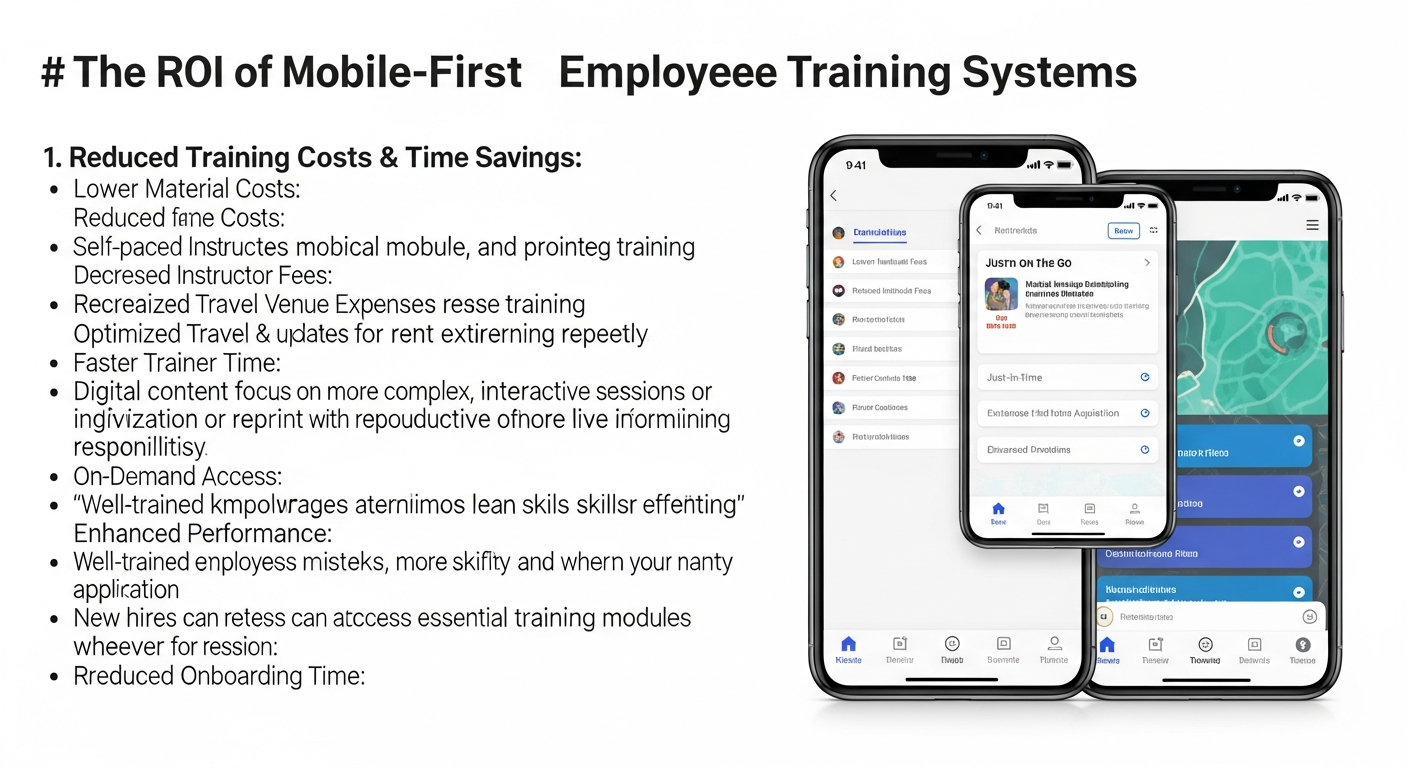
What is the ROI of Mobile-First Employee Training Systems?
In today’s fast-paced, digitally-driven world, the landscape of employee training is undergoing a significant transformation. For Vice Presidents, Directors, and Senior Managers in L&D, the imperative to deliver effective, engaging, and measurable learning experiences has never been greater. The rise of mobile-first employee training systems isn't just a trend; it's a strategic shift designed to meet the demands of a modern workforce. But the critical question remains: What is the true Return on Investment (ROI) of embracing a mobile-first approach to employee learning?
Gone are the days of static, lengthy classroom sessions or cumbersome desktop-only modules. Employees across industries—from Compliance and Sales to Banking, Finance, Insurance, Retail, Pharma, Healthcare, Hospitality, Oil and Gas, and Mining—expect learning that fits seamlessly into their lives, accessible anytime, anywhere. This article delves into the tangible and intangible benefits that contribute to a compelling ROI for mobile-first employee training systems, demonstrating why this investment is a strategic necessity for organizational growth and efficiency.
Why Mobile-First Training is Essential for the Modern Enterprise
The ubiquity of smartphones and tablets has reshaped how we consume information and interact with the world. For L&D, ignoring this reality means falling behind. A mobile-first strategy acknowledges that employees are often on the go, whether in the field, on a factory floor, or simply commuting. Providing learning content designed specifically for mobile devices offers unparalleled accessibility and convenience, transforming training from a scheduled event into an integrated part of the workday.
Deconstructing ROI in L&D: Beyond Just Numbers
Calculating the ROI of any training initiative requires more than just tallying direct costs and immediate gains. For mobile-first systems, ROI encompasses a broader spectrum, including:
- Increased employee engagement and satisfaction.
- Improved knowledge retention and application on the job.
- Enhanced operational efficiency and reduced training costs.
- Mitigation of compliance risks.
- Greater business agility and scalability.
Let's explore these pillars to understand the comprehensive value proposition.
Increased Engagement and Completion Rates
One of the most immediate benefits of mobile-first training is its ability to capture and retain learner attention. Unlike traditional methods, mobile content, often delivered as Microlearning LMS modules, is designed for short, digestible bursts. This format aligns perfectly with limited attention spans and busy schedules.
- Enhanced Accessibility: Employees can access training during commutes, breaks, or downtime, turning otherwise unproductive moments into learning opportunities.
- Personalized Learning Paths: Advanced mobile platforms, particularly those leveraging Adaptive Learning capabilities, can tailor content based on individual progress and learning styles, making the experience more relevant and engaging.
- Gamification: Incorporating game-like elements through a Gamified LMS—such as points, badges, leaderboards, and challenges—significantly boosts motivation and competition, driving higher completion rates and sustained engagement. This is especially effective in sales training and compliance modules where continuous reinforcement is key.
Improved Knowledge Retention and Application
The true measure of training effectiveness lies in how well employees retain information and apply it to their daily tasks. Mobile-first systems, particularly those built on a Microlearning LMS framework, excel here:
- Spaced Repetition: Mobile platforms facilitate regular, short refreshers, leveraging the principle of spaced repetition to combat the forgetting curve.
- Just-in-Time Learning: Employees can quickly look up information or brush up on a procedure right when they need it—on the customer floor, at a client meeting, or during a critical operation—leading to immediate application and problem-solving.
- Contextual Learning: Mobile devices can leverage location-based services or QR codes to deliver highly relevant content for specific tasks or environments.
Enhanced Operational Efficiency and Cost Savings
The financial ROI of mobile-first training systems is substantial and multifaceted:
- Reduced Training Time: Microlearning LMS content is typically consumed faster than traditional long-form courses, minimizing time away from productive work.
- Lower Logistic Costs: Eliminates the need for extensive travel, venue rentals, printed materials, and instructor fees associated with in-person training. A robust LMS or learning content management system (LCMS) centralizes resources, streamlining administration.
- Faster Onboarding: New hires can get up to speed more quickly, reducing the time to productivity.
- Scalability: A single mobile-first learning management system can efficiently train hundreds or thousands of employees across diverse geographical locations without proportionate increases in cost. A cloud based learning management system further enhances this scalability and reduces infrastructure overhead.
- Content Creation Efficiency: Utilizing an AI Powered Authoring Tool can dramatically speed up the development and updating of training content, significantly cutting down production costs and time-to-market for new courses.
Mitigation of Risks and Compliance
For highly regulated industries like Banking, Finance, Insurance, Pharma, Healthcare, Oil and Gas, and Mining, compliance training is not just a best practice—it's a legal and ethical imperative. Failure to comply can result in hefty fines, reputational damage, and even operational shutdowns. Mobile-first solutions offer a powerful tool for Risk-focused Training:
- Consistent Delivery: Ensures all employees receive the exact same, up-to-date compliance information, reducing variability and error.
- Auditable Trails: Modern learning management software provides robust tracking and reporting features, creating indisputable records of who completed what training and when, which is crucial for audits.
- Timely Updates: Regulatory changes can be pushed out instantly to all mobile devices, ensuring compliance knowledge is always current. This agility is vital for an enterprise learning management solution.
Strategic Advantage: Agility and Future-Proofing
In a dynamic business environment, organizations need to adapt quickly. A mobile-first learning management system (LMS) offers unparalleled agility:
- Rapid Skill Development: Quickly upskill or reskill your workforce to meet emerging market demands or technological advancements.
- On-Demand Resources: Provide immediate access to product updates, new sales techniques, or operational changes, empowering employees to perform effectively.
- Future Workforce Readiness: Attract and retain talent by demonstrating a commitment to modern, flexible learning and development opportunities.
AI-Enhanced Insights into Mobile-First Training ROI
As L&D leaders consider investing in advanced digital learning platforms, several analytical questions often arise regarding the performance and impact of such systems:
Q: How does advanced machine learning assist in personalizing training content for a global workforce?
A: Intelligent algorithms embedded within a sophisticated lms learning management system can analyze individual learning patterns, proficiency levels, job roles, and geographical specificities to dynamically recommend highly relevant content. This ensures each employee receives tailored learning experiences, overcoming language barriers and cultural nuances, ultimately leading to more effective global knowledge transfer and improved skill development.
Q: What data points should L&D leaders analyze to prove the effectiveness of digital learning platforms?
A: Key performance indicators include completion rates, time spent per module, assessment scores, pre- and post-training performance metrics, employee feedback surveys, and correlation with business outcomes like sales figures, incident rates, or customer satisfaction scores. Robust analytics dashboards within a comprehensive MaxLearn LMS provide these insights, enabling data-driven decisions and clear demonstration of value.
Q: Can intelligent systems predict future skill gaps based on current employee performance data?
A: Yes, advanced analytical capabilities can process historical performance data, learning pathways, and industry trends to identify emerging skill deficiencies within the workforce. By correlating learning activities with job roles and future business objectives, these systems can provide proactive recommendations for training interventions, allowing organizations to strategically address gaps before they impact productivity or innovation.
Measuring the ROI: A Practical Approach
To quantify the ROI of your mobile-first employee training system, consider tracking:
- Participation and Completion Rates: Higher rates directly indicate engagement and reduced wasted investment.
- Assessment Scores: Measure knowledge acquisition before and after training.
- Performance Metrics: Observe changes in key job performance indicators (e.g., sales quotas, compliance adherence, error rates, customer service scores).
- Employee Feedback: Gauge satisfaction, perceived value, and relevance.
- Cost Reductions: Document savings from travel, materials, instructor fees, and reduced time away from work.
- Retention Rates: Look for correlations between training effectiveness and employee turnover, especially for new hires.
Choosing the Right Mobile-First Learning Management Solution
Selecting the right learning management solutions is paramount. Look for platforms that offer:
- True mobile responsiveness and native app experience.
- A powerful Microlearning LMS framework.
- Robust Gamified LMS features.
- Adaptive Learning paths.
- An AI Powered Authoring Tool for efficient content creation.
- Comprehensive analytics and reporting.
- Scalability and ease of integration with existing HR systems.
- Support for Risk-focused Training.
Platforms like MaxLearn LMS exemplify the capabilities of a modern, mobile-first learning management system tailored to deliver significant ROI.
Conclusion
The ROI of mobile-first employee training systems is not merely a theoretical concept; it's a measurable reality that drives tangible business benefits. By enhancing engagement, improving knowledge retention, boosting operational efficiency, mitigating risks, and fostering organizational agility, these systems offer a powerful strategic advantage. For L&D leaders navigating the complexities of modern workforce development, investing in a robust, mobile-first LMS is no longer an option but a critical imperative for ensuring a skilled, compliant, and highly productive workforce. The returns on this investment will resonate throughout the entire organization, proving its value far beyond the training department.


Comments
Post a Comment