What Are the Essential Features of a Modern Microlearning Platform?
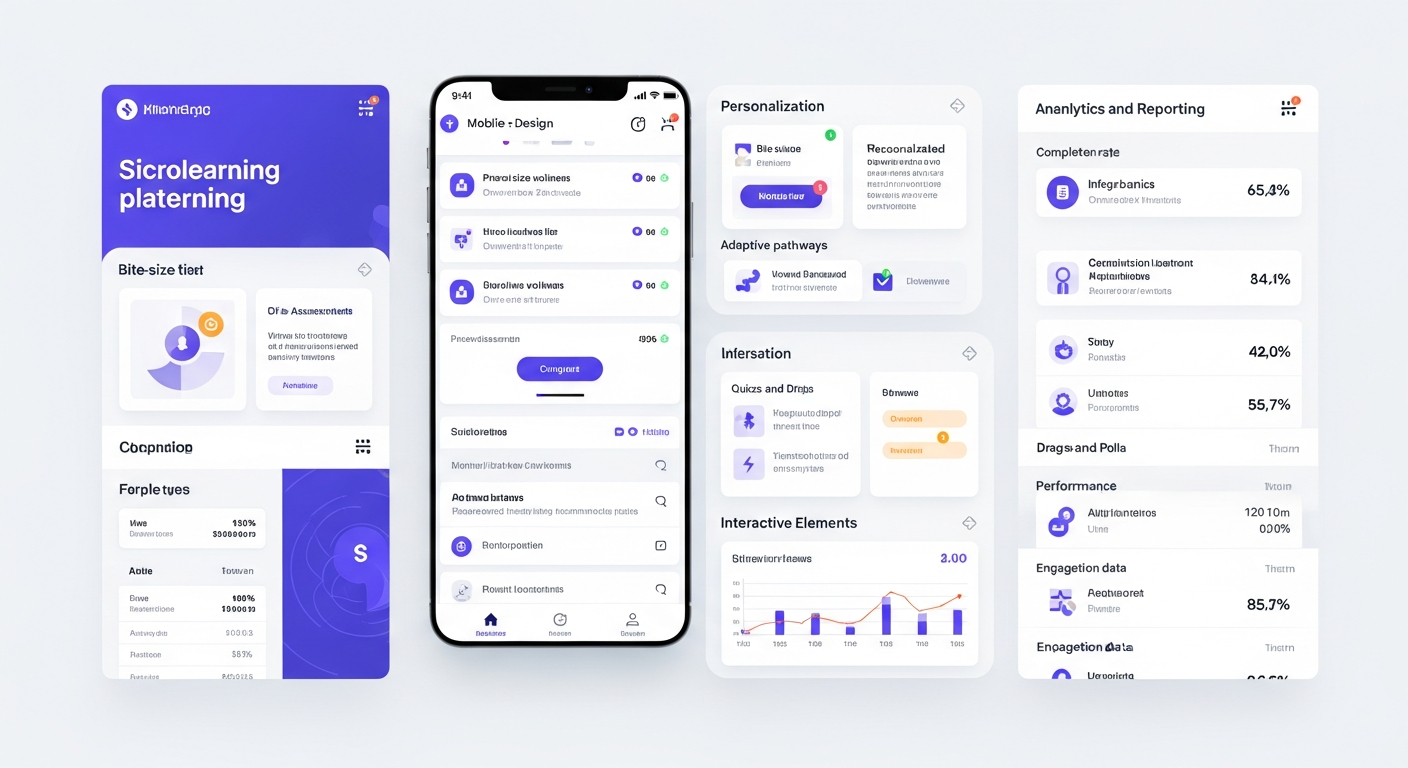
Unlocking Peak Performance: Essential Features of a Modern Microlearning Platform
In today's fast-paced corporate landscape, traditional, lengthy training modules are increasingly ineffective. Vice Presidents, Directors, and Managers in Learning & Development are constantly seeking innovative solutions to enhance employee knowledge retention, boost engagement, and drive measurable business outcomes. The answer for many lies in microlearning – bite-sized, focused content delivered precisely when and where it's needed. But the effectiveness of microlearning hinges entirely on the platform that powers it. A robust Microlearning LMS isn't just a content repository; it's a strategic tool for developing a highly skilled and adaptable workforce across industries like Compliance, Sales, Banking, Finance, Insurance, Retail, Pharma, Healthcare, Hospitality, Oil and Gas, and Mining.
For L&D professionals grappling with diverse learning needs, geographical distribution, and the relentless pace of change, choosing the right learning management system (LMS) is paramount. A truly modern microlearning platform goes beyond basic content delivery, offering a suite of features designed to maximize learning impact and operational efficiency. Let's explore the essential functionalities that define such a platform.
Seamless Content Delivery and Universal Accessibility
The foundation of any effective microlearning strategy is the ability to deliver relevant content quickly and conveniently. A cutting-edge microlearning platform must excel in this area.
- Mobile-First Design: Employees access information on the go. The platform must be fully responsive, offering an intuitive and seamless experience across all devices – smartphones, tablets, and desktops. This ensures learning can happen anytime, anywhere, fitting into the natural workflow.
- Offline Access: For field teams or employees with intermittent internet connectivity, the ability to download content and complete modules offline is crucial. Progress should sync automatically once connectivity is restored.
- Multi-Format Support: From short videos and interactive quizzes to infographics and brief articles, the platform should support a wide array of content formats to cater to different learning styles and content types.
This accessibility ensures that every employee, whether in a branch office, on a sales call, or working remotely, has immediate access to vital information. When combined with an AI Powered Authoring Tool, content creation becomes faster and more targeted, further enhancing delivery efficiency. Such a cloud based learning management system provides unparalleled flexibility.
How can advanced technologies personalize learning paths for diverse global teams?
Modern microlearning platforms leverage sophisticated algorithms to analyze a learner's performance, job role, skill gaps, and even geographical context. This enables the system to recommend highly relevant content and adjust the difficulty or focus of modules in real-time. This dynamic personalization is the essence of Adaptive Learning. Instead of a one-size-fits-all approach, each learner receives a tailored experience, ensuring they focus on areas where they need improvement and progress at their own pace. This capability is especially vital for enterprises with varied training requirements, such as a multinational bank or a global pharmaceutical company, optimizing the overall enterprise learning management strategy.
Dynamic Engagement and Motivation
Microlearning's brevity is an advantage, but engagement is what truly ensures retention. A modern learning management software must incorporate features that keep learners motivated and invested.
- Gamification: Integrating game-like elements such as points, badges, leaderboards, and challenges transforms learning into an interactive and competitive experience. A Gamified LMS drives higher completion rates and encourages repeat engagement.
- Interactive Content: Beyond passive video watching, the platform should facilitate interactive quizzes, simulations, drag-and-drop exercises, and scenario-based learning to actively involve the learner.
- Social Learning Features: Discussion forums, peer reviews, and collaborative spaces allow learners to share insights, ask questions, and learn from each other, fostering a sense of community and shared knowledge.
These elements create a vibrant learning environment that combats disengagement, a common challenge in traditional training. It's not just about delivering content; it's about making the learning experience compelling and memorable.
What role does intelligence play in identifying and addressing employee skill gaps across an organization?
Intelligent systems within an LMS can continuously assess learner performance against competency frameworks, pinpointing specific skill gaps at individual, team, and organizational levels. By analyzing this data, the platform can proactively suggest targeted microlearning modules to address these gaps. Furthermore, it can predict future skill requirements based on industry trends and company objectives, allowing L&D to develop Risk-focused Training and content before skill shortages become critical. This predictive capability helps organizations stay ahead, ensuring their workforce is always equipped with the necessary expertise, especially in areas like compliance and complex sales cycles.
Robust Analytics and Actionable Insights
For L&D leaders, demonstrating ROI is crucial. A modern microlearning platform must provide deep, actionable insights into learning performance and its impact on business objectives.
- Comprehensive Dashboards: Real-time visibility into completion rates, quiz scores, content popularity, and learner progress.
- Performance Reporting: Detailed reports on individual and group performance, highlighting areas of strength and weakness.
- Skill Gap Analysis: Tools to identify common knowledge gaps across departments or roles, informing future content development.
- Business Impact Metrics: The ability to correlate training data with key business performance indicators (e.g., sales quotas, compliance adherence, customer satisfaction) to demonstrate tangible value.
These analytics transform raw data into strategic intelligence, enabling L&D managers to optimize training programs, prove their value, and make data-driven decisions. An advanced learning content management system like MaxLearn LMS empowers leaders to measure the effectiveness of every learning initiative.
Can intelligent systems help L&D measure the actual return on investment of training programs?
Absolutely. Intelligent systems within an LMS can connect learning data with operational data from other business systems (like CRM or HRIS). This integration allows L&D to track how specific training modules impact real-world outcomes – for instance, how a microlearning series on new product features affects sales figures, or how compliance training reduces incident rates. By automating data correlation and generating sophisticated reports, these systems provide a clear picture of training ROI, allowing L&D professionals to justify investments and refine their strategies continuously.
Intuitive Authoring and Content Management
The ability to create, update, and manage microlearning content efficiently is vital. A modern platform acts as a powerful LCMS (learning content management system).
- User-Friendly Authoring Tools: Enables L&D teams and even subject matter experts to quickly create engaging microlearning modules without extensive technical skills. Drag-and-drop interfaces, templates, and multimedia support are key. This is where an AI Powered Authoring Tool truly shines.
- Centralized Content Repository: A single, organized location for all learning materials, ensuring consistency, easy access, and version control.
- Version Control and Updates: The ability to easily update content, roll out new versions, and archive outdated materials is essential for industries with rapidly changing regulations or product lines (e.g., Pharma, Banking Compliance).
- SCORM/xAPI Compliance: Ensures interoperability with other learning tools and content, maximizing flexibility.
This streamlined content creation and management process empowers L&D teams to be agile, responsive, and innovative, making the learning management system a dynamic hub for knowledge creation and dissemination.
Seamless Integration and Scalability
A modern microlearning platform doesn't exist in a vacuum. It must integrate effortlessly with existing enterprise systems and scale with organizational growth.
- API Integrations: Compatibility with HRIS, CRM, performance management systems, and other business tools ensures a unified data ecosystem and automated workflows.
- Scalability: The platform must be able to support thousands or even hundreds of thousands of users without performance degradation, accommodating both current needs and future expansion. This is a hallmark of a robust lms learning management system.
- Security and Compliance: Enterprise-grade security protocols, data privacy compliance (e.g., GDPR, CCPA), and robust uptime guarantees are non-negotiable, especially for sectors like Finance and Healthcare.
These features ensure that the learning management solutions provided by the platform are not only effective for learning but also seamlessly woven into the broader operational fabric of the organization.
Conclusion
For L&D leaders striving to build a future-ready workforce, investing in a microlearning platform with these essential features is no longer optional – it's a strategic imperative. From ensuring compliance in banking and finance to accelerating sales training in retail and pharma, a sophisticated learning management system empowers organizations to deliver precise, impactful training at scale.
By prioritizing universal accessibility, dynamic engagement, robust analytics, intuitive authoring, and seamless integration, L&D professionals can select a Microlearning LMS that not only meets current demands but also evolves with the ever-changing needs of their business. Choose a platform that embodies these capabilities, like MaxLearn LMS, to unlock peak performance and cultivate continuous learning across your enterprise.


Comments
Post a Comment