The Solution to Low Course Completion Rates in Corporate Sales Training
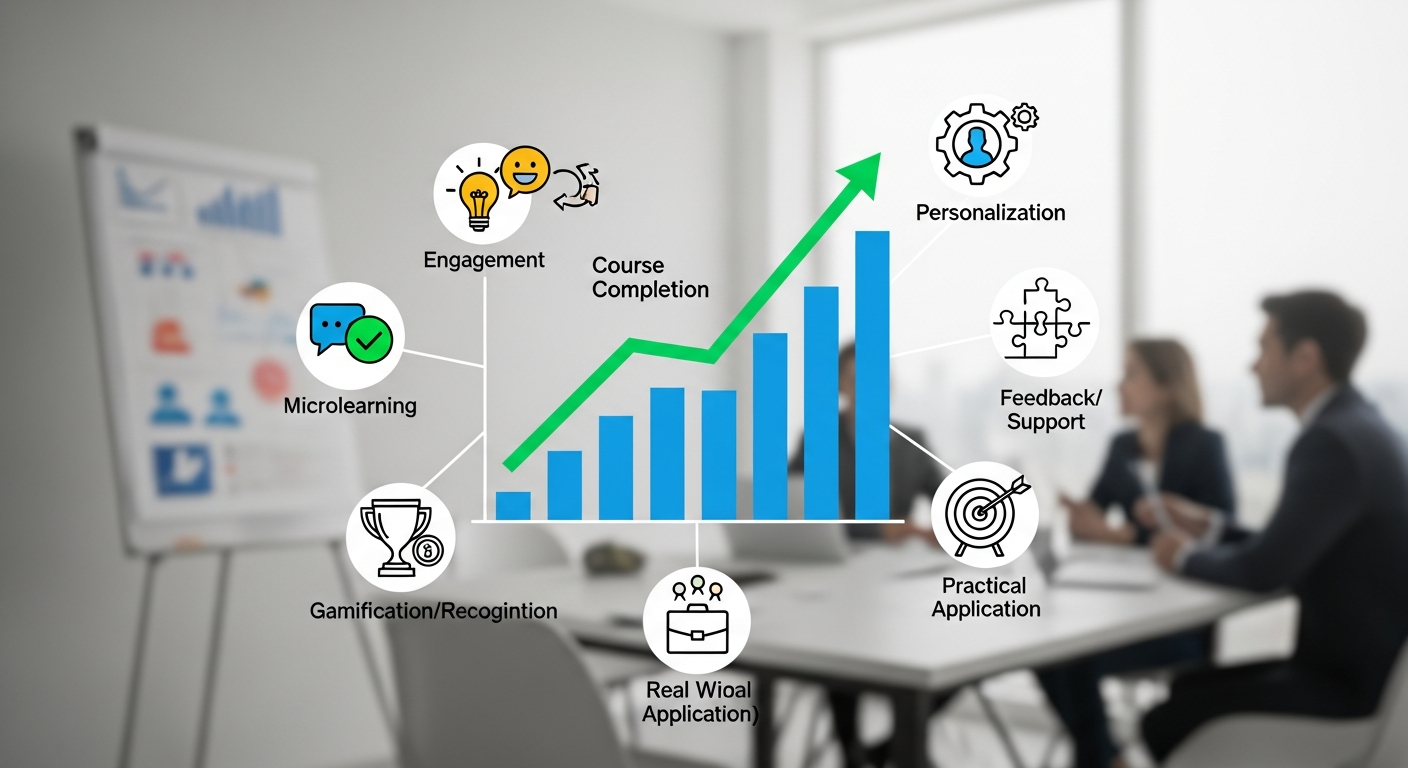
Revolutionizing Sales Training: The Definitive Solution to Low Course Completion Rates
In the dynamic world of corporate sales, continuous learning is not just an advantage; it's a necessity. Yet, many Learning & Development (L&D) leaders grapple with a persistent challenge: alarmingly low course completion rates in sales training programs. This isn't just a minor hurdle; it represents significant wasted investment, untapped potential, and a direct impact on sales performance and revenue generation. For VPs, Directors, and Managers of L&D, understanding and solving this problem is paramount to fostering a high-performing sales team. This article delves deep into the root causes of disengagement and offers a comprehensive, modern solution designed to boost completion rates, enhance knowledge retention, and ultimately drive superior sales outcomes across diverse industries, from Compliance and Banking to Pharma and Oil & Gas.
The Hidden Costs of Unfinished Training: Why Sales Professionals Disengage
Low completion rates are a symptom of underlying issues that often plague traditional sales training. Sales professionals are notoriously busy, driven by targets and client interactions, leaving little time for lengthy, generic training modules. The typical classroom-style or long-form eLearning course often fails to account for their specific needs and fast-paced environment.
The Impact of Low Completion: More Than Just Numbers
- Wasted Resources: Significant investment in content creation and platform subscriptions yields poor ROI when courses go unfinished.
- Skill Gaps Persist: Critical knowledge and skill deficiencies remain unaddressed, hindering individual and team performance.
- Decreased Motivation: Repetitive, unengaging training can lead to cynicism and disinterest in future learning initiatives.
- Compliance Risks: Especially in regulated industries like Finance, Healthcare, and Pharma, incomplete training can lead to non-compliance and legal repercussions.
- Stagnant Sales Performance: Without updated skills and product knowledge, sales teams struggle to adapt to market changes and close deals effectively.
Meeting Sales Teams Where They Are: A New Approach to Learning
Today’s sales professional needs training that is:
- Relevant: Directly applicable to their daily tasks and current challenges.
- Accessible: Available anytime, anywhere, on any device.
- Concise: Delivering high-impact information in short bursts.
- Engaging: Interactive and motivating, keeping their attention.
- Personalized: Tailored to their existing knowledge and learning pace.
Traditional training often misses these crucial points, leading to the disengagement we see today. The solution lies in adopting innovative eLearning methodologies that align with the demands of the modern sales landscape.
Elevating Engagement and Effectiveness with Advanced eLearning Strategies
To truly solve the completion rate conundrum, L&D must embrace strategies that are built for the modern learner and the realities of the sales world. This means moving away from one-size-fits-all approaches and towards dynamic, flexible, and data-driven learning experiences.
Microlearning: Learning in the Flow of Work
The concept of Microlearning LMS is a game-changer for sales training. Instead of hour-long modules, information is broken down into bite-sized, easily digestible segments (2-5 minutes). This approach respects a salesperson’s limited time, allowing them to learn during brief intervals between calls or meetings. It enhances retention and makes learning feel less like a chore and more like a quick knowledge boost.
Gamification: Making Learning Irresistible
Who doesn't love a challenge? Integrating game-like elements into training can dramatically boost engagement and completion. A Gamified LMS transforms learning into an interactive experience with points, badges, leaderboards, and rewards. This taps into the competitive spirit inherent in many sales professionals, driving them to complete modules, master skills, and even compete with peers, fostering a culture of continuous improvement.
Personalization through Advanced Learning: Tailored Pathways to Success
One of the biggest pitfalls of traditional training is its generic nature. Sales professionals come with varying levels of experience and knowledge. Adaptive Learning technologies address this by tailoring the learning path to each individual. Through pre-assessments and real-time performance tracking, the system identifies knowledge gaps and delivers content specifically designed to fill those gaps, ensuring every learner receives the most relevant and impactful training experience.
AI-Powered Content Creation: Efficiency Meets Innovation
Creating engaging, relevant training content can be time-consuming. An AI Powered Authoring Tool revolutionizes this process. It can help generate initial content drafts, suggest improvements, personalize learning paths, and even translate materials, dramatically reducing development time and ensuring content is always fresh, up-to-date, and precisely targeted to sales teams' needs.
Focus on Practical Application and Risk: Learning That Matters
Sales training must go beyond theoretical knowledge and focus on practical application. This includes scenario-based training, simulations, and role-playing that mimic real-world sales situations. Furthermore, especially in sectors like Finance, Insurance, and Pharma, understanding and mitigating potential issues is crucial. Risk-focused Training ensures sales teams are not only skilled at selling but also fully compliant and aware of the implications of their actions, protecting both the company and the client.
Implementing the Solution: The Role of a Robust Learning Platform
To seamlessly integrate these advanced strategies, a robust LMS is indispensable. A modern learning management system like MaxLearn LMS offers the infrastructure needed to deploy, manage, and track diverse training initiatives effectively. It should function as a comprehensive learning content management system, providing a centralized hub for all learning resources.
Key features to look for in a top-tier learning management software or learning management solutions include:
- Scalability to support growing sales teams across various industries like Retail, Hospitality, and Mining.
- Mobile-first design for on-the-go access, typical of a cloud based learning management system.
- Powerful analytics and reporting to measure engagement, completion, and impact.
- Integration capabilities with CRM and other business tools.
- Support for various content formats, including video, interactive modules, and simulations.
- Robust security, crucial for enterprise learning management, especially in sensitive industries like Banking and Healthcare.
- Effective LCMS functionalities for easy content updating and version control, ensuring the lms learning management system remains a living, breathing knowledge base.
Smart Learning: Driving Engagement and Performance with Data and Insights
Beyond innovative methodologies, the strategic use of intelligence can pinpoint what works and why, ensuring every training effort contributes to higher completion rates and superior performance.
Optimizing Content for Audience Insights: Tailoring for Maximum Relevance
By analyzing learner interactions, completion patterns, and feedback, L&D teams gain deep insights into what resonates with their sales professionals. This data allows for continuous content optimization—identifying popular topics, preferred formats, and areas where learners struggle. For example, if data indicates low engagement with certain product feature modules, L&D can revise content, break it into smaller microlearning units, or present it through a gamified challenge. This ensures content continually aligns with the learning preferences and immediate needs of the sales force, enhancing effectiveness across all segments from Banking to Oil & Gas.
Ensuring Relevance Across Regions: Global Impact with Local Nuance
Sales teams often operate across diverse geographic regions, each with unique market conditions and cultural nuances. An intelligent learning platform can tailor content to specific regions or territories. By understanding a learner's location and challenges, the system delivers localized content, case studies, and compliance modules relevant to their operational environment. For instance, a sales rep in the EU might receive different compliance training than one in North America, enhancing perceived relevance and encouraging completion. This capability ensures training is not just effective, but also culturally and contextually appropriate for multinational corporations.
Driving Actionable Outcomes with Intelligence: From Data to Measurable Success
The true power of an intelligent learning system lies in its ability to translate raw data into actionable strategies. Beyond tracking completion rates, it can correlate training performance with actual sales outcomes, identifying which training modules directly lead to improved closing rates, higher average deal sizes, or reduced compliance errors. This allows L&D managers to not only justify their investment but also strategically refine their training roadmap, focusing resources on areas that yield the highest impact. Predictive analytics can even identify struggling sales professionals proactively, enabling personalized intervention. This holistic view ensures that training is a powerful engine for business growth and sustained success.
The Future of Sales Training: Engaged Learners, Exceptional Results
Low course completion rates in corporate sales training are not an insurmountable problem. They are an urgent call to action for L&D leaders to rethink and revolutionize their approach. By embracing the power of Microlearning LMS, Gamified LMS, Adaptive Learning, AI Powered Authoring Tool, and Risk-focused Training, facilitated by a comprehensive MaxLearn LMS, organizations can transform their training from a compliance burden into a dynamic, engaging, and highly effective driver of sales performance. It's time to invest in a learning strategy that not only gets completed but also genuinely empowers your sales teams to achieve unprecedented success. The solution is clear, and the path to higher completion rates and superior sales outcomes begins now.


Comments
Post a Comment