Strategic Workforce Development: Modernizing Large-Scale Automotive Sales Training
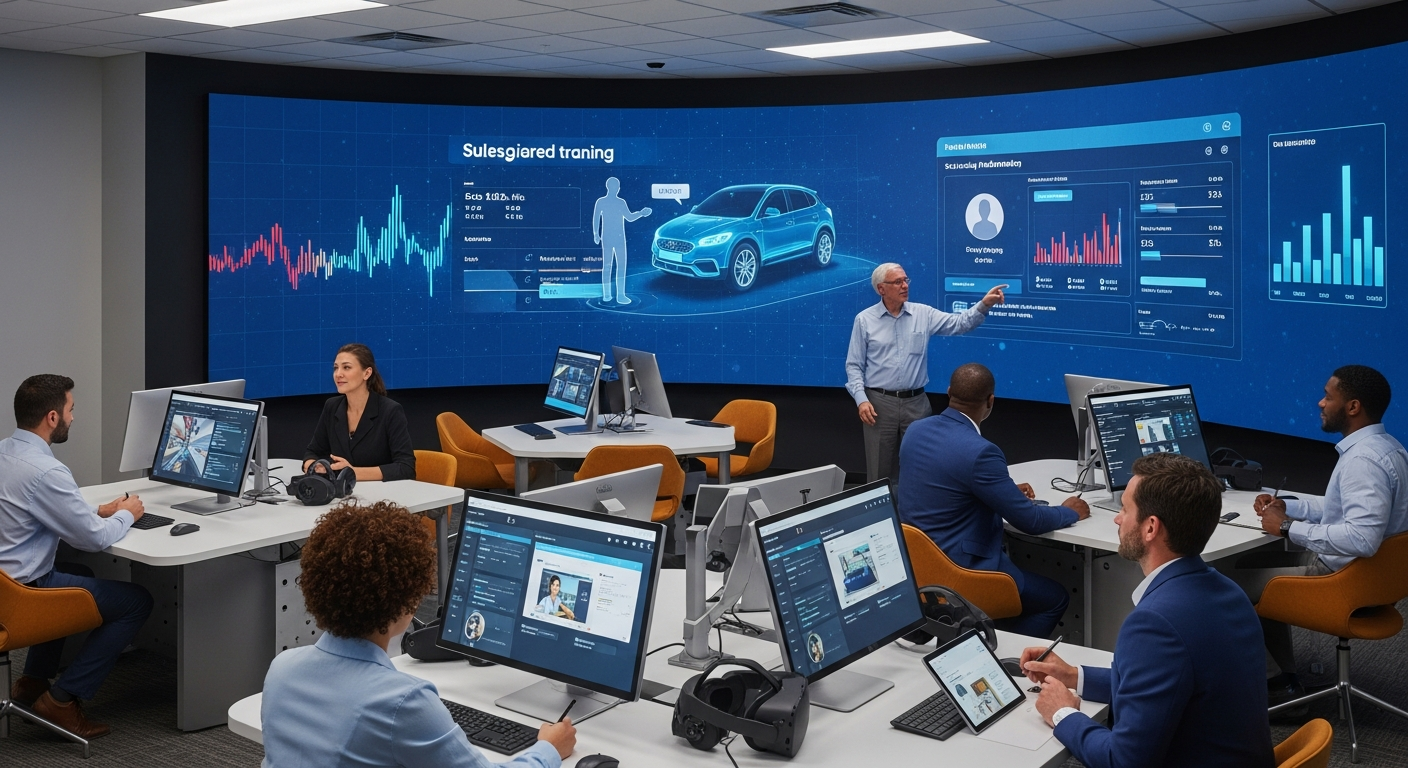
Strategic Workforce Development: Modernizing Large-Scale Automotive Sales Training
In the fast-paced world of automotive sales, where technology evolves daily, customer expectations soar, and competition is fierce, the traditional approach to sales training is simply no longer sufficient. For Vice Presidents, Directors, and Senior Managers of Learning & Development, the mandate is clear: transform sales training from a periodic event into a continuous, strategic workforce development initiative. This transformation is not merely about updating content; it's about adopting modern methodologies and leveraging advanced technology to create an engaging, effective, and scalable learning experience.
Large-scale automotive organizations face unique challenges. Training thousands of sales professionals across diverse dealerships, ensuring compliance with ever-changing regulations, and equipping teams with the skills to sell increasingly complex vehicles demands an innovative approach. The solution lies in embracing a dynamic learning ecosystem powered by a cutting-edge Microlearning LMS, a truly modern learning management system.
The Evolving Landscape of Automotive Sales
Today’s automotive customer arrives at the dealership armed with extensive research, often knowing more about specific models than some sales associates. The sales role has shifted from being a product gatekeeper to a trusted advisor, requiring deep product knowledge, empathy, digital fluency, and an understanding of financing and service packages. This shift necessitates a workforce that is not only highly skilled but also adaptable and continuously learning.
Challenges in Traditional Training
- Scalability Issues: Delivering consistent, high-quality training to a geographically dispersed sales force is a logistical nightmare.
- Engagement & Retention: Long, generic training sessions often lead to disengagement and poor knowledge retention.
- Relevance & Timeliness: Product updates, new features, and market trends emerge rapidly, making static training content quickly outdated.
- Cost & Time: Instructor-led, off-site training is expensive and takes valuable sales professionals off the floor.
- Measuring Impact: Difficulty in accurately tracking training effectiveness and its direct impact on sales performance.
Embracing Modern Learning Methodologies
To overcome these hurdles, L&D leaders must pivot towards methodologies that prioritize agility, engagement, personalization, and measurable outcomes. A comprehensive enterprise learning management solution is central to this shift.
Microlearning for Agility and Retention
In a world of short attention spans, Microlearning LMS delivers training in bite-sized, focused modules that are easy to consume and retain. For automotive sales, this means short videos on a specific vehicle feature, interactive quizzes on financing options, or quick simulations for handling customer objections. This approach allows sales professionals to access relevant information precisely when they need it, whether on the showroom floor or during a lunch break, reinforcing knowledge and improving recall.
The Power of Gamification
Injecting game-like elements into training can dramatically boost engagement and motivation. A Gamified LMS transforms learning into a competitive and rewarding experience. Sales teams can earn points for completing modules, compete on leaderboards for top performance in product knowledge, or unlock badges for mastering sales techniques. This not only makes learning fun but also fosters healthy competition and encourages continuous skill development, driving a culture of excellence across the entire sales organization.
Personalized Learning Paths with Adaptive Learning
Every salesperson has unique strengths and weaknesses. Generic training often leads to boredom for some and frustration for others. Adaptive Learning uses data to tailor learning paths to individual needs. An LMS with adaptive capabilities can assess a salesperson's existing knowledge and performance data, then recommend specific modules that address their skill gaps. This ensures that training is always relevant, efficient, and maximizes the return on investment for each learner, fostering genuine strategic workforce development.
Leveraging AI for Enhanced Sales Training
Artificial Intelligence is no longer a futuristic concept; it's a powerful tool available today to revolutionize how sales training is created, delivered, and optimized. An advanced learning content management system harnesses AI to push the boundaries of learning.
AI-Powered Content Creation and Delivery
Creating dynamic, up-to-date training content for a large sales force is a monumental task. An AI Powered Authoring Tool can significantly streamline this process. It can help generate microlearning modules from existing documents, suggest relevant content based on market trends, and even translate materials for diverse linguistic needs. This capability ensures that training content is always fresh, relevant, and accessible, significantly reducing development time and costs.
Q: How can we ensure our sales training content consistently appears in internal searches and is immediately relevant to a salesperson's specific question at the point of need?
A: By leveraging advanced content tagging, natural language processing, and smart search algorithms within a robust learning management system, training materials can be precisely indexed and retrieved. This ensures that when a sales professional types a query, whether about a new car feature or a financing option, the most accurate and up-to-date microlearning module or knowledge bite is presented instantly, enhancing on-demand support and performance.
Q: For a large automotive group operating across multiple regions, how can training be localized and made relevant to distinct market demands and customer demographics?
A: Modern learning platforms can utilize location-aware features and content segmentation. This allows for the automatic delivery of specific modules tailored to regional compliance, local market trends, or even unique cultural sales approaches. For instance, a salesperson in a metropolitan area might receive training on luxury vehicle customization, while a counterpart in a rural region focuses on utility vehicle sales strategies, all managed seamlessly through a central cloud based learning management system.
Q: What's the best way to proactively identify skill gaps in a large sales force and deliver targeted interventions before they impact sales performance?
A: Predictive analytics and machine learning algorithms within an enterprise learning management system are key. These tools analyze performance data, engagement metrics, and assessment results to identify emerging skill deficiencies across the team or within individual profiles. The system can then automatically recommend personalized learning paths or specific microlearning modules, ensuring timely upskilling and a continuously optimized sales force, transforming reactive training into proactive strategic workforce development.
Addressing Compliance and Risk
Compliance is non-negotiable in automotive sales, from financing regulations to data privacy and ethical sales practices. Failures can lead to hefty fines, reputational damage, and loss of consumer trust. Modern training must integrate compliance seamlessly.
Building a Culture of Compliance
Risk-focused Training, delivered through an intuitive learning management software, ensures that compliance is not just a checkbox exercise but an integral part of daily operations. Short, engaging modules can cover anti-money laundering, consumer protection laws, and fair lending practices. An effective LCMS (Learning Content Management System) allows L&D teams to track completion rates, demonstrate adherence to regulatory requirements, and quickly deploy updates when laws change. This proactive approach to training minimizes exposure to risk and builds a more trustworthy sales force.
The Strategic Imperative for L&D Leaders
For L&D VPs, Directors, and Managers, modernizing large-scale automotive sales training is a strategic imperative. It's about empowering your sales force, future-proofing your business, and directly contributing to the bottom line. The right learning management system is not just a tool; it's the backbone of your strategic workforce development initiative.
Choosing the Right Partner
When evaluating learning management solutions, consider a partner that understands the unique needs of large enterprises and the automotive sector. Look for an lms learning management system that offers a comprehensive suite of features, including microlearning, gamification, adaptive learning, and AI-powered capabilities. A robust LMS like MaxLearn LMS provides the infrastructure to not only train but to truly develop a high-performing, compliant, and agile sales organization.
Conclusion
Modernizing large-scale automotive sales training is a complex but rewarding endeavor. By embracing Microlearning LMS, gamification, adaptive learning, and AI-powered tools, L&D leaders can transform their training programs into strategic assets. This approach not only enhances salesperson knowledge and skills but also drives engagement, ensures compliance, and ultimately boosts sales performance and customer satisfaction. The time to revolutionize your automotive sales training is now, building a future-ready workforce for the challenges and opportunities ahead.


Comments
Post a Comment