How Do You Design a Gamified Training Program for Deskless Workers?
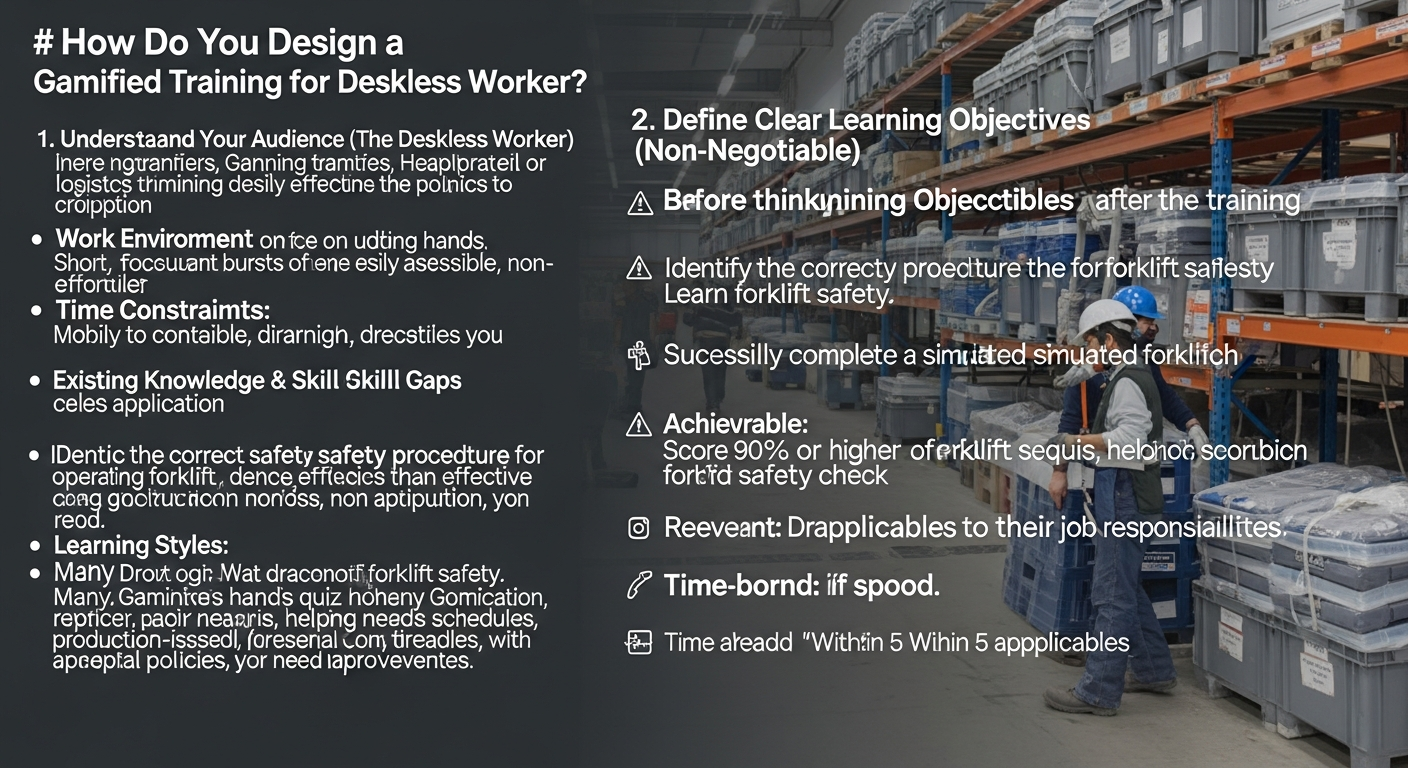
Unlocking Potential: Designing a Gamified Training Program for Deskless Workers
In today's dynamic business landscape, a significant portion of the global workforce operates beyond the confines of a traditional office desk. From the manufacturing floor to the retail storefront, from the oil rig to the hospital ward, these deskless workers are the backbone of many industries. Yet, developing engaging, effective, and scalable training programs for this segment presents unique challenges for L&D leaders. How do you reach employees constantly on the move, often with limited access to traditional training resources, and keep them motivated to learn? The answer increasingly lies in gamification, especially when powered by advanced learning technology.
For Vice Presidents, Directors, and Senior Managers in L&D, understanding how to harness the power of gamification is not just about keeping up with trends; it's about driving tangible business outcomes. It’s about ensuring compliance, boosting sales performance, enhancing customer service, and improving safety protocols across diverse sectors like Banking, Finance, Insurance, Retail, Pharma, Healthcare, Hospitality, Oil and Gas, and Mining.
Why Gamification is a Game-Changer for Deskless Training
Deskless workers often face unique training hurdles: irregular schedules, remote locations, device limitations, and the need for immediate, practical application of knowledge. Traditional long-form courses can be impractical and unengaging. This is where gamification shines. By integrating game-like elements into non-game contexts, it taps into intrinsic human motivators: achievement, competition, collaboration, and a sense of purpose.
- Increased Engagement: Gamified experiences are inherently more interesting than passive learning, capturing attention and encouraging active participation.
- Better Knowledge Retention: The iterative nature of games, combined with immediate feedback, helps solidify learning and improve recall.
- Practical Skill Development: Simulations and scenario-based challenges allow workers to practice skills in a low-stakes environment, mirroring real-world situations.
- Accessibility & Flexibility: Often delivered via mobile-first platforms, gamified training fits seamlessly into the fragmented schedules of deskless employees.
- Motivation & Morale: Recognition through points, badges, and leaderboards fosters a sense of accomplishment and healthy competition.
The Blueprint: Designing Your Gamified Training Program
Crafting an effective gamified training program for your deskless workforce requires strategic planning and an understanding of both instructional design principles and game mechanics. Here’s a step-by-step approach:
1. Understand Your Audience and Define Clear Objectives
Before designing any training, it's crucial to deeply understand your learners. What are their existing skill levels? What devices do they use? What are their daily work challenges? For a retail sales associate, the training might focus on product knowledge and customer interaction. For an oil rig worker, it could be critical safety procedures. Clearly define what employees should know or be able to do after completing the program. For instance, in healthcare, the objective might be to reduce medication errors by 15% through enhanced training on dispensing protocols. This initial step is paramount for any successful learning management system (LMS) deployment.
2. Select Compelling Gamification Elements
Choose game mechanics that align with your learning objectives and audience preferences. Common elements include:
- Points & Rewards: For completing modules, tasks, or achieving certain scores.
- Badges & Certificates: Visual recognition of achievements and mastery.
- Leaderboards: To foster healthy competition among individuals or teams.
- Quests & Challenges: Structured learning paths that guide learners through content.
- Storytelling: Creating a narrative around the learning content to make it more immersive.
- Levels & Progression: Allowing learners to advance as they master new skills.
- Virtual Currencies: Redeemable for virtual or real-world rewards.
3. Content Strategy: Embrace Microlearning
Deskless workers typically have limited time for training. This makes Microlearning LMS modules invaluable. Break down complex topics into short, digestible bursts (2-7 minutes) that can be consumed on the go. For compliance training in finance or insurance, this could mean short interactive quizzes on new regulations rather than lengthy documents. These bite-sized modules, when delivered through a robust learning content management system, are perfect for supporting gamified elements.
4. Leverage the Right Technology: A Powerful Gamified LMS
The success of your program heavily depends on the underlying technology. A modern, mobile-first Gamified LMS is essential. This learning management software should offer:
- Intuitive mobile access for all devices.
- Robust gamification features built-in.
- Analytics to track progress and identify areas for improvement.
- Seamless integration of various learning content types.
- Scalability for enterprise learning management needs.
5. Implement Adaptive Learning Paths
Every learner is unique. An Adaptive Learning system personalizes the training experience based on individual performance and needs. If an employee in the hospitality sector struggles with a customer service scenario, the system can automatically provide additional resources or practice exercises. This ensures that training is always relevant and efficient, minimizing time spent on already mastered topics and focusing on areas that require development. A sophisticated lms learning management system can dynamically adjust content, making the learning journey more efficient.
Integrating AI for Next-Generation Gamified Training
The advent of artificial intelligence (AI) is transforming how we approach learning and development, particularly for deskless teams.
How can technology personalize training for a diverse, geographically dispersed workforce?
AI-powered recommendation engines within a Microlearning LMS can analyze learner data to suggest relevant content, skill-building activities, and gamified challenges. This ensures that whether an employee is in a retail store in New York or a mining site in Australia, they receive training tailored to their role, skill gaps, and local compliance requirements. Such personalized learning management solutions enhance engagement by making training feel directly applicable to their day-to-day tasks.
What tools can help create engaging content quickly for various industry needs?
An AI Powered Authoring Tool can dramatically accelerate content development. Imagine generating interactive quizzes, simulations, or scenario-based games for sales training in retail or critical safety modules for oil and gas with just a few prompts. This not only saves time and resources but also ensures a consistent quality of learning content across the organization, making content management a breeze for any cloud based learning management system.
How can we proactively identify and mitigate training-related risks in high-stakes environments?
AI can analyze performance data from gamified modules to identify patterns and predict potential knowledge gaps or areas of high risk. This enables Risk-focused Training interventions. For instance, in pharma, AI could flag specific compliance areas where employees are consistently underperforming in gamified assessments, prompting targeted training to prevent costly errors. This predictive capability is a significant advantage of a modern learning management system (LMS).
Measuring Success and Continuous Improvement
A crucial aspect of any enterprise learning management strategy is measuring its impact. Your Gamified LMS should provide robust analytics. Track key metrics such as completion rates, engagement levels, quiz scores, time spent, and most importantly, how the training translates to real-world performance improvements. Are sales teams achieving higher targets? Has safety incident frequency decreased? Is compliance adherence stronger? Use this data to iterate and refine your gamified program, ensuring it remains effective and relevant.
Conclusion
Designing a gamified training program for deskless workers is a strategic imperative for L&D leaders looking to drive performance and engagement across their organizations. By understanding your audience, embracing microlearning and adaptive paths, and leveraging cutting-edge technology like a powerful Gamified LMS with AI capabilities, you can transform how your front-line teams learn and grow. Companies like MaxLearn LMS offer comprehensive learning management solutions that make these sophisticated strategies achievable and impactful. Invest in a learning management system that empowers your deskless workforce, and watch your business thrive.


Comments
Post a Comment