Gamified Employee Learning: Using Nudges, Badges, and Rewards to Drive Engagement
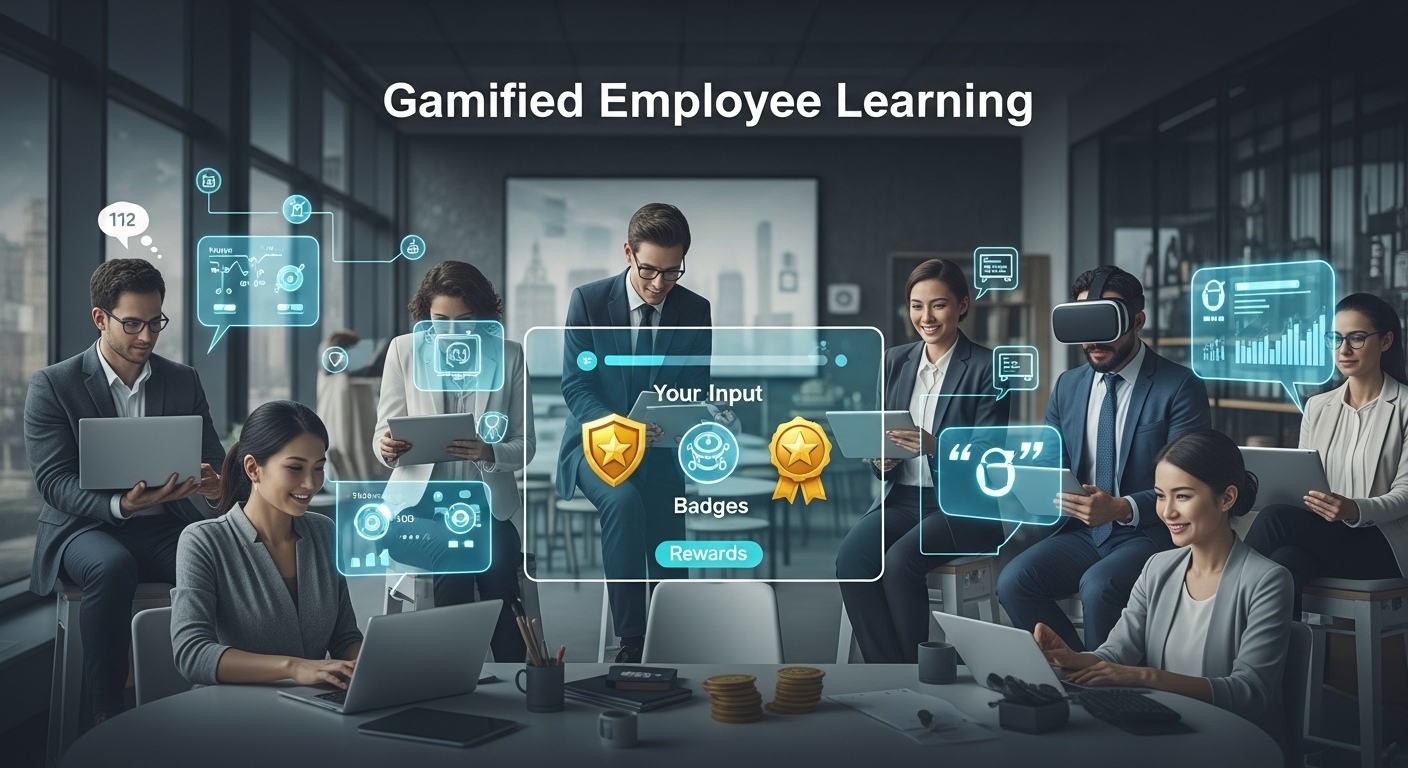
Gamified Employee Learning: Using Nudges, Badges, and Rewards to Drive Engagement
In today's fast-paced corporate environment, employee learning and development are more critical than ever. Yet, L&D professionals, from VPs to front-line managers, consistently grapple with a persistent challenge: how to genuinely engage learners and ensure knowledge retention. Traditional training methods often fall short, leading to low completion rates, passive participation, and a disconnect between learning initiatives and business outcomes. Enter gamified employee learning – a powerful strategy leveraging behavioral science and game mechanics to transform mundane training into an interactive, motivating, and highly effective experience.
This article delves into how targeted nudges, meaningful badges, and strategic rewards can revolutionize your organization's learning landscape, driving engagement and fostering a culture of continuous development across industries like Compliance, Sales, Banking, Finance, Insurance, Retail, Pharma, Healthcare, Hospitality, Oil and Gas, and Mining.
Understanding the Core Problem: The Engagement Gap
For too long, corporate learning has been perceived as a chore rather than an opportunity. Long, text-heavy modules, generic content, and a lack of immediate relevance often lead to learners zoning out, clicking through, or simply procrastinating. This engagement gap directly impacts skill development, compliance adherence, and ultimately, organizational performance. The challenge for L&D leaders is not just to deliver content, but to inspire a genuine desire to learn and master new skills.
The Power of Play: What is Gamified Learning?
Gamified learning is the strategic application of game-design elements and game principles in non-game contexts, specifically in learning environments. It's about tapping into inherent human motivators like achievement, competition, collaboration, and immediate feedback. By integrating elements typically found in games – points, levels, challenges, leaderboards, and rewards – gamification transforms the learning experience from passive consumption into active participation. It makes learning feel less like work and more like an engaging journey towards mastery.
Key Pillars of Gamified Learning
Nudges: Guiding Learners Subtly
Nudges are subtle prompts or interventions designed to influence behavior without restricting choices. In gamified learning, nudges act as gentle guides, keeping learners on track and encouraging desired actions. They are rooted in behavioral economics, steering learners towards positive engagement without overt pressure.
- Progress Bars: Visually showing completion percentage motivates learners to finish what they’ve started.
- Reminders & Notifications: Timely prompts for incomplete modules or upcoming challenges keep learning top-of-mind.
- "Recommended Next" Modules: Based on performance or interests, these personalized suggestions guide learners through relevant content, often powered by sophisticated algorithms found in a modern Microlearning LMS.
- Feedback Loops: Instant feedback on quizzes or activities helps learners understand their progress and areas for improvement.
By integrating intelligent nudges, organizations can subtly yet effectively increase course completion rates and encourage deeper interaction with learning content.
Badges: Recognizing Milestones
Badges are digital symbols of achievement, representing the completion of tasks, mastery of skills, or reaching specific milestones. They appeal to our innate desire for recognition and status. Unlike fleeting praise, badges offer persistent, visible proof of accomplishment.
- Skill Mastery Badges: Awarded for demonstrating proficiency in specific competencies, like "Advanced Data Security" in Banking or "Customer Service Excellence" in Retail.
- Module Completion Badges: Simple recognition for finishing a course or a series of lessons.
- Contribution Badges: For active participation in discussions, sharing insights, or helping peers.
- Expert Status Badges: Recognizing individuals who have completed advanced training paths or demonstrated exceptional knowledge in a specialized area, useful for Risk-focused Training in Compliance or Finance.
Badges foster a sense of pride and can be displayed on user profiles, leaderboards, or even integrated into internal social platforms, amplifying their impact and encouraging others to strive for similar achievements.
Rewards: Incentivizing Achievement
Rewards provide tangible or intangible incentives for learners, reinforcing desired behaviors and motivating them to achieve learning goals. Rewards can be both intrinsic and extrinsic.
- Points & Leaderboards: Accumulating points for completing activities and seeing one's rank against peers on a leaderboard taps into the competitive spirit. This is a core feature of any effective Gamified LMS.
- Virtual Currency: Earned for learning activities, which can then be "spent" on virtual items, custom avatars, or even small physical rewards.
- Unlockable Content: As learners progress, they gain access to advanced modules, bonus content, or exclusive resources.
- Real-world Incentives: While not always necessary, small, meaningful rewards like gift cards, extra PTO, or even public acknowledgment in company newsletters can be powerful motivators for critical training areas such as AI Powered Authoring Tool for Sales teams.
The key is to align rewards with learning objectives and ensure they genuinely motivate the target audience without undermining intrinsic motivation. A balanced approach often yields the best results.
Beyond the Basics: Advanced Gamification Strategies
While nudges, badges, and rewards form the bedrock, advanced strategies elevate the gamified learning experience:
- Challenges & Quests: Structuring learning into multi-step missions with a clear narrative provides purpose and progression.
- Storytelling & Narrative: Embedding learning within a compelling story makes content more memorable and immersive, particularly effective for complex topics in Pharma or Oil and Gas.
- Personalized Learning Paths: Leveraging data to offer tailored content and challenges based on a learner's role, existing knowledge, and performance ensures relevance and efficiency, a cornerstone of Adaptive Learning.
- Team-based Learning: Encouraging collaboration and healthy competition among teams can foster a supportive learning environment.
Implementing Gamification Effectively: A Strategic Approach
Successful gamification isn't just about adding points; it requires thoughtful strategy:
- Define Clear Learning Objectives: What knowledge or skills do you want learners to acquire? How will this impact business goals?
- Understand Your Audience: What motivates your employees? Tailor game mechanics to their preferences and demographic.
- Choose the Right Platform: A robust LMS or Learning content management system with built-in gamification features is crucial. Look for a learning management software that offers flexibility.
- Start Small and Iterate: Pilot gamified elements with a small group, gather feedback, and refine before a wider rollout.
- Measure and Optimize: Continuously track engagement rates, completion times, quiz scores, and ultimately, behavioral changes. Use data to refine your strategy.
Industry-Specific Applications
Gamified learning is versatile, offering immense value across diverse sectors:
- Compliance (Banking, Finance, Insurance): Transform dry regulatory training into interactive scenarios with immediate feedback, ensuring critical knowledge retention and mitigating risk.
- Sales & Retail: Drive product knowledge, sales techniques, and customer service excellence through competitive challenges, leaderboards, and skill badges.
- Pharma & Healthcare: Gamify complex medical protocols, drug information, and patient care procedures, making essential training engaging and easily digestible.
- Hospitality: Enhance customer experience training, operational procedures, and brand standards with role-playing simulations and performance-based rewards.
- Oil and Gas & Mining: Critical safety training, equipment operation, and emergency procedures can be gamified using simulations and scenario-based learning to build muscle memory and decision-making skills.
The Role of Technology: A Modern MaxLearn LMS
Implementing effective gamified learning requires a powerful technological backbone. A modern learning management system (LMS) is essential, especially one designed for dynamic, engaging content. Look for learning management solutions that offer built-in gamification features, robust analytics, and seamless content delivery. A cloud based learning management system provides accessibility and scalability for global teams, while an enterprise learning management solution ensures integration with existing systems. Platforms like MaxLearn LMS provide the necessary tools, combining microlearning with gamification to create a truly impactful learning experience. Consider the benefits of an LCMS that supports dynamic content creation and management for these interactive elements.
Questions and Answers for Enhanced Learning Programs
L&D leaders often seek innovative ways to elevate their training initiatives. Here are some common queries addressed:
Q: How can organizations ensure learning experiences are tailored to individual employee needs across diverse teams?
A: By leveraging smart algorithms within a learning platform, content can be dynamically adapted based on a learner's role, previous performance, and stated preferences. This ensures that each employee receives relevant modules and challenges, optimizing their personal development path and making learning more meaningful and efficient for their specific journey.
Q: What strategies can improve active participation and knowledge retention among a widely distributed workforce?
A: Engaging a dispersed workforce requires accessible, interactive, and motivating content. Implementing elements like real-time leaderboards, team-based challenges, and consistent digital recognition (badges) fosters healthy competition and collaboration. Additionally, short, focused microlearning modules delivered via a responsive learning system ensure that training is digestible and can be completed anytime, anywhere, significantly boosting participation and recall.
Q: In what ways can intelligent systems contribute to the overall effectiveness and measurement of training programs?
A: Intelligent systems within learning platforms can track a multitude of data points, from completion rates and quiz scores to time spent on modules and interaction patterns. This data provides deep insights into learning effectiveness, identifying knowledge gaps and content areas that need improvement. Automated feedback mechanisms and predictive analytics can also guide learners, personalize content recommendations, and forecast future training needs, leading to more data-driven and impactful learning strategies.
Conclusion
Gamified employee learning, through the strategic application of nudges, badges, and rewards, offers a compelling solution to the perennial challenge of learner engagement. It transforms passive training into an active, enjoyable, and results-driven experience. For VPs, Directors, and Managers of L&D, embracing gamification isn't just about adopting a trend; it's about investing in a proven methodology that drives higher completion rates, deeper knowledge retention, and ultimately, a more skilled, motivated, and productive workforce ready to tackle the complexities of their respective industries. Explore how a modern, gamified learning platform can help your organization unlock its full potential.


Comments
Post a Comment