Enhancing Sales Playbook Adoption Through Daily Micro-Coaching Challenges
Enhancing Sales Playbook Adoption Through Daily Micro-Coaching Challenges
In the dynamic world of sales, a robust sales playbook is often hailed as the holy grail – a comprehensive guide designed to equip teams with the strategies, scripts, and product knowledge needed to close deals effectively. Yet, for many Learning & Development (L&D) leaders, the reality is starkly different: playbooks, despite significant investment in their creation, often gather digital dust, failing to translate into consistent, high-impact sales performance. The challenge isn't the playbook itself, but rather its adoption and integration into the daily workflow of busy sales professionals.
This article explores a powerful, modern solution to this pervasive problem: daily micro-coaching challenges. We’ll delve into how this innovative approach, particularly when supercharged by artificial intelligence, can revolutionize how your sales teams engage with, learn from, and ultimately master their sales playbooks, leading to measurable improvements in sales outcomes and a stronger return on your training investments.
The Challenge: Bridging the Playbook-Performance Gap
Sales playbooks are critical tools, serving as the blueprint for best practices, objection handling, competitive positioning, and compliance requirements. However, traditional rollout strategies often fall short:
- Information Overload: Playbooks can be lengthy, making them daunting for sales reps to digest and recall when it matters most – in front of a customer.
- Lack of Relevance: Generic training often fails to resonate with individual sales reps' specific needs, territories, or product lines.
- Poor Retention: The "forgetting curve" is a constant battle. Without regular reinforcement, even the most impactful training fades.
- Time Constraints: Sales teams are driven by targets and appointments, leaving little time for extensive, formal training sessions.
- Inconsistent Application: Even when understood, applying playbook strategies consistently requires practice, feedback, and repetition.
These hurdles highlight the need for a training methodology that is not only accessible and engaging but also deeply embedded in the daily fabric of a sales professional's routine.
Introducing Daily Micro-Coaching Challenges
Enter daily micro-coaching challenges – a game-changing approach that breaks down complex playbook content into bite-sized, actionable tasks delivered regularly. Instead of overwhelming reps with a single, massive training dump, this method offers continuous, focused opportunities for learning and application.
The Power of Microlearning
At its core, daily micro-coaching leverages the principles of microlearning. These challenges are typically 3-5 minute activities that might include:
- A short video explaining a specific sales technique.
- A quick quiz on product features or compliance regulations.
- A scenario-based exercise requiring a specific objection handling script.
- A prompt to practice a pitch with a peer or manager.
- A brief reflection on a recent sales call applying a playbook strategy.
Delivered via a robust Microlearning LMS, these challenges are designed for immediate consumption and application, ensuring that sales professionals can absorb and practice critical information without disrupting their demanding schedules. This approach enhances knowledge retention and encourages immediate behavioral change.
Gamification and Engagement
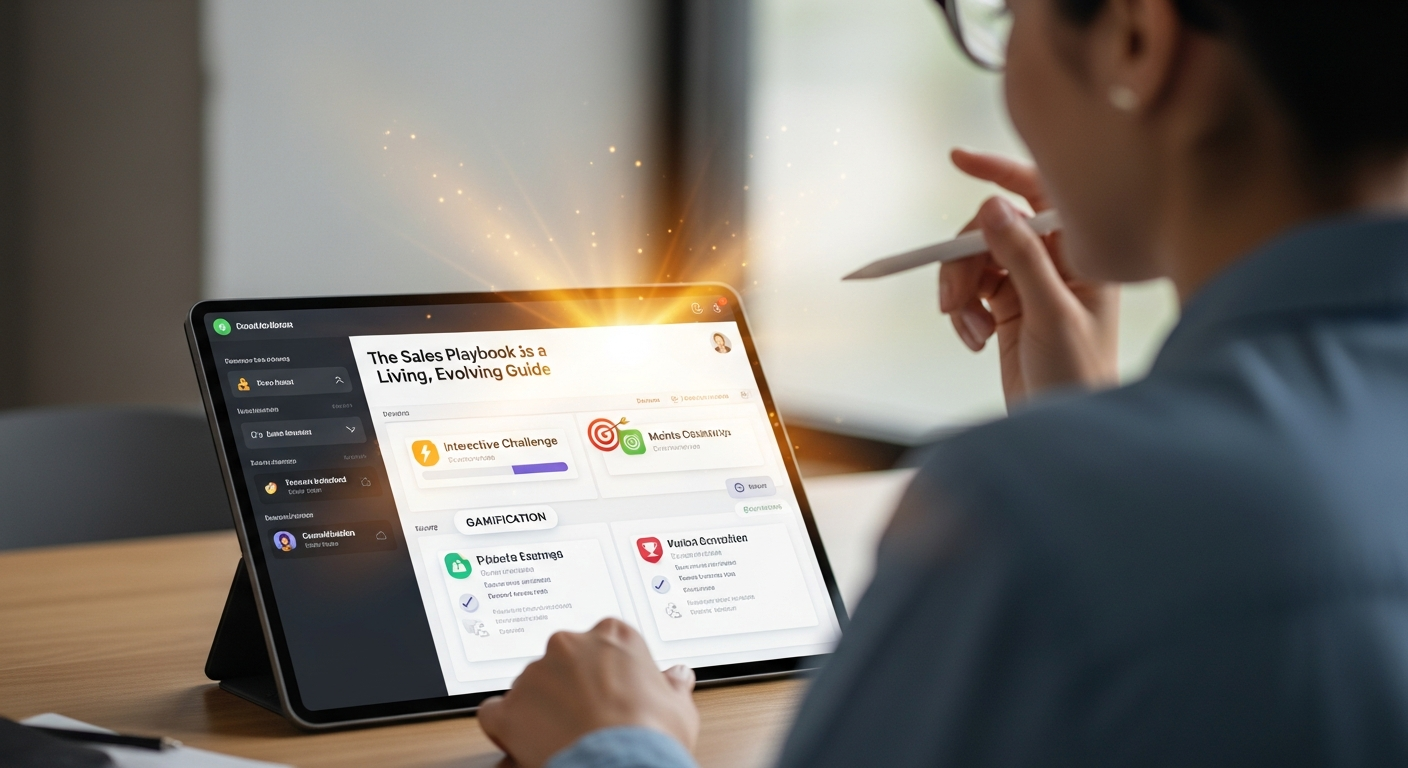
To further boost adoption, these challenges can be integrated into a Gamified LMS. By incorporating elements like points, badges, leaderboards, and friendly competition, daily micro-coaching transforms routine learning into an engaging and motivating experience. This not only makes learning enjoyable but also fosters a culture of continuous improvement and peer learning within the sales team.
AI's Role in Supercharging Micro-Coaching
While micro-coaching challenges are effective on their own, integrating artificial intelligence elevates them to an unprecedented level of personalization and impact. AI acts as a smart engine behind your learning management system, optimizing every aspect of the learning journey.
Personalized Learning Journeys
AI can analyze a sales professional's performance data, skill gaps, learning history, and even their preferred learning styles to deliver truly personalized daily challenges. This Adaptive Learning approach ensures that each rep receives content most relevant to their individual development needs, making the learning experience highly efficient and effective. For example, a rep struggling with closing techniques might receive more challenges focused on negotiation, while another might get more product knowledge quizzes.
Contextual Relevance and Adaptive Feedback
Imagine challenges that adapt in real-time based on current market conditions, new product launches, or even competitor moves. An AI Powered Authoring Tool can dynamically generate or recommend relevant content. Furthermore, AI can provide instant, intelligent feedback on responses to challenge questions or simulated scenarios. This immediate feedback loop is crucial for reinforcing correct behaviors and correcting misunderstandings promptly, reducing the need for constant managerial intervention.
This also extends to Risk-focused Training, where AI can identify potential compliance gaps or high-risk sales scenarios and push targeted challenges to mitigate those risks proactively across various industries like Banking, Finance, Insurance, and Pharma.
Measuring Impact and Iteration
AI's analytical capabilities allow L&D leaders to track the effectiveness of each challenge with unparalleled precision. By correlating challenge completion rates and performance with actual sales metrics (e.g., conversion rates, average deal size, sales cycle length), AI provides actionable insights. This data-driven approach allows for continuous improvement, enabling L&D teams to refine content, adjust difficulty, and optimize the overall micro-coaching strategy for maximum impact. Such insights are invaluable for any enterprise learning management initiative.
Implementing Daily Micro-Coaching: A Practical Guide
For L&D managers, implementing a daily micro-coaching challenge program requires thoughtful planning:
Setting Clear Objectives
Define what success looks like. Is it improved product knowledge, better objection handling, or increased adherence to a specific sales process? Align challenges directly with these measurable goals.
Content Curation and Delivery
Break down your existing sales playbook into micro-content. Utilize an AI Powered Authoring Tool to quickly create engaging quizzes, short videos, and scenario-based questions. Ensure the content is relevant to the day-to-day activities of your sales team, whether they are in Retail, Healthcare, or Oil and Gas.
Integrating with Your LMS
A modern learning management software or cloud based learning management system is essential for delivering, tracking, and managing these challenges. Look for an LMS learning management system that supports microlearning, gamification, and AI integration for optimal results. A robust learning content management system (LCMS) like MaxLearn LMS will facilitate seamless content delivery and management.
Fostering a Coaching Culture
Micro-coaching isn't just about automated challenges; it also encourages managers to engage in more frequent, focused coaching conversations. The data from challenges can provide managers with specific talking points for one-on-one coaching sessions.
Benefits for L&D Leaders
Adopting daily micro-coaching challenges, especially with AI integration, offers significant advantages for L&D leaders:
Increased ROI on Training
By ensuring higher adoption and retention of sales playbook knowledge, your investment in training translates directly into improved sales performance and reduced ramp-up time for new hires.
Enhanced Sales Performance
Consistent reinforcement of best practices leads to more confident, competent, and ultimately, more effective sales teams.
Scalability and Consistency
AI-driven micro-coaching provides a scalable solution for training large, distributed sales forces while ensuring a consistent, high-quality learning experience for everyone, from Hospitality to Mining sectors.
Frequently Asked Questions: Leveraging Intelligence for Sales Training
L&D professionals often inquire about the practical applications of intelligent systems in sales education. Here are some common questions and insights:
How can smart algorithms enhance sales training relevance for specific customer interactions?
Intelligent systems analyze vast amounts of sales data, including customer profiles, past interactions, product performance, and market trends. They use this analysis to dynamically recommend daily challenges that are hyper-relevant to a salesperson's current opportunities or specific client needs. For instance, before a meeting with a finance sector client, the system might push a challenge on compliance regulations or sector-specific product benefits, making the training immediately applicable and impactful.
What are the benefits of using intelligent systems to tailor sales coaching across diverse regions?
Intelligent platforms can adapt training content and challenges based on geographical nuances, local market conditions, cultural sensitivities, and regional regulatory frameworks. For a sales team operating across different countries or states, the system can automatically adjust product positioning, legal disclaimers, or even communication styles within micro-challenges. This ensures that training is not only relevant but also compliant and effective for each specific territory, improving local market penetration and reducing regional sales errors.
How do intelligent learning platforms help individual sales professionals master complex product information?
Intelligent learning platforms excel at identifying individual knowledge gaps and learning preferences. By continuously assessing a salesperson's performance on challenges and actual sales outcomes, the system can pinpoint areas where they struggle with complex product details. It then personalizes the learning path, delivering targeted micro-challenges that break down complex information into manageable parts, using varied formats (e.g., simulations, interactive diagrams, case studies) until mastery is achieved. This ensures that each professional gains a deep and lasting understanding of even the most intricate product portfolios.
The future of sales training lies in personalized, continuous, and intelligent reinforcement. By embracing daily micro-coaching challenges powered by AI within a modern learning management solutions framework, L&D leaders can transform their sales playbooks from static documents into living, breathing tools that actively drive performance and revenue. It's time to move beyond traditional training and empower your sales teams with the knowledge and confidence they need, exactly when they need it.
Leverage the power of MaxLearn LMS to implement your next-generation sales training program and watch your sales playbook adoption soar.


Comments
Post a Comment