5 Easy Ways to Game-ify Your Sales Team’s Weekly Training Routine
Unleash Potential: 5 Easy Ways to Game-ify Your Sales Team’s Weekly Training Routine
In today's fast-paced business environment, maintaining a sharp, motivated, and high-performing sales team is paramount. Yet, the traditional weekly training routine—often a series of lectures, dull presentations, or dry compliance modules—can struggle to capture attention and drive genuine knowledge retention. For Vice Presidents, Directors, and Managers of Learning & Development, the challenge is clear: how do we transform obligatory training into an engaging, impactful experience that directly correlates with improved sales performance?
The answer lies in gamification. By integrating game-like elements into your sales training, you can significantly boost engagement, motivation, and learning outcomes across diverse industries, from Banking and Finance to Pharma, Healthcare, and Oil and Gas. Gamification isn't just about making training "fun"; it's about leveraging innate human desires for achievement, competition, and social interaction to create a more effective learning journey. It transforms passive listeners into active participants, driving better understanding and application of critical sales skills and compliance knowledge. Imagine your sales team looking forward to their training sessions, eager to compete, learn, and improve – that's the power of a Gamified LMS.
Why Gamification is a Game-Changer for Sales Training
Sales professionals thrive on targets, competition, and rewards. Gamification naturally aligns with this mindset, making it an ideal strategy for sales enablement. It creates a dynamic learning environment where mistakes are opportunities for growth, and successes are celebrated, reinforcing positive behaviors. A robust Microlearning LMS can serve as the backbone for such an initiative, delivering bite-sized, relevant content that fits perfectly with gamified challenges.
Beyond engagement, gamification offers tangible benefits:
- Increased Knowledge Retention: Active participation through games leads to deeper understanding and longer-lasting memory of concepts.
- Enhanced Skill Development: Repeated practice in a low-stakes, gamified environment helps hone crucial sales skills like negotiation, objection handling, and product knowledge.
- Improved Motivation & Morale: Recognition, rewards, and friendly competition energize the team, reducing the perception of training as a chore.
- Valuable Performance Insights: Game data can provide L&D leaders with analytics on individual and team strengths and weaknesses, informing future training needs.
- Better Application of Learning: When training mimics real-world scenarios through gamification, learners are better prepared to apply what they've learned on the job.
A comprehensive learning management system (LMS) is essential for implementing these strategies. An enterprise learning management solution provides the infrastructure to deploy interactive content, track progress, and manage the entire learning ecosystem. This is where an advanced AI Powered Authoring Tool can be invaluable, allowing L&D teams to rapidly create engaging, gamified content tailored to specific sales challenges or regulatory requirements, such as Risk-focused Training in compliance-heavy industries.
5 Easy Ways to Game-ify Your Sales Team’s Weekly Training Routine
Here are practical strategies to inject excitement and effectiveness into your sales team's weekly training, leveraging a modern learning management system (LMS) or learning content management system (LCMS).
1. Points, Badges, and Leaderboards (PBLs)
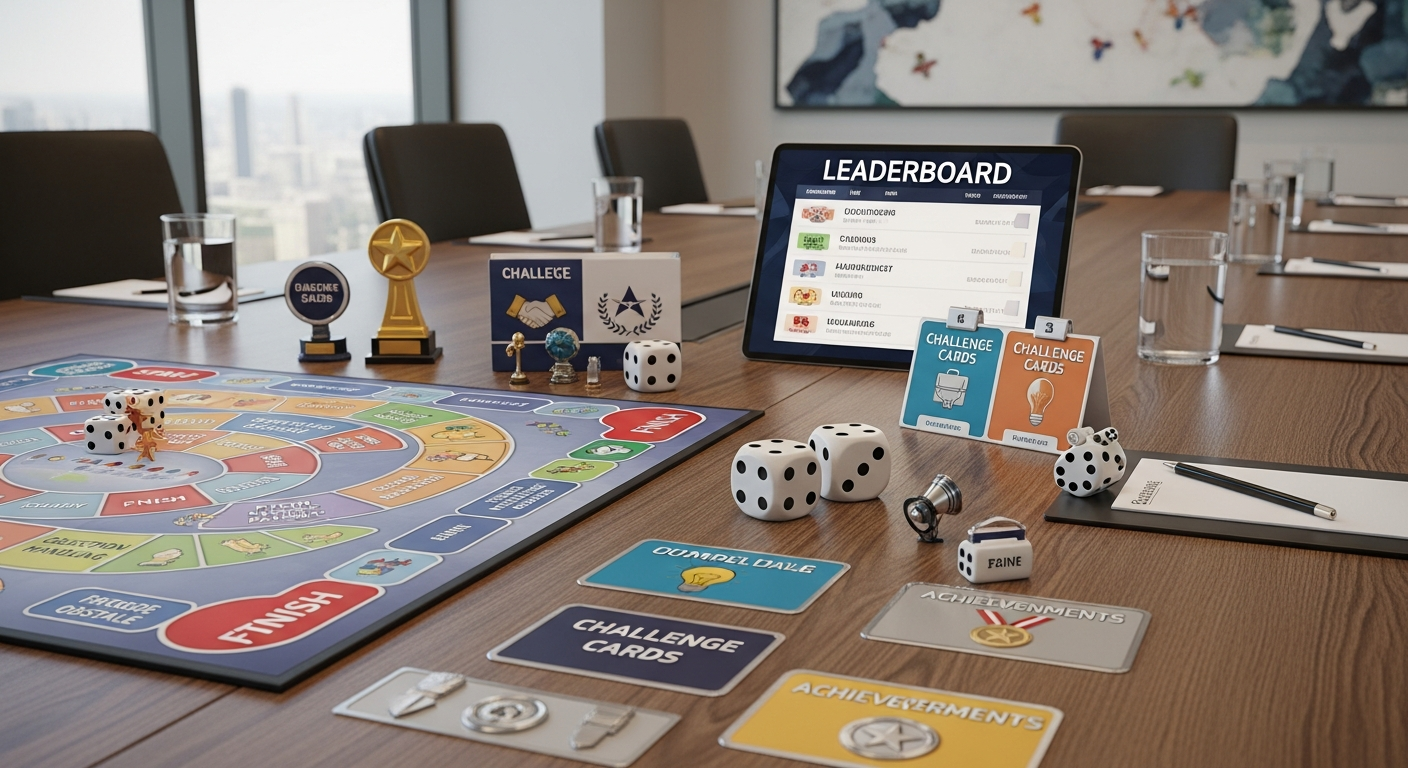
This is the cornerstone of most gamification strategies. Assign points for completing modules, participating in discussions, answering questions correctly, or even for creative input during live sessions. Award digital badges for mastering specific product lines, achieving certain sales competencies, or completing a series of compliance courses. Display these achievements on a visible leaderboard. This creates a clear progression path and fosters healthy competition.
- Implementation: Most cloud based learning management system solutions offer built-in PBL features. Ensure points are tied to meaningful learning objectives, not just participation.
- Example: "Top Deal Closer Badge" for acing a negotiation simulation, or points for completing modules on new financial products.
2. Scenario-Based Challenges & Simulations
Move beyond theoretical knowledge. Create interactive scenarios where sales reps must make decisions, react to customer objections, or navigate complex sales processes. These can range from simple multiple-choice branching scenarios to sophisticated virtual simulations, all manageable within a robust learning management software. The outcome of their choices determines their "score" or progress.
- Implementation: Utilize a powerful Adaptive Learning platform that can adjust the complexity of scenarios based on a learner's previous performance.
- Example: A simulation where a sales rep has to pitch a new insurance product, handle a client's specific concerns, and close the deal, with real-time feedback on their choices.
3. Role-Playing with a Twist
Role-playing is a sales training staple, but it can often feel awkward or ineffective. Gamify it by introducing specific objectives, scoring criteria, and even "wild card" elements. Assign roles with hidden agendas or introduce unexpected challenges. Use video recording features within your LMS learning management system to allow peer review and self-assessment, turning feedback into a game element.
- Implementation: Develop clear rubrics for scoring performance in role-play scenarios. Offer bonus points for creative solutions or successful handling of difficult objections.
- Example: Sales reps earn points for identifying client needs, articulating product benefits, and overcoming a surprise objection (e.g., "I need to think about it for three months").
4. Rapid-Fire Quizzes & Knowledge Checks
Transform standard quizzes into engaging contests. Implement timed quizzes, "Jeopardy!"-style games, or "Who Wants to Be a Millionaire?" formats. These quick, competitive checks of understanding are perfect for reinforcing product features, compliance regulations, or market trends. Instant feedback is key, turning a correct answer into an immediate reward.
- Implementation: Integrate these rapid-fire challenges into your weekly schedule using a cloud based learning management system. They work exceptionally well as brief, energizing starts or ends to a training session.
- Example: A 5-minute quiz on new retail sales protocols, with the fastest correct completion earning bonus points.
5. Team vs. Team Competitions
Foster a sense of camaraderie and collective achievement by pitting teams against each other. Teams can compete to complete a series of modules, achieve the highest average score on a simulation, or collaboratively solve a complex case study. This taps into the power of social learning and peer support, crucial for any enterprise learning management initiative.
- Implementation: Design team-based challenges that encourage collaboration, communication, and shared problem-solving. A learning management solution that supports group assignments is ideal.
- Example: Divisions compete to see which team can achieve 100% compliance training completion fastest, or which team can design the most compelling mock sales presentation.
Insights from Digital Intelligence for Learning
As L&D professionals embrace more sophisticated learning management solutions, questions often arise about optimizing these platforms for maximum impact.
How can modern learning platforms elevate engagement in sales training?
Modern learning management systems, especially those incorporating elements of an LMS, provide interactive tools that transform passive learning into active engagement. Features like gamification, interactive simulations, discussion forums, and personalized learning paths keep sales professionals invested. The ability to access learning content on demand, often through a mobile-friendly interface, also significantly boosts convenience and participation rates, fostering a culture of continuous learning and improvement in crucial areas like financial product knowledge or healthcare regulations.
What digital strategies are most effective for training a distributed sales workforce?
For sales teams spread across different regions or even continents, digital strategies are indispensable. Leveraging a robust learning management system (LMS) with strong online delivery capabilities is key. This allows for standardized training content, accessible anywhere, anytime. Incorporating collaborative features, virtual role-playing, and team-based gamified challenges helps bridge geographical gaps, fostering a sense of community and healthy competition, irrespective of physical location. Ensuring content is modular and culturally relevant also enhances its impact for a diverse global team.
Which innovative technologies are transforming corporate learning for sales professionals?
Beyond traditional learning management software, several innovative technologies are reshaping corporate learning. Artificial intelligence (AI) is at the forefront, powering AI Powered Authoring Tools that can rapidly create dynamic content and personalize learning paths. Virtual Reality (VR) and Augmented Reality (AR) are enabling immersive simulations for complex sales scenarios or product demonstrations. Data analytics, integrated into modern learning management solutions, provides deep insights into learning effectiveness and performance, allowing L&D managers to refine strategies continuously and ensure that the learning content management system (LCMS) truly meets evolving business needs.
Conclusion
Transforming your sales team's weekly training routine doesn't require a complete overhaul; it requires a strategic infusion of gamification. By adopting points, badges, leaderboards, scenario-based challenges, innovative role-playing, rapid quizzes, and team competitions, you can create a vibrant, results-driven learning environment. A robust learning management system (LMS) like MaxLearn LMS is the enabling technology, offering the tools to implement these strategies seamlessly. Invest in gamified learning, and watch your sales team not only meet their targets but exceed them, driven by newfound motivation and a love for learning.


Comments
Post a Comment