10 Critical Compliance Training Metrics Every HR Leader Must Track
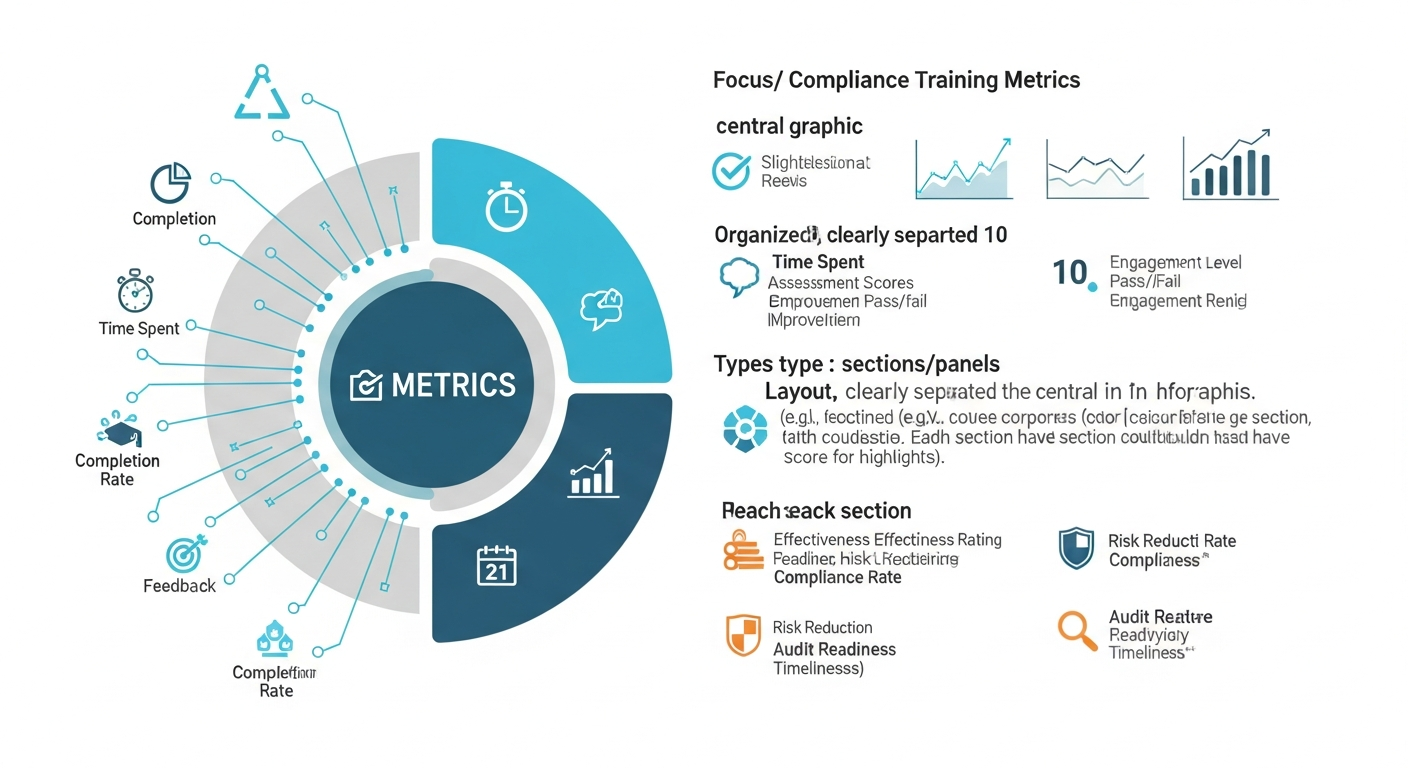
10 Critical Compliance Training Metrics Every HR Leader Must Track
In today's dynamic and highly regulated business environment, compliance training isn't just a checkbox exercise – it's a strategic imperative. From the financial sector to healthcare, manufacturing, and retail, organizations face an ever-growing labyrinth of regulations. Failure to comply can lead to hefty fines, reputational damage, and even criminal charges. For HR and L&D leaders, ensuring a compliant workforce is paramount, and the key to demonstrating effectiveness lies in robust data tracking.
Simply delivering training isn't enough. To truly understand its impact, mitigate risks, and optimize your strategy, you need to move beyond completion rates and delve into meaningful metrics. A comprehensive Microlearning LMS or a powerful learning management system provides the tools to capture this crucial data. This article will explore 10 critical compliance training metrics every HR leader must track to build a resilient, compliant, and high-performing organization.
The Imperative of Data-Driven Compliance
Why is tracking these metrics so crucial? Consider the complex regulatory landscapes in banking, pharma, or oil and gas. A single non-compliance incident can cost millions. Effective Risk-focused Training, supported by insightful metrics, allows leaders to:
- Identify weaknesses before they become liabilities.
- Demonstrate due diligence to auditors and regulators.
- Justify training investments by proving ROI.
- Continuously improve training programs for maximum effectiveness.
- Foster a culture of compliance throughout the enterprise.
Modern learning management solutions, especially a sophisticated cloud based learning management system, offer the functionalities required to meticulously track these vital data points across an entire enterprise learning management ecosystem.
10 Critical Compliance Training Metrics to Master
1. Training Completion Rate
This foundational metric indicates the percentage of employees who have successfully completed assigned compliance training modules. While basic, it’s the first step in assessing reach. A low completion rate signals potential issues with accessibility, relevance, or workload. Utilize your LMS to set clear deadlines and send automated reminders to boost these numbers.
Question for deeper insight: How can intelligent analytics predict which employee groups are most likely to miss deadlines for critical compliance training, allowing for proactive intervention?
2. Assessment Pass Rates & Scores
Beyond just completing a module, did employees actually grasp the content? Pass rates on quizzes and final assessments provide objective evidence of knowledge acquisition. Low scores may indicate poorly designed training content, a lack of engagement, or a disconnect between training and real-world application.
- Track average scores per module.
- Identify areas of common struggle.
- Analyze individual performance for targeted remediation.
An Gamified LMS can significantly improve engagement and retention, leading to higher pass rates.
3. Time to Completion
This metric measures how long it takes employees to finish their compliance training. While some variation is expected, unusually long times could suggest difficulty with the material, poor course design, or technical issues. Conversely, extremely short times might indicate employees rushing through without proper engagement.
Question for deeper insight: What methods can automated content review systems use to flag training modules where average completion times deviate significantly from expected norms, signaling a need for content optimization?
4. Employee Engagement & Satisfaction
Compliance training can often be perceived as dry or tedious. Tracking engagement through survey results, feedback forms, and even module interaction data (e.g., time spent on optional resources, participation in discussions) is vital. High satisfaction correlates with better knowledge retention and application.
- Post-training surveys (NPS, satisfaction scores).
- Usage statistics for optional resources.
- Qualitative feedback on course relevance and format.
5. Knowledge Retention Over Time
Did the knowledge stick? This is arguably one of the most important metrics. Short-term assessments are good, but follow-up quizzes weeks or months later reveal true retention. A strong Adaptive Learning strategy, often involving spaced repetition and microlearning, can dramatically improve retention.
Question for deeper insight: How can machine learning algorithms analyze individual learning patterns to predict knowledge decay for specific compliance topics and automatically recommend timely refreshers?
6. Compliance Incident Rates (Pre/Post Training)
The ultimate goal of compliance training is to reduce non-compliant behavior. Track incident rates, violations, or audit findings before and after training initiatives. A measurable decrease indicates the training is having its intended real-world impact.
- Compare incident data from previous periods.
- Segment data by department, region, or specific regulation.
7. Audit Findings & Corrective Actions
Regular internal and external audits are a fact of life for many industries. Track any findings directly related to training gaps or a lack of employee understanding. This provides direct evidence of where your training programs might be falling short and where immediate improvements are needed.
Question for deeper insight: How can sophisticated analytical platforms cross-reference audit reports with employee training records to identify systemic vulnerabilities in compliance readiness?
8. Cost of Training vs. Cost of Non-Compliance
This metric demonstrates the ROI of your compliance training program. Compare the total investment in training (course development, LMS costs, employee time) against the potential costs of non-compliance (fines, legal fees, reputational damage, lost business). This helps justify budgets and prove the value of your learning content management system.
Question for deeper insight: What quantitative models can intelligent systems employ to project the return on investment for proposed compliance training interventions by weighing potential risk reduction against program costs?
9. Feedback & Improvement Areas
Beyond quantitative scores, qualitative feedback from employees, managers, and even legal teams is invaluable. What content did they find most helpful? What topics need more clarification? What format works best? This continuous feedback loop is crucial for evolving your enterprise learning management system content.
An AI Powered Authoring Tool can help in rapidly updating and iterating training content based on this feedback.
10. Manager & Peer Observation of Behavioral Change
While harder to quantify, observing actual behavioral changes on the job is a powerful indicator of training effectiveness. HR leaders can facilitate this through structured feedback mechanisms for managers and peers. Are employees consistently applying the learned compliance protocols in their daily tasks?
Question for deeper insight: How can digital platforms facilitate anonymous, structured peer and manager feedback on observed compliance behaviors, thereby providing a more holistic view of training efficacy?
Leveraging Technology for Superior Tracking
Tracking these metrics manually is an arduous, if not impossible, task, especially for large organizations. This is where a robust learning management system, like MaxLearn LMS, becomes indispensable. A modern LMS provides:
- Centralized data collection for all training activities.
- Automated reporting and dashboards for real-time insights.
- Integration capabilities with HRIS and other business systems for holistic data analysis.
- Scalability to manage compliance training across global workforces.
A good learning management software serves not just as a delivery mechanism but as a powerful analytical engine for your compliance strategy. With the right learning management system in place, HR and L&D teams can transform compliance from a reactive burden into a proactive strategic advantage.
Conclusion
In the complex world of modern business, effective compliance training is non-negotiable. By meticulously tracking these 10 critical metrics, HR leaders can move beyond simple adherence and build truly impactful programs. A sophisticated LMS, acting as a comprehensive learning content management system, is your partner in this endeavor, providing the data, insights, and automation needed to safeguard your organization against risk, foster a culture of integrity, and drive sustainable growth. Embrace data-driven compliance, and position your organization for success in an ever-evolving regulatory landscape.


Comments
Post a Comment