What is Microlearning and How Does It Improve Corporate Compliance?
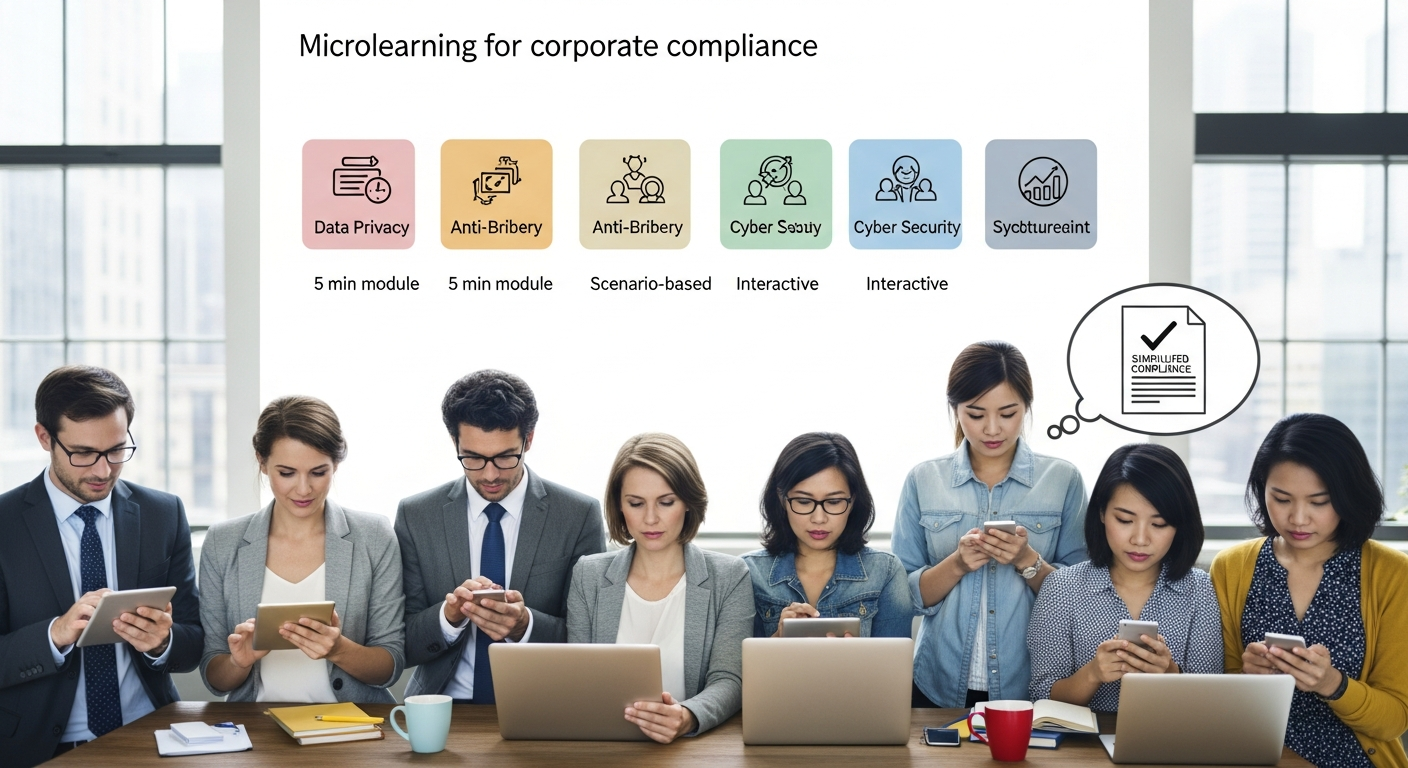
What is Microlearning and How Does It Improve Corporate Compliance?
In today's fast-paced corporate world, navigating the complex landscape of regulatory compliance is a formidable challenge. For Vice Presidents, Directors, and Managers in Learning & Development (L&D), ensuring that all employees, from new hires to seasoned executives, are consistently aware of and adhere to industry regulations, internal policies, and legal frameworks is paramount. Traditional, lengthy training sessions often fall short, struggling with engagement, retention, and scalability across diverse industries like Banking, Pharma, Retail, and Oil & Gas. This is where microlearning emerges not just as a trend, but as a strategic imperative, revolutionizing how organizations approach corporate compliance.
What is Microlearning?
Microlearning is an approach to learning that delivers content in small, focused bursts, typically lasting anywhere from 2 to 10 minutes. Unlike traditional, hour-long modules or multi-day workshops, microlearning breaks down complex topics into digestible, self-contained units. These bite-sized lessons can take many forms, including short videos, interactive quizzes, infographics, quick simulations, or brief articles, all accessible on-demand.
Key characteristics of microlearning include:
- Conciseness: Each module addresses a single learning objective.
- Focus: Eliminates extraneous information, getting straight to the point.
- Accessibility: Available anytime, anywhere, often via mobile devices.
- Engagement: Designed to be highly interactive and captivating.
- Flexibility: Learners can access content as needed, fitting into their busy schedules.
The Compliance Challenge in the Modern Enterprise
For organizations in sectors such as Finance, Healthcare, Hospitality, and Mining, the regulatory environment is constantly evolving. Non-compliance can lead to severe penalties, reputational damage, and significant financial losses. Yet, ensuring employees absorb and retain critical compliance information through conventional methods is increasingly difficult:
- Information Overload: The sheer volume and complexity of regulations can overwhelm learners.
- Engagement Decay: Long, monotonous training sessions often lead to disinterest, poor retention, and a check-the-box mentality.
- Logistical Hurdles: Pulling employees away from their primary duties for extended training periods is costly and disruptive.
- Measuring Effectiveness: Gauging true understanding and behavioral change from traditional training can be challenging.
How Microlearning Transforms Corporate Compliance Training
Microlearning offers a powerful antidote to these challenges, providing a dynamic and effective solution for corporate compliance training.
Enhanced Engagement and Retention
By delivering information in short, impactful segments, microlearning aligns with the modern attention span. Employees are more likely to engage with content that respects their time, leading to higher completion rates and improved knowledge retention. This is particularly effective for reinforcing critical ethical guidelines, data privacy protocols, or anti-money laundering procedures.
Just-in-Time Learning
Microlearning modules are perfect for providing Adaptive Learning. Employees can access specific compliance guidelines exactly when they need them – for instance, reviewing a policy before making a transaction, handling a sensitive customer inquiry, or initiating a new sales process. This contextual learning significantly reduces errors and ensures immediate application of knowledge, making the learning stick.
Personalization and Adaptability
With a robust Microlearning LMS, compliance training can be tailored to individual roles, departments, or geographical locations. This personalization ensures that sales teams receive relevant ethics training, while HR personnel focus on specific employment law modules. Such targeted content is more efficient and prevents unnecessary training fatigue.
Efficiency and Cost-Effectiveness
Microlearning significantly reduces the time employees spend away from their core responsibilities. Development cycles for short modules are also often faster and more agile, making it easier to update content in response to new regulations. This translates to substantial cost savings in terms of employee productivity and training resource allocation.
Measurable Impact and Agility
The bite-sized nature of microlearning makes it easier to track individual progress and identify specific knowledge gaps. Assessments within these modules provide immediate feedback, allowing L&D teams to refine content quickly. Furthermore, an AI Powered Authoring Tool can streamline content creation and updates, ensuring that training remains current and relevant, especially for Risk-focused Training scenarios.
Leveraging Advanced Technology for Microlearning Compliance
The true power of microlearning in compliance is unlocked when integrated with advanced eLearning technologies:
- Learning Management Systems (LMS): A specialized Microlearning LMS is crucial for delivering, tracking, and managing these small learning units effectively. It provides the framework for personalized learning paths, comprehensive reporting, and seamless content delivery.
- Gamification: Incorporating game-like elements through a Gamified LMS transforms mundane compliance topics into engaging challenges. Points, badges, leaderboards, and interactive scenarios motivate learners, foster competition, and improve recall of critical information related to regulatory adherence.
- Artificial Intelligence (AI): AI plays a transformative role, from content creation to personalized learning paths and predictive analytics.
AI-Driven Insights for Optimal Compliance Strategies
Integrating intelligent systems into your compliance microlearning strategy can provide unparalleled insights and efficiencies:
How can artificial intelligence optimize compliance training programs for maximum effectiveness?
Intelligent systems can analyze vast amounts of data, including employee performance in assessments, interaction patterns with compliance content, and even past instances of non-compliance. By identifying common knowledge gaps or areas of struggle, these systems can automatically recommend personalized learning paths or suggest targeted microlearning modules. This ensures that training resources are focused precisely where they are needed most, enhancing overall program effectiveness and predicting potential areas of non-compliance risk based on user behavior and historical data, enabling proactive intervention.
What role does location-specific regulatory information play in global compliance training, and how can technology address it?
For multinational corporations, compliance requirements can vary significantly by country, state, or even city. Relying on a one-size-fits-all approach is insufficient and risky. Advanced learning platforms can leverage geographic data to deliver geo-targeted compliance content, ensuring employees receive training that is specifically relevant to their operational jurisdiction. This mitigates the risk of regional non-compliance and makes training more pertinent and efficient for global teams.
How can learning systems uncover underlying employee behaviors or intentions that might lead to compliance breaches?
Beyond simply testing knowledge, sophisticated learning platforms can analyze how employees interact with scenario-based training, decision-making simulations, and open-ended questions. By observing patterns in choices and responses, these intelligent systems can pinpoint common misconceptions, ethical blind spots, or problematic behavioral tendencies that could lead to compliance violations. This deeper insight allows L&D teams to design highly targeted interventions that address the root causes of potential non-compliant actions, fostering a stronger culture of integrity and ethical decision-making throughout the organization.
Implementing Microlearning for Compliance: Best Practices
- Content Segmentation: Break down each compliance topic into the smallest possible learning objectives.
- Diverse Formats: Utilize a mix of videos, infographics, quizzes, and short articles to maintain engagement.
- Regular Reinforcement: Schedule periodic, brief refreshers to combat the forgetting curve.
- Contextual Relevance: Ensure modules are directly applicable to the employee's role and daily tasks.
- Feedback and Iteration: Continuously gather feedback and use analytics to refine content and delivery.
- Robust Platform: Implement a reliable LMS or LCMS that supports microlearning delivery and tracking.
Conclusion
Microlearning isn't just a modern educational trend; it's a strategic imperative for organizations aiming to enhance corporate compliance effectively and efficiently. By transforming arduous training into engaging, digestible, and accessible experiences, L&D leaders can significantly boost employee engagement, knowledge retention, and ultimately, reduce compliance risk across all industries, from Sales to Banking, Healthcare to Oil and Gas. Adopting a robust learning content management system or learning management software designed for this approach empowers businesses to stay agile in the face of evolving regulations. Investing in a powerful learning management system that leverages microlearning principles means cultivating a more informed, compliant, and resilient workforce. For companies seeking comprehensive learning management solutions, embracing a cloud based learning management system is key to optimizing enterprise learning management. The future of compliance training lies in intelligent, bite-sized learning, and with an advanced lms learning management system like MaxLearn LMS, your organization can achieve unparalleled success in regulatory adherence.


Comments
Post a Comment