Why Tailoring Microlearning Assets to Employee Cognition Prevents Training Failure
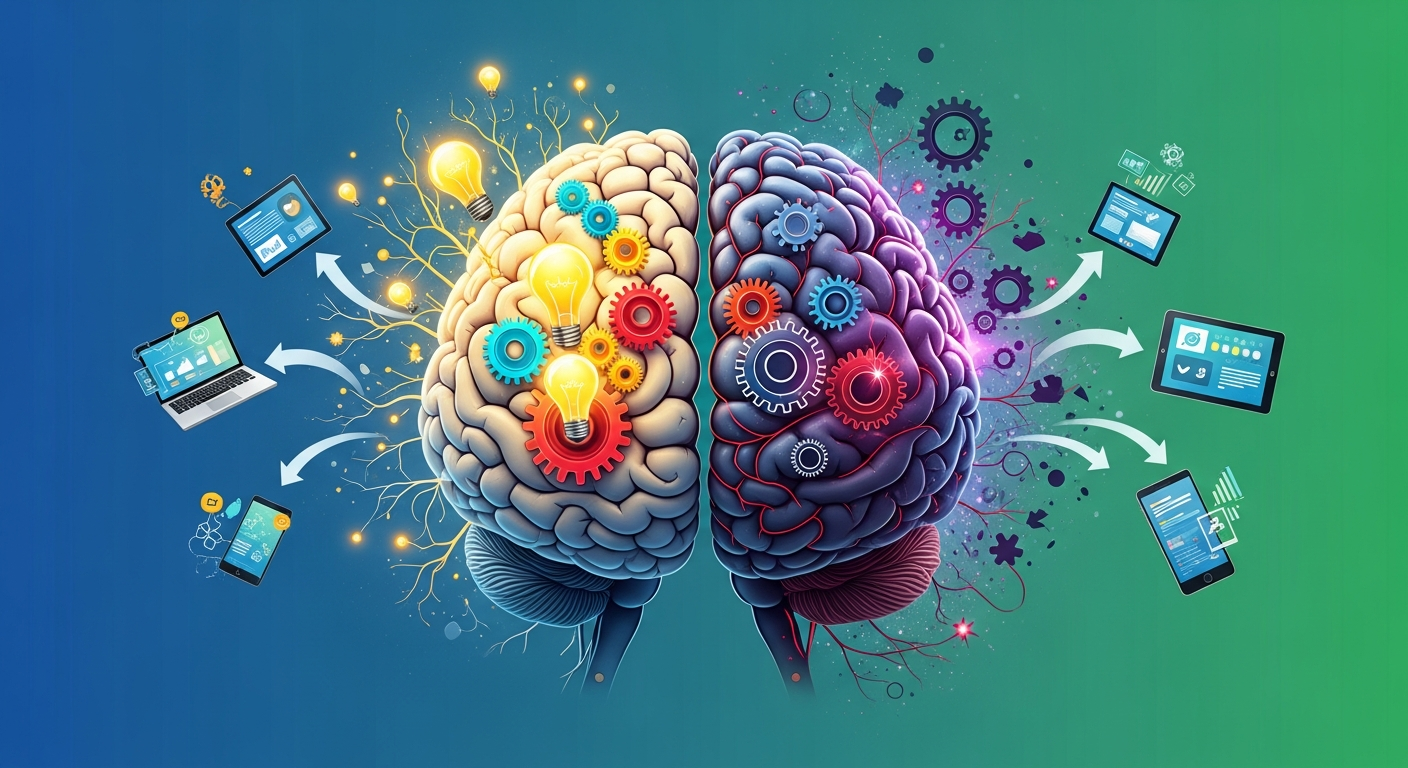
Why Tailoring Microlearning Assets to Employee Cognition Prevents Training Failure
In the high-stakes world of corporate learning and development, the specter of "training failure" looms large. It's not just about wasted budgets; it’s about lost productivity, compliance risks, and a tangible drag on business growth. For L&D VPs, Directors, and Managers across diverse sectors like Banking, Pharma, Retail, and Oil and Gas, the question isn't if training is needed, but why it so often falls short of its promise. The answer, increasingly, lies in a fundamental misalignment: we often design training without fully understanding how the human brain truly learns.
This article explores why a cognition-centric approach to microlearning isn't just a best practice, but a critical imperative for preventing training failure. By designing learning assets that respect the natural architecture of employee cognition – attention spans, working memory, and long-term retention – organizations can transform their training from a necessary evil into a powerful driver of performance and success.
The Root of Training Failure: A Mismatch with Human Cognition
Traditional training methodologies, often characterized by lengthy sessions, information-dense manuals, and one-size-fits-all approaches, are fundamentally at odds with how adults process and retain information. The average human attention span is remarkably short, and our working memory has limited capacity. Bombarding learners with too much information at once leads to cognitive overload – a state where the brain can no longer effectively process new data. This is a primary cause of forgotten lessons, poor skill transfer, and ultimately, training failure.
Consider the compliance training for a financial institution or the intricate sales processes in retail. If employees are expected to absorb vast amounts of information in a single sitting, the forgetting curve ensures that most of it will be lost within days, if not hours. This isn't a reflection of the employee's capability, but a design flaw in the training itself. A robust Microlearning LMS can offer the structure needed to combat these traditional pitfalls.
How Microlearning Aligns with Cognitive Principles
Microlearning, by its very definition, is designed to be short, focused, and digestible. When strategically tailored to cognitive principles, its power to enhance learning and prevent failure becomes undeniable.
Chunking Information for Easier Processing
Our working memory can only handle a limited number of information "chunks" at any given time. Microlearning breaks down complex topics into small, manageable modules, typically lasting 3-7 minutes. This approach reduces cognitive load, allowing learners to fully absorb and process each piece of information before moving on. This is vital for complex topics in industries like healthcare, where understanding intricate procedures is paramount, or for new product knowledge in sales.
Spaced Repetition for Enhanced Retention
For information to move from short-term to long-term memory, it needs to be reviewed and recalled repeatedly over time. Microlearning naturally facilitates spaced repetition. By delivering small bursts of content at strategic intervals, it reinforces learning without overwhelming the learner. This "drip-feed" approach counters the forgetting curve, ensuring knowledge sticks, which is crucial for critical safety protocols in mining or oil and gas, and for maintaining up-to-date knowledge in insurance.
Engaging Content for Sustained Attention
Monotonous content quickly leads to disengagement. Cognitively tailored microlearning leverages varied formats – short videos, interactive quizzes, infographics, simulations – to capture and sustain attention. When learning is engaging, learners are more motivated, and their brains are more receptive to new information. This is where a Gamified LMS can truly shine, transforming routine training into an enjoyable and effective experience.
Contextual Relevance for Practical Application
The brain learns best when new information is directly relevant to existing knowledge and practical application. Microlearning can be delivered "just-in-time" – precisely when an employee needs to learn or recall a specific piece of information to perform a task. This immediate applicability enhances comprehension and knowledge transfer, turning learning into a practical tool for problem-solving in real-world scenarios, from hospitality customer service to complex financial transactions.
The Role of Advanced Learning Platforms in Cognitive Alignment
Implementing cognition-centric microlearning at scale requires sophisticated tools and strategies. Modern learning management systems provide the infrastructure to not only deliver but also optimize learning experiences based on cognitive science.
- Personalized Learning Paths: An effective Adaptive Learning system can dynamically adjust content and pace based on a learner's performance and preferences, ensuring that each individual receives the right information at the right time and in the right format. This personalization respects individual cognitive differences.
- AI-Powered Content Creation: Creating high-quality, cognitively optimized microlearning assets manually can be time-consuming. An AI Powered Authoring Tool can significantly accelerate this process, helping L&D teams generate relevant, concise, and engaging content faster, ensuring it adheres to cognitive principles automatically.
- Targeted Risk Mitigation: For industries with significant regulatory burdens or operational hazards, focusing training on critical areas is paramount. Risk-focused Training ensures that high-impact knowledge gaps are addressed with cognitively optimized microlearning, reducing the likelihood of costly errors or non-compliance.
These enterprise learning management solutions, often part of a comprehensive learning content management system (LCMS), provide the insights and capabilities necessary to move beyond generic training towards truly impactful, cognition-led learning initiatives. A cloud based learning management system offers the flexibility and accessibility required for distributed workforces across global industries.
Practical Strategies for Cognition-Centric Microlearning Design
To ensure your microlearning assets truly prevent training failure, consider these practical strategies:
- Know Your Audience: Understand their existing knowledge, job roles, learning styles, and cognitive biases. What problems are they trying to solve? How do they naturally process information?
- Single Learning Objective per Asset: Each microlearning module should focus on one clear, measurable learning outcome. This prevents cognitive overload and reinforces the "chunking" principle.
- Vary Formats: Utilize a mix of videos, interactive quizzes, short articles, infographics, and simulations to appeal to different cognitive preferences and maintain engagement.
- Incorporate Interactivity: Active learning promotes deeper processing. Integrate drag-and-drop exercises, quick polls, and mini-challenges to encourage cognitive engagement.
- Provide Immediate Feedback: Instant feedback on quizzes or activities helps learners correct misunderstandings immediately, reinforcing correct pathways in the brain.
- Link to Real-World Scenarios: Frame microlearning content within the context of employees' daily tasks and challenges. This increases relevance and aids transferability, making the learning stick for roles in compliance, sales, or even hospitality.
Ultimately, investing in a robust learning management software and developing a strategy around cognition-centric design represents a proactive step towards transforming your organization's learning culture and ensuring that every training dollar yields maximum return.
AI-Driven Insights: Answering Your Critical Questions
How can advanced analytics help in understanding employee cognitive patterns for training?
Modern learning management systems, especially those with AI integration, gather vast amounts of data on learner interactions. By analyzing metrics like completion rates, time spent on modules, quiz scores, repeated attempts, and even sentiment analysis from open-ended responses, AI can identify patterns in how different employee groups absorb information. This insight allows L&D teams to pinpoint areas of cognitive friction, optimize content difficulty, recommend personalized learning paths, and even predict potential training failures before they occur, ensuring a more effective lms learning management system.
What are the measurable benefits of cognitively tailored microlearning?
The benefits are substantial and measurable. Organizations typically see increased knowledge retention, improved skill application on the job, higher employee engagement and satisfaction, reduced training time, and a direct impact on key performance indicators (KPIs) such as sales conversion rates, compliance adherence, and error reduction. For example, a company using MaxLearn LMS might observe a significant decrease in compliance breaches or a notable uptick in product knowledge among sales teams after implementing tailored microlearning.
How do organizations ensure consistent application of cognitive principles across diverse training needs?
Ensuring consistency across various departments and training requirements (e.g., product training for retail vs. safety training for pharma) requires a standardized design framework and a centralized learning management system. This framework should outline core cognitive principles, such as ideal module length, interactive elements, and assessment strategies. Leveraging AI-powered authoring tools can help content creators adhere to these guidelines consistently. Regular audits and feedback loops within the enterprise learning management ecosystem also help maintain quality and cognitive alignment across all learning content.
Conclusion
The journey from training failure to undeniable success hinges on a profound shift in perspective: from delivering information to understanding how the human brain acquires it. By embracing microlearning and meticulously tailoring its assets to employee cognition, L&D leaders can overcome the pervasive challenges of engagement, retention, and application. This isn't just about making training more efficient; it's about making it inherently effective, ensuring that every learning intervention translates into tangible skills, higher performance, and sustainable business growth across all industries.


Comments
Post a Comment