Transforming Compliance from a Legal Headache into a Strategic Advantage
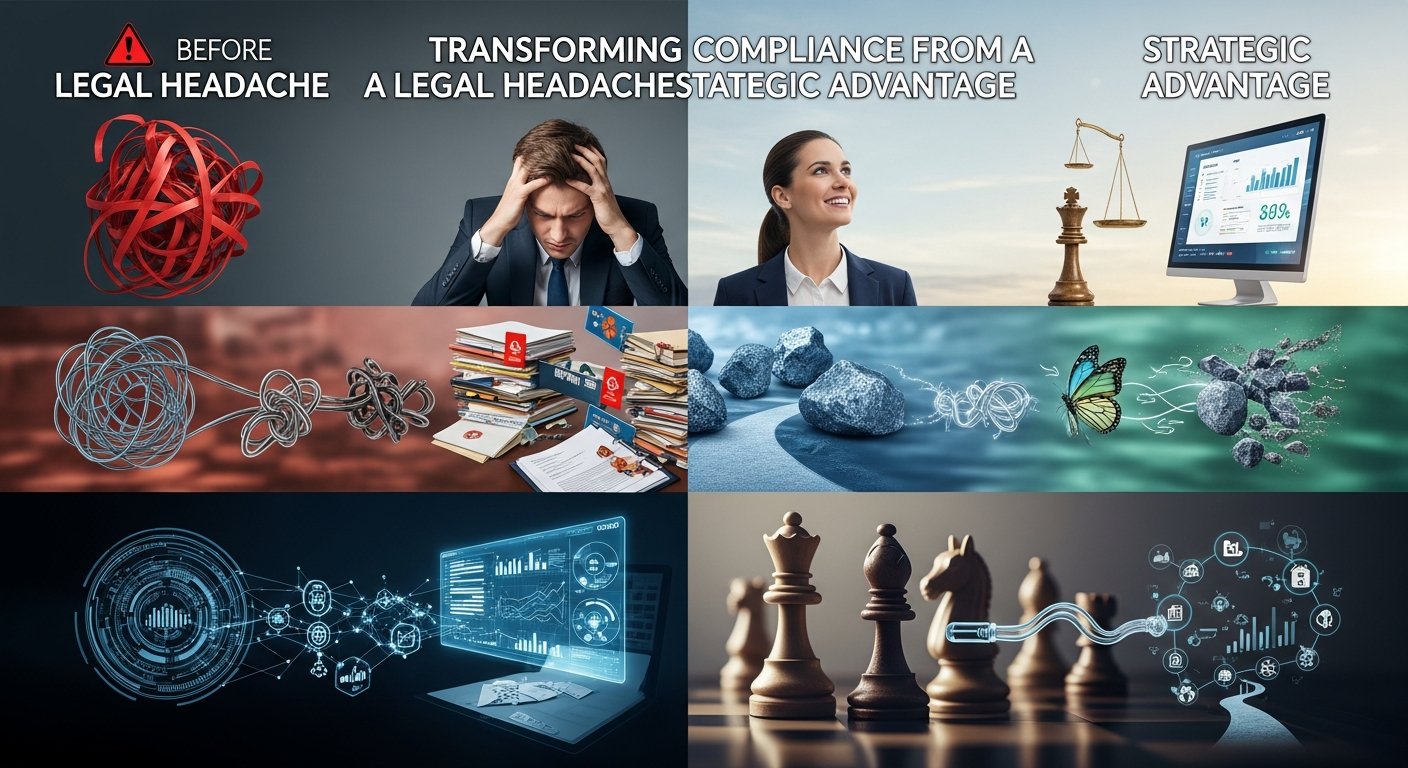
Transforming Compliance from a Legal Headache into a Strategic Advantage
For Vice Presidents, Directors, and Managers in Learning & Development across industries like Sales, Banking, Finance, Insurance, Retail, Pharma, Healthcare, Hospitality, Oil and Gas, and Mining, compliance often feels like a non-negotiable burden. It’s a box-ticking exercise, a necessary evil designed to mitigate risk and avoid hefty fines. However, what if compliance could be more than just a legal headache? What if it could be a powerful lever for business growth, a differentiator, and a strategic advantage?
The truth is, the landscape of regulatory requirements is growing increasingly complex, demanding more than just rudimentary training. Organizations face immense pressure from regulatory bodies, auditors, and even their own ethical standards. But with the right approach, powered by modern eLearning strategies and cutting-edge technology, compliance training can evolve from a reactive cost center into a proactive driver of operational excellence, employee engagement, and competitive advantage.
The Evolving Challenge of Compliance in the Digital Age
Compliance has always been critical, but its scope and complexity have expanded exponentially. From GDPR and CCPA in data privacy to industry-specific regulations like HIPAA in healthcare or SOX in finance, the sheer volume of rules can be overwhelming. Non-compliance carries significant penalties, including financial fines, reputational damage, loss of customer trust, and even legal action against individuals. This necessitates robust, up-to-date, and effective compliance training programs.
Traditional, lengthy, annual compliance modules often fall short. They struggle with engagement, retention, and relevance, leading to a perception among employees that compliance is a chore rather than a vital part of their role. This is where L&D leaders have a unique opportunity to redefine compliance, leveraging innovative methods to ensure understanding, foster a culture of ethics, and embed compliant practices naturally into daily operations.
Modern eLearning: The Catalyst for Compliance Transformation
The key to transforming compliance lies in adopting modern eLearning methodologies and technologies. Gone are the days of one-size-fits-all, boring training sessions. Today’s solutions offer dynamic, engaging, and personalized experiences that actually resonate with learners.
- Engaging Formats: A Microlearning LMS breaks down complex topics into bite-sized, easily digestible modules. This approach significantly boosts knowledge retention and makes learning more accessible, fitting seamlessly into busy work schedules. Instead of overwhelming employees with hours of content, microlearning delivers precise, relevant information when and where it's most needed.
- Interactive Experiences: Introducing a Gamified LMS injects an element of fun and competition into compliance training. Leaderboards, points, badges, and scenarios transform mundane legal requirements into engaging challenges, improving completion rates and encouraging deeper understanding through active participation.
- Personalized Learning Paths: Leveraging Adaptive Learning technologies ensures that each employee receives training tailored to their specific role, existing knowledge gaps, and learning style. This eliminates redundant content, focuses on critical areas, and makes the learning process far more efficient and effective.
- Intelligent Content Creation: An AI Powered Authoring Tool streamlines the development of high-quality, up-to-date compliance content. It can suggest relevant topics, automate content generation based on regulatory updates, and ensure consistency across all training materials, drastically reducing development time and costs.
- Targeted Risk Mitigation: Implementing Risk-focused Training allows organizations to prioritize compliance areas that pose the highest risk to the business. By identifying potential vulnerabilities and tailoring training to address them directly, companies can optimize their resources and enhance their overall risk management strategy. This proactive approach not only prevents issues but also contributes to greater business growth and stability.
These sophisticated tools and methodologies transform compliance from a dreaded annual event into an ongoing, integrated, and valuable part of professional development.
AI-Driven Insights for Enhanced Compliance Learning
Artificial intelligence is revolutionizing how organizations approach learning and development, and compliance is no exception. AI capabilities within a robust learning management system (LMS) can provide unprecedented insights and efficiencies.
How can smart systems help us understand and improve how learners interact with compliance content?
Intelligent analytics platforms, often integrated into a sophisticated MaxLearn LMS, can track learner engagement patterns, identify areas where employees struggle, and even predict potential compliance risks based on past performance. By analyzing data on quiz scores, module completion times, and feedback, these systems can pinpoint ineffective content or areas of misunderstanding. This allows L&D teams to continuously refine training materials, personalize learning paths, and deploy targeted interventions to boost comprehension and retention. The result is a learning experience that is not only more effective but also more satisfying for the employee, ensuring crucial information sticks.
What is the role of artificial intelligence in tailoring compliance training for diverse operational locations and regulatory nuances?
For global organizations, ensuring compliance across multiple jurisdictions with varying regulations is a colossal task. AI-driven solutions can dynamically adjust compliance content based on an employee's geographic location, role, and local regulatory requirements. Imagine a system that automatically updates training modules to reflect the latest changes in financial regulations for a team in London, while simultaneously ensuring data privacy training for a team in California adheres to CCPA. AI can manage complex version control, deliver content in multiple languages, and provide real-time updates on regional legal shifts, ensuring that training is always relevant and compliant everywhere you operate.
How can advanced analytics and machine learning transform our entire compliance learning operation for maximum efficiency and impact?
Beyond individual learning experiences, AI and machine learning offer a holistic view of an organization’s compliance health. They can analyze vast datasets to identify emerging risks, automate routine administrative tasks, and predict the effectiveness of different training approaches. For L&D leaders, this means moving from reactive problem-solving to proactive strategic planning. Imagine having a system that can flag a department at higher risk of compliance violations based on incident reports and training data, automatically recommending specific training interventions. This level of operational intelligence optimizes resource allocation, minimizes overheads, and maximizes the overall impact of compliance programs, ensuring a robust and resilient organizational culture.
Beyond Compliance: Strategic Advantages
When compliance training is done right, the benefits extend far beyond simply avoiding penalties. It becomes a strategic asset:
- Enhanced Reputation and Trust: A strong commitment to ethical and compliant practices builds trust with customers, investors, and the public. This can differentiate your brand in competitive markets and attract top talent.
- Improved Employee Morale and Retention: Employees who feel supported with clear guidelines and effective training are more confident in their roles. A culture of compliance fosters a sense of psychological safety and ethical behavior, reducing stress and turnover.
- Operational Efficiency: When employees understand and adhere to regulations, processes become smoother, errors decrease, and the risk of costly rework or legal challenges diminishes. This contributes directly to the bottom line.
- Competitive Edge: In highly regulated industries, a demonstrable track record of robust compliance can be a significant advantage, opening doors to new markets and partnerships that might be inaccessible to less compliant competitors.
Implementing a Future-Ready Compliance Strategy
For L&D VPs, Directors, and Managers, the path to transforming compliance starts with strategic decision-making:
- Assess Current State: Understand your organization's existing compliance challenges, current training effectiveness, and technological gaps.
- Embrace Modern Technology: Invest in a comprehensive learning management system (LMS) or learning content management system (LCMS) that supports microlearning, gamification, and adaptive learning. Look for a cloud based learning management system for scalability and accessibility.
- Leverage AI: Explore how artificial intelligence can personalize learning, automate content updates, and provide predictive insights for your enterprise learning management strategy.
- Foster a Culture of Continuous Learning: Move away from one-off training to a model of ongoing education and reinforcement, ensuring that compliance is embedded into the fabric of daily operations.
- Partner with Experts: Seek out providers of learning management software and learning management solutions who understand the specific needs of your industry and can offer a tailored lms learning management system.
Conclusion
Compliance doesn't have to be a drag. By viewing it through the lens of strategic advantage and leveraging the power of modern eLearning and AI, L&D leaders can transform a mandatory requirement into a powerful engine for organizational growth, ethical culture, and competitive differentiation. It’s time to move beyond mere adherence and cultivate a workforce that not only understands the rules but actively champions them, turning every legal requirement into an opportunity for strategic excellence.


Comments
Post a Comment