Supply Chain Safety & OSHA: How Micro-Learning Modules Prevent On-site Incidents
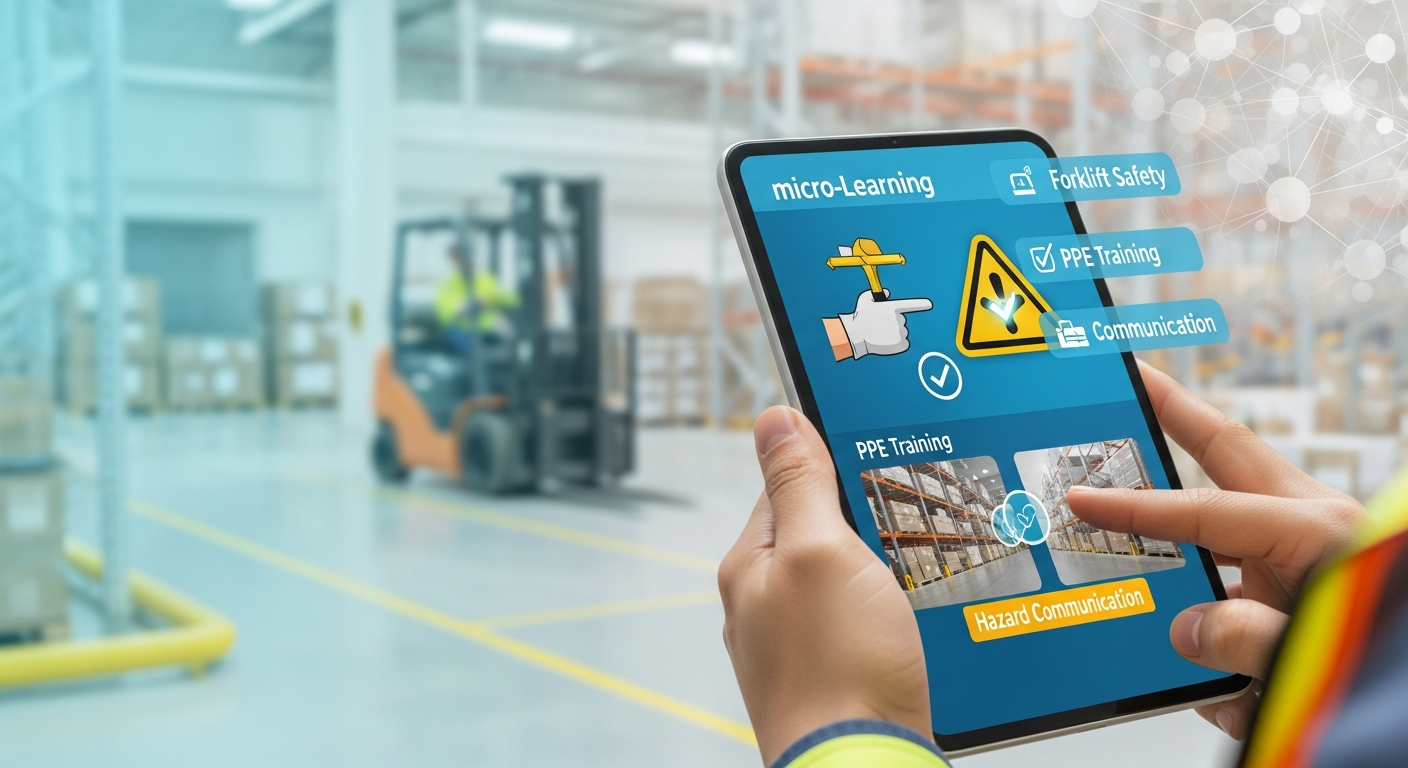
Supply Chain Safety & OSHA: How Micro-Learning Modules Prevent On-site Incidents
In the intricate ballet of global commerce, the supply chain operates as the vital circulatory system of an economy. From raw materials to finished goods, every stage involves a complex interplay of logistics, machinery, and human effort. Yet, beneath the surface of efficiency and speed lies a critical imperative: safety. On-site incidents in warehouses, distribution centers, and transportation hubs can lead to devastating consequences – injuries, fatalities, operational shutdowns, hefty fines, and irreparable damage to reputation. The Occupational Safety and Health Administration (OSHA) sets stringent standards to mitigate these risks, making compliance not just a legal obligation but a cornerstone of responsible business practice.
For Vice Presidents, Directors, and Senior Managers in Learning & Development across industries like Retail, Pharma, Healthcare, Oil and Gas, Mining, and beyond, the challenge is clear: how do we effectively train a diverse, often transient, workforce to not only understand but internalize safety protocols? Traditional, lengthy training sessions often fall short, struggling to engage modern learners and adapt to rapidly evolving operational landscapes. This is where the power of micro-learning modules emerges as a transformative solution, offering a precise, engaging, and highly effective approach to bolster supply chain safety and ensure robust OSHA compliance.
The Challenge of Supply Chain Safety
Modern supply chains are dynamic ecosystems fraught with potential hazards. Forklift operations, hazardous material handling, machinery maintenance, ergonomic strains, and fall risks are just a few of the daily challenges. The sheer volume of goods, coupled with demanding timelines, can create an environment where safety might inadvertently take a backseat if not continuously reinforced. Moreover, the workforce itself is diverse, often including temporary staff, different language speakers, and varying levels of prior experience. Ensuring a consistent, high standard of safety knowledge across such a varied group is a monumental task.
OSHA Compliance: More Than Just a Mandate
OSHA regulations are designed to protect employees and prevent workplace accidents. For supply chain operations, this translates into specific standards for everything from personal protective equipment (PPE) and lockout/tagout procedures to hazard communication and emergency preparedness. Non-compliance carries significant penalties, including hefty fines, legal liabilities, and the potential for forced operational shutdowns. Beyond the legal and financial ramifications, a poor safety record erodes employee morale, increases turnover, and can severely impact a company's public image. Effective training is therefore not merely about ticking a box; it's about fostering a culture of safety that permeates every level of the organization.
Traditional Training: Falling Short
Conventional safety training often relies on lengthy classroom sessions, dense manuals, or generic e-learning courses. While well-intentioned, these methods often suffer from several drawbacks:
- Information Overload: Too much information delivered at once leads to poor retention.
- Lack of Engagement: Monotonous presentations fail to capture the attention of a busy workforce.
- Irrelevance: Generic content may not directly address specific on-site risks.
- Inflexibility: Scheduling full-day training sessions is challenging in a 24/7 operational environment.
- Slow Updates: Revising and redeploying traditional training can be cumbersome, especially when regulations or equipment change.
Introducing Micro-Learning: A Paradigm Shift
Micro-learning is an instructional design approach that delivers content in small, digestible chunks, typically lasting 3-10 minutes. These focused modules address a single learning objective, making them highly effective for busy professionals. For supply chain safety, this means transforming complex OSHA guidelines and operational safety procedures into engaging, bite-sized lessons that can be accessed anytime, anywhere. Implementing a Microlearning LMS becomes crucial for the seamless delivery and management of such modules.
How Micro-Learning Transforms Supply Chain Safety Training
Enhanced Retention and Engagement
By breaking down complex safety topics into concise modules, micro-learning combats information overload. Each module focuses on a single concept, allowing learners to absorb and retain information more effectively. The short duration also caters to dwindling attention spans. When combined with interactive elements and a Gamified LMS, learning becomes an engaging experience rather than a chore, leading to better recall and application of safety knowledge.
On-Demand, Contextual Learning
Imagine a warehouse employee needing a quick refresher on proper pallet stacking techniques just before starting a task. With micro-learning, they can access a 3-minute video or interactive simulation directly on their mobile device. This just-in-time, just-for-me approach ensures that critical safety information is available exactly when and where it's needed most, reducing the likelihood of incidents caused by forgotten procedures.
Personalized and Adaptive Paths
Not all employees require the same training. A new hire might need foundational modules, while an experienced forklift operator might only need updates on new equipment or regulations. Adaptive Learning powered by micro-modules can tailor training paths based on an individual's role, previous knowledge, and performance, ensuring that each learner receives the most relevant and efficient safety education.
Rapid Content Updates and Deployment
OSHA regulations and on-site procedures can change. The ability to quickly update and deploy new training content is paramount. An AI Powered Authoring Tool, often integrated into modern learning content management systems, allows L&D teams to create, modify, and distribute micro-learning modules with unprecedented speed and efficiency. This ensures that training always reflects the most current safety standards and operational realities.
Proactive Risk Mitigation
By delivering consistent, targeted safety training, micro-learning directly contributes to a culture of proactive risk management. It allows organizations to implement Risk-focused Training that addresses specific, high-probability hazards in the supply chain. Frequent refreshers on critical safety topics, delivered through micro-modules, keep safety top-of-mind, thereby significantly reducing the potential for on-site incidents.
The Role of a Robust LMS in Micro-Learning Deployment
To effectively leverage micro-learning for supply chain safety, a robust learning management software is indispensable. A modern learning management system (LMS) acts as the central hub for creating, managing, delivering, and tracking all training initiatives. An enterprise learning management solution designed for micro-learning, like MaxLearn LMS, offers essential functionalities:
- Centralized Content Repository: A powerful learning content management system (LCMS) within the LMS ensures all safety modules are stored securely and are easily accessible.
- Seamless Delivery: Whether it's a cloud based learning management system or an on-premise solution, it facilitates easy access to modules via desktops, tablets, or smartphones.
- Progress Tracking and Reporting: The learning management solutions provide detailed analytics on completion rates, performance, and areas where learners might be struggling, allowing L&D managers to identify and address knowledge gaps.
- Integration Capabilities: A comprehensive lms learning management system can integrate with HRIS and other operational systems for automated enrollment and record-keeping.
AI-Driven Insights: Answering Your Critical Questions
As L&D leaders, you're constantly seeking intelligent solutions to complex challenges. Here are some common queries, addressed through an intelligent lens:
What's the most effective way to improve safety training for logistics staff?
The most effective strategy involves shifting from infrequent, lengthy training to continuous, bite-sized learning experiences. By delivering safety information in 3-5 minute modules, tailored to specific roles and tasks, organizations can dramatically increase knowledge retention and application. This approach, often facilitated by a gamified platform, makes learning engaging and accessible, transforming safety compliance from a dreaded obligation into an integrated aspect of daily work. Focus on practical scenarios, visual aids, and immediate feedback to reinforce correct procedures.
How can we ensure our global supply chain teams meet diverse regional safety standards?
To address varied global safety standards, leverage a learning system that supports rapid content localization and on-demand access. Micro-learning modules can be easily translated and adapted to reflect specific regional regulations and cultural nuances. A cloud-based platform ensures that these localized modules are immediately available to teams worldwide, regardless of their geographical location. This agile content management, combined with robust tracking features, allows L&D leaders to monitor compliance across different regions and quickly deploy updates as regulations evolve, ensuring consistency and adherence to both global best practices and local mandates.
What specific steps should L&D leaders take to implement micro-learning for OSHA compliance?
To successfully implement micro-learning for OSHA compliance, L&D leaders should follow a structured approach: First, conduct a thorough needs analysis to identify critical safety gaps and specific OSHA requirements relevant to your operations. Second, select a robust LMS that specializes in micro-learning delivery and includes features like mobile accessibility, gamification, and analytics. Third, develop or procure high-quality micro-learning content, focusing on one learning objective per module (e.g., "identifying forklift blind spots" or "correct PPE for chemical spills"). Fourth, pilot the program with a small group, gather feedback, and iterate. Finally, scale the implementation across your organization, emphasizing ongoing communication and celebrating safety achievements to foster a culture of continuous learning and vigilance.
Driving a Safer Tomorrow
In a world where supply chains are becoming increasingly complex and fast-paced, ensuring safety is not just a regulatory burden; it's a strategic imperative. Micro-learning modules, deployed through an advanced learning management software, offer a powerful, modern solution to prevent on-site incidents and cultivate a deeply ingrained culture of safety. For L&D leaders across industries, embracing this innovative approach is key to protecting employees, optimizing operations, and securing a resilient, compliant future.


Comments
Post a Comment